Written By | International News Agencies
That architecture came under sustained political pressure after Sanae Takaichi became prime minister in October 2025
Background
For decades, Japan's approach to intelligence has been an outlier among major powers. Unlike the United States with the CIA, Britain with MI6, or even close regional partners like South Korea and Australia, Japan never built a unified foreign-intelligence service after World War II, a legacy of the country's postwar constitutional order and lingering public wariness toward the kind of centralized security apparatus that operated under militarist rule before 1945. Instead, intelligence functions were spread thinly across the Defense Ministry, the Foreign Ministry, the National Police Agency and other bodies, coordinated loosely by the Cabinet Intelligence and Research Office, known as CIRO, a roughly 700-person unit that could gather and analyze information but had no statutory power to compel other ministries to share what they knew.
That architecture came under sustained political pressure after Sanae Takaichi became prime minister in October 2025. Takaichi has taken a notably hawkish line on national security, telling lawmakers that Japan faces its most severe and complex security environment since World War II, citing China's expanding military activity in the East and South China Seas, deepening China-Russia security cooperation, and North Korea's advancing nuclear and missile programs. Her government began laying the groundwork for an intelligence overhaul early in her tenure, with plans for a new coordinating body and an accompanying oversight mechanism confirmed publicly by late July.
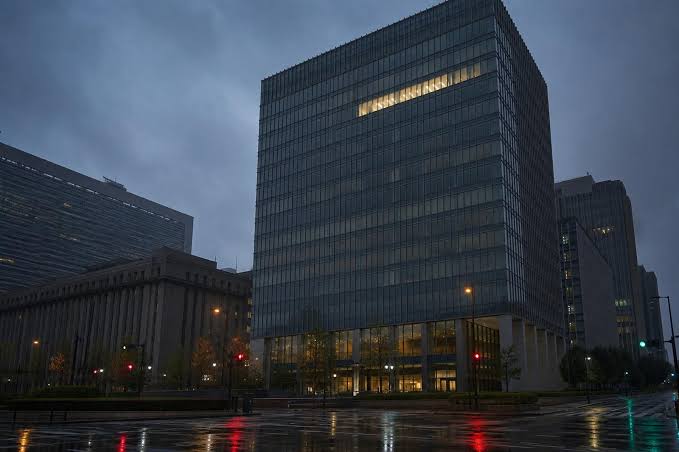
The push gained new urgency from an investigation that had nothing to do with China or North Korea directly. On July 13, the New York Times published findings that Russia's military intelligence agency, the GRU, had for 17 months run a procurement network out of a Tokyo office building, exploiting Japan's fragmented intelligence and comparatively lax counterespionage laws to source technology destined for Russian weapons production. The revelation landed as a genuine shock in Tokyo and gave Takaichi's government the political momentum it needed to push the reform through quickly.
Key Developments
According to the Times investigation, the operation was run by the GRU's classified 20th Directorate and centered on a career Russian intelligence officer, Maksim Vladimirovich Filchenkov, then 49 years old, who worked under cover as an employee of the Russian airline Aeroflot from a 22nd-floor office in Tokyo. Filchenkov's cover job placed him roughly a ten-minute walk from the headquarters of Japan's National Police Agency. From February 2024 until the network's exposure, Filchenkov and his associates sought to acquire electronics, precision machine tools and other dual-use technology in Japan, then route it through third countries — reporting has pointed to a cargo pathway through Sri Lanka — before the components reached Russian recipients. Ukrainian government estimates cited in the reporting suggest that as much as 90 percent of Russian missiles and drones now contain components of Japanese origin, a figure that underscores how significant a back door this single network represented, even if not all of that technology flowed through Filchenkov's operation specifically. After the Times exposed the network, Filchenkov fled Japan.
The scandal exposed precisely the coordination gap Japanese security officials had long worried about: no single agency had the authority to connect procurement anomalies flagged by one ministry with counterintelligence leads developed by another. On July 31, the government acted, formally launching the National Intelligence Bureau, an upgraded successor to CIRO with statutory authority to compel Japan's various intelligence-generating agencies — the Defense Ministry, Foreign Ministry, National Police Agency and others — to share information in a coordinated way for the first time. The new bureau reports to a National Intelligence Council chaired personally by Prime Minister Takaichi and composed of nine cabinet ministers, which held its inaugural meeting the same day.
Officials have described the reform as occurring in stages. The National Intelligence Bureau's launch constitutes what the government has called the first stage. A second stage is expected to bring new anti-espionage legislation, with an expert panel slated to begin work by autumn 2026. Officials and outside analysts have floated the possibility that this second stage could eventually produce an entirely new external foreign-intelligence agency modeled more explicitly on the CIA or MI6, a step that would go considerably further than the coordinating-bureau model adopted this summer.
Reactions
China's government reacted critically, though its public statements have folded the intelligence bureau into a broader complaint about Takaichi's posture toward Beijing rather than treating it as a standalone grievance. Chinese officials have separately and repeatedly criticized Takaichi over her statements regarding Taiwan, at one point calling her remarks "egregious" and demanding a retraction, and China's Foreign Ministry has argued that current strains in the bilateral relationship stem from what it describes as Takaichi's erroneous interference in China's internal affairs. Beijing has framed Japan's broader security buildup, including the new intelligence architecture, as part of a pattern of provocation rather than a defensive response to specific espionage activity.
Domestically, reaction has been more mixed. Security hawks within Takaichi's government and the ruling coalition have welcomed the bureau as a long-overdue modernization that brings Japan's capabilities closer in line with allied intelligence services, particularly as Tokyo deepens security cooperation with Washington and other partners wary of Chinese and Russian activity in the region. But critics, including some opposition lawmakers and civil-society voices, have expressed unease about the pace and direction of the change, with some commentary describing the reform as part of a broader push by the Takaichi government toward what critics call a "wartime system" footing. Observers have specifically flagged the risk of an excessive expansion of intelligence powers without adequate safeguards, noting that preventing abuses of power — and avoiding a repeat of the prewar intelligence apparatus's mistakes — will be one of the central challenges as the bureau matures.
The Filchenkov case itself drew a more unified response: across the political spectrum, Japanese officials treated the exposure of a sustained foreign intelligence operation running within walking distance of national police headquarters as a serious institutional failure, lending the new bureau's creation a degree of cross-partisan legitimacy that a purely China-focused security measure might not have received.
What's Next
The immediate test for the National Intelligence Bureau will be operational: whether its new statutory authority actually translates into faster, better-coordinated detection of the kind of procurement and espionage networks that operated undetected in Tokyo for 17 months. The National Intelligence Council's structure, with Takaichi chairing a nine-minister body, is designed to force information-sharing at the highest levels of government, but its effectiveness will depend heavily on implementation details and on whether individual ministries cede genuine authority to the new coordinating structure rather than treating it as an additional layer of bureaucracy.
The more consequential decisions lie ahead in the promised second stage of reform. The anti-espionage legislation expected to begin moving through an expert panel this autumn will need to grapple with Japan's historically weak counterintelligence legal framework, which observers have said made the country an attractive target for operations like Filchenkov's in the first place. Whether Japan ultimately creates a dedicated external intelligence service akin to the CIA or MI6 — rather than simply strengthening the coordination of existing agencies — remains an open question that will shape Japan's security posture for years to come. That decision will unfold against the backdrop of continuing friction with China over Taiwan and the East and South China Seas, deepening China-Russia security ties, and North Korea's advancing weapons programs, all of which Takaichi has cited as justification for the broader overhaul.



