World Politics
Background
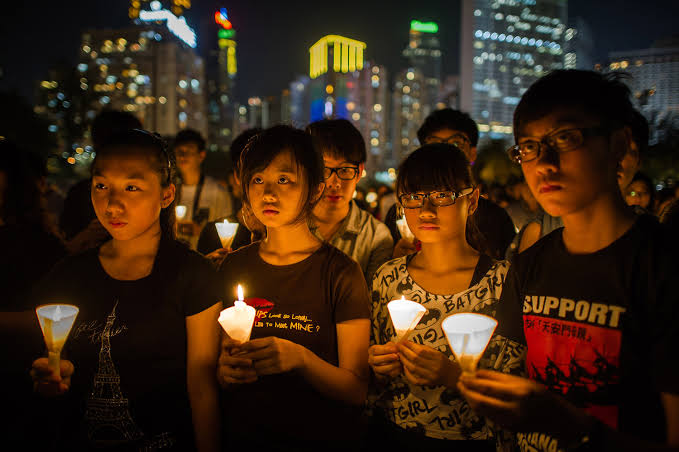
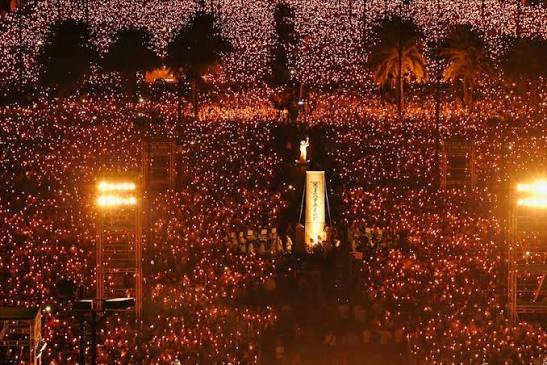
For thirty years, on the evening of every June 4, tens of thousands of people filed into Victoria Park in Hong Kong's Causeway Bay, lit candles, and sat in silence for the students and workers killed when the Chinese army crushed the pro-democracy protests in Beijing in 1989. It was the only large-scale public commemoration of the Tiananmen crackdown anywhere on Chinese soil, and for that reason it became the single most legible symbol of what made Hong Kong different from the mainland. The vigil was organized every year by the Hong Kong Alliance in Support of Patriotic Democratic Movements of China, a group founded in the aftermath of 1989 whose formal platform included the demand to "end one-party dictatorship."
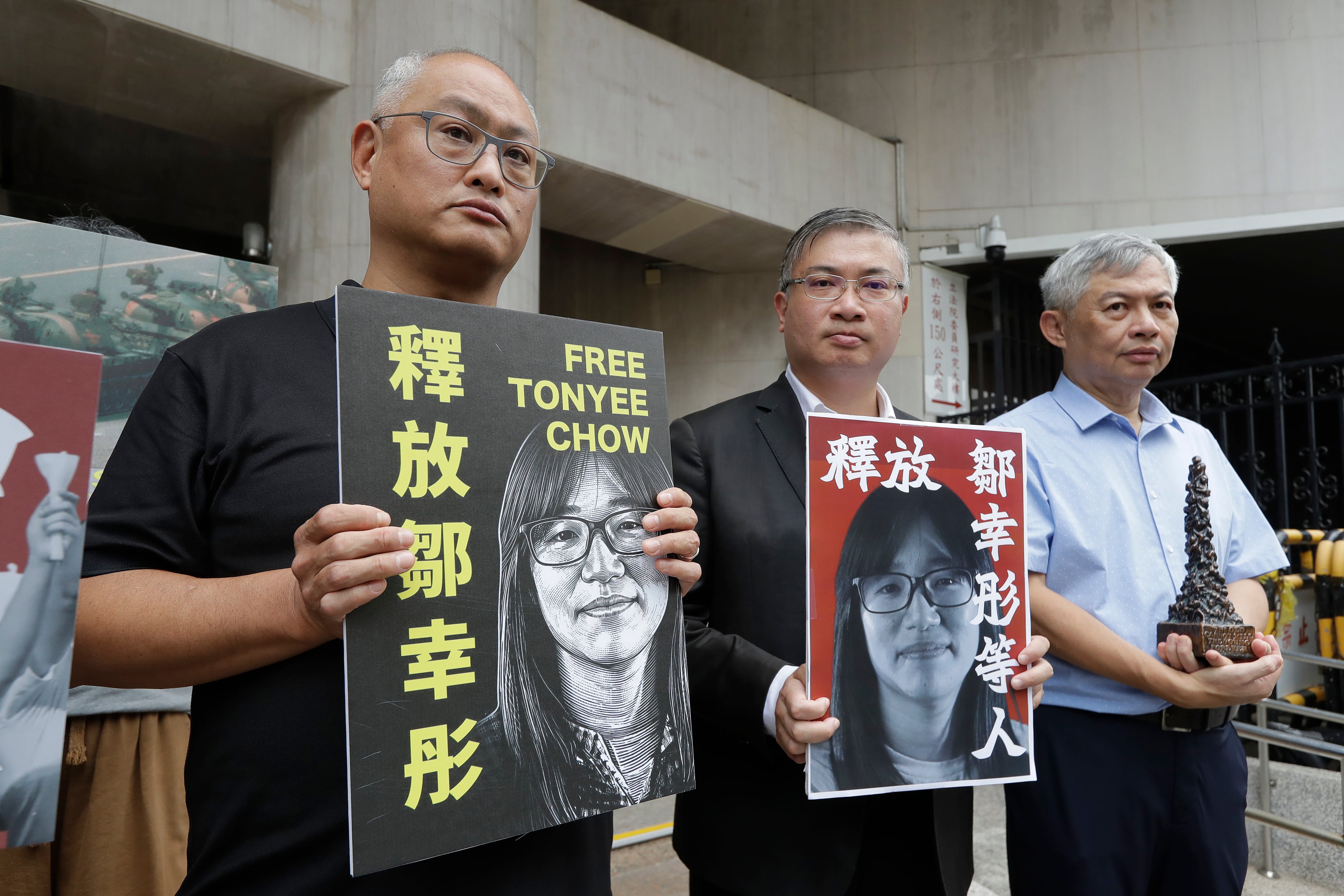
On Friday, September 11, 2026, a Hong Kong court sent three of the Alliance's leading figures to prison for making that demand. Lee Cheuk-yan, 69, a veteran labour unionist and former legislator, received seven years. Chow Hang-tung, 41, a barrister who led the Alliance's final years and who defended herself at trial, received seven years and three months — the heaviest term of the three. Albert Ho, 74, a lawyer and former chairman of the Democratic Party, received five years and two months, a reduced sentence reflecting his guilty plea. Lee and Chow had both pleaded not guilty. All three were charged in September 2021 with inciting subversion under the national security law Beijing imposed on Hong Kong in June 2020, and all three have spent much of the intervening five years in custody. The court also fined the now-dissolved Alliance itself HK$1.5 million, payable within three months.
The convictions themselves were handed down on August 21, 2026, after a trial heard by three judges drawn from the panel approved by the government to sit on national security cases — a feature of the 2020 law that removed such trials from the ordinary jury system. Friday's hearing was the sentencing stage, and it drew a crowd large enough that dozens of people queued outside the court and were directed to overflow rooms once the main courtroom filled.
Key Developments
The legal reasoning is the part of the ruling most likely to be studied for years. The court had earlier found that the Alliance's standing slogan — "end one-party dictatorship" — implied an intention to overthrow or undermine the leadership of the Chinese Communist Party, and therefore satisfied the subversion element of the offence. In passing sentence, the judges conceded a great deal: the case involved no violence and no threat of violence, and the defendants had never put forward any means, plan, or timetable for achieving the change they called for. Even so, the judges concluded that the offence was of a serious nature, reasoning that it was committed during what they described as a turbulent social atmosphere and therefore posed a greater risk to national security.
The written ruling insisted that the three were not being punished for holding political views. "Even when the defendants believed their agenda of 'end one-party dictatorship' might breach the constitution and the national security law, they acted recalcitrantly after the national security law took effect and vigorously promoted their cause," the judges wrote. The distinction the court drew — between opinion, which it said remains lawful, and persistent public advocacy of that opinion, which it treated as incitement to subversion — is narrow enough that legal observers have questioned whether it leaves any practical space for organized dissent.
Urania Chiu, a lecturer in law at Oxford Brookes University, argued that the verdicts confirm the criminalization of peaceful calls for democratic change in China. "The mere possibility that its activities might stir up hostility against the state by reminding the public of past atrocities is enough for the court to classify the offence as 'serious,'" she said. On that reading, the operative offence is not organizing a rally but keeping a memory in public circulation.
The sentencing lands in a landscape that has already been substantially cleared. The Victoria Park vigil was banned in 2020 on public-health grounds during the coronavirus pandemic and was never permitted again. The Alliance disbanded in September 2021, one of dozens of civil society organizations — unions, journalist associations, political parties, church groups — that dissolved under the pressure of the security law rather than face prosecution. In February 2026, the former media proprietor Jimmy Lai, whose Apple Daily was the most prominent critical newspaper in the city, was sentenced to twenty years in prison. On September 2, 2026, barely a week before Friday's hearing, another prominent activist pleaded guilty to colluding with foreign forces. Elections have been restructured to limit who may stand, and the leaders of critical news outlets have been prosecuted.

Reactions
Outside the court, the families were defiant rather than resigned. Elizabeth Tang, Lee Cheuk-yan's wife, said her husband had prepared for the worst and appeared calm, and confirmed that he would appeal. She said there is no freedom of speech left in Hong Kong and predicted the sentences would shock and anger many people, noting that millions had attended or supported the candlelight vigil over the decades. "The sentence is also a punishment for many other people. It's very hard to accept," she said. Chow Hang-tung's mother, Medina Chow Lau Wah-chun, offered a bleaker kind of humour, saying she had to thank the prosecutors for helping to write the truth of the 1989 crackdown, and of what has happened in Hong Kong since, into the permanent court record. Her daughter, she said, had long wanted a proper debate with the authorities. Chow, who represented herself, had earlier said the verdict meant that pursuing democracy is now a crime and that she did not deserve even one day in prison; a friend confirmed she will also appeal.
Among those in the public gallery was Cardinal Joseph Zen, the retired Roman Catholic bishop of Hong Kong, who was himself arrested under the security law in 2022 but never charged under it. The activists Jimmy Sham and Carol Ng, who have already served sentences in a separate national security case, also attended. Simon Ng, a former vigil-goer, captured the mood of many in the gallery: "I took part in the alliance's vigils for decades; the ruling amounts to an accusation against me."
Human rights organizations were unsparing. Sarah Brooks, Amnesty International's deputy regional director, called the outcome "a triple tragedy: for the activists being unjustly punished; the survivors and victims of the Tiananmen crackdown itself; and the generations of Hongkongers denied the space to discuss one of the most consequential events in modern Chinese history." Amnesty added that during most of the three decades in which Hongkongers marked the anniversary with candles, the idea that the organizers could be jailed for it would have been unthinkable. Human Rights Watch's Asia director framed the prosecutions as evidence of Beijing's fear of the memory of its own conduct, and urged governments to speak up for Hongkongers punished for holding China to account.
The authorities defended the outcome in familiar terms. The Hong Kong office of China's foreign ministry said the territory is governed by the rule of law and that no one should be permitted to engage in unlawful activity under the pretext of freedom of speech and of the press. Steve Li, chief superintendent of the police force's national security department, delivered the plainer message: anyone contemplating similar action should take note of the sentences and not test the government's resolve. Beijing's consistent position is that the 2020 law was necessary to restore stability after the mass protests of 2019.
Western governments had already condemned the August verdict, as had United Nations human rights officials. Assistant Secretary of State Riley Barnes wrote that the vigils "sought only to remember the past and honor the lives lost in that assault." Britain and the European Union, which criticized the Jimmy Lai sentence earlier in the year, again objected to the prison terms. None of this has visibly altered the trajectory of enforcement, and the practical leverage available to foreign capitals is limited: Hong Kong's autonomy has already been formally downgraded in the assessments of the United States, the United Kingdom, and the European Union, which means most of the diplomatic instruments tied to that status have been spent.
What's Next
Both Lee and Chow intend to appeal, and those appeals will test the outer boundary of the subversion offence. The central question is whether a demand for political change, advanced without any proposed means of achieving it and without violence, can constitute incitement to subversion. If the appellate courts uphold the reasoning, the practical effect is that a slogan is sufficient — which would make the offence very difficult to avoid for anyone organizing around democratic reform. If they narrow it, the ruling may be read as a limit on how far the 2020 law reaches into speech. Given the composition of the national security bench and the record of previous appeals, few observers expect a reversal.
The Alliance's fine is due within three months, an awkward obligation for an organization that no longer exists, and one that may itself produce further litigation. More broadly, the sentencing removes the last institutional vehicle for the Tiananmen commemoration in Hong Kong. What remains is private and dispersed: candles in windows, individuals walking through Victoria Park, diaspora gatherings in London, Taipei, Toronto, and Sydney. Taiwan now hosts the largest public commemorations in the Chinese-speaking world.
The timing also matters for China's external relations. The sentencing comes weeks before a scheduled Trump–Xi summit in Washington on September 24, at a moment when Washington's attention is absorbed by the war with Iran, the midterm elections on November 3, and an unresolved tariff agenda. Human rights cases have rarely survived contact with that kind of competing priority. For Hong Kong's remaining civil society, the message delivered on Friday was procedural rather than rhetorical: the courts will treat sustained advocacy as a serious offence, and the sentences will be measured in years.
Published By | News Editor