Written By | International News Agencies
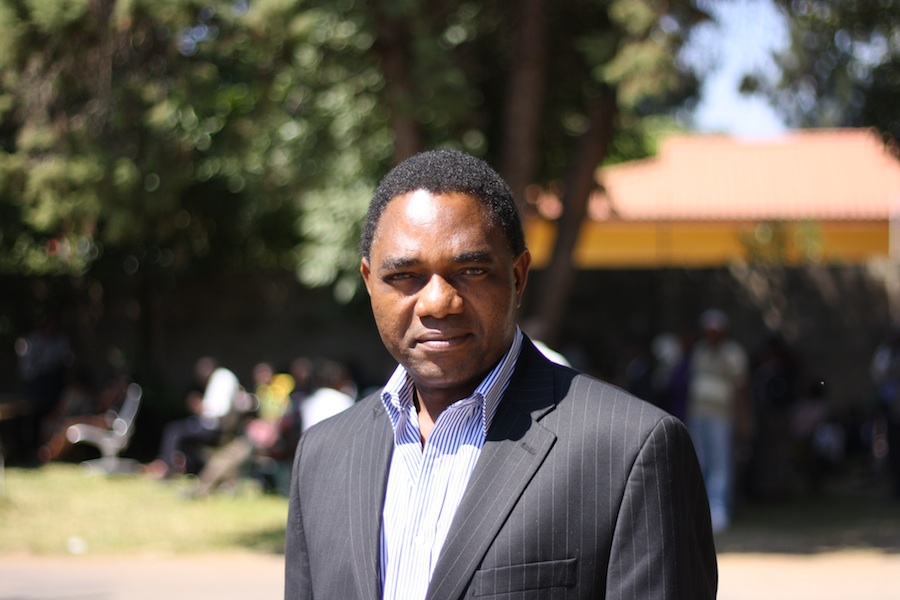
Hakainde Hichilema
LUSAKA
Human Rights Watch (HRW) said on Nov. 1 that Zambian police and soldiers forcibly disappeared, arbitrarily detained, beat and threatened opposition members, lawyers, journalists and critics around the August general election, and it called on President Hakainde Hichilema's government to end what it described as a widespread crackdown. Opposition leader Brian Mundubile, who is charged with treason, is due back in the Lusaka High Court on Thursday, Nov. 5, for a bail hearing.
The report lands on a government that will take a seat on the UN Human Rights Council for 2027 to 2029. The Zambia Monitor reported no official government response to HRW's latest statement.
The election and the court closures
Hichilema was re-elected in the Aug. 13 vote. HRW said observers cited irregularities, including a suspension of vote counting and limits on fundamental freedoms. The Zambia Monitor's account gives no vote totals or margins, and this report does not offer any.
From Aug. 24 to 28, HRW said, authorities suspended judicial services, blocked legal challenges to the presidential result, and closed and cordoned off courts. Police called this an "intelligence-led and preventive measure" but gave no details, according to HRW.
The Aug. 14 raid on Mundubile's home
The central episode in HRW's account is a raid on Aug. 14 on the Lusaka home of Mundubile, who leads the opposition Tonse Alliance. Opposition members say security forces killed former minister Mutotwe Kafwaya during the operation. Police Inspector General Graphel Musamba first said officers returned fire after "gunfire and resistance" and that Kafwaya was killed. Police initially denied the raid took place and denied that Mundubile was in custody, but Musamba later acknowledged a "joint security-led intelligence operation," HRW said.
The Zambia Information and Communications Technology Authority sent a text message warning of "false reports" of shootings, and the Ministry of Information described the reports as disinformation. Kafwaya's fate remained unknown until Aug. 19, after his wife filed a habeas corpus petition, HRW said. Mundubile's High Court petition says he saw a member of the military fatally shoot Kafwaya. HRW said authorities have not credibly explained or investigated the killing and called for an independent, impartial investigation.
Authorities said they arrested 11 men in the raid. Lawyers and relatives of seven of them said the men were beaten with fists, rifle butts and sticks by men in military uniform, blindfolded and driven away in military vehicles. Among those named by HRW were Bishop Trevor Mwamba, president of the United National Independence Party, and Patrick Mwansa, along with security aides. HRW said detainees were reportedly taken to a "military command center" and then held at Lusaka police stations whose officers initially denied holding them. All the men from the raid were charged with treason but had not appeared in court, HRW said.
HRW's tally
HRW reported the following from its documentation:
Separately, Zambia's Human Rights Commission said on Sept. 3 that it was following the cases of 84 election-related detainees. HRW said the government has not disclosed total arrests or charges, so it believes the true number of people detained is higher.
Allegations of abuse in custody
HRW described a pattern of mistreatment. It said 43 opposition election monitors detained on Aug. 14 were reportedly kicked, beaten and denied food during the first eight days of a 21-day detention, and that police initially denied holding them. Lawyers said most had swelling and serious injuries, including broken bones. A court later ruled their arrest unjustified and ordered their release on Sept. 10.
Eight monitors aged 21 to 26 were seized on Aug. 15 at a house in Lusaka's Emmasdale township by masked, armed soldiers, HRW said, beaten for three days and pressed to confess to belonging to "Brian Mundubile's militia." They were released without charge on Aug. 18.
Lawyers for the 18 treason detainees said their clients were abused and denied medical care, and that 10 had been restricted from seeing lawyers or family. A Sept. 11 petition by Ezra Topola, Dickson Tembo and Victor Muzyamba alleged waterboarding, suspension from a metal bar and beatings. Another detainee, Jackson Mutyoka, was found on Aug. 17 with a swollen face, coughing blood and limping, HRW said; he told lawyers masked military men beat him with rifle butts and whips, and as of the report's publication he had not seen a doctor. The Zambian authorities have not publicly answered these specific allegations in the material reviewed for this story, and the allegations are untested in court.
Lawyers, journalists and critics
HRW also documented intimidation beyond detentions. Seven people, including lawyers and a journalist, fled or went into hiding after receiving "wanted list" messages. A lawyer working on the Tonse Alliance's election petition went into hiding on Aug. 15 after security agents visited his home and office, and opposition figure Mulenga Kapwepwe also went into hiding that day. An investigative journalist crossed a border on Aug. 17 and was later sought for sedition by officers from the Office of the President. Seven international lawyers' associations said some lawyers involved in election challenges had fled Zambia over threats.
On Sept. 11, the government cancelled the passports of six critics, including academic Sishuwa Sishuwa, citing "security reasons," according to HRW. The group also said police detained two siblings of a diaspora critic and harassed their 76-year-old father to force the critic to remove content, including a video demanding an independent inquiry into Kafwaya's killing.
The treason case
Mundubile was arrested on Aug. 27. He and his running mate, Makebi Zulu, face treason and sedition charges over an Aug. 14 Facebook Live statement in which they claimed the opposition had won, HRW said. HRW says it believes the nonbailable treason charge and heavily penalized sedition law are being used to suppress dissent.
The Zambia Monitor and local outlets report that a three-judge panel of the Lusaka High Court, consisting of Judges Derrick Mulenga, Davies Chibwili and Ireen Wishimanga, is hearing a constitutional bail application from Mundubile, Zulu and 16 others, who are held at Mukobeko Maximum Security Correctional Facility. On Oct. 29, the court adjourned to Nov. 5 at 9 a.m. and, according to defense lawyer Milner Katolo, warned that "this is the last adjournment." Attorney General Mulilo Kabesha's office asked for more time, saying the defense's affidavit was "bulky." The defense argues that the National Prosecutions Authority's own manual recognizes constitutional bail when proceedings are delayed. Dates for the substantive petition will be set after the bail ruling.
The government's position
The Ministry of Foreign Affairs rejected a Sept. 2 call by the UN Special Rapporteur on freedom of assembly and association to release political detainees, HRW said. The ministry called the call inaccurate and undiplomatic, said opposition membership does not put anyone beyond the law, and said courts are open to test detention claims. The Law Association of Zambia raised concerns on Sept. 22 about prolonged detention without court appearances.
Analysis: a democratic reputation at stake
Zambia's 2021 transfer of power, when Hichilema defeated the incumbent, was widely cited as proof of democratic resilience in the region. Five years on, the allegations in HRW's report, if substantiated, describe the security apparatus acting against the opposition on a scale that is hard to square with that reputation. The government's defense, that no one is above the law and that courts are open, is not frivolous, but it sits uneasily with a 21-day detention of 43 monitors that a court ruled unjustified, and with the closure of courts during the very week when an election challenge could have been filed.
The judiciary is now the key institution. A bail ruling on Thursday will be read as a signal of the court's independence either way. Granting bail would ease pressure but would not resolve the treason charges, which carry far heavier consequences. Refusing it would harden the impression, already voiced by HRW, that criminal law is being used to remove an opposition leader from politics.
Regional and international actors also face a choice. HRW urged African leaders and development partners to press Hichilema to restore the rule of law. Zambia's incoming Human Rights Council seat gives that request additional weight, because membership carries an expectation of cooperation with UN mechanisms. The foreign ministry's dismissal of the UN rapporteur suggests the government is not yet inclined to engage.
What to watch
The Nov. 5 hearing is the immediate test. Beyond it, readers should watch whether authorities open any independent investigation into Kafwaya's death, whether the 18 treason defendants receive medical access, whether the passport cancellations are reversed or challenged, and whether the opposition's election petition ever receives a hearing. The dispute is also a test of how far external pressure can move the government.



