Written By |
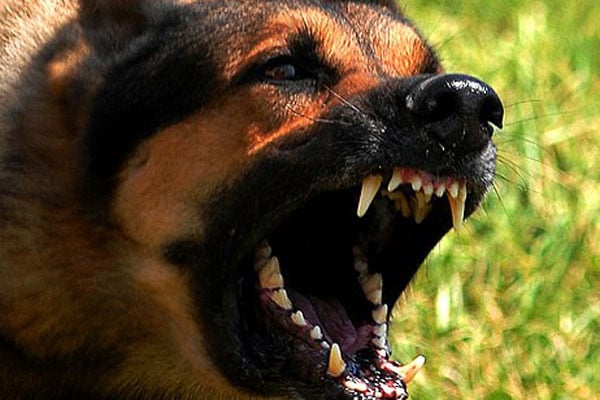
A tamed dog belonging to Doctor Andrew Ekwaro Obuku, the former president of the Uganda Doctor’s Association | Monday, March 18, 2024 - Wakiso
Police in Entebbe Police Division are investigating circumstances under which a family dog escaped from its kennel, mauled and killed baby boy, leaving the house maid with serious Injuries.
The heartbreaking incident occurred on Monday at Dr. Andrew Obuku’s home located in Canaan Estate Mawugulu cell katabi town council wakiso district, after the family dog mauled to death a-three-months-old baby boy, Raphael and injured the house maid, one Nuwarinda Sharon.
Police report that at around 10:00 a.m. on Monday, March 18, 2024, a tamed dog belonging to Doctor Andrew Ekwaro Obuku, the former president of the Uganda Doctor’s Association, escaped from its kennel.
It violently attacked and bite to death the baby when the parents had left him in the custody of the newly recruited house maid one Nuwarinda.
Nuwarinda narrated that the boy was placed on the veranda of the house as she was doing her house work while watching over the baby .
she saw the dog coming to attack the boy hence she rushed pick him up, the dog grabbed the boy, the maid tried to struggle with the dog but it over powered her and bite the boy’s head badly.
“ It also posed a bite on the maids thigh. The maid made a continuous alarm and when the dog killed the boy, it went back to its kennel. Later on the neighbours arrived at Dr.Obuku's home and the deceased was rushed to Kisubi hospital, Nuwarinda recalled.
Later on, both Entebbe and kisubi police went at the scene of crime to secure the situation, The Scene of Crime officer (SOCCO at Kisubi police examined the crime scene and took samples of parts of the deceased's body
“Police findings shows the dog have been hostile, and it one time tried to attack people from the neighborhood. The dog's house was not well-fixed which gave it a chance to sneak out.
The Doctors house is ever locked from the gate which make it hard for the neighbor’s to rescue the situation,” says the Police.
Further findings shows that dog badly bite the boys head hence it removed the internal organs of the head (brain) which is a rare behavior of dogs thus it might have been sick
The body was taken to Kisubi Hospital first and later to Mulago for postmoterm , whereas Nuwarinda was taken to Entebbe police station for safe custody.
This is not the only shocking case of dogs which are best friends and supposed to protect turn on their human companions.
According to Government statistics show that an average of 14,865 dog bites and 36 rabies deaths were registered annually in Uganda from 2015-2020.
Information obtained from World Health Organization, shows that there are no global estimates of dog bite incidence, however studies suggest that dog bites account for tens of millions of injuries annually. In the United States of America for example, approximately 4.5 million people are bitten by dogs every year. Low- and middle-income country data are more fragmented, however some studies reveal that dogs account for 76–94% of animal bite injuries.
Dog bite fatality rates are higher in low- and middle-income countries than in high-income countries because dog-mediated rabies viral infection, and there may be a lack of post-exposure treatment and appropriate access to health care.
An estimated 59 000 people die annually from rabies, and bites from rabid dogs account for majority of these deaths. While rabies is vaccine preventable and post-exposure prophylaxis can be administered soon after exposure to save lives, once signs of rabies appear, there is no treatment and the consequences are fatal.
Who is most at risk?
Children are the largest percentage of people bitten by dogs, with the majority in their mid-to-late childhood. The risk of injury to the head and neck is greater in children than in adults, adding to increased severity, necessity for medical treatment and death rates.
In some countries, males have a higher frequency of dog bites than females. Dog bites account for over 50% of animal-related injuries in travellers. Provoked bites are often due to attempts to feed or handle animals, whereas unprovoked bites often are associated with infectious stages of rabies.
Treatment
Treatment depends on the location of the bite, the overall health condition of the bitten person and whether the dog is vaccinated against rabies. It is recommended to confine the dog and observe daily for 10 days under the supervision of a veterinarian, and in coordination with local public health authorities. The main principles of care include:
Prevention of dog bites and their serious health consequences
Communities – especially children – should be educated about the risks of dog bites and prevention including avoiding stray dogs and never leaving a child unattended around any dog.
Health-care providers should be educated on the appropriate management of dog bites. Health authorities and policymakers should ensure rabies control within dog populations, ensure appropriate supplies of rabies vaccines and post exposure treatments for potential rabies exposure in people.



