KHARTOUM/EL-OBEID
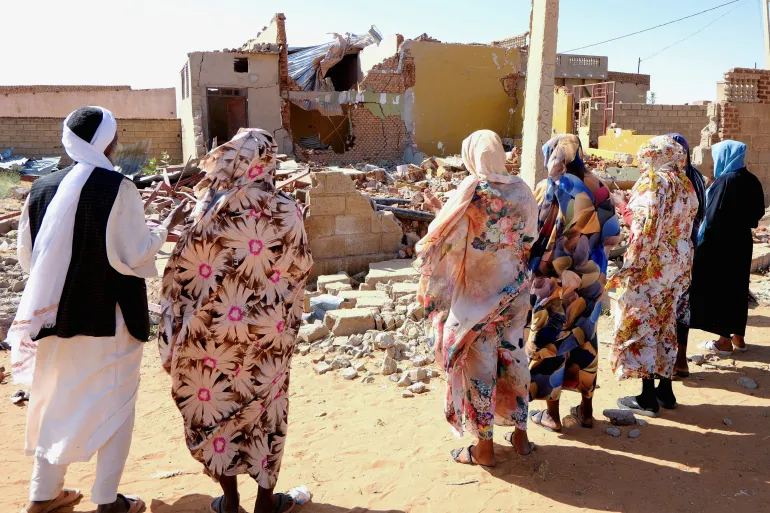
More than three years into Sudan's civil war, the besieged city of El-Obeid has become the clearest marker yet of how far the conflict has drifted from any negotiated end. Rapid Support Forces (RSF) units have ringed North Kordofan's capital for months, cutting power to the city, striking its main market and fuel depots with drones, and massing reinforcements for an assault that United Nations officials warn could replicate the mass killings the paramilitary group carried out after capturing El Fasher last October. An estimated 563,000 civilians remain inside El-Obeid, according to figures cited by the European Parliament, alongside 105,000 people already displaced within the city and roughly 700,000 more living within a 30-kilometer radius of its center. The stakes of the siege, and of the stalled political process meant to end the broader war, are now drawing sustained attention from the U.N. Security Council, the European Parliament and Washington — even as the fighting itself grinds toward what Sudanese army commanders describe as a decisive offensive.
The war pits the Sudanese Armed Forces (SAF), which recaptured the capital, Khartoum, in March 2025, against the RSF, which responded by consolidating control over Darfur and, since October, large parts of Kordofan. The RSF's capture of El Fasher on Oct. 26, 2025, was followed by atrocities that human rights investigators and the U.N. Human Rights Commission say killed thousands of civilians over a matter of days near El Fasher and Ed Damazin. El-Obeid, roughly 400 kilometers southwest of Khartoum, is now the next flashpoint: it sits astride the road connecting the capital to Darfur and Kordofan, making it strategically indispensable to whichever side controls it.
A City Under Siege
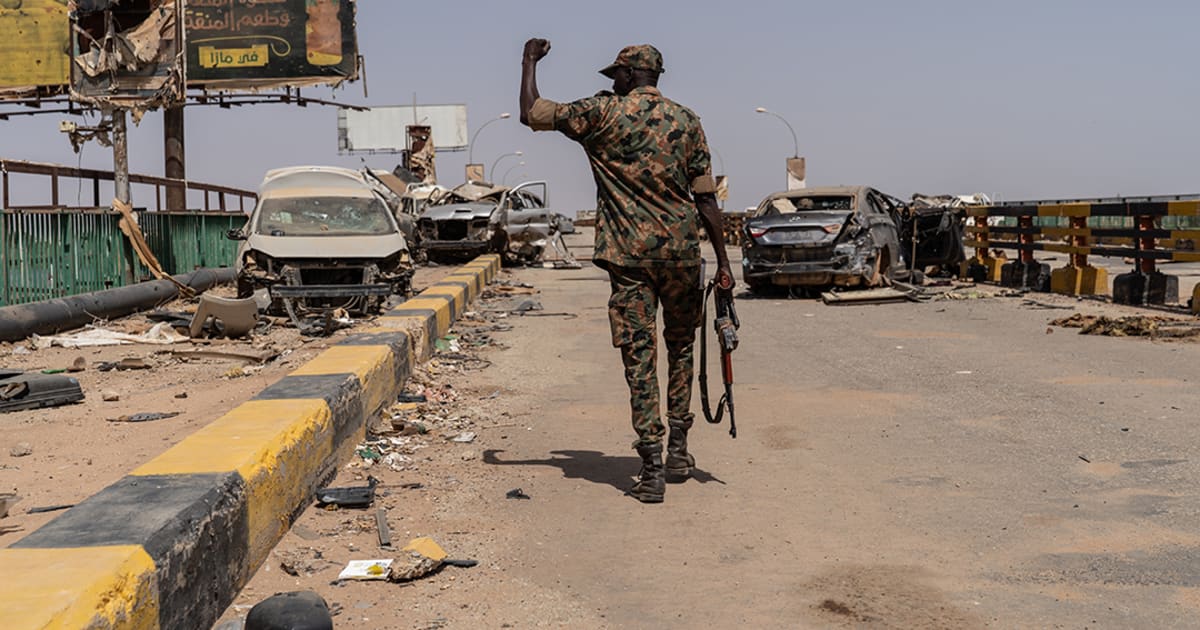
Al Jazeera and U.N. reporting describe a city plunged into darkness after RSF drone strikes destroyed its power station, with residents facing skyrocketing food prices, intermittent shelling and near-total isolation from humanitarian supply lines. The Sudanese army says it has since broken through parts of the siege, announcing in late July that it had recaptured a stretch of the highway linking Khartoum to El-Obeid. Sudan Tribune reported Aug. 4 that army-allied forces killed an RSF field commander, identified as Mahdi Jebel Moon, in clashes in Darfur, while the army said over the past week it had seized Bara, Jabrat al-Sheikh and Um Sayyala — towns along the export corridor connecting Omdurman to North Kordofan. Sudan's army chief of staff, Yasir al-Atta, has said the military intends to retake RSF-held areas of Kordofan and Darfur before the end of the year.
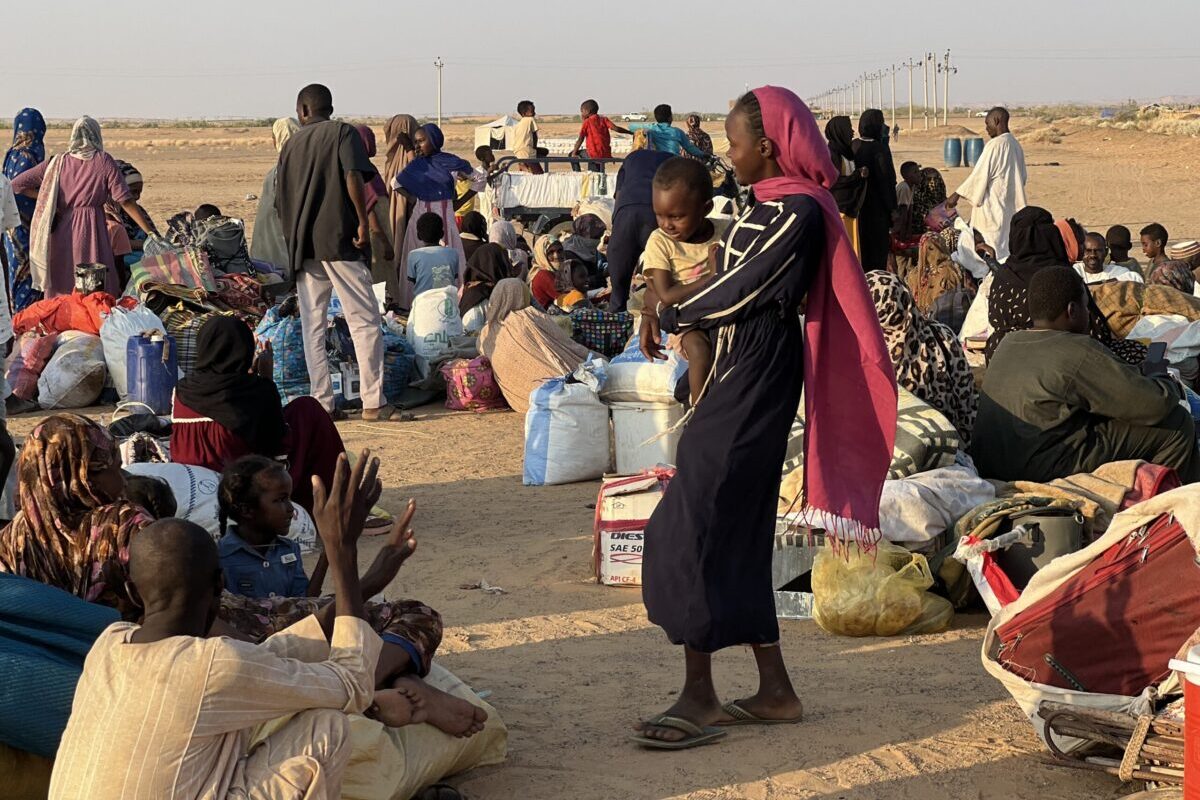
The human toll of the broader war, meanwhile, continues to defy precise measurement. The United Nations has recorded more than 20,000 deaths since fighting began on April 15, 2023, though the International Rescue Committee estimates the true toll may exceed 150,000. More than 14.5 million Sudanese have been forced from their homes — the world's largest displacement crisis — with 11 million displaced internally and 3.5 million having fled to Chad, Egypt, South Sudan, Ethiopia, the Central African Republic and beyond. The International Committee of the Red Cross says at least 11,000 people have gone missing since the war began. According to the 2026 Humanitarian Needs and Response Plan, 61.7% of Sudan's population — 28.9 million people — face acute food insecurity, and the U.N.'s $2.9 billion appeal for this year is only 16% funded. U.N. High Commissioner for Human Rights Volker Türk told the Human Rights Council in February that more than 500 cases of sexual violence, including rape and sexual torture, were recorded in Sudan during 2025 alone.
International Pressure Mounts, Without Consequence Yet
The European Parliament escalated its response on July 9, adopting a resolution — approved 476 votes to 28, with 96 abstentions — calling on the European Union to designate the RSF a terrorist organization and to sanction individuals and companies tied to attacks on civilians, including the Abu Dhabi-based Global Security Services Group, which Human Rights Watch has accused of recruiting Colombian mercenaries to fight alongside the RSF since 2024. The EU already sanctions 18 individuals, including RSF deputy commander Abdelrahim Dagalo, and eight entities, with asset freezes and travel bans. Lawmakers also renewed calls for the International Criminal Court to expand its jurisdiction across Sudan and urged member states to halt any support — direct or indirect — for the RSF, an implicit reference to reports that the United Arab Emirates has funneled weapons and mercenaries to the group through neighboring states. Sudan formally accused the UAE of this in documents submitted to the U.N. in September 2025. In Washington, a group of U.S. senators has separately urged Secretary of State Marco Rubio to halt arms sales to the UAE over its alleged role in the war, according to Sudan Tribune.
Despite the growing paper trail of international condemnation, none of it has translated into a ceasefire or meaningfully constrained the fighting. Sudan's own African Union membership remains suspended, and most governments continue to refuse recognition to either side's claim of authority.
A Political Process Splintering Before It Starts
Underlying the military stalemate is an equally fractured political track. In June, the RSF-aligned "Tasees" (Sudan Founding Alliance) announced in Nyala, the South Darfur capital, the formation of a rival presidential council headed by RSF commander Mohamed Hamdan Dagalo — widely known as Hemedti — with Mohamed al-Taayshi named as prime minister of a parallel transitional government. That structure, unrecognized internationally, now administers large areas of Darfur and western Sudan in direct competition with the army-backed government based in Port Sudan.
Efforts to bridge the divide through the "Quintet Mechanism" — a body combining the African Union, United Nations, European Union, Arab League and the regional bloc IGAD — have themselves become a point of contention. Babiker Faisal, head of the executive bureau of the Unionist Alliance and a leading figure in the civilian "Somoud" coalition, said Aug. 5 that the mechanism had abandoned an agreement reached June 5 among Somoud, the Democratic Block, the Baath Party, the Popular Congress Party, the Umma Party and civil society groups to form a preparatory committee for a Sudanese-led political dialogue. Faisal accused the Quintet of instead convening consultations in Addis Ababa this month that included "coalitions with no presence on the political scene" aligned with the army, a move he said "strip[ped] the mechanism of required neutrality" and positioned it to favor military leadership. The Somoud and Tasees coalitions boycotted the Addis Ababa talks in protest.
Faisal went further, alleging that the army's approach — pairing a stalling political process with a battlefield push to reclaim Kordofan and Darfur — is designed to reduce the RSF to "a limited rebellion in remote areas," which would in turn let the army-backed government reframe the war for international audiences, restore Sudan's suspended AU seat and secure recognition without ceding meaningful power. He called for civilian forces to unify against what he described as a "fake, incomplete political process."
Why It Matters Now
El-Obeid's fate carries implications well beyond North Kordofan. If the RSF encircles and storms the city as it did El Fasher, the U.N. and rights investigators have warned it risks becoming, in the words of one U.N. briefing to the Security Council, "the next crime scene" — a repeat of ethnically charged mass killings that have already drawn genocide accusations against the RSF in Darfur. A successful defense or army breakthrough, by contrast, would hand Sudan's military-backed government a significant strategic and political win, reinforcing its narrative that the war is winding down in its favor just as the fragile Quintet-led dialogue threatens to collapse entirely.
The dispute over the political process also underscores a structural problem that has bedeviled international mediation efforts since the war began: neither the SAF-backed government in Port Sudan nor the RSF-aligned authorities in Nyala have an incentive to negotiate seriously while each still believes it can win, or at least consolidate, more territory first. The September 2025 Quad statement — issued by the United States, Saudi Arabia, the UAE and Egypt — explicitly called for keeping warring parties out of control of the political process, a principle now being tested by the very mechanism meant to enforce it.
What to Watch
Diplomats and analysts will be watching three things in the coming weeks: whether the Sudanese army follows through on al-Atta's stated goal of retaking Kordofan and Darfur before year's end; whether the RSF proceeds with an assault on El-Obeid despite the international attention now focused on the city; and whether the Quintet Mechanism can salvage a genuinely inclusive preparatory process or whether, as Faisal and the Somoud coalition allege, it becomes a vehicle for legitimizing military rule. The Security Council held closed consultations on Sudan this month, but has yet to authorize the kind of humanitarian corridor or civilian-protection mechanism that aid groups say is now urgently needed to prevent El-Obeid's roughly 563,000 remaining residents from facing the same fate as El Fasher.
Published By | News Editor