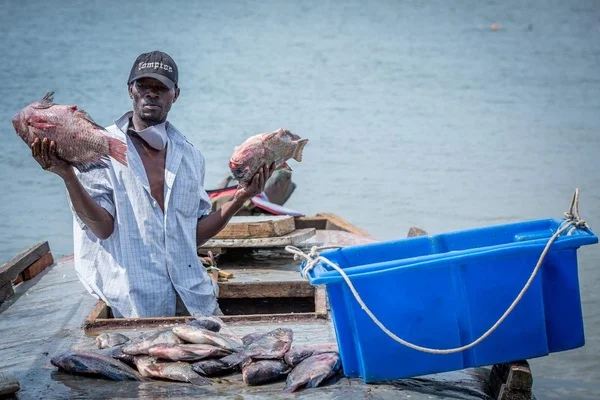
Uganda has rolled out a sweeping new set of fisheries and aquaculture regulations aimed at reversing decades of decline on Lake Victoria, the River Nile and the country's other water bodies, giving every fisher, boat owner and fish farmer in the country until September 15 to register and obtain a species-specific licence or risk enforcement action once the deadline passes.
The regulations, unveiled this week under the Fisheries and Aquaculture Act, 2023, mark the government's most detailed attempt yet to modernise management of a sector that supports more than a million livelihoods and remains one of Uganda's significant, if increasingly troubled, sources of export revenue.
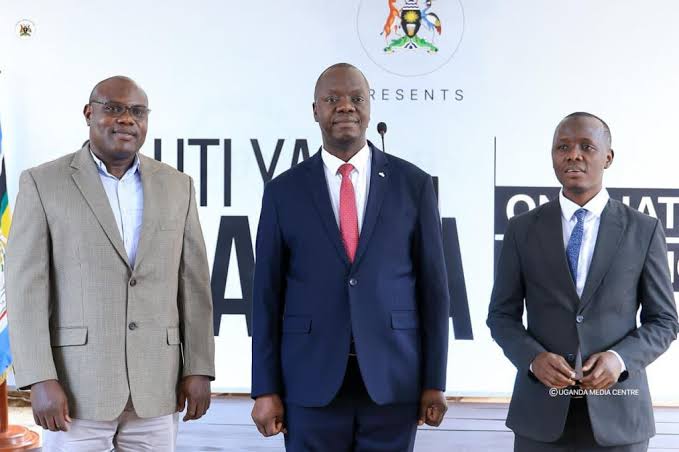
Announcing the framework at the Uganda Media Centre, State Minister for Fisheries Robert Migadde Ndugwa said the new rules introduce stricter licensing requirements, standardised fishing gear, protected breeding areas and closed fishing seasons, alongside clearer guidelines for the country's fast-growing aquaculture industry.
"All fishers are reminded to apply for species-specific licenses before 15 September 2026," Migadde said, warning that enforcement against illegal fishing capacity would begin once the deadline lapses.
A lake that has lost two-thirds of its fish
The urgency behind the reform is rooted in one of the starkest resource-decline stories in East African agriculture. Lake Victoria's total fish stock has fallen by roughly 65 percent from its peak, dropping from about a million tonnes in the early 2000s to an estimated 350,000 tonnes. The Nile perch population — the backbone of Uganda's commercial fish export trade — halved between 2002 and 2008 alone, as fishers first stripped out the large breeding fish and then, as those grew scarce, turned to harvesting immature juveniles before they could reproduce.
The consequences have shown up directly in Uganda's export earnings. Fish and fish products were once the country's second-highest-earning agricultural export after coffee, contributing around six percent of total export revenue. By 2023, Nile perch had slipped to eighth place among Uganda's export commodities by value, overtaken by coffee, cocoa and wheat. A 2023 Auditor General's report found that a quarter of all fishing gear in use on Lake Victoria was illegal — undersized nets and prohibited equipment capable of catching fish before they mature — while smuggling networks have been documented drying illegally small Nile perch for sale into conflict-affected markets in the Democratic Republic of Congo, where local fish stocks have been depleted by years of instability.
Government has not stood by idly. President Yoweri Museveni deployed the Uganda People's Defence Forces onto the lake in earlier years after complaints from stakeholders about the pace of decline, following the disbandment of Beach Management Units implicated in extortion and collusion with illegal traders. Yet illegal fishing has persisted despite the military presence, and just last week enforcement teams from UPDF's 155th Battalion raided landing sites on Buvuma's Kabaganja Island as part of a separate crackdown on the banned "hurry-up" method of harvesting mukene (silverfish), underscoring how entrenched illegal practices remain even under active surveillance.
What is new this time
Where previous crackdowns leaned heavily on military enforcement of existing rules, the 2026 regulations attempt something more structural: a full licensing and management regime built on the legal foundation of the Fisheries and Aquaculture Act, 2023, which itself replaced fragmented, decades-old fisheries legislation.
Species-specific licensing is central to the new approach. Rather than a single generic fishing permit, fishers will need authorisation tied to the particular species they target — a mechanism regulators say will make it far easier to track harvesting pressure on vulnerable stocks like Nile perch and tilapia, and to close in on operators exploiting species nearing depletion. The regulations also formalise protected breeding areas and closed seasons, giving fish populations dedicated windows to spawn and recover, and set standardised gear specifications intended to eliminate the undersized nets blamed for stripping juvenile fish from the lake before they can reproduce.
Enforcement will run through a strengthened Monitoring, Control and Surveillance Unit, which the ministry says will coordinate with national and local authorities, as well as private-sector players and civil society groups, to police compliance once the licensing window closes. The reforms also introduce clearer rules for aquaculture — fish farming in ponds, cages and tanks — an industry the ministry is positioning as a release valve for pressure on wild stocks even as it grows in its own right.

The economics for fishing communities
For the estimated one million Ugandans whose livelihoods are tied to fisheries — as boat owners, crew, processors, traders and support workers around landing sites on Lake Victoria, Lake Albert, Lake Kyoga and the River Nile — the new licensing regime cuts two ways.
On one hand, rebuilding depleted stocks is existential for an industry that has already watched its export ranking slide for two decades. A recovered, sustainably managed Nile perch fishery would mean larger, more valuable catches over the long run, and a stronger claim on the premium European and regional markets that pay well for quality, legally sourced fish. Uganda's fisheries sector also has room to grow beyond its traditional base: a nascent sport-fishing industry built around Nile perch has begun attracting recreational anglers, adding a tourism dimension to the resource that depends entirely on healthy fish populations.
On the other hand, the compressed six-week window between the regulations' announcement and the September 15 licensing deadline raises real questions about how many small-scale, often informal fishers will manage to register in time — particularly in remote landing sites with limited access to district fisheries offices, documentation, or the cash needed to pay licensing fees. Uganda's cattle-corridor and cross-border enforcement campaigns in other sectors, from foot-and-mouth disease quarantines to seed certification drives, have repeatedly shown that compliance timelines set in Kampala often move faster than awareness reaches the last mile — a gap the ministry will need to close if the September 15 deadline is not simply to criminalise fishers who never learned the rules had changed, rather than the illegal operators the reform is designed to target.
Balancing enforcement with livelihoods
Migadde was explicit that implementation cannot rest with government alone, calling on fishers, local governments, civil society organisations and private-sector players to actively support the rollout rather than simply comply with it after the fact. "Uganda is blessed with vast freshwater resources that support a rich diversity of fish species and a growing aquaculture sector," he said, framing the reforms as an attempt to secure that resource "for generations to come."
Whether the new framework succeeds where earlier enforcement pushes have fallen short will likely depend on execution details still taking shape: how aggressively the Monitoring, Control and Surveillance Unit pursues large-scale illegal operators versus small subsistence fishers, how affordable and accessible the new licences prove to be for low-income fishing households, and whether closed seasons and protected breeding areas are enforced consistently enough to let fish populations actually recover.
For now, the message from the ministry is unambiguous: after September 15, operating without a species-specific licence will no longer be a grey area. For a sector that has spent two decades watching its most valuable stocks disappear, that clarity — if it holds — may be the first real test of whether Uganda's fisheries can be rebuilt rather than simply policed.
Published By | Features Editor