304 cases, 11 dead and seven districts hit. Eight of the victims died at home, never reaching a clinic. Now health chiefs are begging the public: at the first sign of watery diarrhoea, get help fast.
In July, Zambia's health chiefs stood before the cameras and announced what the nation had been waiting a year to hear: cholera was gone. The outbreak was over. The country could breathe again.
Less than a month later, the bug was back.
On Wednesday 30 September, Acting Minister of Health Dr Gilbert Siame went before the nation to make the announcement nobody wanted. Zambia, he said, was officially in the grip of a new cholera outbreak, with 304 suspected cases and 11 deaths recorded across seven districts in five provinces.
The most chilling detail? Eight of those 11 people died in their own communities. They never made it to a hospital bed, a drip or a packet of rehydration salts, the simple treatments that could almost certainly have saved them.
How it started: one patient, one journey, one lab result
According to the minister, the first case of the new outbreak was confirmed on 13 August 2026. Laboratory tests found Vibrio cholerae, the bacterium behind the disease, in a patient who had travelled from Chibombo District in Central Province and was admitted to Apollo Mini Hospital in Lusaka.
From there, the infection quietly spread. By 29 September, health officials had logged 304 suspected cases. Of those, 62 had been confirmed in the laboratory. Some 230 patients had been treated and sent home, and 35 were still receiving care when the minister spoke.
"Sadly, 11 people have died, of which eight died in the community and three in health facilities," Dr Siame said.
Standing at the podium, he invoked the legal powers granted to the health minister to formally declare the outbreak, a step that unlocks the full machinery of an emergency response: contact tracing, disinfection teams, water testing and house-to-house visits.
The hotspots: where cholera is striking
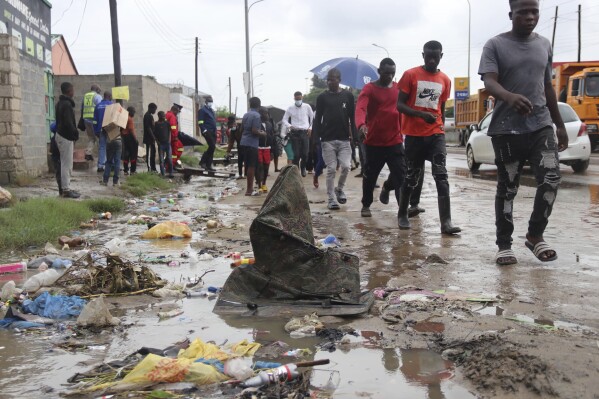
The outbreak is not confined to one corner of the country. The ministry's figures show cases scattered from the capital to the far north.
Lusaka District is the epicentre, with 130 cases, 39 of them laboratory-confirmed, and four deaths. Ninety-four people there have recovered and 32 remained under treatment.
Chibombo, the district where the first patient had travelled from, is close behind with 109 cases, including 11 confirmed infections and four deaths, all of them in the community. Officials say most of Chibombo's infections have been recorded in the area served by the Mwanjuni health facility, around the busy 10 Miles area on the road north of the capital.
Chongwe, east of Lusaka, has logged 23 cases and two deaths. Chilanga has recorded six cases, all of whom have now been discharged.
Further afield, Chiengi in Luapula Province on the border with the Democratic Republic of the Congo has recorded eight cases and one community death. Nsama in Northern Province has 13 cases, and Chikankata in Southern Province has two.
That geographic spread matters. Cholera thrives where people move, and Zambia's highways, markets and border crossings carry people and goods hundreds of kilometres every day.
"Many patients are seeking help too late"
The figure that has most alarmed health officials is not the total number of cases. It is the location of the deaths.
Dr Siame said the eight community deaths showed that many patients were seeking medical attention too late. He pointed out that among patients who did reach a health facility, the case fatality rate stood at just 0.98 per cent.
In plain English: if you get to a clinic, you will almost certainly survive. If you stay at home, cholera can kill you.
"Cholera is both preventable and treatable," the minister said. "Our greatest opportunity to save lives lies in early detection, prompt treatment, access to safe water and sanitation, and strong community participation."
He urged the public to drink only safe water, to wash their hands regularly with soap and clean water, and to seek immediate medical attention at the first signs of the disease, which include acute watery diarrhoea and vomiting.
He also issued a plea that goes to the heart of how outbreaks spread in silence. He asked families not to stigmatise people who fall ill, and called on traditional leaders, church leaders, civil society groups and the media to help spread the word. Fear of being shunned, health workers say, is one of the reasons sick people hide at home instead of seeking help.
Déjà vu: the outbreak that was supposed to be over
For Zambians, this has a painfully familiar ring.
On 16 July 2026, the Ministry of Health officially declared the end of the previous cholera outbreak, which had begun in August 2025. The country had gone more than four weeks without a confirmed case. Ministry of Health Permanent Secretary for Technical Services Dr Kennedy Lishimpi told reporters at the time that Zambia had recorded 1,627 cases and 26 deaths across 25 districts during that outbreak.
Dr Lishimpi warned then that "cholera risk still remains" and urged citizens to protect the hard-won gains through handwashing, clean surroundings and prompt treatment.
His warning proved prophetic. The first case of the new outbreak was confirmed just 28 days after that all-clear.
And Zambians have not forgotten the nightmare of two years ago. During the devastating 2023 to 2024 epidemic, one of the worst health crises in the country's recent history, cases soared past 19,000 and the death toll climbed to 685 by late February 2024. The situation became so desperate that the 60,000-seat National Heroes Stadium in Lusaka was converted into a 1,000-bed cholera treatment centre.
Today's outbreak is far smaller. But the lesson of 2024 is that cholera can go from a few hundred cases to many thousands in a matter of weeks if it takes hold in crowded neighbourhoods with poor water and sanitation.
The race against the rainy season
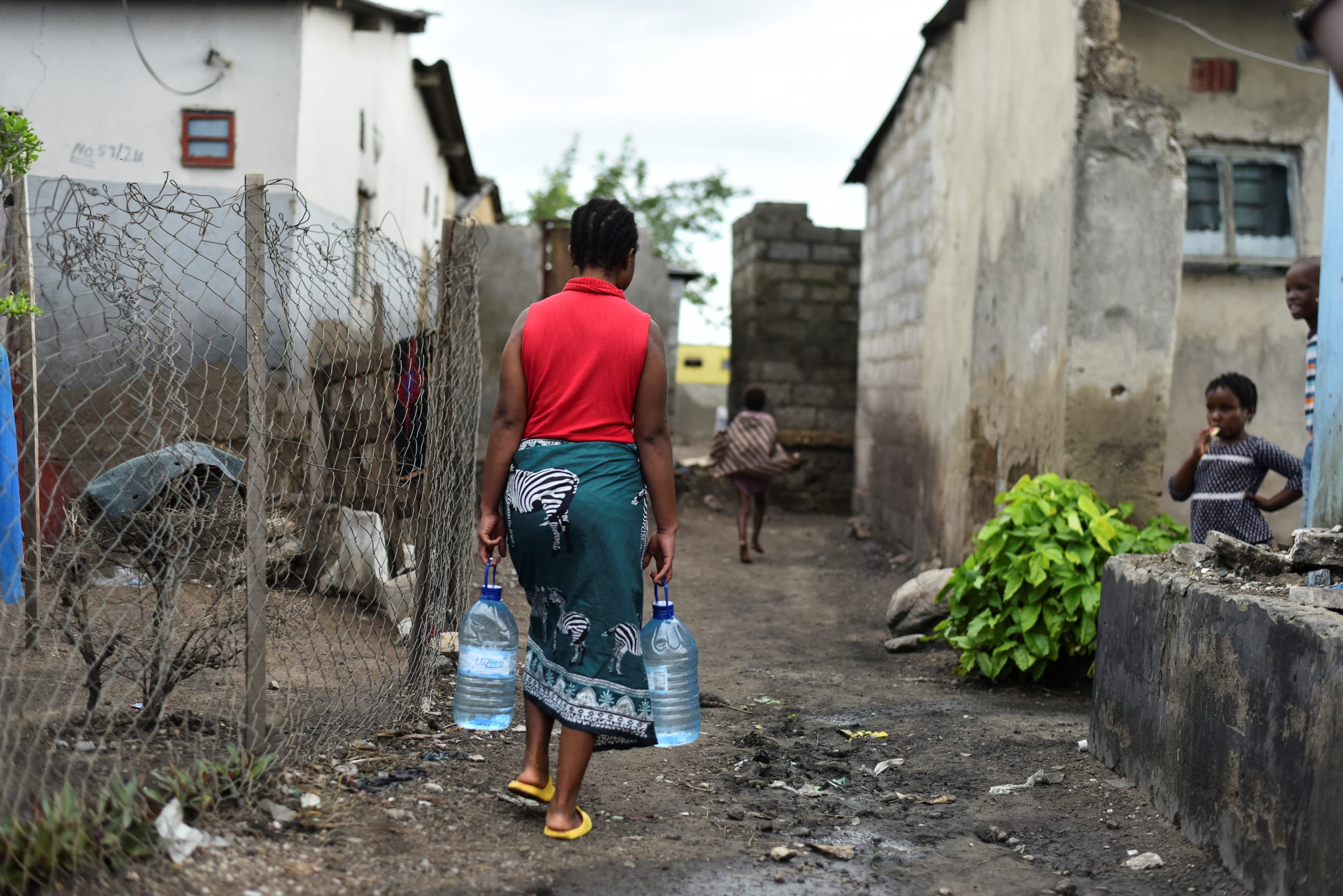
The timing of this outbreak is a worry. Zambia's rains usually begin in November. In past years, heavy downpours have flooded pit latrines, contaminated shallow wells and washed sewage into the water that families drink, conditions in which cholera spreads explosively.
That gives health teams a narrow window of weeks to stamp out transmission before the rains arrive. Officials say response teams are carrying out investigations, household visits, water testing and health education campaigns in the affected areas, and Dr Siame appealed to communities to cooperate with them.
The government has made bold promises on cholera. In July, Dr Lishimpi credited President Hakainde Hichilema with championing investment in water, sanitation and hygiene, pushing to establish local cholera vaccine manufacturing, and mobilising African leaders to set up presidential cholera task forces across the continent. Zambia has set itself the goal of eliminating cholera by 2030.
The new outbreak is a reminder of how hard that target will be to hit.
A global killer on the march
Zambia is not alone. The World Health Organization's figures show that between 1 January and 26 August 2026, 212,857 cholera cases and 1,943 deaths were reported worldwide. Africa is one of the hardest-hit regions, along with the Eastern Mediterranean.
There is one piece of good news. After global stocks of oral cholera vaccine ran dry in late 2024, supply has recovered. According to WHO, annual global supply roughly doubled from 35 million doses in 2022 to nearly 70 million in 2025, allowing preventive vaccination campaigns to restart earlier this year. Whether Zambia will request doses for this outbreak has not yet been announced.

Expert perspective: why cholera kills, and how simple it is to stop
Cholera is caused by swallowing food or water contaminated with Vibrio cholerae bacteria, usually from human faeces. The bacteria release a toxin in the gut that causes the body to pour out enormous amounts of fluid.
The World Health Organization warns that cholera can kill within hours if left untreated, because victims become severely dehydrated. Yet WHO also says the great majority of patients, up to 80 per cent, can be treated successfully with oral rehydration solution alone: a simple mixture of clean water, sugar and salts. Severe cases need intravenous fluids and sometimes antibiotics.
That is exactly why Zambia's health chiefs are so worried about the eight people who died at home. Cholera deaths are, in most cases, deaths of delay. The cure is cheap, and it works. The problem is getting it to people in time.
The 0.98 per cent fatality rate in health facilities that Dr Siame quoted is in line with WHO's target of keeping cholera deaths below 1 per cent with proper care. The deaths outside the health system are what push the overall toll higher.
What this means for you
If you live in Zambia, or in a neighbouring country, here is what health officials want you to know:
- Drink only safe water. Boil it, treat it with chlorine, or use water from a trusted, treated source. If in doubt, boil it.
- Wash your hands with soap and clean water after using the toilet, after changing a nappy, and before preparing or eating food.
- Eat food that is freshly cooked and served hot. Peel fruit yourself and avoid raw foods washed in water you cannot trust.
- Know the warning signs: sudden, profuse watery diarrhoea (sometimes described as looking like rice water) and vomiting. Leg cramps and extreme thirst are signs of dangerous dehydration.
- Act immediately. Start drinking oral rehydration solution straight away and go to the nearest health facility. Do not wait to see if it passes.
- Do not shun the sick. People who fear stigma hide their illness, and hidden illness spreads.
- Travellers should follow the same food and water precautions, and speak to a travel health clinic before visiting affected areas.
The bottom line
Zambia has beaten cholera before, and it can do it again. The country's health workers have hard-won experience, and the numbers so far are a fraction of the 2024 disaster.
But the return of the disease just weeks after it was declared defeated is a stark warning. Cholera is a disease of dirty water, crowded living and delayed care, and it does not respect press conferences or deadlines.
For now, the message from Lusaka could not be simpler. Clean water. Soap. And if the diarrhoea starts, do not stay at home.
Eleven families have already learned the cost of waiting.
Published By | Features Editor