Written By | International News Agencies
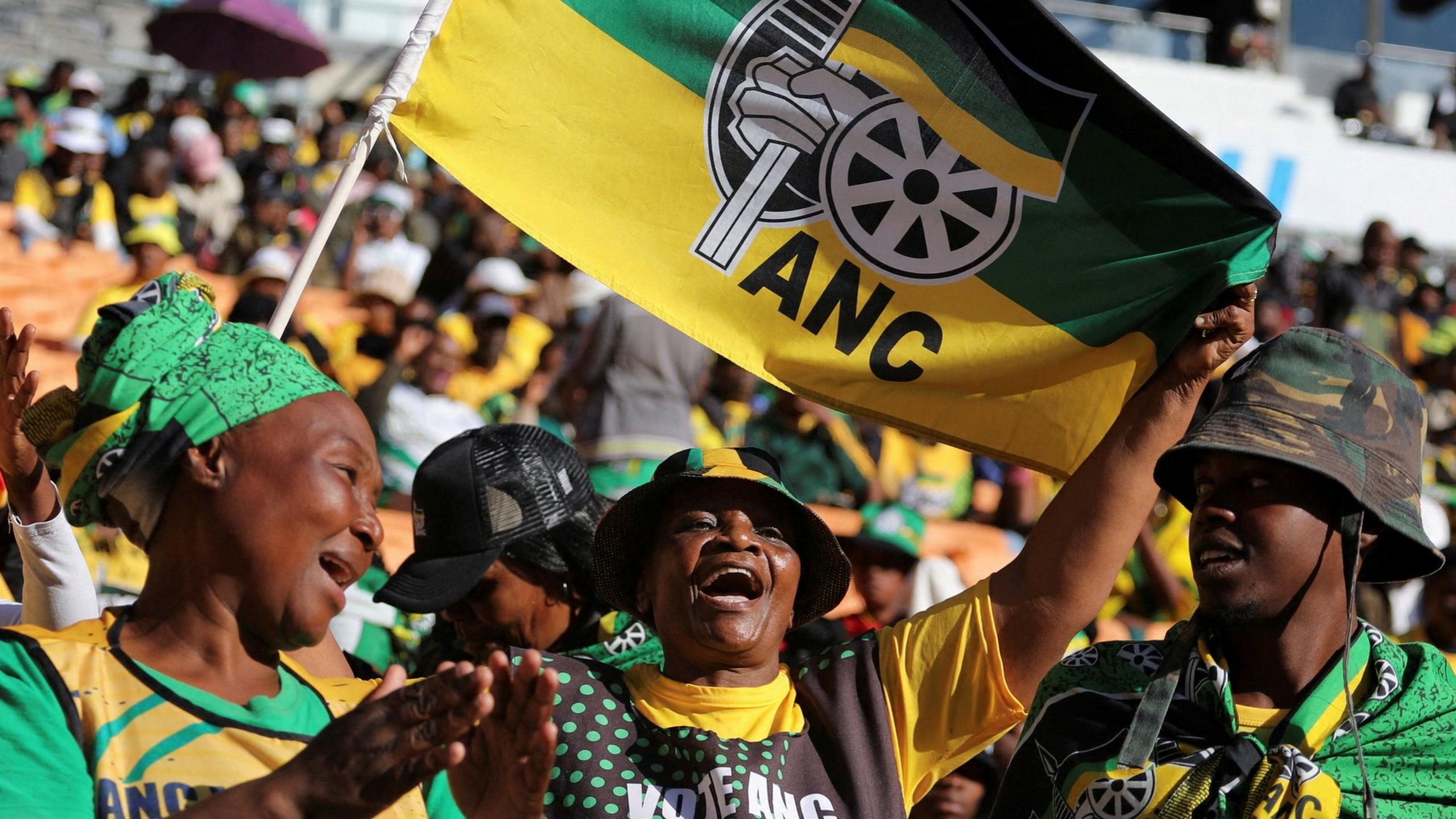
South Africans go to the polls on Nov. 4.
JOHANNESBURG
A Constitutional Court ruling that put 181 African National Congress candidates back on the ballot has done more than rescue the governing party from a self-inflicted paperwork failure. Two weeks before South Africa's Nov. 4 local government elections, it has opened a rift in the Government of National Unity (GNU), forced the Electoral Commission to rewrite its rules for dozens of other parties, and handed an anti-immigrant protest movement fresh ammunition.
The Lede: A Button, a Ruling and a Coalition Threat
On Thursday, Oct. 15, the Constitutional Court upheld, by majority, the ANC's appeal against an Electoral Court decision that had excluded its candidates in six municipalities, Daily Maverick reported. The court ordered the Electoral Commission of South Africa (IEC) to take the steps needed to place the candidates and their lists on the ballot. It has not yet published its reasons.
Within hours, ANC Secretary-General Fikile Mbalula turned on the Democratic Alliance (DA), the ANC's main partner in the GNU, which had opposed the appeal as a respondent. "We must review the DA in the GNU," Briefly News quoted him as saying. On Sunday, President Cyril Ramaphosa, who leads both the ANC and the government, publicly rejected the idea.
Background: What Went Wrong
The dispute concerns the candidate nomination process for the municipal elections. According to Daily Maverick, the ANC had completed its nomination forms, uploaded its documents and paid its deposits before the deadline in the six municipalities concerned, but did not click "Submit as Final" on the IEC's online system. The ANC argued that this button is a feature of the IEC's software rather than a requirement of electoral law. The IEC said it was necessary to confirm that candidate lists were final.
The result was that 181 candidates, made up of 51 ward candidates and 130 proportional representation candidates, were left off the ballot, according to Channel Africa. The affected municipalities are Sundays River Valley, Walter Sisulu, Ngquza Hill and Port St Johns in the Eastern Cape; uMshwathi in KwaZulu-Natal; and Mangaung, the metropolitan municipality that includes Bloemfontein, in the Free State, per the Mail & Guardian.
At the hearing, ANC counsel Daniel Berger said the party was not seeking special treatment or extra time, Daily Maverick reported. DA counsel Michael Bishop argued that if the ANC's position were accepted, the same principle would have to apply to all parties in the same position. The justices' questions were pointed in both directions. Justice Rammaka Mathopo asked: "Why is my right now diluted by the software button?" Justice Kate Savage asked why the ANC had not completed a process it knew about and had used elsewhere since 2016, calling the omission "quite extraordinary" and suggesting that the only explanation appeared to be gross negligence.
Key Developments: The Ruling's Ripple Effects
The ruling's immediate consequence was administrative. The IEC said it would apply the same treatment to similarly placed parties. According to Channel Africa, the Commission has allowed 32 other parties that had nominated compliant candidates and paid deposits, but had not submitted final lists, to complete their submissions. Together they intended to contest 121 municipalities, and applying the ruling to them affects ballots in 107 municipalities. A further 13 parties were excluded after checks found they had not met nomination requirements, such as paying deposits or having candidates registered on the voters' roll in the relevant municipality.
The IEC said extending the remedy was a matter of equal treatment. "It would be irrational and offensive to the principle of parity of treatment to exclude parties similarly situated to the ANC," the Commission argued, according to Channel Africa. The Commission also faces a printing deadline. It must produce 33 million ballots, of which about 27 million have been printed and about 6.6 million remain outstanding, including those for the six municipalities in the ANC case. IEC Chairperson Mosotho Moepya said he does not expect the extra work to move the Nov. 4 election date but acknowledged that "logistical preparations had been significantly disrupted and would have to be completed within a shorter period."
The DA's reaction was measured on the legal question and sharper on the political one. DA Federal Council Chairperson Ashor Sarupen said the party respects the ruling but is concerned about its implications for IEC deadlines, noting that courts had previously required strict compliance with electoral deadlines. He added that the ANC's support is at record lows and that the DA is focused on winning towns and cities, according to Daily Maverick.
The GNU Threat
Mbalula's response, delivered at Constitution Hill after becoming visibly emotional, was the most consequential part of the day. He said the ANC was not bound to the DA indefinitely and questioned whether the parties still shared the principles in the GNU's statement of intent, under which a party working against the arrangement means others should look for other partners, Daily Maverick reported. He framed the review as a matter of principle, not blackmail, and the article does not say what concrete steps the ANC might take.
DA leader Helen Zille hit back in an eNCA interview on Oct. 15. She said Mbalula was implying that the DA would be blamed for damaging the economy: "we'll throw the economy to the dogs because the DA stands up for what is right." She added: "We're not captured by them. We have our positions."
Ramaphosa then moved to lower the temperature. Speaking on Sunday in Khayelitsha, Cape Town, he said the GNU is a national arrangement separate from the local contests, according to the Cape Times. "The elections that we are now embarking upon are at local government level," he said, and "we got into the government of national unity for a number of reasons, and those reasons still hold." He acknowledged that the parties have "different policies, different ideologies, different histories" but have found a way to work together. He also criticised the DA-run City of Cape Town for unequal services between affluent areas and townships, describing it as "a tale of two cities."
The exchange shows the two-sided position in which Ramaphosa finds himself. He needs the DA to keep the national coalition functioning, yet his party's general secretary has just publicly questioned that partnership, and Ramaphosa himself is campaigning against the DA in the Western Cape.
A Campaign Shaped by Courts and Immigration
The court fight is only one of the forces shaping the final weeks. In an analysis published by Daily Maverick on Oct. 19, Aldu Cornelissen and Kyle Findlay of Murmur Intelligence argued that the anti-foreigner movement has regained dominance of South Africa's online political conversation. The authors tracked conversation from Oct. 9 to 15 on X and public Facebook pages, covering about 920,000 X posts by or about South African parties, institutions and politicians. They found that two anti-immigration communities produced 43% of X posts from 24% of accounts. The authors read the pattern as consistent with coordinated amplification. The article is an opinion piece, and its measurements are those of the authors' firm rather than independently verified data.
Two triggers drove the surge, according to the authors: a policy reversal by the Department of Home Affairs on asylum, which drew criticism from anti-immigrant accounts and from the African Transformation Movement's Vuyo Zungula, and a News24 investigation into the state contracts held by March and March leader Jacinta Ngobese-Zuma and her husband. Ngobese-Zuma said the asylum directive had been withdrawn but the Constitutional Court judgment had not, and her network pressed for a referendum and for withdrawal from the 1951 Refugee Convention. The authors also noted that Operation Dudula ranked third among political Facebook pages by engagement, behind SABC News and the South African Police Service.
The same analysis found the Economic Freedom Fighters' supporters accounted for 8.5% of X posts, down from 14% two weeks earlier, and that the party has announced a closing rally at Orlando Stadium on Oct. 31. Supporters of the uMkhonto weSizwe party held steady at 6.4% of posts. Some MK-aligned voices argued that the ANC's court win showed bias at the IEC and in the judiciary, while AfriForum-aligned voices said the court was "packed with pro-ANC judges." Those claims are partisan characterisations and not findings of fact. The Constitutional Court has yet to give reasons for its order, which means that critics are arguing about a decision whose legal basis the public cannot yet read.
Analysis: Why This Matters Beyond Nov. 4
Municipal elections in South Africa are usually a referendum on service delivery, and the ANC enters this one with the weakness the DA's Sarupen described. But the past week suggests that the campaign is also becoming a contest over institutions. By winning at the Constitutional Court, the ANC has avoided the embarrassment of being absent from six ballots, including a metropolitan municipality, Mangaung. It has also paid a price: the ruling has been read by opponents as special pleading, and the IEC's decision to extend the remedy to 32 other parties shows that the ruling has changed the rules of the game for everyone.
The reasons, when published, will matter. If the majority held that the "submit as final" step is not required by law, the IEC will have to rethink its online system before the next national contest. If it rested on the specific facts of the ANC's case, the DA's concern about precedent and deadlines will carry more weight.
The coalition question is likelier to be settled by arithmetic than by rhetoric. Ramaphosa's rebuke of Mbalula indicates that the presidency sees the GNU as indispensable, and Zille has little reason to leave. Still, the episode illustrates how local elections can strain a national partnership, and it will shape how both parties campaign in the final stretch. Ramaphosa's attack on Cape Town's record is a reminder that, for all the talk of unity, the two parties are competing for the same voters.
What to Watch
Four things bear watching. The first is the publication of the Constitutional Court's reasons. The second is whether the IEC can deliver the remaining ballots and complete the accelerated nomination process for the 32 parties without a challenge from the 13 excluded parties. The third is whether Mbalula's threat is followed by any formal ANC decision on the GNU, or whether it fades after the vote. The fourth is the immigration debate: the movement's online strength, if it translates into votes for parties such as ActionSA, MK or independents, could erode support for both the ANC and the DA in the cities where they are most closely contested.
South Africans go to the polls on Nov. 4.



