Written By | International News Agencies
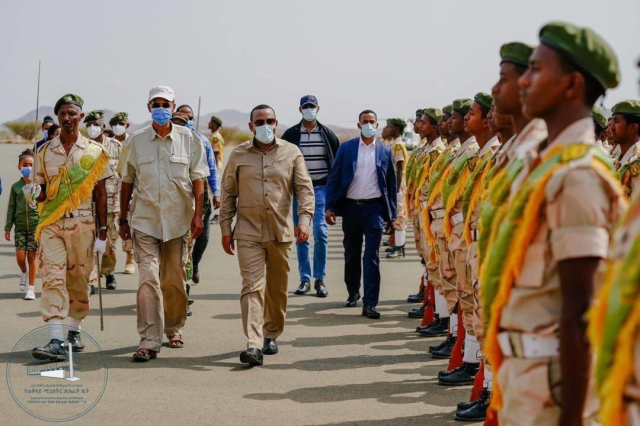
Abiy was sworn in on October 5 as the House of Peoples' Representatives opened its seventh term, according to The Rio Times and Wazema Briefings.
Ethiopia
Prime Minister Abiy Ahmed took the oath for a second five-year term on Monday with his country fighting a renewed war in Tigray, cut off diplomatically from Eritrea and confronted by a four-nation Red Sea declaration that appears aimed squarely at Ethiopia's long-stated ambition to regain a sea outlet. The convergence of a fresh electoral mandate and a widening security crisis makes this week one of the most consequential in Ethiopia's recent politics, and it carries risks for the whole Horn of Africa.
A mandate from a dominant ruling party
Abiy was sworn in on October 5 as the House of Peoples' Representatives opened its seventh term, according to The Rio Times and Wazema Briefings. (The Middle East Eye gives October 6; the two earlier accounts agree on October 5.) The new administration has been styled the "Medemer Government," after Abiy's signature Amharic term for "addition" or "coming together."
The mandate flows from the general election of June 1, 2026. The Rio Times reported that more than 54 million people voted, that 42 parties and 10,438 candidates took part, and that Abiy's Prosperity Party won 438 seats, a supermajority that leaves the opposition unable to block government action. Congratulations arrived quickly from regional bodies. Kenya's President William Ruto called the new mandate "a vote of confidence in your leadership," and the African Union Commission noted that Ethiopia "holds a special place in the continental family as host of the AU headquarters," according to The Eastleigh Voice. The Intergovernmental Authority on Development said it "reaffirms its commitment to continued engagement with the government and people of Ethiopia."
As of Tuesday the new cabinet had not been published, and the government has not laid out a strategy for Tigray or a diplomatic approach to Eritrea, The Rio Times reported.
The collapse of the Pretoria settlement
The war that Ethiopia's leaders hoped had ended in November 2022 has resumed. The Pretoria Agreement halted a 2020-22 conflict that Al Jazeera says killed hundreds of thousands of people and displaced millions. According to Al Jazeera, the Tigray People's Liberation Front (TPLF) declared that agreement defunct in July 2026, citing the federal government's failure to comply with it. Fighting erupted on September 23, and the TPLF now operates within a broader armed alliance that Al Jazeera describes as seven groups strong and drawn from several regions. The Eastleigh Voice reports renewed clashes in Tigray, Amhara and Afar.
The federal side moved quickly. Government forces retook Mekelle's main airport on October 3, and the TPLF announced that evening that it had "temporarily moved out of Mekelle," Al Jazeera reported. The Tigray Peace Forces, a pro-government militia, fought alongside federal troops. A former president of the Tigray Interim Administration said a new interim administration would be formed and regional elections held within months, Al Jazeera reported, though the details remain unclear. Telephone and internet service has been restored in Mekelle and shops have reopened, according to Wazema Briefings.
The TPLF's retreat is not the end of the fighting. The group's chairman, Debretsion Gebremichael, was quoted by The Star as saying: "We should ensure that Tigray is their graveyard, not their playground." The same report said the Tigray Peace Forces claimed to have taken Milazat, about 20 kilometers southeast of Mekelle, and that the TPLF-led alliance had attacked into Afar and Amhara.
The human toll is still being counted. Africanews, citing humanitarian and local accounts, reported hundreds killed or wounded and more than 700 wounded people treated at hospitals across Tigray, with thousands displaced. Wazema Briefings reported that airstrikes on October 5 killed at least 17 people, nine in Adwa and eight in Sheraro; that figure comes from a single outlet and has not been independently confirmed in the sources reviewed here. Residents interviewed by Al Jazeera voiced fear of a prolonged conflict; one college student spoke of "another Sudan."
The violence has also reached the capital's doorstep. Reports of explosions in Addis Ababa on the night of Wednesday, September 30, including a blast near the military headquarters, were relayed by Africanews and The Star. The cause and casualty figures remain unclear, and rebel claims of a drone attack, reported by Ynet, have not been verified.
The break with Asmara
The war has also unravelled the rapprochement Abiy achieved with Eritrea in 2018, that followed the 1998-2000 border war. On Thursday, October 1, Ethiopia closed its embassy in Asmara and ordered 10 Eritrean diplomats to leave within 48 hours, The Star reported; it also expelled an Egyptian diplomat. Eritrea responded by severing diplomatic relations altogether. Africanews reported that Ethiopia accused Eritrea of supporting the TPLF-led alliance and said it had "no option" but to sever ties. Al Jazeera adds that Ethiopia has accused Sudan and Egypt of backing the opposition as well; Sudan and Egypt have denied involvement.
The African Union Commission has urged "maximum restraint," the European Union has warned of the risks of a wider regional conflict, and the U.S. State Department has said that an Ethiopia-Eritrea conflict would jeopardize cooperation, according to The Star and Wazema Briefings.
The Alamein Declaration
The diplomatic response from Ethiopia's neighbors arrived on Sunday. At New Alamein, Egyptian President Abdel Fattah el-Sisi hosted Eritrean President Isaias Afwerki, Somali President Hassan Sheikh Mohamud and Sudan's Sovereignty Council chairman, Gen. Abdel Fattah al-Burhan, Daily News Egypt reported. Their joint declaration did not name Ethiopia, but its content is hard to read any other way.
The four governments asserted that governance of the Red Sea belongs to the coastal states while guaranteeing freedom of navigation through the Gulf of Aden and the Bab el-Mandeb strait. The Rio Times quoted the text as calling Red Sea governance "the exclusive responsibility of littoral states." On the Nile, the document called for "cooperation through prior notification, consultation, and consensus" and rejected "any unilateral measures that harm the existing water uses of the Nile's downstream states," a clear reference to the Grand Ethiopian Renaissance Dam, according to Daily News Egypt. The leaders also rejected Somaliland, backed Somalia's federal unity, called for "sufficient, predictable, and sustainable funding" for the African Union mission in Somalia, and agreed to set up a periodic joint mechanism on regional security. Sisi warned that "attempts to undermine state unity are explicit violations of international law, the United Nations Charter, and the Constitutive Act of the African Union."
The rejection of Somaliland strikes at an Ethiopian initiative. In January 2024 Addis Ababa signed a memorandum of understanding with the breakaway region, which has been central to its sea-access strategy, Middle East Eye reported. Somalia's government has been the most vehement opponent of that deal, though the same outlet noted that Mohamud also expressed willingness to cooperate, saying he looked "forward to working closely together to strengthen Somalia-Ethiopia relations," and that Mogadishu has opened the door to conditional access.
Abiy's sea-access argument
Abiy has not softened his position. Around his swearing-in he said that "landlocked Ethiopia must have access to the Red Sea," according to The Rio Times' Africa Intelligence Brief. Middle East Eye quotes him as saying: "Based on the principle of give and take, we will work diligently to ensure that Ethiopia has an outlet to the sea." Ethiopia has depended on Djibouti since Eritrea's independence in 1993 cost it the port of Assab, MEE noted.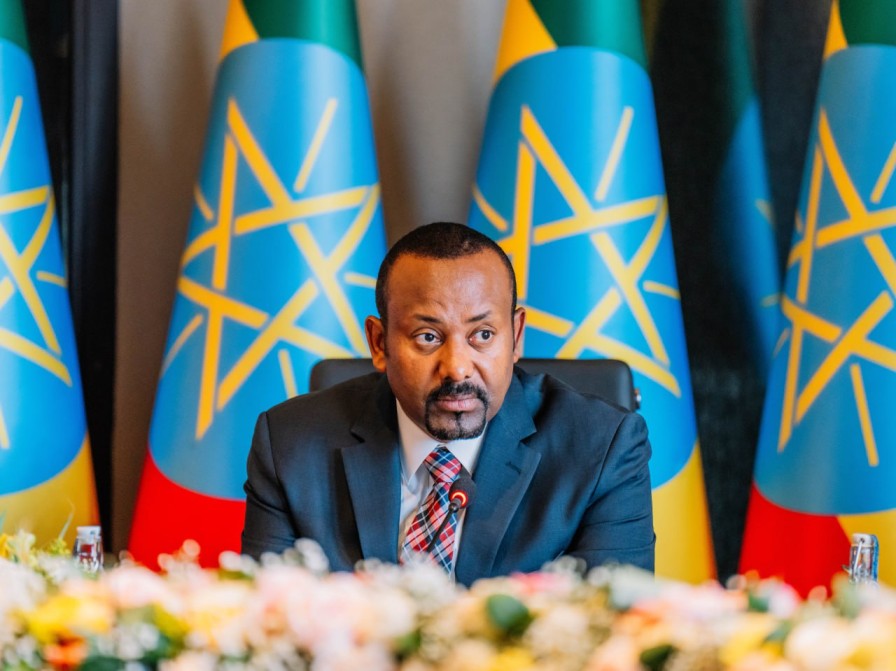
Analysis: three fronts, one government
These developments compound one another. Abiy commands a legislature that cannot stop him, which removes domestic constraints but also any excuse: Tigray, Eritrea and the standoff with Egypt are plainly his government's to manage.
First, the military gains in Mekelle are tactical rather than final. The TPLF has withdrawn rather than been destroyed, its alliance is active in two neighboring regions, and its leadership is publicly vowing resistance. Holding a regional capital against an insurgency that is spread across several fronts is a different task from taking it. The announced plan for a new interim administration and regional elections will test whether Addis Ababa can build a legitimate Tigrayan authority, or whether the effort will be read in Tigray as an imposition.
Second, the rupture with Eritrea ends the 2018 settlement. It also raises the risk of direct Ethiopian-Eritrean confrontation, although there is no confirmed evidence in the sources reviewed that either army has crossed the border. Both sides have closed their diplomatic channels, leaving fewer ways to defuse an incident.
Third, the Alamein Declaration signals that Egypt has assembled a bloc whose members have their own grievances with Ethiopia: Eritrea, over the war; Somalia, over Somaliland; Sudan, where Middle East Eye reported in April 2024 on an Ethiopian army base said to support the Rapid Support Forces; and Egypt, over the Nile. The bloc is rhetorical so far. The declaration commits its signatories to coordination but not to joint military action.
What to watch
Several markers will show where this goes. The first is the cabinet and whether Abiy keeps hardliners or signals a more conciliatory course. The second is whether the Tigray campaign pushes beyond Mekelle toward Eritrea's frontier, and whether humanitarian access is secured for the thousands displaced. The third is the response from the African Union and IGAD, whose heads were among the first to congratulate Abiy and may now find that goodwill tested by calls for mediation. The fourth is any follow-up from the Alamein group, including its announced security mechanism. Finally, watch Somalia, whose president left a door ajar to Ethiopian access even as he signed the declaration.
Whether Abiy treats his supermajority as a license to press the military advantage on every front, or as the political capital to negotiate on at least one of them, will shape the Horn of Africa well beyond this term.



