Written By | International News Agencies
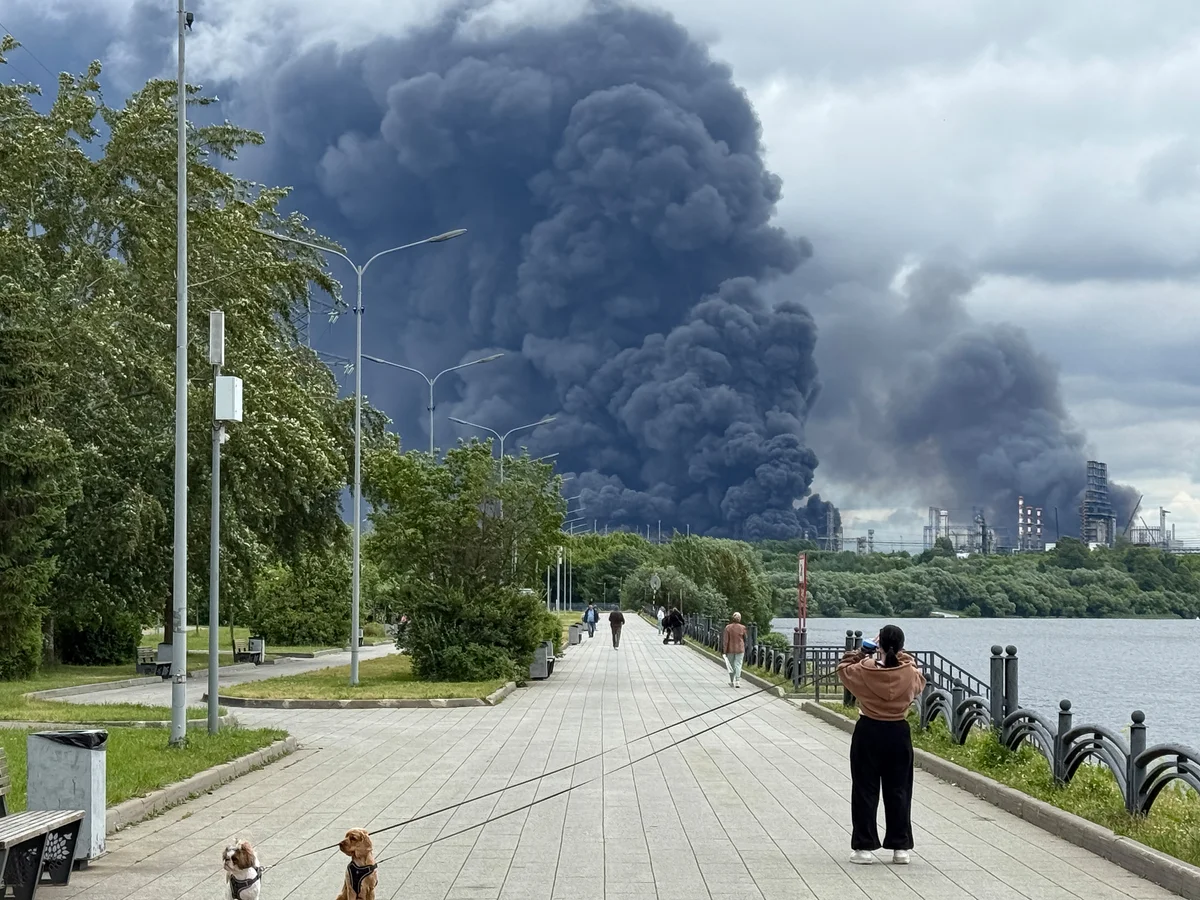
A refinery that fuels two-fifths of the capital burns as Zelensky and Trump agree to meet in New York
Background
The war in Ukraine has been fought for most of this year at two very different tempos. Along the roughly 1,250-kilometre front line in the east and south, movement has slowed almost to a stop: so many drones and ground robots now watch the approaches that massing troops or armour has become close to suicidal, and Ukrainian commanders describe a Russian assault doctrine reduced to individual soldiers on foot. Above and behind that line, the war has accelerated. Both sides have spent 2026 building and firing long-range weapons at each other's rear areas in volumes that would have been unimaginable in 2022.
Ukraine's half of that exchange has a specific target set: oil. Kyiv has systematically struck refineries, pumping stations, fuel depots and the logistics that move their output, on the theory that crude which cannot be refined cannot be sold and that the revenue funds the invasion. The campaign has drawn on a generation of domestically built weapons that did not exist three years ago - the Flamingo cruise missile, the FP-1 long-range attack drone built by the private firm Fire Point, and a growing family of one-way drones cheap enough to launch by the hundred.
The tempo picked up sharply in the second week of September. On 15 September Ukrainian drones hit a refinery, a drone plant and a logistics facility in a single night. On 17 September long-range drones flown by the Security Service of Ukraine's Alpha special operations centre struck the Rostov-Tsentralny military airfield, hitting six transport aircraft and helicopters, while a joint intelligence and military operation set fire to the Slavneft-YANOS refinery at Yaroslavl, 250 kilometres north-east of Moscow, a plant that processes some 15 million tonnes of crude a year. The federal M-8 highway was closed while it burned.
All of this ran alongside Russia's first wartime parliamentary election. Voting for the State Duma took place over three days, 18 to 20 September, with the opposition removed from the ballot by court order and disqualification, no OSCE observers invited, and polling stations open in the four partially occupied Ukrainian regions and in Crimea. Kyiv called the exercise illegal. The Kremlin called it a demonstration that the country was governing itself normally under fire.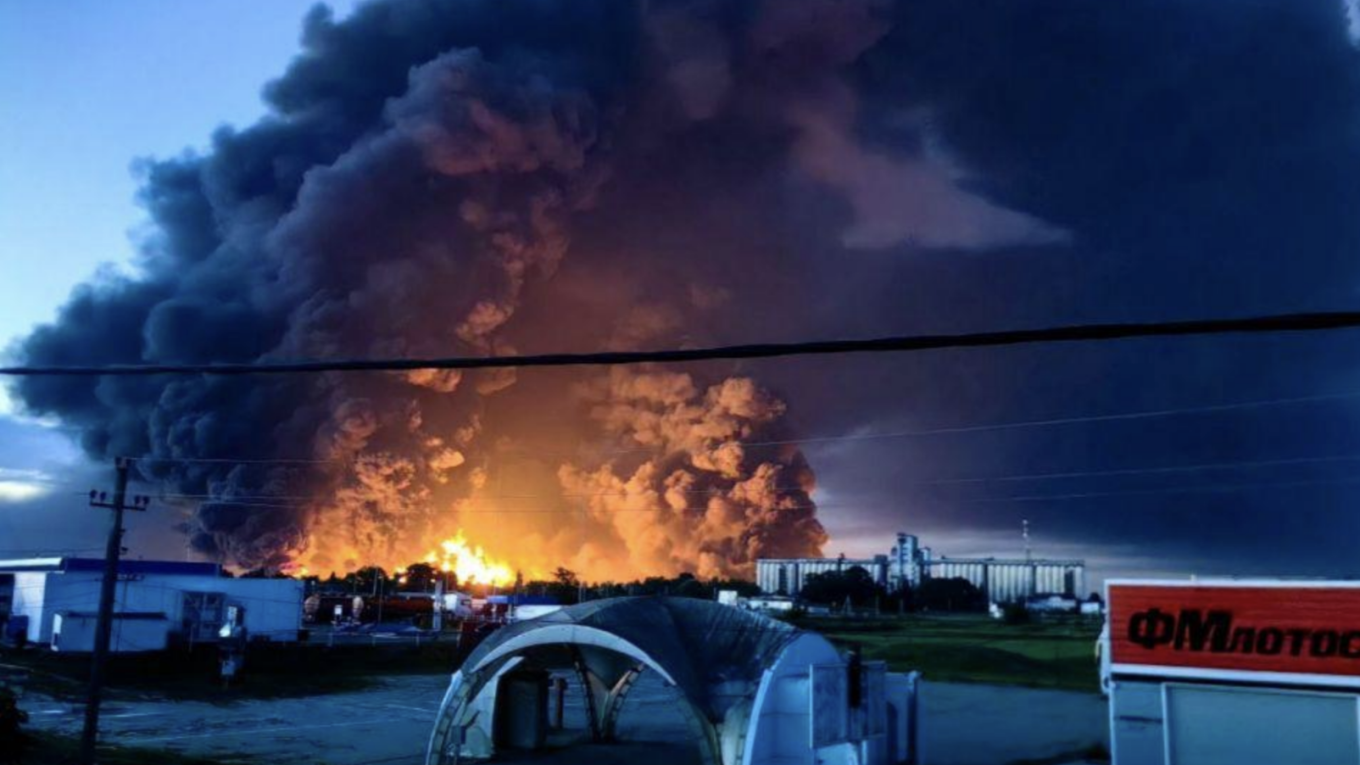
Key Developments
Some time after midnight on Sunday 20 September - the election's final day - Ukraine launched the heaviest attack of the war on the Russian capital. Moscow's mayor, Sergei Sobyanin, said more than 1,600 drones had been intercepted across Russia since the previous day, about 450 of them on the approaches to Moscow, and described it as the largest Ukrainian assault ever mounted against the capital.
The headline numbers differ substantially between sources and should be read with care. Sobyanin's 1,600-plus figure covers interceptions across all defensive lines since the previous day. Russia's Ministry of Defence said on Sunday that its forces had shot down 1,110 Ukrainian drones across Russia, over annexed Crimea and over the Black Sea. Some outlets reported a still larger overnight total of roughly 1,900 drones together with eight guided aerial bombs, eight cruise missiles and four rockets, which would eclipse this year's previous record of 822. Ukraine has not published a launch figure. Zelensky described the weapons used but not their number, and the Kyiv Independent noted it could not verify the Russian claims.
What is not in doubt is what burned. Ukraine's General Staff and Zelensky both confirmed that the Gazpromneft-Moscow Oil Refinery, in the Kapotnya district in the south-east of the city and about 560 kilometres from Ukrainian territory, was struck and set alight. Videos filmed by residents and geolocated by the independent Russian outlet Astra confirmed an extensive fire at the complex. The General Staff said three installations had been damaged: the AVT-6 primary refining unit, the integrated refining unit and the isomerisation unit.
The plant matters out of proportion to its size. It is one of Russia's largest refineries, with an annual processing capacity variously reported at 11, 11.6 and 12 million tonnes of crude, and it supplies roughly 40 per cent of the fuel sold in Moscow and around 70 per cent of the petrol and aviation kerosene consumed across the wider Moscow region. Any prolonged loss of throughput is a problem for the capital's transport networks and for the airports that ring it. The refinery was already damaged in a large-scale drone wave in June; at least one account has held that repairs would not restore full production before 2027, a claim that has not been independently confirmed.
The second target of the night was logistics. Fire Point announced that Ukrainian forces had used FP-1 drones to destroy a large commercial storage complex operated by Modern Warehouse Technologies at Sofyino, in the Ramensky district east of Moscow. Astra reported that a Russian Pantsir-S1 air-defence system was positioned roughly 500 metres from the burning warehouses.
Civilians were killed. Moscow region governor Andrei Vorobyov gave the toll as at least two dead and, depending on the bulletin, six or twenty injured, with Ramensky district worst hit; the dead were a 74-year-old man and a 44-year-old woman. In Sofyino a drone struck a residential building, killing one woman and injuring five people including two children. In Ramenskoye, falling debris set fire to the roof of a 21-storey block and about 400 residents were evacuated. Sobyanin said a drone also hit a building on Orekhovy Boulevard in southern Moscow and that there were no casualties at the refinery itself. Aviation authorities suspended operations at Domodedovo and Zhukovsky airports overnight, and imposed restrictions elsewhere, including at Saratov.
Zelensky framed the night in economic terms. "Our long-range responses had a very significant impact in the Moscow region last night," he wrote, adding of the oil and logistics targets: "These are billions of dollars that sustain the war machine." The General Staff said that striking such facilities "constitutes Ukraine's exercise of its inalienable right to self-defence." Sobyanin gave the attack a different motive - an attempt to disrupt the election - and declared that "the enemy failed in this regard."
Russia's own strikes did not pause for its election. On Saturday evening a Russian attack on the Kyiv region killed a mother and two of her children; a third child died of wounds in hospital on Sunday. A Russian drone hit a monastery in Kherson region, killing a member of the clergy and wounding four people. Ukrainian authorities reported at least eight killed and thirty wounded across the country on Sunday, from 138 attack drones of which 101 were intercepted. On Monday Zelensky said Russia had fired more than 2,000 drones at Ukraine over the past week - most of them jet-powered and capable of nearly 600 kilometres per hour - along with 1,700 aerial bombs and 19 missiles. In occupied Kherson region, Russia's Central Election Commission said a Ukrainian attack had killed a member of a local electoral committee.
Reactions
The most consequential reaction came not from Moscow but from Washington, and it was not one Kyiv wanted. Zelensky spoke to President Trump by telephone on Sunday and announced afterwards that the two would meet in New York during the UN General Assembly high-level week, with the meeting expected on Tuesday. He listed the agenda as de-escalation, energy security, food security and the protection of life, and said Ukraine was ready "to take really serious steps" towards a deal. A source familiar with the call told reporters that Trump had repeatedly asked Zelensky to stop attacking Russian oil refineries, on the grounds that the strikes are pushing up global diesel prices. If accurate, that puts the American president in the position of asking Ukraine to abandon the single element of its strategy that is currently working.
The call also followed the signing of a new congressional sanctions package aimed at Russia and at countries purchasing Russian energy - a measure that cuts in the opposite direction to the refinery request, and one that sits awkwardly beside reporting that the European Union's own Russia sanctions regime may lapse entirely if France and Slovakia succeed in delisting individual oligarchs before the renewal deadline.
Moscow's answer was economic as well as military. Putin placed the Russian operations of Nestle and Auchan under temporary state administration, the latest in a sequence of seizures of Western corporate assets, drawing condemnation from across the European political spectrum. And on the evening of the attack Zelensky approved what his office called "new long-range operations" in response to the Russian strikes on Ukrainian cities - a signal that the refinery campaign is not being wound down ahead of Tuesday.
What's Next
Three questions follow from Sunday night. The first is physical: how much of the Moscow refinery's throughput has actually been lost, and for how long. Russia does not publish refinery outage data, and independent estimates will lag the event by weeks. Fuel queues or price controls in the capital region would be the first public sign that the damage is serious. Russia has managed previous refinery losses by rerouting product from other plants, but the plants available to do the rerouting are themselves being hit - Yaroslavl three days earlier, a string of others through the summer.
The second is diplomatic. Zelensky has been floating a limited energy truce for weeks: Ukraine would pause strikes on Russian energy infrastructure if Russia spared Ukraine's. Trump claimed on 14 September that such a mutual halt had already been agreed, which Kyiv said it knew nothing about. Sunday's attack, and Sunday's phone call, now collide at Tuesday's meeting in New York. Kyiv's leverage in that room consists largely of the very strikes Washington is asking it to stop; Zelensky's language about steps being "on the table" in energy and food security suggests he intends to trade them rather than simply surrender them.
The third is about the election the strike was timed against. Putin's ruling party was on course to claim victory in a vote that independent monitors regard as predetermined, in a parliament from which organised opposition has been removed, with ballots cast in occupied Ukrainian territory that no Western government recognises. Ukraine's point in choosing that night was that the Kremlin cannot stage normality and prosecute the war at the same time - that a capital which needs 450 interceptions before breakfast is not a capital at peace. Sobyanin's insistence that "the enemy failed" was aimed at the same audience. Whether Moscow's residents drew the Kremlin's conclusion or Kyiv's is, for now, unmeasurable. The refinery is still the one supplying two out of every five litres they buy.



