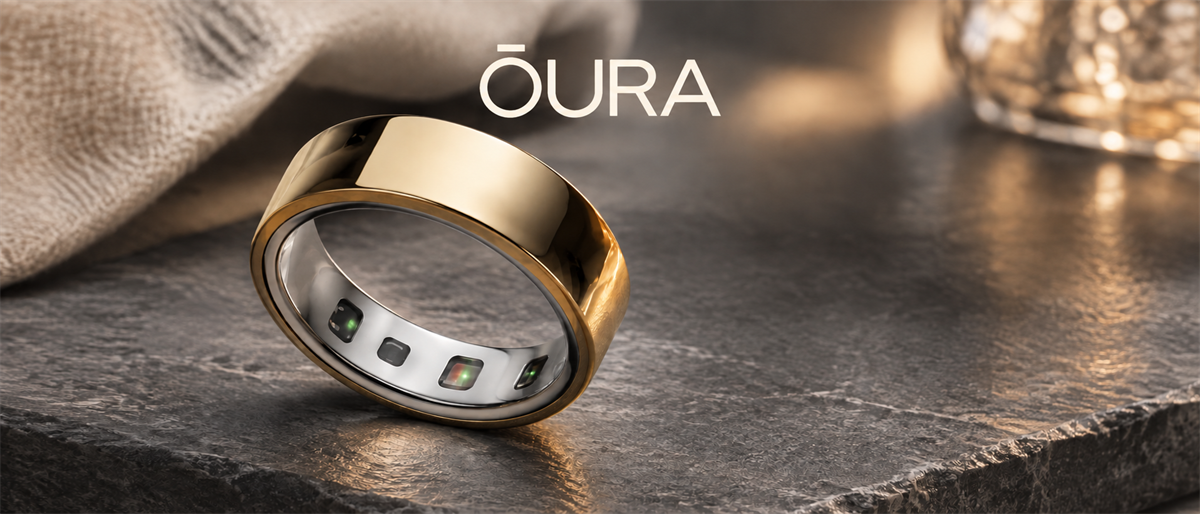
The smart ring that counts the sleep, heartbeats and body temperature of 5.7 million paying members was supposed to hit the Nasdaq this week. Instead it pulled the plug, blaming jittery markets. Here's what happened, who loses out, and what it means for the ring on your finger.
SAN FRANCISCO
It was meant to be the biggest coronation yet for the booming world of wearable health tech. Instead, it ended with a two-paragraph statement and a lot of unanswered questions.
On Tuesday 29 September 2026, Oura, the company behind the sleek smart ring worn by athletes, celebrities, chief executives and millions of ordinary health-watchers, announced it was postponing its long-awaited stock market listing. Reports said shares had been due to start trading the very next day.
The company said the decision came "despite strong demand, due to uncertainty in the IPO market."
The deal would have raised up to $2.2 billion and valued the Finnish-founded, California-based company at around $15 billion, according to TechCrunch. It would have been one of the largest listings ever for a consumer health technology company. Now it sits in limbo, with no new date.

EIGHT DAYS FROM LAUNCH TO LIMBO
The timeline is dizzyingly short.
Oura filed its paperwork to go public with the US Securities and Exchange Commission on 3 September. On 21 September it formally launched the offering, planning to sell 50 million shares at between $40 and $44 each on the Nasdaq, under the ticker "OURA", according to Fast Company and TechCrunch's reporting on the company's filings.
Then, just eight days later, the brakes went on.
"Our mission is to empower people to live healthier, longer, and an IPO is just one step in our journey," chief executive Tom Hale said in a statement. "We aim to deliver an extraordinary IPO for our employees and investors and we have the luxury of choosing our moment. In the meantime, we will execute against the opportunities ahead."
That phrase, "the luxury of choosing our moment", is the key to understanding this story. Oura is not a struggling start-up desperate for cash. It is a profitable, fast-growing business that simply decided the timing was wrong.
WHY NOW? THE MARKET HAS THE JITTERS
The company did not spell out exactly what spooked it. But the wider picture is not hard to see.
Financial markets have been on edge. Rising US bond yields and high oil prices have unsettled investors, with the yield on 10-year US government debt reported this week to have hit its highest level since 2007. When safe government bonds pay more, investors tend to become less willing to gamble on newly listed growth companies.
There is another warning sign. According to data firm PitchBook, 2026 has been a record year for venture-backed companies going public, but the aftermath has been "dimmer". Many high-profile newcomers have seen their share prices sag after listing day. Fast Company pointed to quantum computing firm Quantinuum, whose shares were reported to be down more than 30 per cent from their opening price.
Oura is also not alone in hitting pause. Fast Company reported that OpenAI chief Sam Altman has said the ChatGPT maker will not go public this year, despite filing initial paperwork in June.
For a company that prides itself on premium branding, a wobbly first day of trading would be a nightmare. Waiting, Oura seems to have calculated, is safer.
A PROFITABLE HEALTH GADGET, NOT A BURNING START-UP
Look under the hood and Oura's numbers are, by the standards of tech listings, remarkably healthy.
According to its filing, reported by Fast Company, Oura made a net profit of $60.8 million in the nine months to 30 June 2026, up from just $1.6 million in the same period a year earlier.
TechCrunch reported that hardware sales, the rings themselves, brought in $974 million over that period, while subscription revenue from Oura's membership service more than doubled to $240.5 million. That membership business is extraordinarily profitable, with a gross margin of 89 per cent.
Oura's revenue in its previous financial year was $907.9 million, and the company says it expects revenue to grow by 90 per cent in its 2026 financial year.
The customer base is growing fast too. Oura now has 5.7 million paying members, up from 5 million at the end of June. Its newest device, the Oura Ring 5, has, the company says, been received well.
That is a long way from where the business started. Oura raised $28 million in a 2020 funding round. By December 2024 it was valued at $5.2 billion, and in October 2025 it raised $900 million in a round led by Fidelity at a valuation of about $11 billion, according to TechCrunch.
WHO WAS REALLY GOING TO CASH IN?
Here is the twist that many buyers of Oura rings may not realise: this IPO was never really about raising money for the company.
According to TechCrunch's analysis of the filing, of the 50 million shares on offer, 36.5 million, almost two thirds, were being sold by existing shareholders, not by Oura itself. At the $42 midpoint, that would have meant about $1.53 billion going to those shareholders and around $567 million to the company before fees.
The single biggest winner would have been venture capital firm Forerunner Ventures, Oura's second-largest shareholder, which planned to sell its entire 9.3 per cent stake of about 28.7 million shares for roughly $1.2 billion. Forerunner first invested back in 2020.
And the company's own share of the money? Almost all of it was already spoken for. Oura expected net proceeds of $532.6 million and planned to use about $526.4 million of that to pay tax bills linked to employee share awards that would vest when the company went public. That would have left roughly $6.2 million for everything else.
TechCrunch editor Ram Iyer described the plan as "kind of a flex": Oura was using the listing to give early backers an exit and to settle tax obligations without borrowing or dipping into its cash pile, which stood at about $372 million at the end of June.
So the postponement hits investors waiting to cash out, and employees hoping their shares would become easy to sell, far more than it hits Oura's day-to-day finances.
EXPERT PERSPECTIVE: A PAUSE, NOT A PANIC
Market watchers have been careful not to read the delay as a verdict on the ring itself.
Endpoints News, which covers the health technology business, noted that Oura pulled the deal despite annual revenue running above $1.2 billion and strong reported demand, and placed it alongside several other companies that have postponed listings this month.
TechCrunch observed that "any shareholders looking for liquidity will also have to wait now", but also that the company's underlying business appears to be in rude health.
The broader lesson, according to PitchBook's data on this year's listings, is that record numbers of companies going public have not translated into strong share performance afterwards. Investors are becoming choosier, and even glamorous brands are not immune.
For the wider health-tech sector, Oura's retreat matters. The company has become a kind of standard-bearer for the idea that people will pay a monthly fee to track their sleep, recovery, heart rate and temperature, and that consumer wellness data is a serious business. A blockbuster listing would have sent a signal that the market values that model highly. A delayed one leaves the question hanging.

WHY A HEALTH READER SHOULD CARE
It is tempting to see this as a story for Wall Street only. It isn't.
Oura's ring is one of the most popular pieces of "quantified self" technology on the market. It records sleep stages, resting heart rate, heart rate variability, skin temperature and activity, and turns it into daily scores that many wearers check before they have even got out of bed. Some women use its temperature data to track their menstrual cycles.
That means Oura is sitting on an enormous library of intimate, round-the-clock body data from millions of people. As a private company, it answers mainly to its investors. As a public company, it would face stricter disclosure rules and far more scrutiny of its risks, including how it protects and uses that data. The delay means that extra layer of public accountability is on hold too.
It also matters for the direction of the whole industry. Wearables are steadily edging from "wellness" towards "medicine", with companies adding features that hint at medical conditions. How much investors are prepared to pay for that ambition shapes how quickly new health features get built.
WHAT THIS MEANS FOR YOU
If you already own an Oura ring: nothing changes today. The company is profitable, is growing, and had around $372 million in cash at the end of June. The postponement is about the timing of a share sale, not about the company's survival. Your ring, your app and your membership should carry on as normal.
If you were hoping to buy shares: you will have to wait. Oura has not given a new date. When it does come back, remember that the business will have to be valued in whatever market mood exists then, which could mean a higher or lower price.
If you are thinking of buying a ring: judge it on what it does for you, not on the IPO headlines. Be clear about the ongoing monthly membership cost on top of the purchase price, since much of the analysis lives behind that subscription.
Keep perspective on the data: rings and watches are consumer wellness gadgets. Sleep scores and "readiness" numbers can be useful nudges, but they are not a medical diagnosis. If your device flags something that worries you, such as a persistently raised resting heart rate or temperature, talk to a doctor rather than relying on an app.
Check your privacy settings: whatever happens with the listing, take five minutes to review what data your wearable collects, what you have agreed to share, and with whom. Public company or private, it is your body's data.
CONCLUSION
Oura built its brand on telling people when to slow down, rest and recover. On Tuesday, it took its own advice.
The company that promised to help people "live healthier, longer" walked away from a $15 billion stock market debut a day before trading, not because the business was failing, but because the market felt too feverish.
Investors who had lined up $1.5 billion in payouts will have to wait. Employees with shares will have to wait. And the wider health-tech world, which had hoped Oura would prove that wellness data is worth a fortune on the public markets, will have to wait too.
For the 5.7 million people who slip a titanium ring on each morning, though, the message is simple. The ring keeps counting. The only thing that has stopped, for now, is the clock on Oura's Wall Street debut.
Published By | Features Editor