Written By | Business Experts
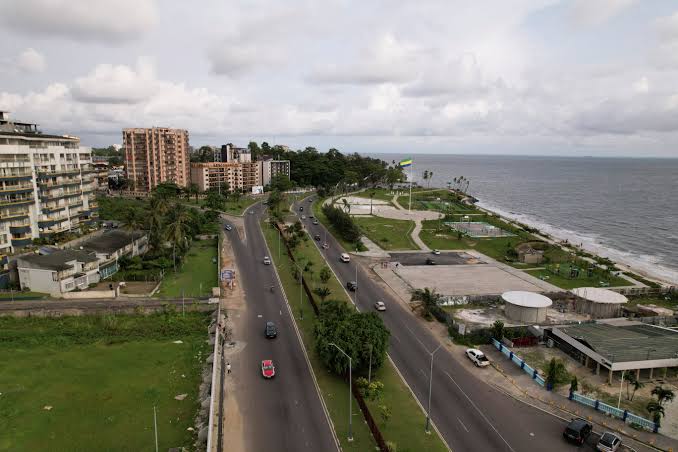
Gabon is one of Africa's richer countries on paper and one of its more fragile ones on the balance sheet
Economic & Social Transformation
An Oil State Spending Against a Shrinking Cushion
Gabon is one of Africa's richer countries on paper and one of its more fragile ones on the balance sheet. GDP in 2025 is estimated at about US$21.6 billion, with GDP per capita near US$9,400, which places it in the upper-middle-income group. Yet roughly a third of the population lives below the poverty line, and one estimate projects the poverty rate at about 39 per cent for 2025. Unemployment was recorded at 20.3 per cent in 2023, a figure analysts attribute to non-labour-intensive oil and mining industries, a thin private sector and a mismatch between skills and jobs.
The economy's structure explains much of this. Industry accounts for roughly 47 per cent of GDP but only about 19 per cent of employment, while agriculture employs close to 29 per cent of workers yet generates under 7 per cent of output. Oil, manganese and timber together make up an estimated 97 per cent of exports, and oil alone supplied around half of tax revenues in 2023. Crude output has been drifting lower for years: TotalEnergies EP Gabon reported production of 16.0 thousand barrels per day in 2025, down 6 per cent from 17.0 in 2024, and some commentators expect a further contraction of about 3 per cent in 2026.
The political context is one of consolidation. President Brice Oligui Nguema, who led the 2023 transition, won the April 2025 presidential election with 94.9 per cent of the vote on a 70 per cent turnout, securing a seven-year mandate. That mandate gives him room to take unpopular decisions. The question this article examines is whether the 2026 fiscal record shows him using it.
A Growth Forecast Cut by 2.5 Points
On 22 May 2026 the Council of Ministers adopted a revised growth forecast of 4 per cent for 2026, down from the 6.5 per cent assumed in the original budget, a downward adjustment of 2.5 percentage points. The revision came as the government prepared for talks with the International Monetary Fund, following a February 2026 IMF mission and the Spring Meetings in Washington, and it was accompanied by language stressing debt sustainability and fiscal discipline.
The sectoral detail is instructive. Oil production was assumed to rise 3.1 per cent with prices up 15 per cent to a target of US$75 a barrel. Manganese output was revised up to 9.424 million tonnes from 9.229 million, even though the assumed price slipped 0.8 per cent to US$166.9 a tonne. Gold was the bright spot, with production expected to double to 800 kilograms. Outside the extractives sector the picture was grim: sawn timber output was projected to fall 36.2 per cent, rubber by 76.9 per cent (600 tonnes against 2,500 planned) and palm oil by 6.4 per cent.
Two details deserve scepticism. The budget's oil assumption of a 3.1 per cent production increase sits awkwardly beside company data showing declining output at TotalEnergies' Gabonese operations. And the sharp contraction in timber and rubber suggests the non-oil economy, which is meant to be the diversification story, is currently shrinking rather than filling the gap. A government that is relying on a rebound in oil volumes to hit its numbers has little margin for error.
The July Budget and the Financing Gap
The supplementary 2026 budget, signed on 17 July and published on 21-22 July, is where the strain became visible. Revenue forecasts were cut by 22 per cent to CFA 3.24 trillion. The financing gap rose to CFA 915.6 billion, 13 per cent above December projections. The government authorised up to US$1.5 billion (CFA 855 billion) in foreign borrowing and set aside CFA 424.9 billion for domestic treasury bonds. Fitch calculated that the revised budget implies a deficit of 6.7 per cent of GDP, up from 6.0 per cent in the original law, with the first half of 2026 running at a provisional 3 per cent.
Financing has been unusually commercial. Fitch counts US$2.5 billion of planned external commercial borrowing in 2026, including a US$1 billion loan from the trader Trafigura in April 2026 and the planned Eurobond. A US$920 million private placement in July 2026 carried a yield of about 12.6 per cent, and a seven-year Eurobond of that size has been reported with a 9.375 per cent coupon. Meanwhile official-sector disbursements were cut by 96 per cent in the revised plan, which means Gabon is replacing concessional money with expensive market money at the very moment its ratings are weakest.
Those ratings are low. Fitch rates Gabon CC in local currency and CCC- in foreign currency, and Moody's holds a Caa2 rating with a negative outlook, citing funding pressure and the risk of undisclosed liabilities. Capital spending tells its own story: it is projected at 8.5 per cent of GDP in the revised budget, against 11 per cent in 2025 and a 2020-2024 average of just 2.7 per cent, yet only 23 per cent of the revised target had been executed by mid-year. The country is therefore borrowing heavily and still failing to deliver the investment that borrowing is supposed to fund.
Debt, Arrears and the Hidden Liabilities Problem
Government debt is estimated at 81.1 per cent of GDP for 2025, far above the 70 per cent ceiling in the CEMAC convergence criteria. Projections cited by Daba Finance show the ratio rising from 70.9 per cent in 2024 to 78.9 per cent in 2025, 86.1 per cent in 2026 and 94.3 per cent in 2027, with deficits of 3.3 per cent of GDP in 2024 rising to 8.5 per cent in 2025 and a forecast 10 per cent in 2026. These figures differ from Fitch's, which is a reminder that Gabon's public accounts are measured in several incompatible ways.
Arrears compound the problem. Fitch estimates arrears at about 13 per cent of GDP at the end of 2025. External arrears stood at US$761 million at the end of the first half of 2026, including US$160 million owed to multilateral lenders and US$319 million to bilateral creditors. A public debt audit covering 2016 to 2024 is under way, and rating agencies warn it may uncover liabilities that have never been reported. For investors the audit is a binary event: a clean result would support an IMF programme, while a large new number would reopen the sustainability debate.
The regional dimension matters too. Investors note that the CEMAC region as a whole needs multilateral assistance, and that Gabon's decision to tap markets in place of waiting for an IMF deal shifts risk onto bondholders. After the revised budget, the 2031 Eurobond fell 1.575 cents to 84.97 cents and the 2029 bond dropped 1.2 cents to 94.27 cents.
The IMF Track: Slow, but Moving
Gabon formally requested an IMF programme in March 2026. An IMF mission led by Aliona Cebotari visited from 14 to 25 September 2026, meeting President Oligui Nguema, both vice-presidents and the ministers of economy and planning. The staff examined fiscal developments, the findings of the debt audit and the 2027 fiscal plans, and said technical discussions would continue in the coming weeks with formal negotiations to follow.
Market commentators are cautious. One fund manager argued that the revised deficit and the Eurobond authorisation could push approval 'to later in the year or drag into 2027'. The IMF's own advice is consistent: windfall oil revenue should be used to clear arrears, reduce domestic debt and rebuild buffers rather than finance discretionary spending. A programme would almost certainly demand a lower deficit, tighter payroll control and better debt reporting, and it would unlock co-financing from other multilaterals that Gabon currently lacks.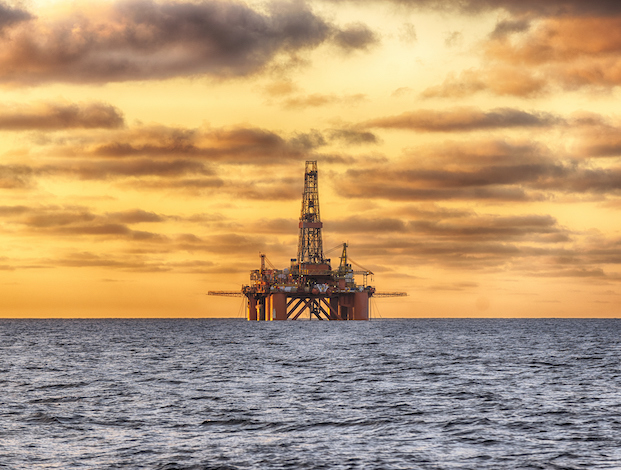
What the Numbers Mean for Households
For ordinary Gabonese the fiscal story is not abstract. A country with a 20 per cent unemployment rate and about one in three people in poverty cannot easily absorb either austerity or a debt crisis. Higher borrowing costs crowd out spending on health, education and social transfers, and arrears to domestic suppliers hurt the small firms that employ people outside the oil sector. The collapse in timber and rubber output points to job losses in rural areas where alternatives are few.
There are genuine bright spots. The government has planned a ban on raw manganese exports from 2029 to push processing onshore, and new iron ore and gold projects at Belinga, Baniaka and Etéké are expected to come on stream, following Belinga's first shipment in December 2023. Inflation remains modest, at about 2 per cent in 2025 with a projection near 3.2 per cent for 2026. If these projects deliver local jobs, they could begin to change an economy where industry produces nearly half of output but under a fifth of employment.
Outlook: Three Tests for 2027
The next twelve months will hinge on three tests. The first is credibility of the numbers: a debt audit that is published in full and a budget that reconciles with Fitch's and the IMF's. The second is composition of spending: whether the 8.5 per cent of GDP planned for capital expenditure is actually executed on projects with returns, rather than lost to arrears and wages. The third is whether Gabon can demonstrate that the non-oil economy can grow, since a 4 per cent growth forecast built on oil volumes that are physically declining is not a diversification strategy.
Gabon is not Ghana or Zambia in 2022; its debt ratio is lower than those countries' peaks and it still has market access, albeit at near-distress prices. That is both an opportunity and a trap. Access buys time, but each expensive issuance raises the eventual cost of adjustment. A signed IMF programme in the first half of 2027 would be the clearest sign that the government has chosen discipline over delay.



