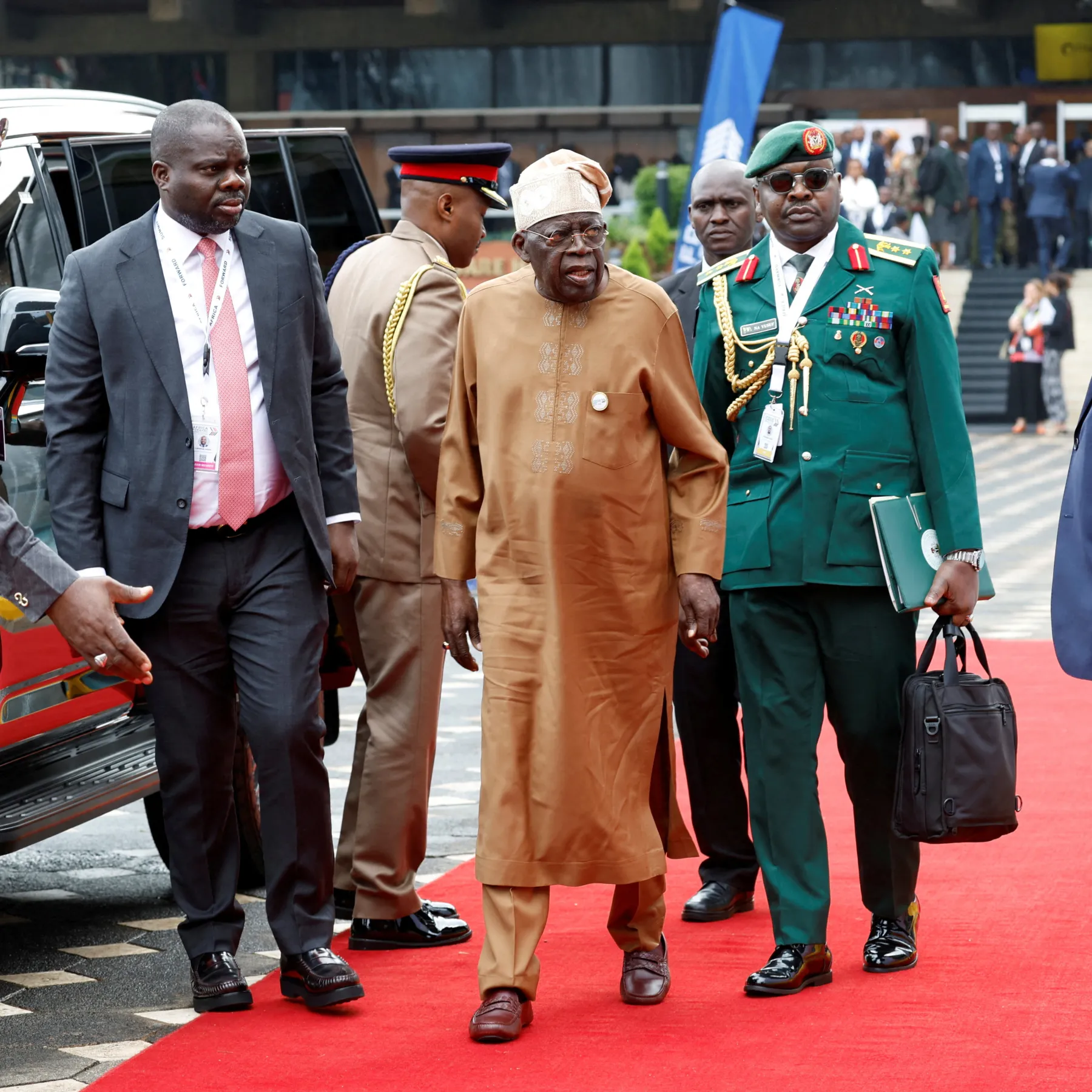
Minna/Abuja, Nigeria
More than a week after gunmen stormed a mosque during Friday prayers in Niger State and abducted what residents say were hundreds of worshippers, Nigerian security forces have yet to locate the captives or make contact with their abductors, turning what began as a single, brutal raid into a national referendum on President Bola Tinubu's ability to protect Nigerian civilians less than six months before the country returns to the polls.
The attack unfolded on Friday, August 21, when an armed group descended on Kpenya Mosque in the Dekara district of Borgu Local Government Area during Juma'at prayers, then fanned out to the nearby communities of Gidan-Zana and Sabon Gida. Local residents told Reuters that more than 60 worshippers were taken, but community leaders and other local accounts put the number far higher — with estimates ranging as high as 500 to 600 women, children and elderly people loaded onto trucks and marched into the surrounding bush. The traditional head of the Dekara community said the violence was so severe that roughly 2,000 residents fled across the border into neighboring Benin Republic in its immediate aftermath. Nigerian authorities have been unable to independently verify the precise number of people missing, and as of Thursday, August 27, the Niger State government said the attackers had still not made contact to demand ransom — an unusual silence in a country where mass-kidnapping gangs typically move quickly to negotiate payment.
A rescue operation without a rescue
President Tinubu ordered the military, the Nigeria Police Force, the Department of State Services and other security agencies to launch what his office described as a coordinated rescue operation, and troops began moving into Borgu Local Government Area on Wednesday, August 26 — five days after the initial attack. Niger State Governor Mohammed Umaru Bago called the abduction "an unacceptable assault on the peace and security of the state" and said his government was strengthening cooperation with traditional rulers and community leaders to improve intelligence-gathering and early-warning systems in vulnerable areas. But the gap between the attack and the deployment of a rescue mission — and the fact that, as of this week, officials still could not say how many people had been taken or where they had been moved — has drawn sharp criticism from residents and civil society groups who say it illustrates the same pattern of delayed, reactive response that has defined Nigeria's decade-long struggle with mass abductions.
That pattern is now a matter of public record. Save the Children International has documented at least ten mass school kidnappings in Nigeria in less than two years, and researchers tracking the phenomenon count 26 major school attacks between April 2014 — when Boko Haram's abduction of 276 girls from a school in Chibok drew global attention — and May 2026, with at least 2,416 students taken over that period. Amnesty International has calculated that at least 10,217 people have been killed by armed groups and roughly 15 mass abductions of schoolchildren have occurred since Tinubu took office in May 2023. A separate analysis found that kidnapping gangs and their intermediaries collected approximately $1.42 billion in ransom payments between May 2023 and April 2024 alone, underscoring how abduction-for-ransom has become a self-sustaining criminal economy across Nigeria's northern and north-central states.

A widening geography of violence
The Niger State attack did not occur in isolation. It follows a February 3, 2026, massacre in Woro village in neighboring Kwara State, where an armed group — Nigerian authorities said the assault was carried out by fighters operating under the command of a Boko Haram-linked commander identified as Mallam Sadiku — killed more than 160 people, binding and executing some victims and burning others alive in what the International Crisis Group called one of the deadliest single incidents in Nigeria in recent years. A commission investigating violence in the area found that bandits have killed more than 1,200 people in Kwara North since Tinubu assumed office. Tinubu visited the state and deployed an army battalion after that attack, and in November 2025 he had already declared a nationwide security emergency, pledging what his administration called extraordinary measures to reverse the trend. The recurrence of a mass-casualty attack nine months later, and a mass abduction three weeks after that, has fueled arguments that the emergency declaration produced little operational change on the ground.
The demographic profile of the Niger State victims — described by residents as overwhelmingly women, children and the elderly, seized from a house of worship during a religious observance — has also sharpened public anger in a way that distinguishes this attack from the school kidnappings that have previously dominated headlines. Analysts who track the violence note that armed groups in north-central and northwestern Nigeria, sometimes described loosely as "bandits" rather than formally designated terrorist organizations, have increasingly targeted civilians at prayer, at school and in transit, exploiting the difficulty security forces face in patrolling vast rural areas with limited manpower and, in many communities, little advance warning capability.
Security as the defining issue of 2027
The timing could hardly be more consequential for Tinubu. Nigeria's next presidential election is scheduled for early 2027, and campaigning has effectively already begun, with insecurity emerging as the central line of attack from opposition figures, including Labour Party candidate Peter Obi. Polling cited by regional outlets has found that close to 80 percent of Nigerians believe the country is headed in the wrong direction, with roughly 45 percent naming economic hardship and insecurity as their top concerns. Tinubu has publicly dismissed suggestions that rising insecurity threatens his re-election prospects or could force him from the race, arguing that opponents are amplifying the issue for partisan advantage, and he has pointed to what his government describes as an ongoing overhaul of the country's security architecture — including new battalion deployments, enhanced surveillance assets and closer coordination between the military, police and state-level vigilante groups — as evidence of progress.
That defense has grown harder to sustain with each new mass-casualty event. The Niger State abduction is the third mass kidnapping episode Nigeria has experienced since May, following school-linked abductions in Borno and Oyo states earlier in the year, and it comes as the government simultaneously faces criticism over electricity shortages and the broader cost-of-living crisis that has accompanied Tinubu's 2023 removal of a longstanding fuel subsidy. Opposition figures have explicitly linked the security failures to what they describe as a hollowed-out state presence in rural Nigeria, arguing that the military's resources remain concentrated in high-profile flashpoints like Borno's Boko Haram-affected areas while north-central states such as Niger and Kwara — geographically closer to the capital, Abuja — have been left comparatively exposed to opportunistic criminal and jihadist-linked groups.

What comes next
In the immediate term, the central question is whether the joint military-police-DSS operation can locate the missing worshippers before the incident follows the trajectory of past mass abductions, in which victims are held for weeks or months while negotiations — often conducted quietly between community intermediaries and the kidnappers rather than through official security channels — drag on. The absence of a ransom demand more than a week after the attack is itself being read two ways by security analysts: as a possible sign the group has ideological rather than purely financial motives, which would mark an escalation, or simply as evidence of the logistical difficulty of moving and controlling several hundred captives across a porous, thinly policed border region.
Longer term, the attack is likely to intensify pressure on Tinubu to demonstrate concrete results from his November 2025 security emergency well before voters go to the polls in 2027. Civil society organizations and opposition parties are expected to use the incident, alongside the Kwara State killings earlier this year, as a central exhibit in arguments that the current security architecture — built around reactive troop deployments after attacks occur rather than sustained preventive presence in vulnerable rural communities — has failed to adapt to a threat that has migrated from the northeast's Boko Haram insurgency into a broader, more diffuse pattern of banditry and mass abduction across Nigeria's north-central states. Whether the government can locate and safely recover the Dekara worshippers, and whether it can do so without paying ransom that would further finance the criminal economy driving these attacks, will likely shape both the immediate humanitarian outcome and the political narrative heading into campaign season.
Published By | News Editor