Technological Transformation
From pilot to procurement category
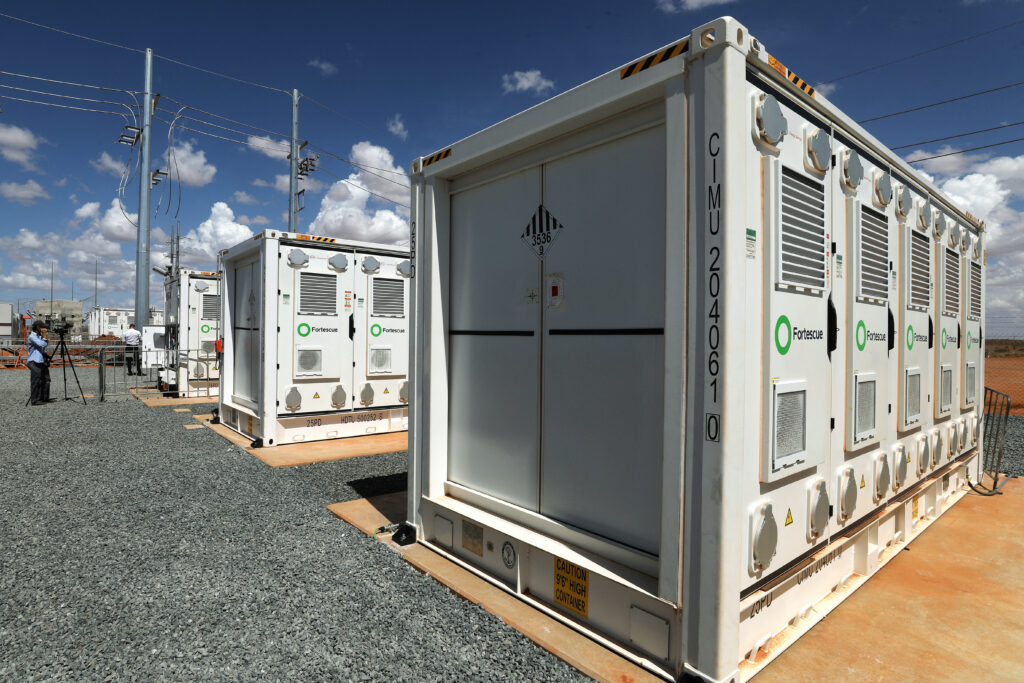
Five years ago, a battery energy storage system (BESS) on an African grid was a curiosity: a demonstration unit at a utility head office or a small installation attached to a mine. In 2026 it has become a procurement category in its own right. South Africa runs a dedicated storage tender programme with three completed bid windows. Egypt has commissioned utility-scale batteries alongside giant solar farms and committed state money to 4 gigawatt-hours (GWh) more. Morocco is procuring batteries across its grid. Kenya has designated its generator, KenGen, to pilot a 200 megawatt-hour (MWh) system.
The driver is technology economics. BloombergNEF's 2025 battery price survey found the average lithium-ion pack price fell 8% to a record US$108 per kilowatt-hour (kWh), but stationary storage packs fell much faster: down 45% to US$70/kWh, making grid storage the cheapest battery segment for the first time. Turnkey storage systems averaged about US$117/kWh globally, and as little as US$73/kWh in China, the source of most hardware installed in Africa. BNEF expects four-hour turnkey systems to fall toward US$41/kWh by 2035.
This article argues that falling hardware costs have solved only half of Africa's storage problem. The other half is institutional: designing tenders, contracts and grid rules that let batteries earn revenue, and building the local capacity to operate them. The leaders in 2026, South Africa and Egypt, are the countries that have built that machinery, not simply bought cheap cells.

How big is the market?
Estimates of Africa's installed base vary because data mixes operating, under-construction and planned projects. The Africa Solar Industry Association's outlook put installed battery storage at over 1,600 MWh by 2024, up from roughly 31 MWh in 2017. ESS News estimated around 2,900 MWh supporting renewables by August 2025. Either way, the continent is still small by global standards; Germany alone added about 6.57 GWh in 2025. But the pipeline has grown sharply, and 2026 is the year that a large share of it moves from paper to financial close and construction.
South Africa: the procurement template
South Africa's Battery Energy Storage Independent Power Producer Procurement Programme (BESIPPPP) is the continent's most developed model. It tenders storage at specific Eskom substations, often in the Northern Cape and Free State where solar output is abundant but evening peaks and grid congestion bite. Winners sign 15-year agreements to provide capacity and ancillary services.
The first bid window produced 513 MW/2,052 MWh of projects. Bid Window 3, announced on 30 May 2025, sought 616 MW/2,464 MWh across five Free State substations and drew 33 bids. Mulilo won four projects totalling 493 MW/1,972 MWh, and Scatec won the fifth (Haru BESS, 123 MW). The government reported average evaluation prices about 40% lower than Bid Window 1 and 8% lower than Bid Window 2, which is direct evidence that global price declines are flowing into African tariffs.
The test in 2026 has been financing. Mulilo reached financial close on its 77 MW/308 MWh Hartebeesfontein project near Klerksdorp in June 2026, its fifth close of the year. Debt came from Absa, Standard Bank and Nedbank, with Copenhagen Infrastructure Partners and Norfund as shareholders. That local-bank participation matters: it shows that South African lenders now regard battery contracts with the state transmission company as bankable. Meanwhile, Globeleq and African Rainbow Energy's Red Sands project (153 MW/612 MWh, about US$300 million, Sungrow equipment) is under construction as Africa's largest standalone battery, and EDF's roughly 1 GWh Oasis portfolio has been building toward completion.
Egypt: storage bolted onto mega-solar
Egypt has taken a different route, pairing batteries with very large solar plants. AMEA Power commissioned the country's first utility-scale battery, a 300 MWh system at its 500 MW Abydos solar plant, in 2025, designed to shift solar output into the evening peak. Scatec's Obelisk project became fully operational in August 2026: 1.1 GW of solar with a 100 MW/200 MWh battery, backed by about US$479 million in development-finance debt and a fully contracted storage revenue model. In January 2026 Scatec also signed a power purchase agreement for a further 1.95 GW of solar and 3.9 GWh of storage.
The state has moved too. In February 2026 the electricity ministry targeted 600 MW of batteries before summer to manage peak demand. In May 2026, in the presence of Prime Minister Mostafa Madbouly, a protocol committed the Tahya Misr fund to finance 4 GWh of storage at South Cairo, Damanhur and Wadi El Natrun, with tariffs set in Egyptian pounds and grid connection targeted within two years. Egypt is also trying to capture manufacturing: Kemet and China's Cornex agreed a US$200 million factory with 5 GWh of annual capacity. Local-currency pricing is notable; it shields the utility from foreign-exchange risk but shifts that risk to whoever imports the dollar-priced cells.
Morocco and Kenya: the next wave
Morocco's national utility ONEE has been procuring roughly 1,600 MWh of batteries across about ten sites, including around Kenitra and Settat, while ACWA Power's Noor Midelt II and III solar projects are reported to include about 1.2 GWh of storage combined. Reports on timing and tender status conflict, so the precise schedule should be treated with caution. Morocco has also attracted Gotion High-Tech's planned 10 GWh lithium iron phosphate battery plant, linking storage deployment to its industrial ambitions in electric-vehicle supply chains.
Kenya, whose grid already runs on more than 80% renewable power, illustrates a different use case. Its problem is less about shifting solar and more about grid stability, frequency control and reducing blackouts as variable wind and solar grow. KenGen has commissioned a 1.16 MWh pilot at its Nairobi head office to support a modular data centre, and the government has designated it to implement a 200 MWh BESS pilot, with an initial phase reportedly backed by the World Bank. KenGen's long-term strategy targets 500 MWh of storage over the next decade, and Kenya's Mission 300 energy compact includes 400 MW of batteries in its scale-up scenario, from a baseline of zero in 2024.
Why institutions matter more than cells
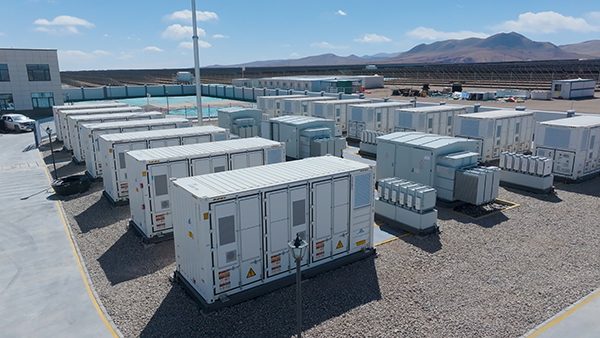
Cheap hardware does not automatically produce batteries on the grid. Three institutional ingredients separate leaders from laggards.
First, a revenue model. Batteries earn money by doing several jobs: shifting energy from midday to evening, providing fast frequency response, and deferring transmission upgrades. Few African markets have wholesale prices or ancillary-service markets that pay for these services, so long-term contracts with a creditworthy buyer, as in South Africa and Egypt, are essential.
Second, utility creditworthiness. Many African utilities are financially stressed, which makes 15-year storage contracts hard to finance without guarantees. Where the buyer is weak, development-finance institutions, partial risk guarantees or state funds such as Egypt's must fill the gap.
Third, technical capacity. Grid operators need dispatch software, protection settings and trained staff to integrate batteries. Fire safety, maintenance regimes and end-of-life recycling also require standards that most countries are still drafting.
Risks and the road ahead
The risks are real. Almost all cells come from China, concentrating supply-chain and price risk; recent data hint that Chinese storage prices may have bottomed. Currency mismatches between dollar-priced equipment and local-currency revenues remain a central financing problem. And storage cannot fix a grid that lacks transmission capacity in the first place.
Yet the direction is clear. Batteries are becoming the technology that lets African countries use the solar they are already building, cut diesel peaking, and stabilise grids for new demand from data centres, mines and electric mobility. The countries that turn storage into a routine, bankable procurement, rather than a one-off pilot, will capture most of that value.
Published By | Tech Wiz