Written By | Sports Desk
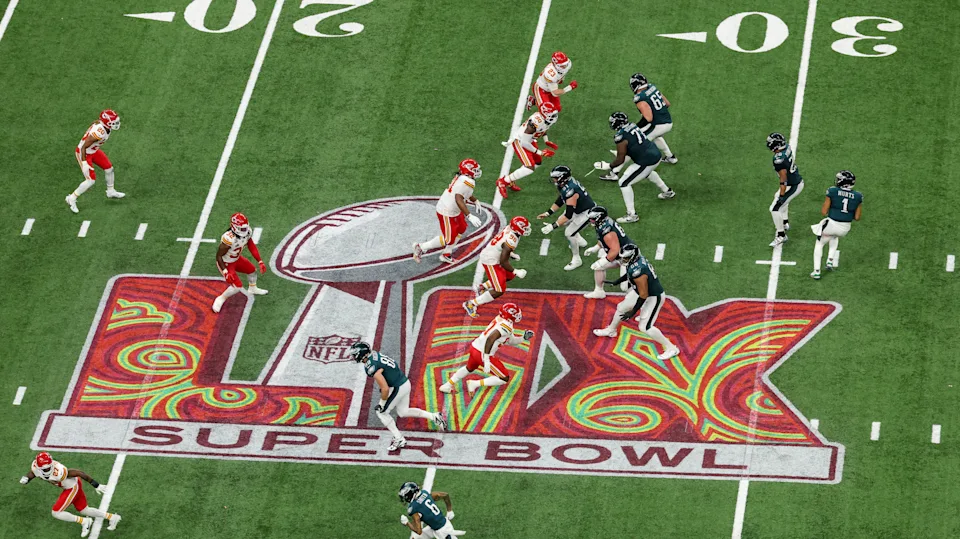
A 19.86 million-viewer crowd, a seventh straight week of breakthroughs and a sweeping streaming-era shift: what Week 7 tells us about how America now watches football.
NEW YORK
The most-watched Thursday night in the Prime Video era that did not fall on Christmas arrived this week, and it came from a matchup few would have circled in August. The Patriots' visit to the Bears averaged 19.86 million viewers, according to figures reported by Sports Media Watch, a number that includes local over-the-air simulcasts in the two home markets. At its peak, in the 9 p.m. Eastern quarter-hour, the audience reached 21.72 million.
For a league that has spent a decade arguing that live sports are the last great appointment television, the number is a useful exhibit. It is also a reminder that the way the audience is counted has changed almost as much as the way the audience watches.
The numbers behind the headline
Only one Prime Video Thursday game has drawn more viewers since Amazon began airing the series in 2022: last year's Christmas matchup between the Broncos and Chiefs, which averaged 21.06 million. Set Christmas aside, and Patriots-Bears becomes the most-watched Thursday night game since Packers-Cardinals in 2021, which drew 20.26 million on FOX and NFL Network.
It was also the most-watched Week 7 Thursday game ever, topping the 17.12 million who watched Seahawks-49ers on CBS and NFL Network in 2015. That makes three consecutive weeks in which a Thursday night game has set the high-water mark for its slot on the calendar, following Seahawks-Broncos and, as we reported earlier this month, Buccaneers-Cowboys.
Zoom out and the pattern is hard to dismiss. All six Thursday games Prime Video has aired this season have reached multi-year highs, including an 11-year high in Week 2, a ten-year high in Week 3 and a six-year high in Week 4. Together they rank among the streamer's 11 most-watched Thursday games. The season average through Week 7 stands at 17.71 million viewers, up 12 percent from 15.84 million at the same point last year, and the best average through seven weeks in the history of the franchise, ahead of the 17.57 million recorded in 2015 on CBS and NFL Network.
A fair-minded caveat on comparisons
Anyone tempted to treat these figures as a clean apples-to-apples ranking should pause. Nielsen now counts out-of-home viewing, the kind that happens in bars, restaurants and airports, and its methodology blends so-called Big Data from smart TVs, set-top boxes and first-party sources with its traditional panel. This is only the second year of that approach, and Nielsen recently adjusted how it accounts for co-viewing of games.
Sports Media Watch notes that the 2015 Seahawks-49ers game might rank higher under today's methodology, a reminder that records set across eras carry some uncertainty. The Black Friday and Wild Card playoff games on Prime are excluded from the comparison because they fall under separate rights deals. The honest reading is that the current audience is very large and growing, while the precise distance from past peaks is blurrier than a single record-setting headline suggests.
Why this matchup, and why now
Part of the story is simple scale. The Patriots and the Bears are two of the league's most recognizable brands, and the game was carried on Fox 32 in Chicago alongside Prime Video's stream, a local simulcast arrangement that broadens reach in precisely the markets where interest runs highest. The Chicago Sun-Times reported earlier this month that the local station would carry the broadcast.
Part of it is timing. A Thursday night offers no competition from other NFL games, and the league has leaned into that exclusivity as the audience for the sport has grown. Last week's reporting showed the NFL averaging 18.8 million viewers through Week 5, the best start on record, and the Thursday package has been among the strongest contributors to that run.
What it means for the sports business
Streaming-first football used to be framed as a risk: would viewers follow the games to a subscription platform, and would advertisers pay for an audience measured differently? Six weeks of multi-year highs suggest the audience has largely followed. For rights holders, that strengthens the hand of any platform bidding for packages, and it helps explain why negotiations elsewhere in sports, including the ongoing jockeying over college and international rights, increasingly feature technology companies at the table.
It also raises the stakes for measurement. If out-of-home and co-viewing adjustments continue to lift audience totals, the industry will need clearer conventions for comparing a 2026 game with a 2015 one, or advertisers and the public will keep drawing conclusions from numbers that do not line up.
What this means for you
For fans, the practical takeaway is that Thursday football is no longer a niche stream. It is a mainstream event that increasingly shows up on a local broadcast channel as well as an app, so check whether your market carries a simulcast before paying for or troubleshooting a subscription. For anyone who follows the business of sport, it is a prompt to read ratings stories with the footnotes in view: the headline number matters, but so does the method behind it.
The bottom line
Nineteen point eight six million people tuned in to watch two storied franchises on a Thursday in late October, and the season's Thursday slate is outpacing every comparable stretch on record. Whether the pace holds through the holiday games will be the next test. For now, the evidence points in one direction: the NFL's audience is not just surviving the move to streaming, it is setting records on it.



