Written By | Political Desk
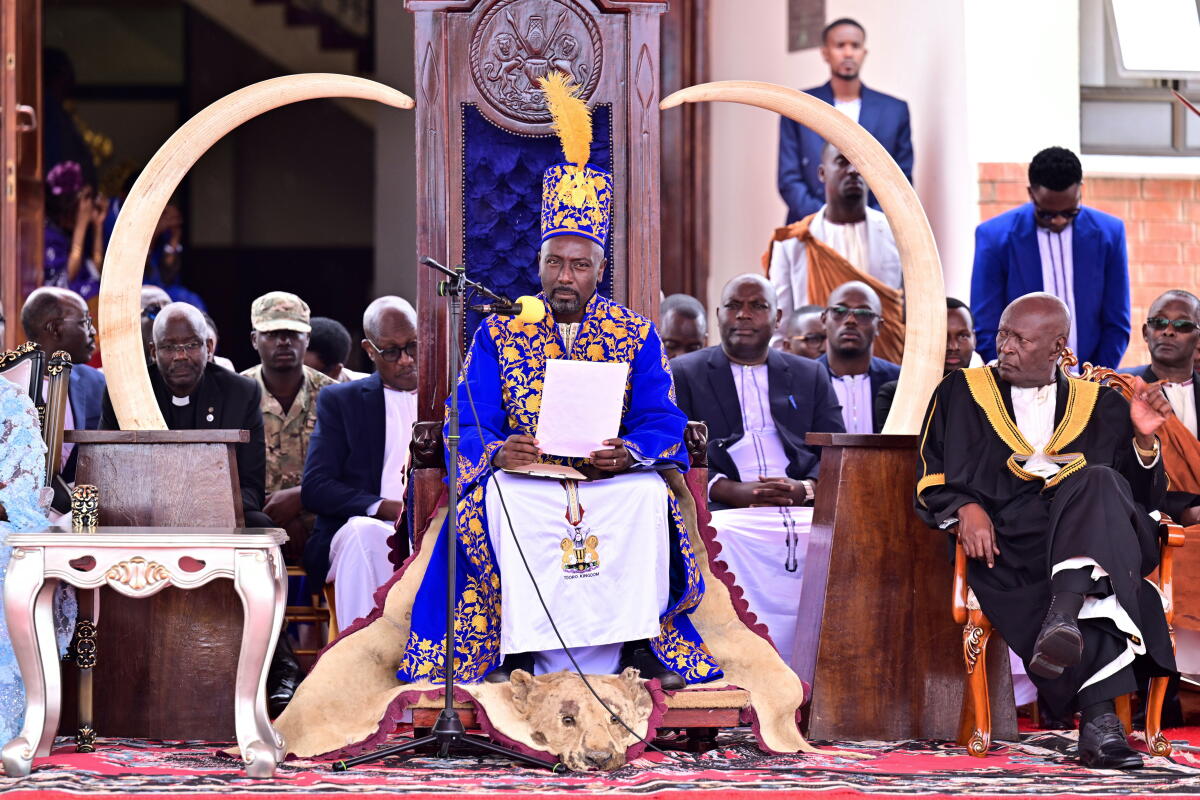
The ceremony ended a month of uncertainty that began on 27 August, when King Oyo Nyimba Kabamba Iguru Rukidi IV died at the age of 34.
POLITICS
A crowning under a legal cloud
On 29 September 2026, Edward Rukidi Nyabongo I was crowned Omukama of Tooro at Karuziika Palace in Fort Portal, with President Yoweri Museveni presiding. The ceremony ended a month of uncertainty that began on 27 August, when King Oyo Nyimba Kabamba Iguru Rukidi IV died at the age of 34. Yet the coronation has not closed the matter. A court bid to stop it failed at the last minute, a substantive lawsuit challenging the selection of the new king is now expected to proceed, and a senior government figure used the occasion to call for a review of the laws governing Uganda's cultural institutions.
The episode has become one of the week's most closely followed political stories in Uganda because it combines three threads: a royal succession dispute inside one of the country's restored kingdoms, the involvement of the presidency and the courts, and a renewed debate on how far the state should regulate traditional institutions.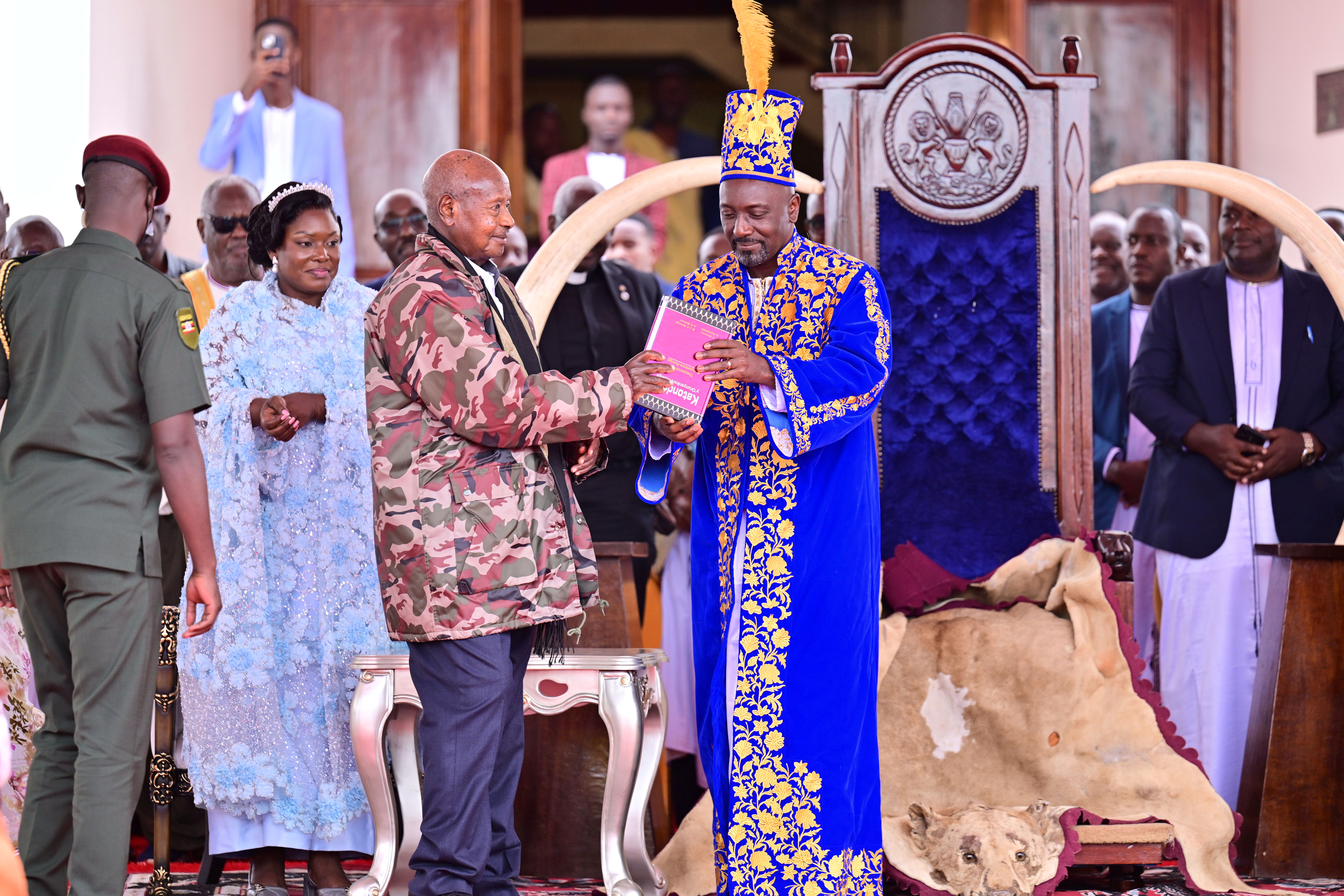
What happened
According to reporting by the Daily Monitor and State House Uganda, King Oyo died on 27 August after an illness reported as angiosarcoma. He had reigned for 31 years, having ascended the throne as a small child, and he was buried on 12 September. In the interim, Charles Kamurasi, the Omujwera Musuuga and head of the Babiito royal clan, led the transition.
A 21-member committee of the Babiito clan selected Prince Edward Rukidi Nyabongo, described by the Monitor as 56 years old and a former news anchor and editor at the Uganda Broadcasting Corporation. The coronation rituals, which the Monitor reports ran from midnight to about 3 a.m., included a symbolic battle, the slaughter of a bull and the ceremonial sprinkling of blood, before public celebrations in Fort Portal with drummers and dancers. The new king's wife, Rebecca Omoding Akiiki, was presented as Queen.
President Museveni, who presided, made light of the new king's media past. "I was watching him on the news as a good news reader in English, so I am sure he will do a good job here," he said, according to State House. He also gifted the new Omukama 100 cattle and used his address to urge the preservation of indigenous languages and knowledge: "We must guard our language, culture and indigenous science jealously." The new king, for his part, pledged an inclusive reign in which the kingdom would serve all people without discrimination.
The dispute behind the celebration
The pageantry concealed a real disagreement within the royal family. The Monitor reports that Queen Mother Best Kemigisa, the late king's mother, and Princess Ruth Komuntale objected to the selection, claiming that King Oyo had left a written will naming a young son as his heir. The government backed the clan's choice, and the head of the Babiito clan, Charles Kamurasi, dismissed the alternative claims about an heir.
The dispute reached court. Two residents of Tooro and a Kampala-based legal advocacy group filed a case arguing that the selection process contradicted the explicit wishes of the late king. The suit names the Queen Mother as a co-defendant and asks the court to compel her to disclose details about an alleged son of the late monarch. Their application for an interim injunction to block the coronation could not be heard in time, and the ceremony went ahead on schedule. Their lawyers have said they will now shift their focus to the main suit challenging the selection. The judge handling the matter was not named in the reporting reviewed for this article.
It is important to note what the court has and has not decided. Nothing reported so far suggests that any court has ruled on the merits of the claim that a will exists or on the validity of the clan's decision. The failed injunction bid means only that the coronation was not stopped before it took place.
The call for a legal review
The political dimension sharpened at the coronation itself. Speaking at the event, Gen (Rtd) Henry Tumukunde called for a comprehensive examination of the laws governing cultural institutions, warning that unchecked power centres within traditional leadership structures could become a source of national instability. According to the Monitor, he argued that culture "must also have a role" and stressed the need to document cultural practices within a legal framework, clarifying the relationship between traditional institutions and the central government.
Tumukunde also praised the handling of the transition, crediting Kamurasi with navigating succession protocols without missteps despite the family disagreements. He noted that kingdoms were restored to reverse the instability caused by their earlier abolition, and that they should modernise while preserving heritage. The Monitor's coverage also reports that the government is moving to review the cultural institutions law in the wake of the succession.
Kingdoms were restored in Uganda in the 1990s under the constitutional framework that allows traditional or cultural leaders to exist, with the understanding that they remain outside partisan politics. The restoration arrangement has always balanced cultural autonomy against state oversight, and a succession contested in court is exactly the situation in which that balance is tested.
The main players
The key figures are the new Omukama, Edward Rukidi Nyabongo I, who must now establish authority and unity; Charles Kamurasi, the clan head who managed the interim and defended the selection; Queen Mother Best Kemigisa and Princess Ruth Komuntale, whose objections anchor the dispute; the applicants and their lawyers, who intend to press the main suit; and the government, represented by President Museveni, who presided, and by Gen Tumukunde, who raised the question of legal reform.
Why it matters
First, succession disputes in cultural institutions can carry wider consequences. Kingdoms command emotional loyalty and, in some cases, significant land and economic assets, so a divided royal household can affect local politics and community cohesion. Tumukunde's warning about "unchecked power centres" reflects that concern from the state's perspective.
Second, the episode shows the state taking a visible role in a matter that the clan and family would traditionally settle themselves. The government's backing for the clan's choice, the president's presence at the coronation and the announced review of the law together suggest that Kampala intends to shape the rules for future successions. Supporters will describe this as providing clarity and stability; critics may see it as creeping state control over cultural autonomy. That argument is likely to be contested.
Third, the court case introduces uncertainty, even if it is a long shot. A substantive suit that questions the legitimacy of a king who has already been crowned is unusual, and how the High Court handles it, including whether it considers the matter justiciable at all, will set a precedent for cultural disputes elsewhere.
What to watch next
Several developments will show where this goes. The first is whether the main suit in the Fort Portal High Court is actually pursued, and whether the court agrees to hear evidence about the alleged will and the alleged son. The second is the detail and timing of the government's promised review of the cultural institutions law, including whether it is a consultative process involving the kingdoms or a unilateral amendment. The third is the tone within the royal family: whether the Queen Mother and Princess Komuntale reconcile with the new king, stay in opposition, or escalate legally. The fourth is how other kingdoms respond to a proposed review, since any law that changes the terms of succession or governance would affect all of them and not just Tooro.
For now, the new Omukama has been installed with the backing of the clan and the president, and the public celebrations suggest considerable popular goodwill in Fort Portal. But the legal challenge, the family rift and the policy debate mean that the political significance of this coronation will outlast the ceremony.
Note on sourcing
This article is based on reporting by the Daily Monitor, State House Uganda and other outlets as of 30 September 2026. Some details, such as the ordinal number of the new Omukama in the line of Tooro kings, were reported inconsistently across sources and are therefore omitted here.



