Written By | International News Agencies
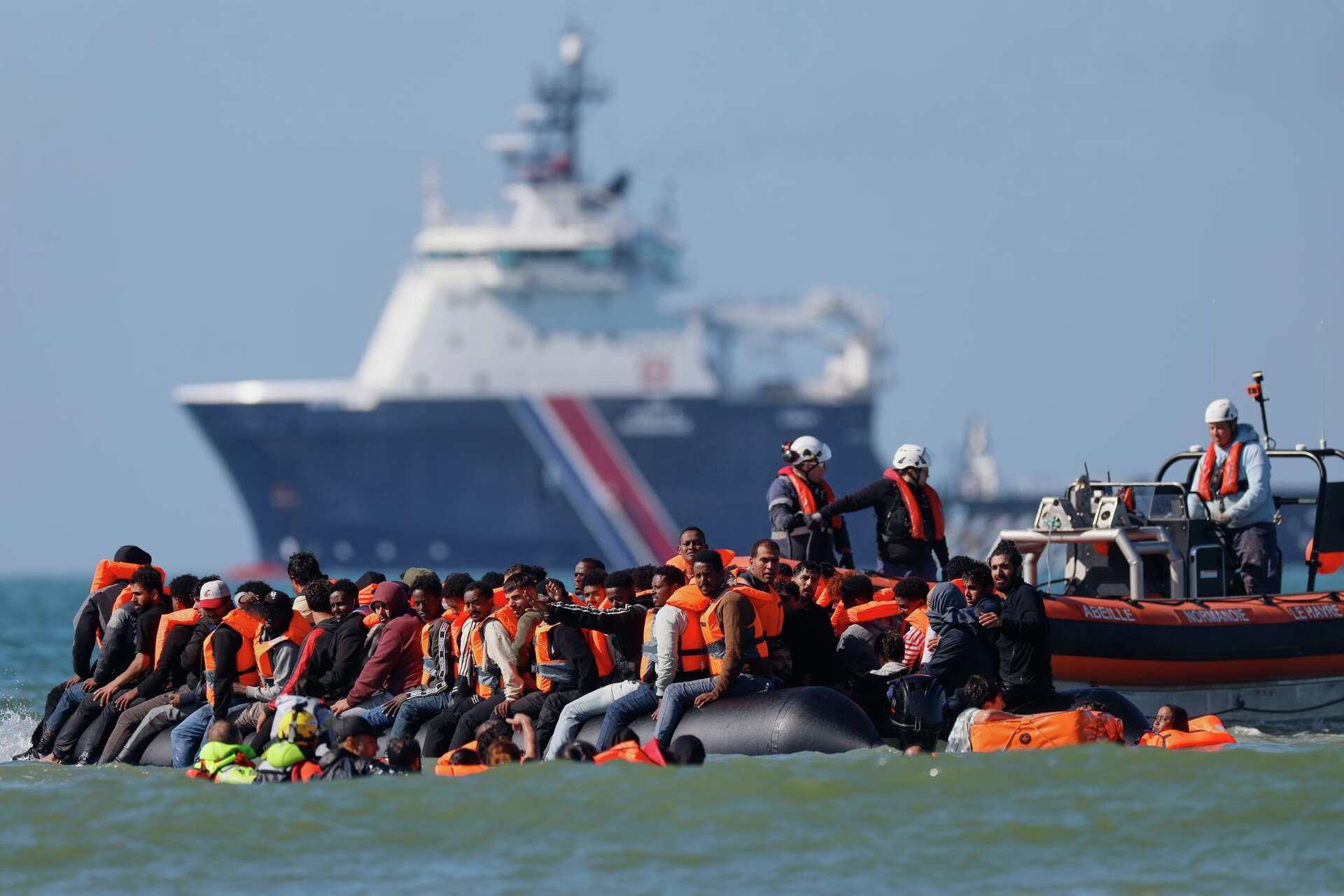
The United Kingdom's flagship attempt to deter Channel crossings by sending small-boat arrivals back to France has come to an end
World Politics
Overview
The United Kingdom's flagship attempt to deter Channel crossings by sending small-boat arrivals back to France has come to an end. The "one in, one out" pilot, announced with fanfare by then-prime minister Keir Starmer and French President Emmanuel Macron in July 2025 and launched that August, was due to expire on October 1, 2026. The Home Office has confirmed that it is "no longer processing new cases," bringing the scheme, known operationally as Operation Hillmore, to a close. France, according to reports, wants to replace the bilateral arrangement with an EU-wide mechanism, and talks between London and Paris on the terms of formal withdrawal are under way.
The end of the scheme lands at an awkward political moment. It is the first major immigration decision to land on the desk of Prime Minister Andy Burnham, who took office only recently and who, in a separate development this week, has put rejoining the European Union back on the table as one of several options for Britain's future relationship with the bloc. The pilot's closure forces the new government to say what it will do instead, and it hands critics on the right a fresh argument that the previous government's central deterrence idea never worked at scale.
Background: How the Deal Was Meant to Work
The scheme was announced on July 10, 2025, by Starmer and Macron, and formally approved by both governments the following month with the support of the European Commission. The logic was straightforward and, its backers argued, humane: Britain could return to France migrants who had arrived illegally by small boat, and in exchange it would accept an equivalent number of asylum seekers from France who passed security checks and who were likely to qualify for protection, such as those with family ties in the UK or from countries with high asylum approval rates, such as Afghanistan or Iran. The initial phase envisaged about 50 returns per week.
The idea was to undermine the smugglers' sales pitch. If a person who paid thousands of pounds to cross the Channel could be sent back, the thinking went, fewer would pay. Meanwhile, the intake of asylum seekers from France was meant to show that there was a lawful route for those with genuine claims.
The rollout was slow. Legal challenges delayed the first removal flights, and the first return, of an Indian national, took place on September 18, 2025. The first migrants accepted by the UK from France, a family of three, arrived on September 24, 2025. From that point the scheme operated at far smaller volumes than the weekly figure initially discussed, even as small-boat arrivals continued.
From the outset, critics said it addressed only a fraction of the problem. Opposition figures, including Conservatives, pointed out that more than 25,000 people were expected to cross by small boat in 2025, and urged tougher measures, such as reviving the Rwanda asylum plan that the Labour government had scrapped.
Key Developments: The Numbers Behind the Verdict
The headline figures for the pilot are now public, though they differ somewhat between sources. According to Euronews, which cited data through the end of June 2026, 1,087 migrants were returned to France between August 2025 and June 2026, while 1,117 asylum seekers were transferred to the UK under the scheme. During the same period, 27,920 migrants arrived on small boats, meaning that only around 4 percent of arrivals were returned. A different outlet, citing a later or differently defined count, put the number deported to France at approximately 1,400. The Daily World Politics desk has not been able to reconcile the two figures; the lower number matches the end-of-June official data and the higher appears to be a later estimate.
Costs have been the other source of controversy. Home Secretary Shabana Mahmood told Parliament that the scheme cost taxpayers roughly 56,000 pounds per return. Euronews reported an average cost of 65,500 euros per return, which is a broadly similar figure after allowing for the currency conversion and the difference in how costs are counted. By either measure, it was an expensive way of moving a small number of people.
Mahmood acknowledged the operational difficulty in plain terms, saying that the harder thing had been to "scale up very large numbers of removals every week into the French system." Inkl, summarizing a report on the closure, noted that France's preference is for an EU-wide arrangement to share the burden of small-boat migrants more broadly across Europe, rather than a bilateral deal, and that talks on formal withdrawal terms were under way. Burnham, for his part, blamed Brexit for reduced cooperation with the EU on asylum, saying his government would tackle "every element" of the smuggling operations while creating "safe legal routes."
There is also evidence about what happened to some of those who were sent back. The same report noted that many returnees faced homelessness in Paris, while others relocated to camps around Calais and Dunkirk, and some then tried to cross the Channel again. That finding cuts to the heart of the deterrence argument: a return that is followed by another attempt does not reduce the number of people trying to arrive.
The government can point to some positive trend data. Small-boat crossings to the UK are reported to be down 42 percent year on year, and immigration enforcement arrests are up 55 percent. Those figures, which come from the same reporting, suggest that the pilot's expiry does not coincide with a surge in arrivals. But they do not settle the question of how much, if any, of the decline can be attributed to the exchange scheme, as opposed to weather, enforcement on the French coast, shifts in smuggling routes or other factors.
Reactions and Political Fallout
The scheme's end hands every side something to argue about. For Conservatives and the populist right, the closure is proof that the Labour approach was a gimmick: a pilot that, in their telling, returned a tiny proportion of arrivals at high cost and was quietly dropped. Similar critiques accompanied the scheme from its launch, and they will now be recycled with the added force of the official figures.
For the government, the line is different. Burnham's attribution of the problem to Brexit is a politically charged claim, but it aligns with the arguments that Labour and the Liberal Democrats have made for years, namely that the loss of the EU's Dublin returns arrangements left Britain without a standing mechanism for returning asylum seekers to the countries through which they traveled. The pilot was a bilateral workaround for that gap, and its closure reopens it. That framing also fits neatly with Burnham's wider message this week that no option on the European relationship is off the table.
In France, the stance is more pragmatic. Paris has long argued that the Channel is a European problem, not a bilateral one, and the proposal to replace the pilot with an EU-wide arrangement reflects that view. It is also a reminder that France never wanted to be the sole receiving country for returns from Britain, and that even a modest number of returnees strained local services and, according to reports, contributed to street homelessness.
Humanitarian organizations, which criticized the scheme at the outset, are likely to see the findings about returnees ending up homeless as vindication. Whether they will welcome the government's promised "safe legal routes" depends on details not yet published.
What Comes Next
The Home Office has said the government will pursue a "changed approach" that combines stricter enforcement with legal asylum pathways. The specifics are not yet public, and several questions loom. Will London seek a new bilateral arrangement with Paris, or wait for an EU-level framework that Britain, outside the bloc, would need to negotiate access to? How will the government finance and staff any alternative? And how will it respond to the central statistical problem the pilot exposed: that a scheme returning around 4 percent of arrivals could not plausibly change the incentives facing smugglers or their customers?
The timing adds complexity. Burnham has told the BBC that rejoining the EU is "among all the options," and has promised to set out choices before a postponed UK-EU summit. If asylum cooperation becomes part of those negotiations, the end of the pilot could become a bargaining chip rather than merely a policy failure. But any deal would have to be acceptable to a public that has repeatedly shown, in polling and in elections, that it wants visible control over the Channel crossings.
In the near term, the practical effect is limited: with the pilot expired, no new returns under the scheme will occur, and the arrangement's roughly one thousand returnees and a comparable number of arrivals are history rather than precedent. The political effect is greater. The government has lost its most visible deterrence tool without yet announcing a replacement, and it faces opponents eager to define that gap as failure. How Burnham fills it, whether through a new bilateral understanding, an EU deal or a more domestic mix of enforcement and legal routes, will be one of the first real tests of his premiership.




