World Politics
Overview
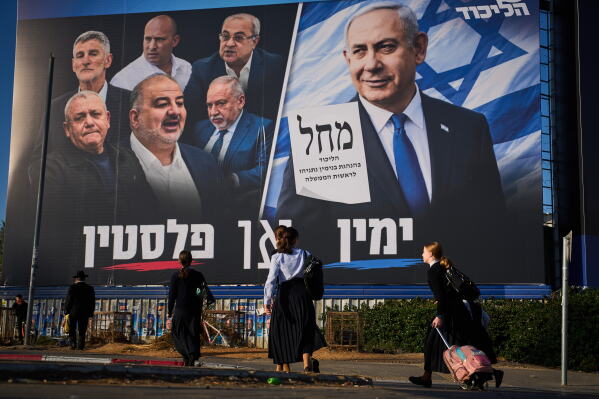
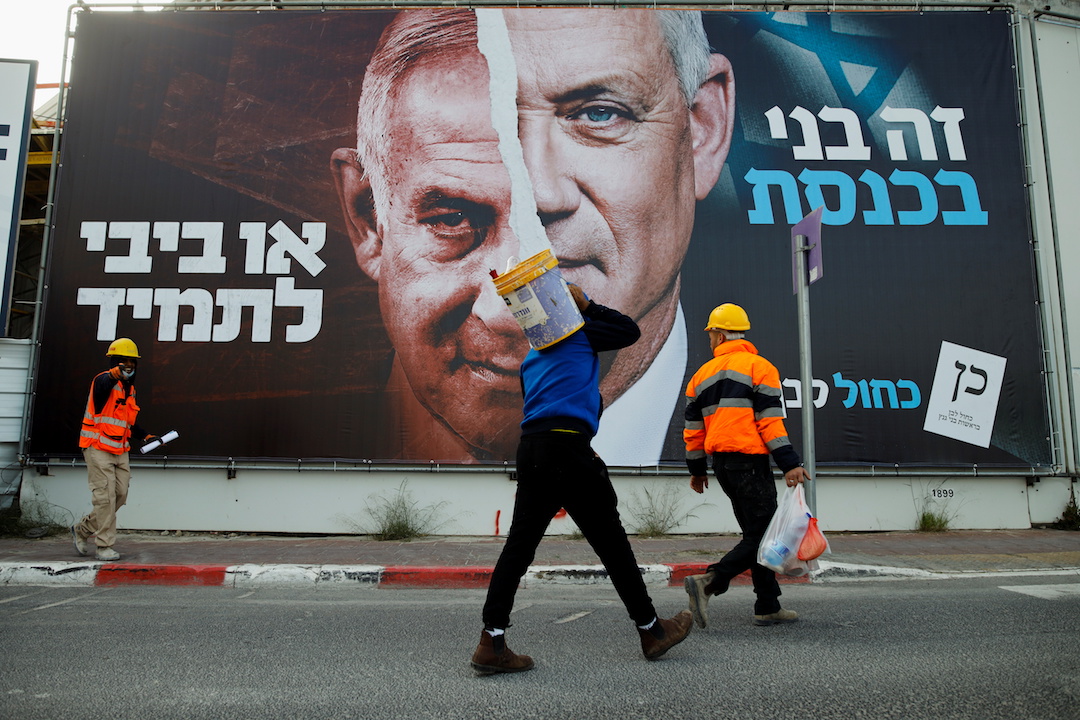
Israelis go to the polls on Tuesday, October 27, in the first national election since Hamas's attacks of October 7, 2023, and the final surveys published before the legal blackout suggest a country that is as divided as it has ever been. Three television polls released on Friday, October 23, put the centrist Yashar party of former military chief Gadi Eisenkot narrowly ahead of Prime Minister Benjamin Netanyahu's Likud, but they also agree on something more consequential: neither Netanyahu's governing coalition nor the opposition "change bloc" is projected to reach the 61 seats needed to govern a 120-seat Knesset.
That arithmetic means the real contest may begin only after the ballots are counted. Analysts quoted by the Council on Foreign Relations and others describe lengthy coalition talks and a "quite plausible" return to the polls as realistic outcomes. If no government can be formed, Netanyahu would remain as caretaker prime minister while Israelis vote again, most likely in early 2027. Layered on top of the numbers are warnings about street unrest, accusations about the integrity of the vote, and a debate over whether any change of leadership would alter Israel's conduct of the wars with Iran, Hamas and Hezbollah.
Background: An Election Shaped by October 7 and Three Wars
Israel elects all 120 members of the Knesset by nationwide proportional representation. Voters choose parties rather than individual candidates, and a party must win at least 3.25 percent of the national vote, roughly four seats, to enter parliament. No single party has ever won an outright majority, so every Israeli government is a coalition, and if the president's chosen candidate cannot assemble one within 28 days, the country returns to the ballot box.
This campaign is widely seen as a referendum on Netanyahu. His standing has been strained by the failure to prevent the October 7 attacks, by the long wars in Gaza, Lebanon and Iran, and by a coalition that has repeatedly fractured. According to the Council on Foreign Relations, Itamar Ben-Gvir's Otzma Yehudit left the government in January 2025 over the Gaza ceasefire and returned two months later, while United Torah Judaism quit in July 2025 over the question of conscripting ultra-Orthodox men. Polling suggests Netanyahu is less popular than in past campaigns and would likely need far-right partners again to govern.
The issues voters raise most often are accountability for October 7, the military draft for the ultra-Orthodox, the cost of living, and Israel's strained relations with the United States, Europe and Arab neighbors. Palestinian statehood, by contrast, is not a priority for most Israelis, and nearly all Jewish-majority parties reject it; only the Arab parties support it.
Key Developments: What the Final Polls Show
The three polls, from Channel 13 (Madad), Channel 12 (Midgam) and the public broadcaster Kan (Kantar), were published on Friday under rules that bar further publication until exit polls appear at 10 p.m. on election night. Yashar led in all three, with 22, 23 and 22 seats respectively. Likud followed with 19, 21 and 20. Naftali Bennett's B'Yachad list, the merger of his Bennett 2026 party with Yair Lapid's Yesh Atid, drew 14 to 15 seats, and the Democrats, led by Yair Golan, won 8 to 10.
On the right, Ben-Gvir's Otzma Yehudit polled at 8 seats in all three surveys, Shas at 7 to 8, United Torah Judaism at 7 to 8, and Religious Zionism at 6 to 8. Avigdor Liberman's Yisrael Beytenu stood at 8. The Arab-led parties were projected to win between 14 and 16 seats in total, with the Joint List at 9 in each poll and Ra'am at 5 to 7.
Added up, the pollsters gave the "change bloc" between 52 and 56 seats and the current coalition 50 in each survey, with the Arab parties holding the balance. A separate Zman Yisrael poll the day before showed 51 seats for each Jewish-led bloc, 14 for the Arab parties and 4 for the Reservists list of Yoaz Hendel and Yaron Zelekha, which Kan's poll was the only one to place above the threshold. Two small right-leaning lists, Ofer Winter's party and Moti Leitner's ultra-Orthodox list, fell below the threshold in all three polls but have vowed to stay in the race despite pressure from Netanyahu and his allies to withdraw, a decision that could waste votes that would otherwise help the coalition.
Not every pollster agrees. Pro-government Channel 14 surveys have shown Likud at around 30 seats and the pro-Netanyahu bloc at 62, while the Times of Israel poll put Likud at 21 and the bloc at 51. Netanyahu has told supporters not to trust the polls, saying the "real position" is "on the bubble."
The Coalition Math
The opposition bloc is united mainly by opposition to Netanyahu. In a joint statement in September, its parties pledged not to attack one another and promised an official commission of inquiry into October 7, a common position on ultra-Orthodox conscription, limits on prime ministerial terms and a formal constitution. They have not named a candidate for prime minister, and they have not agreed on whether to sit with Arab parties.
That last question may decide the outcome. Mansour Abbas of Ra'am has said he is open to joining the change bloc, but several of its parties have ruled out serving in government with Ra'am. Meanwhile, with Arab parties potentially winning record support, a Netanyahu-led coalition could only reach a majority if smaller right-wing lists clear the threshold or if ultra-Orthodox parties are reconciled with the rest of the coalition over the draft. Analysts cited by the CFR see three possible compromises: a rotation government, cooperation with Arab parties, or a deal with the ultra-Orthodox. Steven Cook has floated a rotation between Eisenkot and Netanyahu, though he notes that would undercut the opposition's central argument. Elliott Abrams considers another election quite plausible.
Reactions and the Fear of Unrest
The campaign has turned bitter. Times of Israel reporting describes a country "primed" for clashes around election day. Haredi anti-draft protesters have blocked roads and thrown rocks at police, settler and Palestinian violence in the West Bank has risen, and a poll cited by the paper found that only 68 percent of Israeli Jews would accept a democratically elected government whose policies they oppose. Reichman University's Gilad Hirschberger warned that "part of the populace will feel disenfranchised no matter what happens."
Concern about the integrity of the vote is running high on both sides. A Channel 13 poll found nearly 60 percent of Israelis worried about election interference. Likud and Religious Zionism plan to station nearly 2,000 activists at polling stations in Arab towns to watch for alleged fraud, a plan the Joint List calls racist and which left-wing groups intend to oppose. Hirschberger cautioned that it could "create chaos." Analysts also recall that in 2021 Netanyahu described the government that replaced him as the product of "the greatest electoral fraud" in Israel's history, and they warn that a large gap between pro-government polls and actual results could feed claims that the election was stolen.
The rhetoric has also turned personal. Channel 14 commentators have called Bennett a "traitor," Golan has received death threats and requested a security detail, and President Isaac Herzog has appealed to politicians and broadcasters with the warning that "words kill."
Would a New Government Change Israel's Wars?
A Reuters analysis published on October 21 argues that the election may change who leads Israel but not its core strategy. Analysts from across the region told the agency that Iran will remain Israel's main adversary and military force its preferred instrument. Michael Young of the Carnegie Middle East Center described a shared outlook across Israel's security establishment and political class built on "forward defence" and deterrence. A change of government might bring a warmer tone toward neighbors and perhaps tougher action against settler violence, but not a fundamental shift.
Netanyahu's own message has been uncompromising. On Sunday, October 18, he said Israel must prioritize "prevention and offence" over containment and defence, including pre-emptive strikes, and he has said the only way to end the Iranian threat is to overthrow the regime in Tehran. President Donald Trump has praised him as a "great warrior prime minister," which Reuters says has raised expectations that he would try to finish the campaign against Iran if re-elected. Earlier reporting covered by this series said Washington and Jerusalem were weighing strikes after the US midterms. Some Gulf leaders, the analysis adds, quietly see Netanyahu as the politician most likely to keep pressure on Tehran even as they oppose his policies in Gaza and the West Bank.
The Gaza peace plan is also hostage to the vote. Israeli intelligence reportedly believes Hamas is rebuilding, and the disarmament and withdrawal sequencing dispute has frozen the Board of Peace and a multibillion-dollar reconstruction plan until a government with a mandate emerges.
What's Next
Polls close at 10 p.m. local time on Tuesday, when the first exit polls will arrive; official results will take longer, and the final seat allocation could hinge on parties that hover near the 3.25 percent threshold and on the surplus-vote agreements between lists. After certification, President Herzog will consult party leaders and ask the figure with the best chance of forming a government to try within 28 days, with an extension possible.
Three outcomes look most likely. One is that the change bloc, aided directly or indirectly by Arab parties, reaches 61 and installs Eisenkot or another figure. Another is that the right, helped by wasted votes on the left or in the center, squeaks through with Netanyahu. The third, and arguably the most probable given every published poll, is stalemate, which would extend Netanyahu's caretaker tenure and send Israelis back to the polls in 2027. In any of these cases, the Iran confrontation, the Gaza ceasefire track and relations with Washington will continue to shape events, and the first days after the vote will test whether Israel's institutions and its divided public can absorb a result that roughly half the country may refuse to accept.
Published By | News Editor