CAIRO
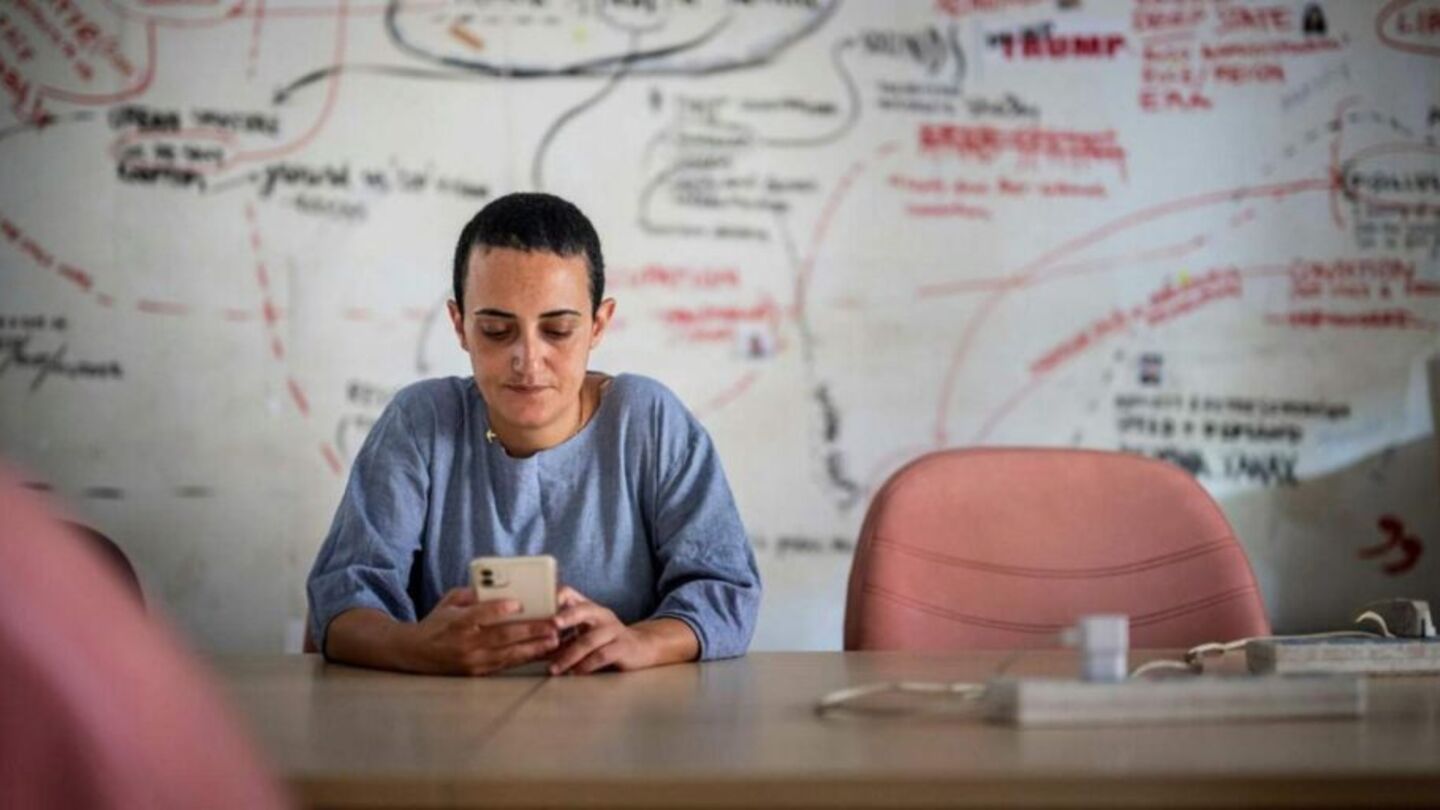
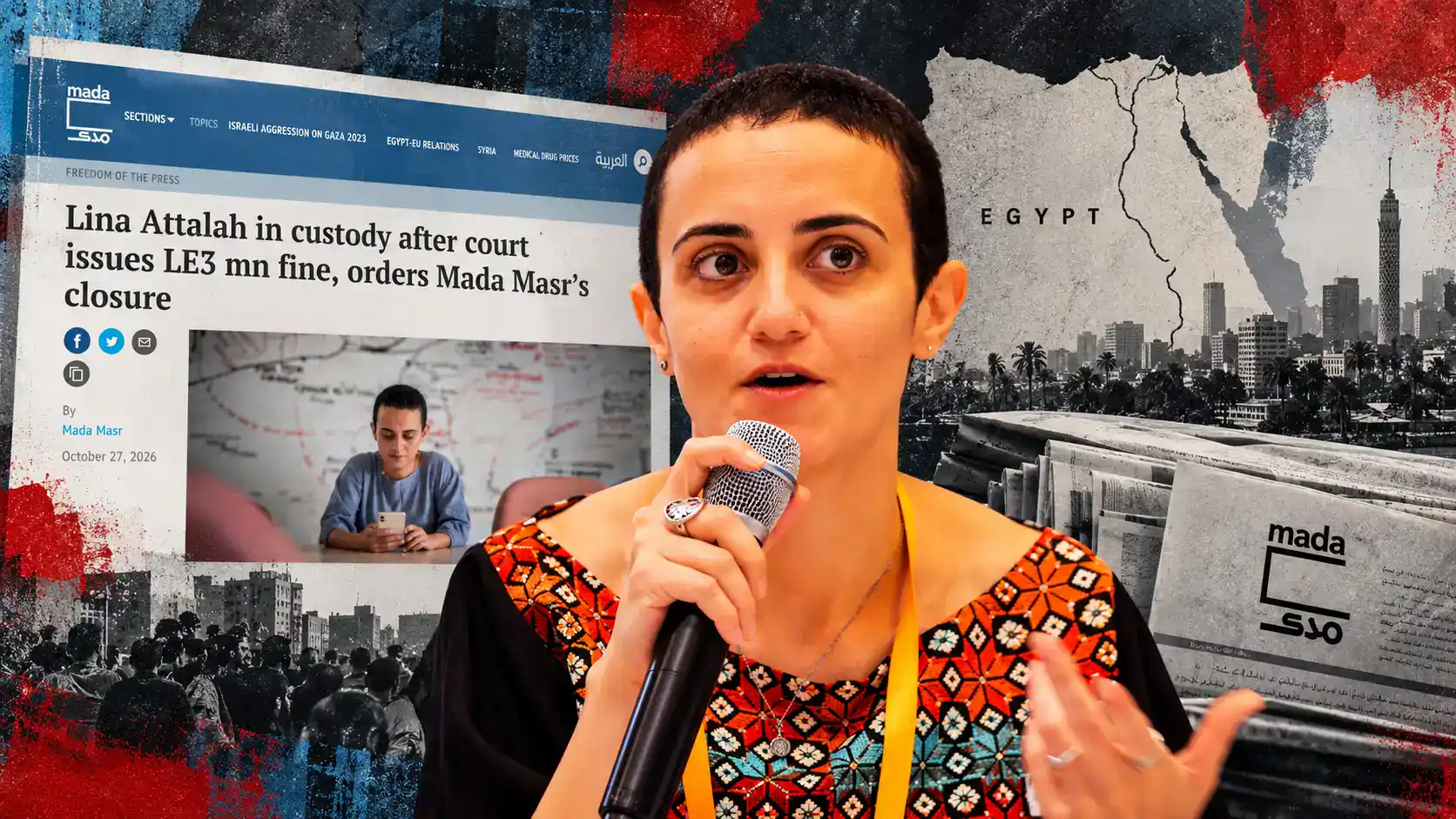
An Egyptian misdemeanor court on Tuesday fined Lina Attalah, editor-in-chief of the independent news outlet Mada Masr, 3 million Egyptian pounds and ordered the website closed. Attalah was taken into custody after the ruling. The verdict came just six days after prosecutors referred her to trial for operating a website without a license, and it ends, at first instance, one of the most closely watched press-freedom cases in the country in years. Rights groups call it an unprecedented escalation against Egypt's few remaining independent newsrooms. The ruling can be appealed.
The ruling
The ninth circuit of the New Cairo Misdemeanor Court handed down the verdict at the first hearing in the case, according to Egyptian Streets. The fine of 3 million Egyptian pounds is about $53,500 (Human Rights Watch put it at $53,474). The court also ordered Mada Masr's website closed. Mada Masr said the court additionally ordered its equipment confiscated.
Attalah was tried under Article 105 of Law No. 180 of 2018, the media-regulation law. According to Egyptian Streets, the article sets fines of 1 million to 3 million pounds for running a website without a license from the Supreme Council for Media Regulation, allows courts to order closure and confiscation of equipment, and doubles the fine for repeat offenses. The 3 million pound penalty is therefore the maximum for a first offense.
Attalah was detained at the courthouse after the hearing and was still there on Tuesday afternoon, Egyptian Streets reported. One aggregated news summary published Wednesday suggested she was later released after the outlet paid the fine. The primary reports reviewed for this article did not confirm that, and her custody status should be treated as unverified.

How the case moved so quickly
The speed of the process has become a central point of criticism. Attalah received a summons on Oct. 19, according to Human Rights Watch. MERIP, the Middle East Research and Information Project, says the summons came from the Supreme State Security Prosecution under Case No. 9072 of 2026 and gave no reason. She was questioned on Oct. 21 for more than six hours about Mada Masr's coverage of prison protests and about the outlet's license status, according to MERIP and La Nación. She was released that evening on bail of 100,000 pounds, roughly $1,800.
Prosecutors had also questioned her about publishing false news. That charge was not included when the prosecution referred her to trial on Oct. 22 for establishing, managing and operating a website without a license. Her lawyer, Hassan al-Azhari, called the referral's speed "unjustified urgency." The first hearing was set for Tuesday, Oct. 27, and the verdict arrived the same day.
Human Rights Watch, citing Mada Masr's account, listed several alleged irregularities at the hearing. The judge cleared the courtroom, rejected every procedural motion from the defense, including requests to present evidence and hear witnesses, and the defense counsel was replaced against Attalah's will. These claims come from Mada Masr and HRW; the court has not publicly responded in the reports reviewed.
"The summary conviction of Lina Attalah in a sham process involving a single, rushed hearing is a complete travesty of justice," said Bassam Khawaja, HRW's deputy Middle East and North Africa director. He said Egypt's international partners "should loudly condemn this outrageous crackdown."
The licensing dispute at the core of the case
Mada Masr's defenders argue that the offense it was convicted of is one the state has made impossible to avoid. The outlet says it applied for a license in October 2018 and again in August 2020 and received no response either time. In 2022, it learned through prosecutors that the regulator had rejected its application without notifying it, according to MERIP and La Nación, and it challenged that decision in court. According to Egyptian Streets, in that administrative case the council said the application lacked some required documents. Mada Masr says it submitted a complete application in June 2023 and has had no decision since. The Supreme Council for Media Regulation had not publicly commented on the ruling as of Tuesday afternoon, Egyptian Streets reported.
The Journalists Syndicate has taken Mada Masr's side. Its head, Khaled El-Balshy, said the syndicate had sent the council a memo on the outlet's pending application and planned to submit a legal memo supporting it in court. The syndicate argues that licensing disputes belong before administrative courts rather than criminal courts and has called for a review of the licensing rules.
A long record of official pressure
Mada Masr was founded in 2013 and has been blocked inside Egypt since 2017. Attalah, who was named to Time magazine's list of the 100 most influential people in 2020, has been detained before. In November 2019, plainclothes security forces raided the outlet's office and held three senior reporters, including Attalah, for several hours, confiscating laptops and phones, according to The New Arab. In October 2023 the media regulator suspended the site for six months, citing operation without a license and what it called fabricated news, after an article on an Israeli plan concerning Gaza.
This is the sixth case against Mada Masr and its journalists in six years, according to both MERIP and La Nación. MERIP says it is the first of those cases to reach trial. The prosecution's case file, La Nación reports, included a Mada Masr report on prison protests and a harsh security response, protests that followed parliament's decision to delay the country's new criminal procedures law by a year.
A wider crackdown
The conviction did not come in isolation. In late September, security forces arrested the entire six-person newsroom of Matsadaash, an independent fact-checking and investigative platform. Families and lawyers did not know where the journalists were for days. The six remain in pretrial detention on charges that include joining a terrorist group and spreading false news, which they deny, and their detention was renewed for 15 days on Oct. 13, according to La Nación. Some of the detainees allege torture, according to MERIP.
In response, Mada Masr and seven other Egyptian and Arab outlets launched a temporary joint fact-checking newsroom in solidarity. Attalah's summons followed shortly after. In a statement, MERIP's board joined 119 civil society and media organizations, including Amnesty International, Human Rights Watch, the Committee to Protect Journalists, ARTICLE 19 and PEN International, in condemning the referral to trial as an "unprecedented attack on press freedom in Egypt." The statement demanded an end to the prosecution, a license for Mada Masr, an end to the targeting of independent outlets including in the Matsadaash case, and the release of all journalists detained for their work.
Egypt ranks 169th out of 180 countries in Reporters Without Borders' 2026 World Press Freedom Index, according to La Nación.
Analysis: why this matters now
Three features make this case more significant than a routine licensing dispute. First, the legal route is notable. Rather than relying on the administrative blocking and false-news charges used in earlier cases, prosecutors chose a licensing offense that carries heavy fines and a closure power, and they applied it through a licensing system under which, Mada Masr says, the regulator has left its applications unanswered for years. That arrangement allows the state to decide when to enforce the rule, a point at the heart of the Journalists Syndicate's objection.
Second, the timing suggests a campaign rather than a one-off. The Matsadaash arrests, the solidarity newsroom, the summons and the conviction all fall within roughly five weeks. Whether that sequence reflects coordination is not established by the reporting available. The pattern, however, is what rights organizations cite when they call the case unprecedented.
Third, the case is a test of Egypt's foreign relationships. HRW's call for the country's international partners to "loudly condemn" the ruling is aimed at governments, including Western and Gulf states, that have kept close security, economic and migration ties with Cairo. Past press-freedom cases in Egypt have drawn statements of concern but rarely lasting diplomatic consequences, and nothing in the reporting so far suggests a departure from that record. Still, the presence of 119 signatories on a single statement shows the breadth of the response.
What to watch next
The most immediate question is Attalah's legal and physical status: whether she remains in custody, whether the defense files an appeal and how quickly an appeals court acts. Because the ruling was issued by a first-instance court, a higher court could reverse or reduce it, although Egyptian appeals in politically charged cases have often been slow and have rarely favored defendants.
Second, watch whether the closure order is enforced in practice. Mada Masr has been blocked inside Egypt since 2017, so a closure order may matter chiefly for the outlet's equipment, finances and legal standing, and for whether it can keep operating from abroad or under another structure. The outlet has not said, in the reports reviewed, how it plans to continue publishing.
Third, watch the Matsadaash detainees. Their pretrial detention is renewed in 15-day increments, and the next renewal hearing will show whether prosecutors intend to move toward trial. Finally, the Supreme Council for Media Regulation's silence will not last indefinitely; any public explanation of its handling of Mada Masr's 2023 application would be the first official account of why the license has not been granted or refused.
For now, one of Egypt's last independent newsrooms has lost its legal right to exist, its editor has been convicted after a hearing that lasted a single session, and the country's press-freedom record, already among the world's worst by Reporters Without Borders' ranking, has taken another step downward.
Published By | News Editor