DAKAR, Senegal
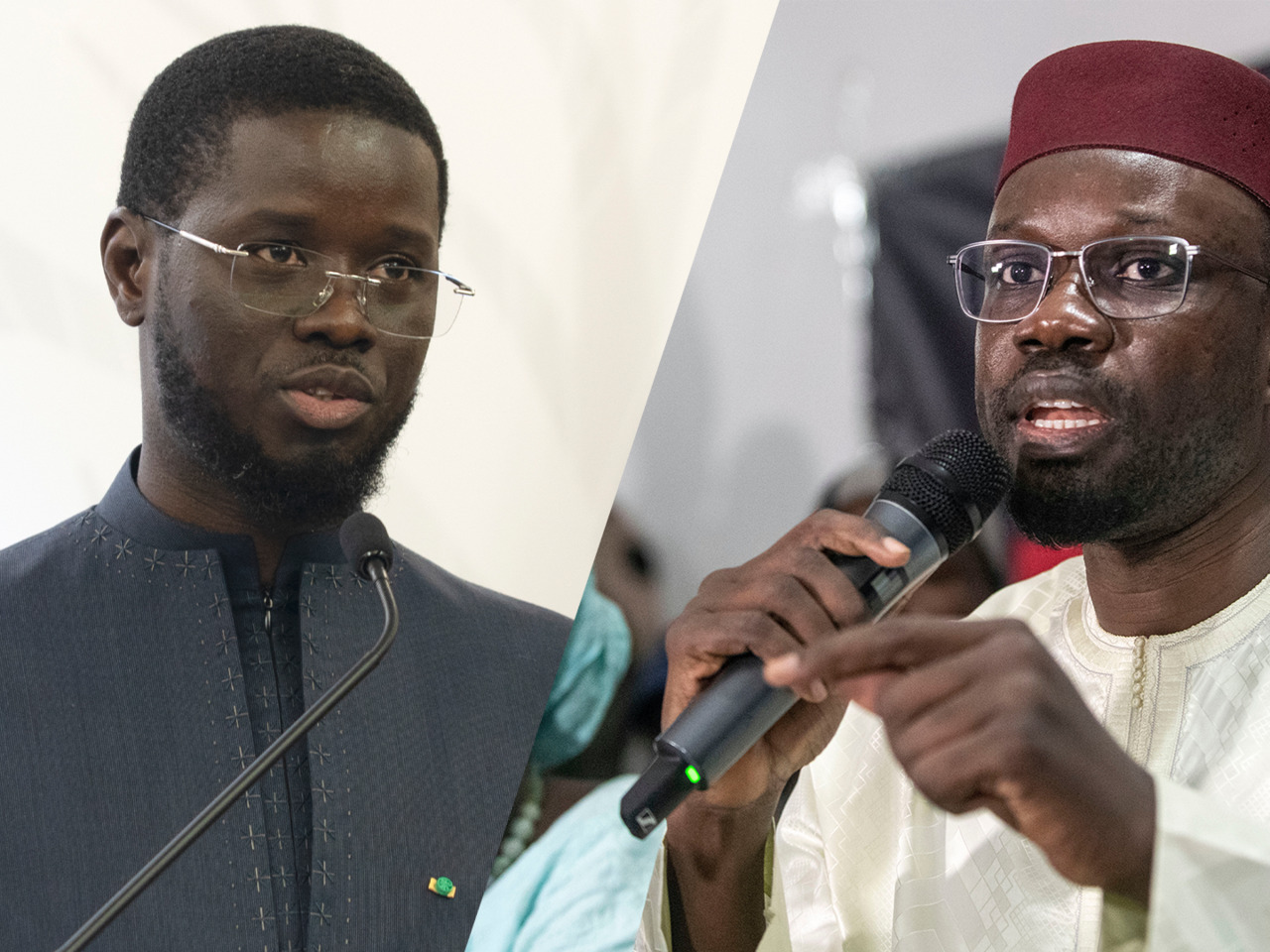
Senegal's president has publicly declined to rule out dissolving the National Assembly, just as lawmakers loyal to his former ally and ex-prime minister prepare to examine the amended budget that underpins a new International Monetary Fund program. In interviews given in the United States last week, President Bassirou Diomaye Faye said that any decision would depend on "necessity or context," and asked: "Why exclude a prerogative granted by the Constitution?" The stakes are high. A staff-level IMF agreement worth $2.2 billion over three years depends on Senegal passing corrective measures, the country's debt stands at about 132 percent of gross domestic product, and the chamber is presided over by Ousmane Sonko, the man Faye fired in May.
From partners to rivals
Faye and Sonko rose together. Faye won the March 2024 presidential election with 54 percent of the vote, according to Al Jazeera, after Sonko, the charismatic leader of the Pastef party, was barred from running because of a defamation conviction. Both men had been in jail before the campaign and were freed days before the vote. Pastef then won a landslide in November 2024 legislative elections, taking 130 seats in the 165-seat National Assembly.
The partnership frayed over money. After the new government audited the books, it found that the previous administration had understated debt and budget deficits. Estimates of the concealed borrowing vary: Carnegie's Emissary refers to a "$7 billion hidden debt scandal," CNBC Africa says the IMF puts it at more than $11 billion, and other analysts cite $13 billion. All agree that it pushed debt to about 132 percent of GDP at the end of 2024, that Moody's and S&P downgraded the sovereign, and that the IMF suspended a $1.8 billion lending program.
Carnegie's analysis describes the split as one between two approaches: Faye, who personally oversaw debt talks, judged negotiations with the IMF necessary despite the domestic cost, while Sonko called debt restructuring a "disgrace," opposed fuel price increases and pursued renegotiation of oil and gas contracts. In March, Sonko indicated he might pull Pastef out of government if Faye abandoned the party's priorities, Al Jazeera reported.
On May 23, Faye dismissed Sonko and dissolved the government. Sonko's response was to move to the legislature. The Assembly's speaker, El Malick Ndiaye, resigned the next day, describing the decision as "a personal choice, guided above all by my notion of institutions, public responsibility and the greater interest of the nation." Wikipedia's chronology records that Faye named the economist Ahmadou Al Aminou Lo as prime minister on May 25 and that Sonko became speaker on May 26. On June 1, Sonko announced that Pastef would not take part in the new government.
The result is an unusual arrangement: a president and a prime minister without a reliable majority of their own, facing a parliament led by the president's most powerful rival, who is also the president of Pastef. Legislators had, a month before the dismissal, approved electoral code changes that would let Sonko run for president in 2029, according to Al Jazeera.
The IMF deal and the budget test
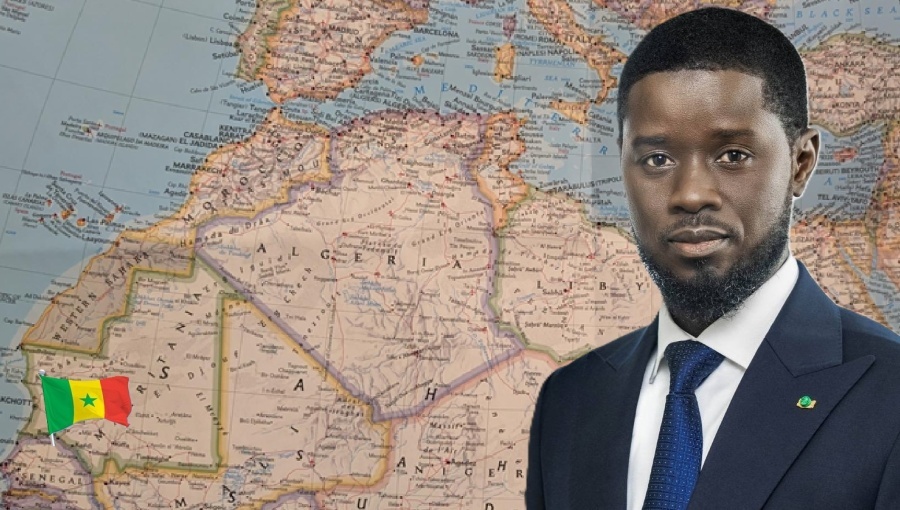
The IMF announced on September 1 that it had reached a staff-level agreement on an Extended Credit Facility arrangement with Senegal; the deal is subject to approval by the Fund's Executive Board. The $2.2 billion figure and the 36-month duration come from secondary reporting (Pan African Visions, CNBC Africa), because the text of the IMF's press release was not accessible when this article was prepared. CNBC Africa reported that Senegal committed to restoring "debt sustainability," and that the country's international bonds fell to record lows, trading below 50 cents on the dollar. Pan African Visions reported that S&P Global Ratings lowered Senegal's foreign-currency rating to "CC" from "CCC+" on September 4, with a negative outlook; that is a single-source figure.
The government's amended budget, known by its French acronym PLFR-2026, was drafted to reflect the agreement. It is due before an Assembly that Pastef dominates. According to Seneweb, Faye urged deputies while in the United States to back the text, saying they "must accompany this dynamic that they found and managed with us" and that each actor would face public judgment for its position. Sonko had previously sought clarification of the IMF agreement's terms and of how debt would be managed, per the same report.
For ordinary Senegalese the debate is not abstract. A report by Pan African Visions quotes an activist who says the price of fish has risen from about 2,500 CFA francs ($4.35) to nearly 4,000 CFA francs ($6.95), a reminder that price increases and austerity carry a political cost that Sonko's populist wing has shown it is willing to exploit.
What Faye said in New York
In interviews with RFI and France 24 (quotations here are translated from French), reported by Benin Web TV and by The Gambia Journal, Faye acknowledged the breakdown with Sonko. He cited "persistent divergences on certain subjects," and said: "When this loss of confidence persisted, I chose another Prime Minister." He rejected the idea that the IMF talks alone caused the split.
Asked whether he could dissolve the Assembly, Faye said, "Why exclude a prerogative granted by the Constitution?" and added that any decision would turn on "necessity or context" and the "supreme interest of the Senegalese people." On the possibility that deputies reject financial measures, he said: "Each assumes their responsibility and the people judge."
Responding to Pastef members who accuse him of betrayal, he said: "In terms of betrayal, the only thing I am likely to betray is the oath I took on April 2, 2024." He also defended the law criminalizing homosexuality, enacted on March 31, asking rhetorically, "Of what international community are you speaking?" and arguing that Senegal deserved the same respect for sovereignty extended to Western states that legalized same-sex marriage.
The constitutional trap
The remark on dissolution is a political signal more than an immediate option. Article 87 of the 2001 Constitution allows the president to dissolve the Assembly, but the text bars dissolution during the chamber's first two years. Analysts differ slightly on the date: The Zambian Observer says the current Assembly, elected in November 2024, cannot be dissolved before November 2026, while Carnegie says December 2026. Either way, the window opens within weeks. The president must also consult the prime minister and the Assembly's president; the consultation is mandatory though approval is not, so Faye would have to consult Sonko.
The political calculation is delicate. The Zambian Observer argues that dissolving an Assembly in which his own former party holds 130 seats would risk splintering the ruling coalition and give Sonko a narrative of presidential overreach; on this reading, the threat may be leverage rather than a plan. Carnegie adds that Sonko controls both the speakership and a capacity for street mobilization, and warns that implementing austerity could trigger youth-led unrest like that seen in Kenya in 2024, Nigeria in 2024 and Madagascar in 2025.
The transparency fight
The two camps are also contesting the terms of accountability. On August 17, the Assembly approved, by 133 votes of 165 deputies, a law requiring the president, prime minister and speaker to publicly declare their assets within three months of taking and leaving office, according to Africanews. Some Pastef deputies opposed it, worried that it could be used against Faye, and Justice Minister Moussa Sarr suggested it belonged in broader constitutional changes, the report said. Both camps have accused each other of a lack of transparency in the management of state affairs. Faye has announced plans for a constitutional referendum, though no date has been set.
Analysis: leverage on both sides
Each side holds a weapon that it may not want to use. Faye has the threat of dissolution, but using it would mean a new legislative election while the economy is under IMF supervision, bonds are trading at distressed levels, and it is unclear how much of Pastef's base he could count on. Sonko and Pastef control the votes needed to pass or block the budget, but rejecting it could jeopardize the IMF program that the country's finances now depend on, and would expose them to the charge of sinking the economy for personal advantage.
The most likely outcomes, on the evidence so far, are a negotiated or amended passage of the budget with conditions attached, or a tense standoff that pushes the confrontation into December, when dissolution becomes legally available. A rejected budget would be a serious escalation. It is worth stressing that none of these outcomes has been reported as decided, and the precise contents of the PLFR-2026 were not available in the reporting reviewed here.
There is a regional dimension as well. Carnegie notes that Senegal holds the presidency of the ECOWAS Commission through 2030, and that a paralyzed government undermines its role as a democratic anchor in a region where several neighbors are governed by the military. A crisis that is resolved through votes and constitutional procedures would help reinforce that role; one that ends in institutional deadlock would do the opposite.
What to watch
- The PLFR-2026 vote: the date the Assembly takes up the amended budget, whether Pastef amends or rejects it, and how Sonko frames the IMF terms.
- IMF Executive Board approval: the timing of board consideration and any prior actions required from Dakar.
- The dissolution window: whether Faye moves once the two-year bar expires in late 2026, and whether he formally consults Sonko.
- Markets and ratings: how bond prices and further rating decisions respond to the budget outcome.
- Street pressure: whether rising prices produce protests, and which camp they favor.
Published By | News Editor