ABUJA, Nigeria
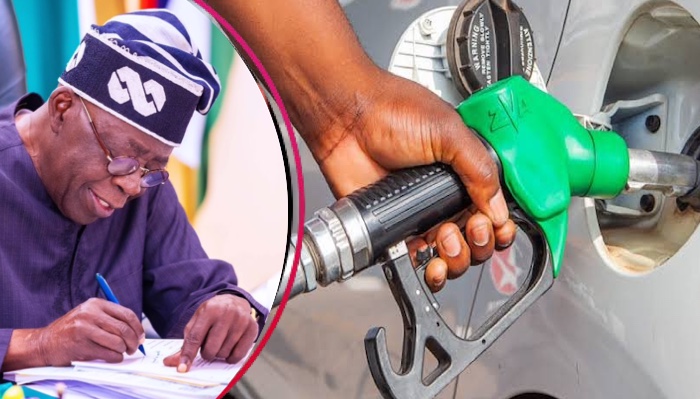
Nigeria's federal, state and local government workers are in the middle of a three-day warning strike over the price of petrol and the value of their pay, a confrontation that pits a coalition of public sector unions against President Bola Tinubu's signature economic reform. The strike began on Friday, October 2, and is scheduled to end on Sunday, October 4. Union leaders have warned that it could be a prelude to something larger if the government does not respond.
The strike and its organizers
The action is led by the Joint National Public Service Negotiating Council (JNPSNC), which brings together eight public sector unions, among them the Nigeria Civil Service Union and the Association of Senior Civil Servants of Nigeria. Its national secretary, Gbenga Olowoyo, who is also general secretary of the Nigeria Civil Service Union, announced that the strike would go ahead after a September 30 deadline passed without a government response, Daily Trust reported. The council had first written to Tinubu on September 21.
Olowoyo said "the economic and mental hardships are becoming unbearable and frustrating," according to Opinion Nigeria. In a statement quoted by Star Connect Media, the council said that "the failure of the Federal Government to take tangible steps to address these critical issues on or before September 30 has left Nigerian workers with no choice but to commence a three-day warning strike."
The Nigeria Labour Congress (NLC), the country's main labor federation, has endorsed the council's position. Chris Onyeka, the NLC's assistant general secretary, warned that unmet demands "may snowball into a national strike involving all workers" in both the public and private sectors, according to Parrot Nigeria. The Rio Times reported that the unions left room for last-minute negotiations to avert the action, but no deal emerged before the deadline.

What the unions want
The council has three demands. The first is a cut in the pump price of petrol, formally known as premium motor spirit, to ₦500 per liter. According to the council, as quoted by Daily Trust, petrol was selling for between ₦1,450 and ₦2,000 per liter, and in some locations outside major cities and communities for as much as ₦2,500. Other outlets reported slightly different ranges, which reflects how much prices vary by location; the council's own figures are used here.
The second is an immediate wage award, an across-the-board payment intended to cushion the effect of high prices on workers' incomes.
The third is the creation of a tripartite committee, bringing together government, employers and labor, to begin negotiating a new national minimum wage. The council wants the new floor to be at least ₦500,000 a month beginning in 2027, Daily Trust reported. The current minimum wage is ₦70,000 a month, a figure agreed in July 2024, according to the Rio Times, which described it as eroded by inflation and currency depreciation.
A reform's long shadow
The roots of the dispute lie in the end of Nigeria's long-running fuel subsidy. Tinubu removed the subsidy after taking office in May 2023, and petrol prices rose from below ₦200 per liter to historic highs, Star Connect Media reported. The government has presented the removal as a necessary correction of a costly, leaky subsidy. For workers, the effect has been a steep rise in the cost of getting to work, eating and paying rent and school fees. Star Connect Media reported that transport costs in major cities have roughly quadrupled, a claim attributed to that outlet and not independently verified here.
The unions' argument is structural. In a statement reported by AllAfrica, the NLC said that fuel prices feed through the whole economy. "Without cutting this chain, any effort to ease the suffering of the people is futile," it said, describing petrol costs as the starting point for inflation in transport, food, rent and education. The council said the high cost of petrol "had placed severe pressure on workers, their dependants and the wider population."
The ₦500 demand deserves scrutiny because it is, in practical terms, a demand for a price roughly a quarter to a third of current pump levels. The sourced reporting does not say how the unions arrived at that number or how it would be financed. Nor does it say whether the government would be willing to restore any form of subsidy. That gap matters, because a price cut of that scale could not occur without significant public spending or a policy reversal.
The government's response so far
The government has been quiet. Parrot Nigeria reported that efforts to reach the Federal Ministry of Labour were unsuccessful, and an unnamed ministry source said only that "the appropriate authorities are handling the issue" before declining further comment. The Rio Times reported that as of its publication the administration had not publicly responded to the September 21 letter.
The president's Independence Anniversary address, delivered around the time of the deadline, did not satisfy the unions. Opinion Nigeria reported that a council leader expressed disappointment, saying that "the speech offered no concrete relief" to workers' demands. The reporting reviewed for this story does not include an official reaction to the strike itself, and it contained no independent measure of how widely workers complied on the first day. Reports of closed ministries, shuttered offices or disrupted hospital services should be treated cautiously until confirmed.
Economic data complicates the picture
The administration has an argument of its own. The Stanbic IBTC Bank Nigeria Purchasing Managers' Index, compiled by S&P Global, rose to 56.4 in September from 54.3 in August, the highest reading since February 2022, Leadership reported. Readings above 50 indicate expansion. New orders rose for an eighth consecutive month, and all four monitored sectors expanded. Muyiwa Oni, Stanbic IBTC's head of equity research, said business conditions had improved significantly.
The data show how the same economy can look very different from the vantage points of companies and wage earners. A rising PMI measures output and orders, not household purchasing power. A civil servant on a ₦70,000 minimum wage may see little of the expansion. For the government, the figures offer evidence that the reform program is working. For the unions, they illustrate that growth has not reached those who depend on fixed salaries. The tension between the two readings is likely to define the argument over the coming weeks.

Analysis: leverage and limits
A warning strike is a calibrated instrument. By limiting the walkout to three days, the unions demonstrate capacity without exhausting their members' finances or forfeiting the possibility of talks. Labor leaders have indicated that more could follow. Star Connect Media reported that union leaders warned the action precedes an indefinite general strike if the demands go unmet, though the NLC's wording, as quoted by Parrot Nigeria, was more conditional.
The government faces a dilemma with no easy resolution. Conceding on petrol prices would undercut a reform that its supporters consider the central achievement of the administration. Refusing any concession risks hardening the unions and widening the coalition. A middle path, such as a wage award or an early start to minimum wage talks, is the most plausible, though the sourced reporting offers no sign yet that the administration is considering one. The minimum wage demand is also politically timed: the unions want talks to begin before 2027, a year in which Nigeria is due to hold its next general elections, and wage promises are likely to figure in the campaign environment. That timing is an interpretation of the calendar rather than anything the unions have stated.
The NLC has a history of using the threat of broad stoppages to extract concessions, but this strike is led by public sector bodies rather than the NLC itself, which has so far offered endorsement and not direct participation. Whether the congress and its private sector affiliates join a second round would determine whether this becomes a nuisance for the civil service or a national shutdown.
What to watch next
Several indicators will clarify the direction of the dispute. The first is whether the government convenes talks before Sunday's scheduled end of the strike, or announces any interim relief such as a wage award. The second is the unions' decision after October 4: an extension, an ultimatum or a return to negotiations. The third is whether the NLC moves from endorsement to a formal call for action involving the wider workforce. The fourth is the trajectory of pump prices, which will determine whether the ₦500 demand gains or loses public resonance. Finally, the next set of inflation and purchasing-power data will show whether the improvement in business activity is reaching household budgets.
Published By | News Editor