Written By | International News Agencies
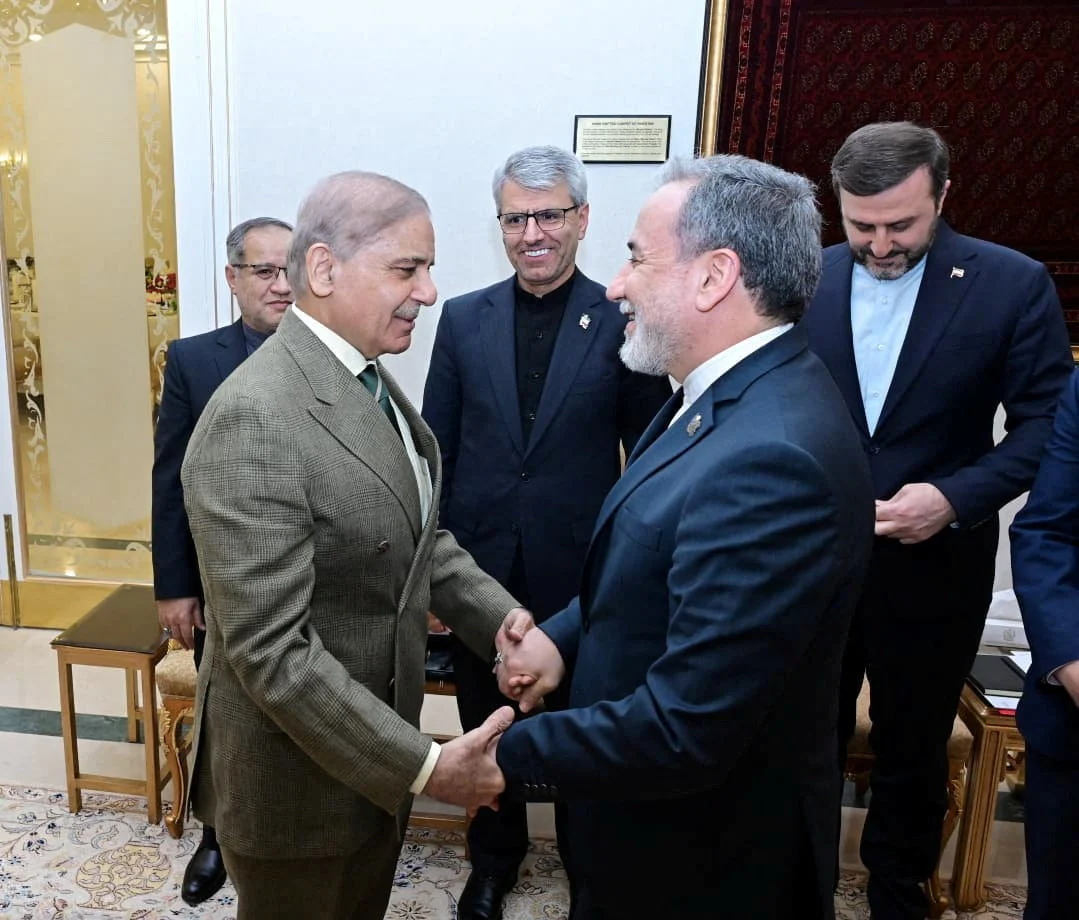
The conflict began in late February and has since reshaped the region
World Politics
Overview
Iran's seven-month war with the United States has produced a second front inside Tehran: a fight over who is allowed to negotiate. Hardline lawmakers have filed a motion to impeach Foreign Minister Abbas Araghchi over his meeting on the sidelines of the UN General Assembly with President Donald Trump's envoy, Steve Witkoff. They allege that he met the American side without authorisation from the Supreme Leader, Mojtaba Khamenei, or coordination with the Supreme National Security Council. The motion was reported on October 6 and 7 and, as of this writing, has not yet been referred to parliament's presiding board, let alone brought to a vote.
The episode arrives as Washington signals it has little patience for Iran's opaque decision-making. Vice President JD Vance said this week that Iran must make a "meaningful" cut to its enrichment capacity, while Trump complained that his "biggest problem" is that nobody knows who runs Iran. The impeachment push, whatever its outcome, tends to prove his point: the person charged with carrying Tehran's message to the world is under attack from inside the system for doing so.
Background: A War, a Blockade and a Stalled Negotiation
The conflict began in late February and has since reshaped the region. A central obstacle in the talks has been the Strait of Hormuz, the narrow waterway through which a significant part of the world's oil passes. Euronews reports that negotiations have centred on the conditions for reopening it, while a US naval blockade has throttled Iran's exports. The data firm Kpler, cited by BeInCrypto, reported that Iran's crude loadings fell to zero in September for the first time since the 1979 revolution, compared with about 255,000 barrels a day in August. The same outlet reported that Iran's Oil Minister, Mohsen Paknejad, resigned on Sunday, October 4.
On the American side, the human and political costs are rising. Earlier coverage, including a TIME interview with Trump reported last week, noted that US casualties stood at 19 dead and more than 800 wounded, and that the president faces poor polling ahead of the midterm elections. A previous round of diplomacy in New York appeared to break down at the start of October, when Axios reported that Secretary of State Marco Rubio ordered Araghchi's delegation out, a claim Iran disputes, saying its departure was scheduled and communicated in advance. Qatar has remained the principal intermediary throughout.
Key Developments: The Motion Against Araghchi
According to Euronews, the impeachment request is led by Amirhossein Sabeti, a hardline lawmaker associated with the Paydari Front, with Hosseinali Hajideligani among the signatories and Alireza Salimi, a member of parliament's presiding board, signing the letter. The total number of signatures was not given. Sabeti accused the foreign minister of "crossing red lines" and making "serious miscalculations" in handling the US file. Hajideligani went further, accusing Araghchi of repeatedly helping to push down oil prices to America's benefit through his interviews, an allegation that ties the political fight to a falling market: on Tuesday, according to BeInCrypto, Brent crude fell 2.6 percent to $100.46 and WTI fell 2.5 percent to $88.
The core allegation concerns the meeting of September 22 in New York. Euronews reports that Araghchi met Witkoff without approval from Mojtaba Khamenei or the Supreme National Security Council. WION, citing Tasnim, reports the same complaint, while saying Araghchi allegedly met both Witkoff and Jared Kushner and noting that two Iranian officials made that claim to the New York Times. There is a factual wrinkle here: Iran's foreign ministry has said contact ran only through Qatari intermediaries, and Witkoff has likewise said the talks went through mediators, so whether there was a direct, face-to-face encounter is itself contested. Trump publicised the meeting and called it "very productive," and Iranian media reported that it took place at the request of the American side.
Mohammad Rashidi, a presiding-board member, said on October 6 that the request had been registered in the legislative system but not referred to the board. Salimi cautioned that filing a motion does not mean the speaker backs it. Notably, the motion was filed while Speaker Mohammad Bagher Ghalibaf, himself a prominent negotiator with the United States, was presiding. Reports on October 7 also noted that a group of hardline lawmakers had been drafting the motion since September 24, when Araghchi was still in New York, and that Hajideligani said in August that they were collecting documents for it.
Reactions: The Government Pushes Back
The most important rebuttal came from inside the security establishment. The secretary of the Supreme National Security Council, Mohsen Rezaei, contradicted the claim that the trip was unauthorised, saying that it had been agreed that Araghchi would use his New York visit to convey Iran's conditions to the intermediaries. The foreign ministry later described Araghchi as a member of Iran's six-person decision-making team, which Euronews reads as a sign that he retains the system's confidence. Those statements do not resolve the factual dispute, but they make clear that large parts of the state are not prepared to treat him as a rogue actor.
Even among conservatives there is resistance. Lawmaker Ruhollah Lak Aliabadi said impeachment, especially in wartime, is not in the country's interest, adding that a recent four-and-a-half-hour parliamentary session with Araghchi had included at least three phone calls to him from the commander of the Revolutionary Guards. Conservative figure Mansour Haghighatpour put it more bluntly: you do not change saddles in wartime. There was no reaction from President Masoud Pezeshkian in the Euronews account. Iran International, an outlet with an open regime-change editorial stance and therefore to be treated with caution, claimed that Pezeshkian and Ghalibaf are both severely frustrated with Araghchi; that claim is unconfirmed.
Social media rumours that Araghchi had sought asylum abroad during the trip are presented by Euronews only as speculation and should be treated as such. Araghchi's sister died while he was at the UN, and her memorial drew one of the largest gatherings of Iranian officials since the war began, though Mojtaba Khamenei, who has not appeared at public events for more than seven months since assuming power, did not attend.
The Substance: What Iran Offered and What Washington Wants
Behind the procedural fight sits a real disagreement over terms. Euronews says Araghchi set out Iran's conditions in New York: an immediate lifting of the US naval blockade, an immediate transfer of frozen Iranian assets, and an end to the war on all fronts. WION adds that he presented a seven-day roadmap for fully reopening the blockaded strait. Trump rejected the proposal, saying Iran wanted a deal because it was losing "so badly," and by September 27 he said of Tehran, "They want to make a deal, but it is not the deal that I want to make." He has also warned that military operations could intensify after the midterms.
On October 5, in a Reuters interview, Vance said Iran must make a meaningful reduction in its enrichment capacity to end the war, arguing that a country that does not want a weapon has no need for 60 percent enriched fuel and that any deal must involve actual reductions rather than promises of future drawdowns. He said Washington is unsure how Tehran makes decisions and declined to say whether he leads the talks, adding that the president is "driving things." Iran's foreign ministry spokesperson said on October 4 that American officials understand Iran's system perfectly well. The exchange shows a recurring pattern: each side accuses the other of opacity while the underlying gap on sanctions, assets, enrichment and sequencing remains.
What Comes Next
The formal path is slow. If the motion is referred to the National Security and Foreign Policy Commission and the committee validates the complaints, Araghchi would be asked to appear before the full parliament within 10 days. Parliament has removed ministers before, for example Economy Minister Abdolnasser Hemmati in March 2025. But for a post as sensitive as the foreign ministry, the Supreme Leader's consent ultimately decides the outcome. That makes the signals from Mojtaba Khamenei's office, and the Security Council's public backing of Araghchi, more telling than any signature count.
The more likely effect is political. Even a stalled motion constrains the foreign minister, strengthens the hand of those who oppose concessions, and warns any Iranian negotiator that talking to Americans carries personal risk. It also gives Washington a talking point: Trump's argument that it is unclear who holds authority in Tehran is reinforced each time a minister is accused of acting without it. Meanwhile, the economic pressure is building, with exports near zero, a resigned oil minister and the possibility, noted by BeInCrypto, that stored oil could run out this month.
Watch for three things in the coming days: whether the motion is referred to the board, whether Ghalibaf and the Security Council publicly close ranks around Araghchi, and whether Qatar can arrange another round of talks before the American midterms harden positions further. If the impeachment fizzles quickly, it will have shown the limits of Iran's hardliners. If it advances, it will suggest that the war's real negotiation is being fought in Tehran first.



