Written By | International News Agencies
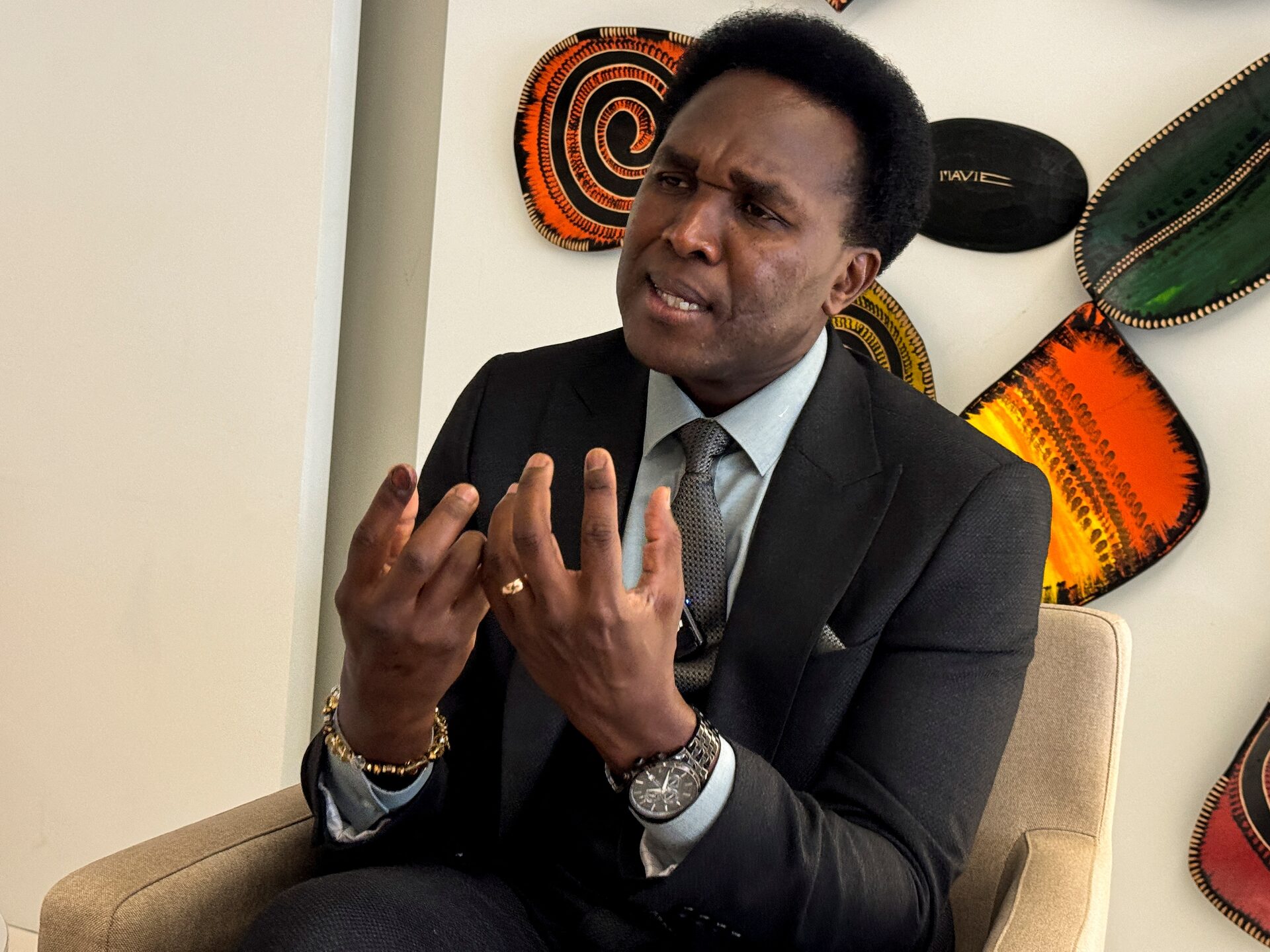
Mondlane was notified by the court on Aug. 25 that he would face trial on five charges arising from the post-election demonstrations
Maputo
Nearly two years after a disputed presidential election pushed Mozambique into the worst civil unrest of its democratic era, the man who came second in that vote is preparing to answer for it in a courtroom. Venâncio Mondlane, the independent candidate whose refusal to accept the October 2024 result triggered months of protest, is set to stand trial before a five-judge panel of the Supreme Court, with reporting from Mozambican outlets placing the opening of proceedings on Oct. 6.
Mondlane was notified by the court on Aug. 25 that he would face trial on five charges arising from the post-election demonstrations, according to Al Jazeera. He is not in custody and has not yet appeared before the bench. At the time of his notification he said he expected proceedings to begin within two or three months, and no date had been officially announced. The charges are public advocacy of crime, incitement to collective disobedience, public instigation to a crime, instigation to terrorism and incitement to terrorism. Prosecutors filed them in July 2025. He denies all of them.
The case matters beyond Mondlane's own liberty. It is the first time since multiparty politics arrived in Mozambique in 1994 that the runner-up in a presidential election will be tried for what he said and wrote while contesting the result. The outcome will shape whether the country's most consequential opposition figure can appear on a ballot in 2029 — and whether Mozambicans conclude that their courts settle disputes or ratify them.
How a contested count became a criminal case
The election of Oct. 9, 2024 was won, officially, by Daniel Chapo of the Mozambique Liberation Front, or Frelimo, the party that has governed since independence in 1975. The Constitutional Council confirmed Chapo with 65.17 percent of the vote against 24.19 percent for Mondlane, who had run as an independent with the backing of the Podemos party. Mondlane rejected the count outright and said he had won.
What followed was not a legal challenge but a street movement. Demonstrations spread from Maputo to the northern provinces and lasted, in waves, from November 2024 into March 2025. More than 300 people were killed in the post-election unrest, according to Reuters. Mozambique News Reports and Clippings, the long-running bulletin edited from Milton Keynes in Britain, puts the toll above 350 and reports that more than 1,000 demonstrators remain in jail without trial. No police officer has been charged over a protest death.
Two killings framed the whole period. On Oct. 19, 2024, Elvino Dias, Mondlane's lawyer and adviser, and Paulo Guambe, a Podemos spokesman, were shot dead in Maputo. Mondlane left the country days later, saying he feared for his life, and directed the protest movement from exile through livestreamed broadcasts on social media. He returned on Jan. 9, 2025, six days before Chapo's inauguration. Thousands of supporters went to Mavalane International Airport to meet him; police blocked access and fired tear gas. He was allowed to enter the country and leave the airport.
Chapo and Mondlane met twice in Maputo, on March 23 and May 20, 2025, in an attempt to defuse the crisis. Those meetings produced undertakings on medical support for victims of police violence, compensation for families of the dead and an amnesty for many of those arrested, but they did not resolve the underlying dispute over the election. In July 2025, prosecutors charged Mondlane with the five offences that now stand before the Supreme Court.
Meanwhile, a parallel process — an "inclusive national dialogue" launched under a compromise agreement signed by Chapo, opposition parties and civil society on March 5, 2025 — proceeded without him. Mondlane did not sign that agreement, and he was subsequently excluded from the dialogue on the ground that participation was limited to parties holding seats in the national or provincial assemblies. His own Democratic Alliance Coalition had its registration revoked before the 2024 election, too late for him to switch to another party for the legislative race. He could still run for president only because Mozambican presidential candidates stand as individuals.
The immunity that was lifted in secret
The procedural history of the case is, if anything, more politically charged than the charges themselves. Because he finished second in the presidential election, Mondlane sits automatically on the Council of State, the advisory body to the president — and members of that council enjoy immunity from prosecution.
A Council of State deliberation dated June 10, 2026 suspended that immunity so that proceedings in case No. 52/2025-P could continue before the Supreme Court. Mondlane did not attend the meeting. The decision was not made public until Aug. 25, after Mondlane himself announced that he had been notified of his trial. He has challenged the deliberation, arguing that the Council of State has no legal authority to suspend the immunity of its own members.
That challenge is unlikely to prosper, and the reason lies in the architecture of the Mozambican judiciary. The president and vice president of the Supreme Court are named by the president of the republic. Its eleven judges are nominated by parties in parliament in proportion to their seats, subject to qualification criteria — a formula that hands Frelimo, with its parliamentary supermajority, decisive control over who sits on the bench that will now try the leader of the opposition.
The weekly Savana published detailed profiles of the five judges assigned to the case on Sept. 4. Luís Mondlane and António Paulo Namburete — no relation to the defendant; Mondlane is a common surname in southern Mozambique — will lead the trial. Luís Mondlane was appointed president of the Constitutional Council by then-President Armando Guebuza and resigned in 2011 after accusations that he had misused $400,000 on personal expenses, returning to his earlier seat on the Supreme Court. Namburete was named attorney general by President Joaquim Chissano in 1998 and dismissed in 2000, along with six deputies, over accusations that they had failed to investigate $14 million in thefts from the Banco Comercial de Moçambique. He joined the Supreme Court in 2012. The other three judges are Isabel Rupia, a former deputy attorney general who has investigated senior Frelimo figures and was appointed to the court in 2024; João Beirão, a member of the National Elections Commission from 2013 to 2015 and vice president of the Supreme Court from 2015; and Carlos Mondlane, appointed in 2025. Savana describes Rupia and Carlos Mondlane as the most level-headed judges in the group.
What the prosecution must prove, and what the trial will look like
The prosecution intends to rely on videos of Mondlane's speeches and social media broadcasts to argue that in calling for demonstrations he was inciting collective disobedience and violence, according to the Mozambican outlet Evidências. The defence will argue that his political statements and the protests themselves were legitimate exercises of constitutional rights, and that he repeatedly urged supporters against violence.
The court has already decided to hold the trial in a small room with limited space for press and public, Savana's Raul Sende and Cleto Duarte reported. Civil society groups are pressing for the proceedings to be televised. That decision rests with Luís Mondlane and Namburete, and it is the first real test of whether the panel wants this case to be seen.
Analysis: the judicialisation of an unresolved election
Mozambican analysts have been careful to separate the legitimacy of a prosecution from the wisdom of one.
"This trial is politically untimely, given the country's current political situation," Salomão Moyana, a veteran journalist and commentator, told Al Jazeera. "But at the same time, it is legally timely for Venâncio himself, because it gives him an opportunity to finally put these pending cases behind him." He added a point that will be repeated often in the coming weeks: "He is not being accused by the court; he is being accused by the Public Prosecutor's Office, by the Attorney General's Office. The court is there to adjudicate."
Andre Mulungo of the Centre for Democracy and Development put the objection more bluntly. "The trial of Venâncio Mondlane reflects a broader pattern of the judicialisation of politics in Mozambique," he said. "A crisis that is essentially political, marked by disputes over the election results and a lack of trust in electoral processes, cannot be resolved in the courts. Political problems require political solutions." He warned that the case risks being read "not simply as an act of justice, but as the use of justice as a political weapon."
The practical stakes may be narrower than a prison term. The Institute for Security Studies observed in September 2025 that the charges could bar Mondlane from contesting the 2029 presidential election — an assessment, not a judicial finding, and one made before any trial. The lawyer Esau Cossa offered a similar reading: "It seems to me that he will not be imprisoned, but he will not have a clean record and will then be made ineligible to run in 2029."
If that is the outcome, the trial will have achieved through a criminal docket what the 2024 election machinery achieved through a deregistration: the removal of Mondlane from the ballot without the state ever having to defeat him at the polls. Civil society groups have argued that organising protests against a manifestly disputed election cannot amount to incitement to terrorism — and that to call it so is to criminalise opposition itself.
What to watch
Three things will signal which way this goes. First, whether Luís Mondlane and Namburete allow the trial to be broadcast; a closed courtroom will confirm the suspicions of those who already regard the case as political. Second, whether the Supreme Court entertains Mondlane's challenge to the Council of State's authority to lift his immunity, or dismisses it summarily. Third, and most consequential, whether any verdict carries a disqualification from public office — the quiet penalty that would matter far more than a sentence.
Chapo has spent his first year and a half in office promising reconciliation and presiding over a national dialogue designed to close the wound of October 2024. Starting Oct. 6, a court his party effectively staffed will decide whether the man who refused to accept that election belongs in politics or in the dock. Mozambicans will draw their own conclusions about which process is the real one.



