Utah becomes the first US state to let an AI write a brand-new prescription. Scan your face, answer a few questions, and an app picks your acne cream for $4.99 a month. Doctors' groups are not convinced
SALT LAKE CITY
Got a breakout? In Utah, you no longer need to wait two months for a dermatologist. You need a smartphone, 15 minutes and five dollars.
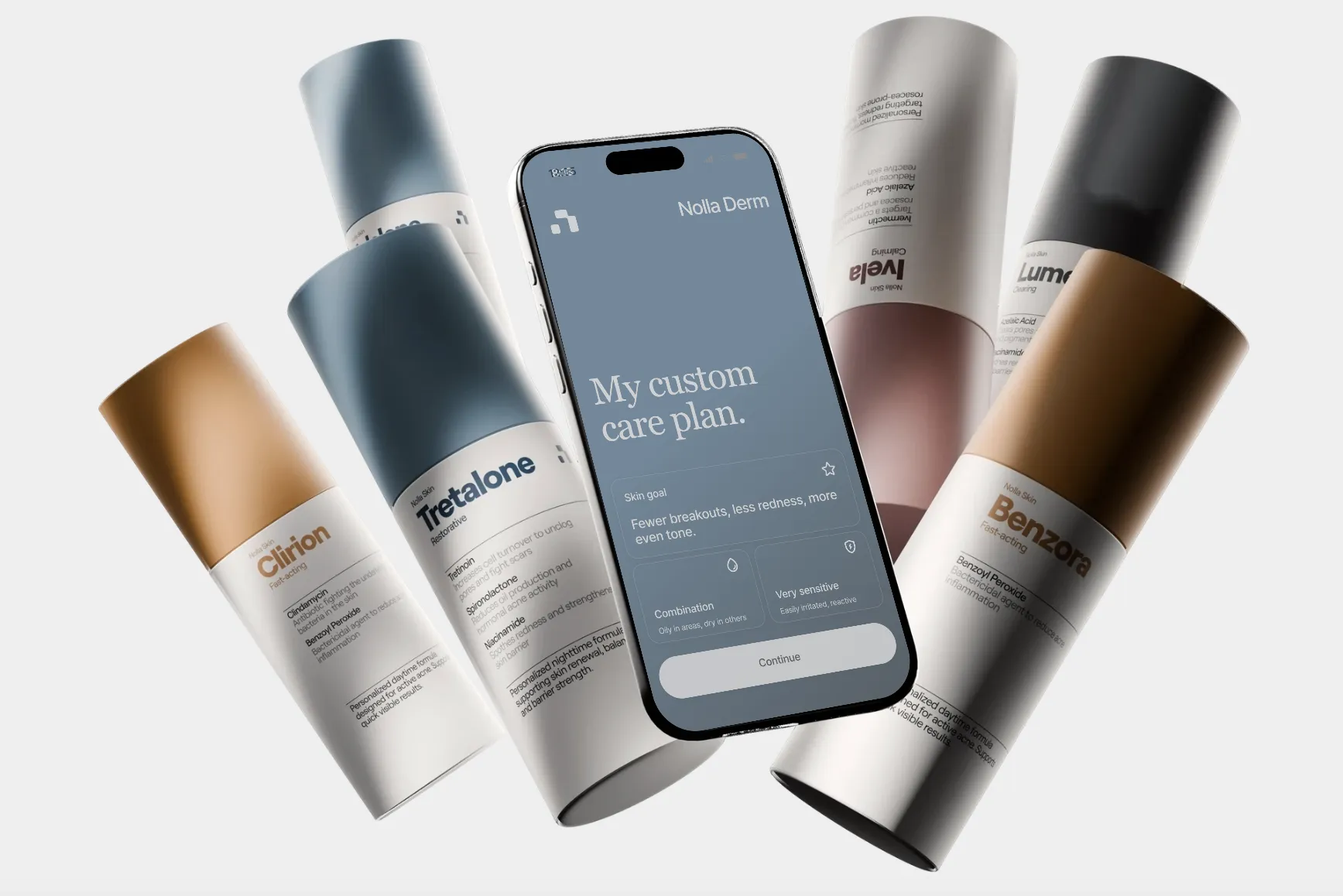
On Monday, October 5, New York-based start-up Nolla Health switched on what it calls the nation's first AI-powered prescriptions. Through its Nolla Derm app, Utah adults with mild to moderate acne can now scan their face, answer a short questionnaire, and receive a personalised treatment plan and, if the app decides it is appropriate, a brand-new prescription for a topical acne medicine.
Not a refill. Not a "suggestion" for a doctor to rubber-stamp. An initial prescription, chosen by artificial intelligence, under a special agreement with the state of Utah.
Bloomberg called it the first time a US state has allowed this kind of technology to replace the role of a doctor. Supporters say it is the future of affordable healthcare. Critics, including the head of the American Medical Association, say AI should not be practising medicine on its own. Welcome to the most closely watched skin experiment in America.

How the "AI doctor" works
According to Nolla Health, Utah residents aged 18 and over download the Nolla Derm app and opt into the pilot at a discounted price of $4.99 a month. The cost of the medication itself is separate.
Each patient then:
- Verifies their identity.
- Goes through an informed-consent process explaining that AI is involved.
- Completes a short intake questionnaire.
- Takes a "five-angle" face scan with their phone camera.
The whole process takes about 10 to 15 minutes, the company says. According to the Los Angeles Times, the AI analyses the skin, identifies the types of acne present, rates oiliness and produces a numerical severity score running from clear skin to severe acne. It then picks a treatment from a short menu of eight approved topical medicines. Prescriptions arrive by home delivery or can be picked up at a pharmacy.
After that, patients take daily skin scans so the app can track progress, and the treatment plan is reviewed after every 28 scans, roughly every one to two months.
There are hard limits. The pilot covers creams and gels only. Pills, hormone treatments and isotretinoin (the powerful acne drug once sold as Accutane, which requires strict monitoring) are excluded. Patients with severe acne, those who are pregnant, and anyone with conditions outside the pilot's rules are routed to a human doctor or in-person care instead.
"The AI can't improvise. It can only choose from a short list of physician-approved topical treatments. The moment a patient falls outside those limits, it stops and hands them to a doctor," said Dr Zaid Fadul, Nolla Health's chief medical adviser and a physician overseeing the pilot, in a statement reported by MobiHealthNews.
"No doctor signing off"? It's complicated
Headlines this week have screamed that Utah now lets AI prescribe "without doctors." The reality is more layered, and it changes over time.
Under its signed agreement with Utah, Nolla says physician oversight steps down in three stages:
- Stage one (the first 100 patients): two Utah-licensed physicians independently review and approve every AI-generated prescription before it reaches the patient. This lasts at least four weeks.
- Stage two (up to 500 patients): the AI sends prescriptions directly, and a physician reviews every case after the fact, at least weekly. This lasts at least eight weeks.
- Stage three: physicians review a sample of at least 10% of prescriptions every month, plus every case involving a side effect or an escalation.
To move from one stage to the next, Nolla says it must hit safety targets, including 95% agreement with physicians and zero serious adverse events, and get written approval from the state.
In other words, the first patients have a double human check. But by stage three, nine out of ten prescriptions could go out with no human ever looking at them, beforehand or afterwards. Patients can message a licensed physician through the app at any time at no extra cost, and the company stresses those messages are answered by a human, not AI.
According to the Los Angeles Times, Utah waived the law requiring a prescriber to be a licensed physician for this pilot, required special malpractice insurance covering AI-generated prescriptions, and wrote duty-of-care provisions into Nolla's contract. A third-party physician appointed by the state's medical board will also oversee prescription reviews. The programme runs for one year and can be renewed for two more at the discretion of Utah's Office of Artificial Intelligence Policy.

The pitch: care for people who can't get it
Nolla's argument is about access and cost, and the numbers it cites are striking.
The company says roughly 100,000 Utahns have active acne at any given time, but only about 10% ever see a dermatologist. It says the average wait for a dermatology appointment in Utah is 61 days, nearly double the national median, that eleven Utah counties have no dermatologist at all, and that a visit can cost up to $300. Untreated acne, it points out, can leave permanent scars.
"AI will matter most in healthcare when it helps people get care they otherwise would not receive," said Luis Wenus, Nolla Health's co-founder and chief executive, in a statement. "With Nolla Derm, we are showing how AI can responsibly expand that access and help someone get personalised treatment in minutes instead of long waits or going without care altogether."
In the company's own announcement, Wenus said: "Growing up with a doctor in the family, I saw firsthand the impact access to healthcare had for us and every neighbour and friend who came to our door for help. Most people don't have that opportunity."
The company claims that licensed clinicians agree with Nolla Derm's treatment recommendations in 96% of real-world cases, and that disagreements are minor tweaks such as the strength of a cream rather than a different treatment. That figure comes from Nolla itself and has not been independently verified. Nolla says its app, which outside Utah works under clinician guidance, has already been downloaded more than 175,000 times across 44 states.
Wenus has made no secret that acne is just the start. According to the Los Angeles Times, he described plans to eventually turn the company into an AI-driven personal doctor for families.
The backlash: Utah's last AI experiment
If doctors sound wary, it's because Utah has been here before, and it got messy.
In January, the state announced a pilot with another company, Doctronic, letting an AI system renew existing prescriptions for patients with chronic conditions. CNN reported that the programme was overseen by a five-member board of AI specialists, none of them doctors.
In April, the Utah Medical Licensing Board called for the Doctronic pilot to be suspended, according to Utah News Dispatch and MobiHealthNews. In a letter to the state's Office of Artificial Intelligence Policy, the board said it had not been consulted before the programme launched and raised concerns about patient safety and clinical oversight. Doctronic responded that every prescription in its first phase was reviewed by a physician. Fierce Healthcare reported that during the first five months, the AI recommended renewal in 72% of cases and reviewing physicians agreed with it 91% of the time. The Los Angeles Times reports the state later removed two medications from Doctronic's approved list.
Nolla says it learned that lesson and engaged the Utah Medical Licensing Board before receiving its own authorisation. The company also says practising physicians, dermatologists and Utah officials reviewed the pilot over multiple rounds before launch. And Utah is pressing on: this week it also approved a separate pilot from August AI for prescription renewals, with a licensed physician reviewing each one, according to MobiHealthNews.
Expert perspective: "AI tools should not autonomously practise medicine"
The American Medical Association, the largest US doctors' organisation, is sceptical. According to the Los Angeles Times, AMA chief executive Dr John Whyte said AI tools should not autonomously practise medicine. The AMA has repeatedly argued that transparency and evidence must come first as AI spreads through healthcare, and that the long-term effect of these tools on patient outcomes has not yet been proven.
Critics' worries tend to fall into a few buckets:
- Misdiagnosis. Not every red bump is acne. Rosacea, fungal folliculitis, allergic reactions and other skin conditions can look similar, and a camera may miss clues a trained eye would catch in person.
- Skin tone. Dermatology has long struggled with training images that under-represent darker skin. Any AI built on skewed data could perform unevenly, and Nolla has not publicly released a breakdown of its accuracy across skin tones.
- Accountability. When a machine makes a clinical decision, who answers for mistakes? Utah's insurance and duty-of-care requirements are an attempt to settle that, but the legal questions are new.
- Mission creep. Acne creams are low-risk. The fear is that a "successful" pilot becomes the template for AI prescribing of far riskier drugs.
Supporters counter that the pilot was designed precisely to address those risks: low-danger medicines, a fixed menu, no free-text chat in the prescription process, automatic referral of hard cases, and a stepped reduction in oversight only after safety targets are met. Nolla's Dr Fadul put it this way: "There's been a lot of noise about AI in healthcare, and a lot of it deserves scrutiny. What sets Nolla apart is the clinical rigour behind it."
Politico has described Utah's broader effort as a high-stakes test of whether AI can safely take on one of healthcare's most sensitive tasks. CNN notes that Texas and Wyoming are also loosening rules on AI in healthcare. Whatever happens in Utah over the next year is likely to shape what happens everywhere else.
What this means for you
If you live in Utah and are thinking of trying it:
- Know what it covers. The pilot is for adults 18 and over with mild to moderate acne, treated with topical medicines. If your acne is cystic, scarring, sudden in adulthood, or comes with other symptoms such as irregular periods or excess hair growth, see a doctor in person, since these can signal hormonal or other conditions.
- Read the consent carefully. You are agreeing to take part in a regulated experiment. Understand what stage of oversight the programme is in when you join.
- Use the human option. You can message a licensed physician through the app at no extra cost. Do so if your skin gets worse, burns, peels badly or doesn't improve.
- Watch the total cost. The $4.99 subscription doesn't include the medicine.
- Protect your data. You are handing a company detailed images of your face. Check its privacy policy and what happens to your scans.
If you live elsewhere, nothing changes for you yet. But expect more states to watch Utah closely, and expect more AI health apps promising quick, cheap care. Common acne treatments such as benzoyl peroxide and adapalene (sold as Differin) are available over the counter in the US, and a pharmacist can help you choose one while you wait for an appointment.
The bottom line
For Utah adults with stubborn spots and no dermatologist nearby, Utah's experiment may be a genuine gift: faster, cheaper treatment for a condition that too often goes untreated. Acne creams are about as safe a place to test AI prescribing as medicine offers.
But this week marks a line being crossed. For the first time, a US state has given software the legal power to decide, on its own, what medicine a new patient should get. The safeguards are real, and so are the open questions. The coming year of data will show whether AI can earn a place on the prescription pad, or whether doctors' warnings were right all along.
Either way, the app has already been switched on.
Published By | Features Editor