Written By | Fashion and Design Desk
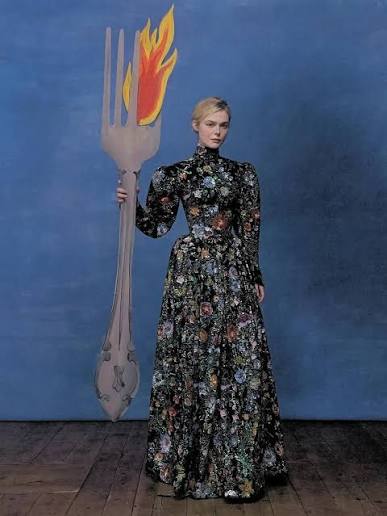
Jenna Ortega in Dior for US Vogue and Hunter Schafer in flames and feathers for ELLE: the Hungarian photographer's theatrical look is suddenly everywhere this November.
NEW YORK
If November's magazine covers feel like they come from the same dream, there is a reason. Szilveszter Makó, a Hungarian photographer based in Milan, shot both the US Vogue cover starring Jenna Ortega and the American ELLE cover starring Hunter Schafer. theFashionSpot noted on Oct. 22 that he has also recently shot covers for Vogue Arabia and British Harper's Bazaar.
Few photographers get one of the industry's top slots. Getting several in a single season is a statement about where editors' tastes currently sit.
The Vogue Cover: Ortega in Dior
Vogue's November 2026 cover features Ortega in a dress from Jonathan Anderson's Christian Dior Cruise 2027 collection, photographed against a dusky lavender backdrop. Tabitha Simmons styled the shoot. For the cover, Ortega also wears Van Cleef & Arpels earrings and an antique Cartier earring from S.J. Phillips, according to Fashionista's report. theFashionSpot says editor Chloe Malle enlisted Makó for the profile.
The cover story, written by Alice Robb, covers Ortega's work on Wednesday, her start as a child actor and her upcoming film Nasty. The full text is behind Vogue's paywall, so this article does not quote from it.
The ELLE Cover: Schafer in Flames and Feathers
Makó photographed and art directed the ELLE story starring Schafer, who is on the cover for her role as Cora in Blade Runner 2099. Set design is by Edith Di Monda, and the images use painterly backdrops and muted, moody lighting, so they read closer to paintings than to a standard magazine spread, according to Comic Basics' description.
Among the looks: a black feathered mini dress with gloves and heels against a painted flame backdrop; a sleeveless, textured dark column dress with long gloves; and a cream coat with dark fur trim, a quilted black bag and a knitted white rat tucked under one arm, which the outlet calls the most memorable frame. Designers credited include Marc Jacobs, Tom Ford and Prada, with shoes by Olivier Theyskens and Jeremyn Lee Archive. The styling team includes stylist Jessica Willis, hair by Pablo Kümin and makeup by Raoul Alejandre. The interview is by Lotte Jeffs.
Fans Are Divided
theFashionSpot's forum members have not all been convinced. One reader wrote, "Szilveszter Makó is on fire! This is a good cover," while another said, "I'm starting to get tired of his work at this point." A third objected to repetition: "I genuinely can't understand the point of rehashing the same idea across so many magazines." A fourth liked the Vogue shoot's "purple backdrop, the styling, and the overall look and feel." Forum comments are not a scientific sample, but they capture a familiar tension in fashion media: the thrill of a strong visual signature against the fatigue of seeing it duplicated.
Why This Trend Matters
Analysis: covers are among the most expensive and most visible pieces of real estate in fashion, and editors face a dilemma. A magazine wants to look distinctive, but it also wants the kind of polished, shareable image that performs well on social media. A photographer with a recognizable aesthetic solves the second problem and risks the first. When several publications hire the same person within weeks, the result is a shared look across titles.
There is also a business logic. Luxury houses such as Dior, Prada and Tom Ford rely on editorial credits to reach consumers, and a surreal, art-directed approach makes clothes feel like part of a story rather than a catalogue entry. It is a high-fashion answer to an internet that scrolls quickly: an image that stops a thumb has value.
What This Means for You
For shoppers, the practical lesson is that the mood of the moment is theatrical, textured and a little strange. Feathers, long gloves, fur-trimmed outerwear and quilted bags all appear in the ELLE credits, and moody lavender and cream tones show up in the Vogue cover. You do not need a Dior budget to borrow them: a pair of long gloves, a textured knit or a statement coat can take on that mood. For anyone who follows magazines, it is a good time to compare covers side by side and decide which treatment you prefer.
For creatives, the streak is a case study in how a distinct point of view can travel across publications, and in how quickly audiences begin to ask for something new.
Conclusion
Makó's recent run suggests the fashion industry is currently in a surrealist phase. Whether it lasts through the winter issues or gives way to something plainer will say as much about reader appetite as about editors' taste. For now, November belongs to the photographer who paints with light, flames and a knitted rat.



