Written off after flop after flop, Kodiak's Zenkuda has matched Eylea in a major trial for wet macular degeneration, with more than half of patients going six months between eye injections. The stock nearly tripled in an hour. Here's what it really means for anyone facing a needle in the eye.
PALO ALTO, California
Ask anyone with wet age-related macular degeneration what they dread most, and many will give you the same answer. Not the blurry patch in the middle of their vision. Not the straight lines that bend. It's the needle.
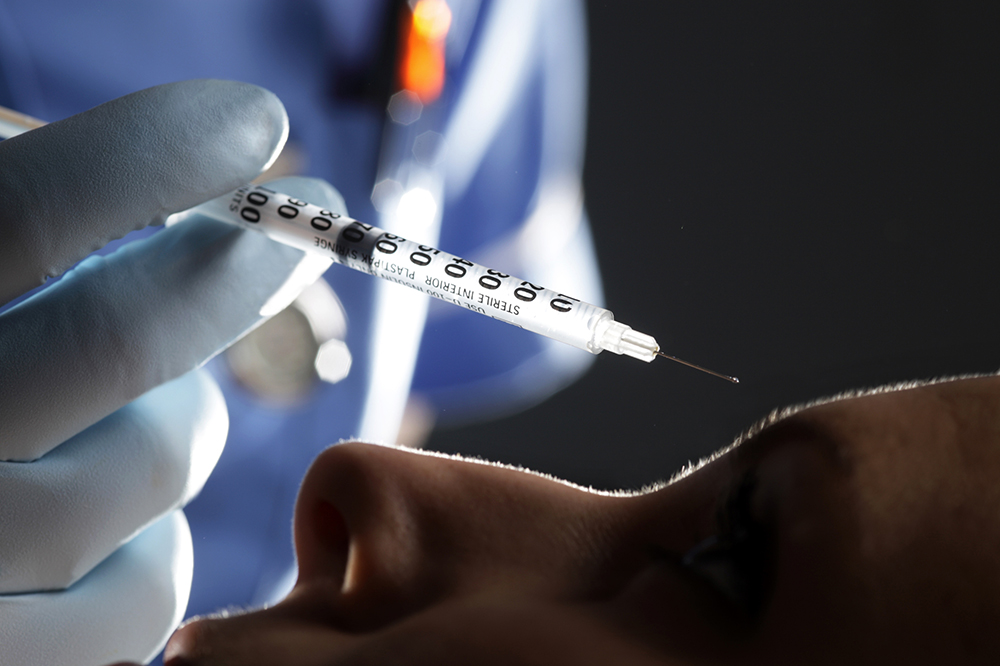
Every month or two, for years on end, millions of older people sit in a clinic chair, have their eye numbed and propped open, and take an injection straight into the eyeball. It is the treatment that saves their sight. It is also a relentless grind of hospital trips, lifts from family members and anxiety.
On Monday a small California company that Wall Street had all but buried said it may have found a way to cut those visits dramatically, and investors went wild.
Kodiak Sciences announced that its experimental drug Zenkuda (tarcocimab tedromer) met its main goal in a large late-stage trial called DAYBREAK, delivering vision gains that matched Regeneron's blockbuster Eylea (aflibercept) at one year. The kicker: after the first four monthly doses, 54 per cent of patients on Zenkuda were being treated only once every six months.
Kodiak's shares soared 166 per cent within an hour of the market opening, hitting $86.53, according to BioSpace.
"Twenty years after Lucentis (ranibizumab) was approved for wet AMD, the holy grail remains the same: robust anatomic disease control and maximal visual gains, sustained with less frequent dosing," said Dr David Brown, chief medical officer of Retina Consultants of America. "The DAYBREAK results with Zenkuda are truly impressive."
The thief of central vision
Age-related macular degeneration attacks the macula, the tiny part of the retina responsible for sharp central vision: reading, recognising faces, driving. In the "wet" form, abnormal blood vessels sprout beneath the retina and leak fluid and blood, damaging it quickly. Left untreated, wet AMD can destroy central vision within months. It is a leading cause of severe sight loss in older people in wealthy countries.
The villain is a protein called VEGF, which drives those leaky vessels to grow. Since the mid-2000s, drugs that block VEGF, first Lucentis and later Eylea and others, have transformed the outlook, stopping or even reversing vision loss for many patients.
But they wear off. The eye clears them out within weeks, so patients need repeat injections, typically every four to eight weeks at first. In real life many patients miss appointments, get undertreated, and slowly lose the vision the drugs were meant to protect. Longer-lasting drugs are the industry's great prize.
How Zenkuda is built to last
Zenkuda's trick is chemistry. Kodiak attaches its anti-VEGF antibody to a large, heavy "biopolymer", a molecular anchor designed to keep the drug hanging around in the eye for longer.
According to Kodiak, the drug has a mean half-life in the human eye of about 20 days, roughly three times that of approved treatments. The DAYBREAK version also contains some free, unattached antibody to deliver a quick early punch while the anchored drug provides staying power.
"Zenkuda pairs free protein for immediate disease control with antibody conjugated to a high-molecular-weight biopolymer," Dr Brown explained in the company's announcement.

What DAYBREAK found
DAYBREAK was a head-to-head "non-inferiority" trial: its job was to prove the new drugs were not worse than Eylea at protecting vision. It pitted Zenkuda, and a second Kodiak drug called tabirafusp-ted, against aflibercept in people newly diagnosed with wet AMD.
Patients on Eylea were dosed as the label says: after the loading phase, every eight weeks. Patients on Zenkuda got four monthly loading doses and then were treated only when needed, anywhere from every four to every 24 weeks.
Here is what Kodiak reported:
Zenkuda met the primary goal of non-inferior vision gains versus aflibercept, measured by the change in best-corrected visual acuity averaged over weeks 40, 44 and 48 (p = 0.0007).
Through the first four months, Zenkuda's vision and anatomy improvements matched or exceeded Eylea's.
At one year, 54 per cent of Zenkuda patients were on six-month dosing.
Crucially, Kodiak says that durability was achieved under strict "treat-to-dryness" rules: any detectable fluid on an eye scan meant another injection. That is tougher than the rules many earlier trials used, and closer to how fussy retina specialists actually practise.
On safety, Kodiak reported zero cases of intraocular inflammation with Zenkuda and a cataract rate of 0.5 per cent, against 0.9 per cent with aflibercept. Tabirafusp-ted also met its vision goal (p = 0.0036) with a 0.4 per cent inflammation rate and no cataracts.
Dr Charles Wykoff of Houston Methodist Hospital said the results "exceeded my expectations", adding: "More than half of patients reached a 24-week dosing interval using strict treat-to-dry retreatment criteria. This combination of immediacy, flexibility and true durability is unique and differentiated."
Back from the dead
If those numbers feel like a triumph, it is because of how close this drug came to the scrapheap.
Tarcocimab has failed before, repeatedly. In 2022 its first wet AMD study, DAZZLE, missed its main goal of showing non-inferior vision gains. Then in July 2023, two Phase 3 trials in diabetic macular oedema, GLEAM and GLIMMER, also failed to match aflibercept, and an unexpected rise in cataracts in the tarcocimab groups helped sink both. Kodiak said it would discontinue the drug, and its share price was cut roughly in half, according to trade reports at the time.
The comeback started with a trial in diabetic retinopathy called GLOW, in which 41.1 per cent of evaluable patients given tarcocimab improved by at least two steps on the disease severity scale, against 1.4 per cent on sham treatment. Kodiak reformulated, tightened its trial design and went back to the well.
"Four years and seven months after our first Phase 3 readout, Zenkuda's profile has come fully into focus through rigorous science, disciplined learning and thoughtful execution," said Kodiak's chief medical officer, Dr J. Pablo Velazquez-Martin.
Dr Wykoff put it more bluntly: "Kodiak persevered through real challenges with the tarcocimab development program, incorporating multiple lessons learned, culminating in a successful DAYBREAK trial."
The company now claims five successful Phase 3 studies across wet AMD, diabetic retinopathy and retinal vein occlusion, and plans to file for FDA approval in all three conditions in the fourth quarter of 2026.
The fine print
Before anyone cancels their next eye appointment, some sober caveats.
This is not an approval. Zenkuda is still experimental. Kodiak has not yet filed its application, and FDA review typically takes the best part of a year. Realistically, Kodiak itself talks about the possibility of approvals by the end of 2027 or early 2028.
These are headline results from a company press release. Kodiak has not yet released the full data: the actual average letters of vision gained in each group, how many patients dropped out, or detailed results for the 46 per cent who were not on six-month dosing. Those details will matter when the results are published and presented to doctors.
"Matching" is the claim, not "beating". DAYBREAK was designed to show Zenkuda is not worse than Eylea on vision. The attraction is fewer injections, not better sight.
And the goalposts have moved. Eylea's own high-dose version, Eylea HD, and other long-acting rivals already allow some patients to stretch treatment intervals well beyond eight weeks. DAYBREAK compared Zenkuda with standard-dose aflibercept given every eight weeks, not with those newer options. How Zenkuda stacks up against today's best alternatives is something doctors will be asking.
Finally, Kodiak has no approved products and relies on raising money to keep going. Its earlier cataract problem is also why the safety data from DAYBREAK will be scrutinised line by line.
The other drug in the trial
Tabirafusp-ted, the second drug in DAYBREAK, is a "bispecific" that blocks both VEGF and an inflammatory signal called IL-6. It also matched aflibercept on vision and hit a key anatomy goal (p < 0.0001). Kodiak is now testing whether it can outright beat Eylea in diabetic macular oedema, a condition where inflammation plays a bigger role, in a roughly 910-patient Phase 3 trial called ALTO. A third drug, KSI-101, for eye swelling caused by inflammation, is due to report Phase 3 results in December.
What this means for you
If you or a relative are being treated for wet AMD, here is what matters today.
Do not change your treatment. Zenkuda is not available and will not be for some time. Keep every injection appointment. Missing doses is one of the main reasons people lose vision on current drugs.
Ask about longer intervals now. Several approved drugs and "treat-and-extend" schedules already let some patients stretch the gap between injections. Ask your specialist whether you might qualify.
Know the warning signs. Straight lines looking wavy, a new dark or blurry spot in the centre of your vision, or colours fading can all signal wet AMD or its return. Test each eye separately with an Amsler grid if your clinic has given you one, and call promptly if something changes. Fast treatment saves sight.
Protect your eyes. Not smoking is the single biggest lifestyle step you can take to reduce AMD risk. Regular eye tests after 50 catch problems early.
If you want to be part of the future, ask your clinic about trials. Kodiak's ALTO study is currently recruiting people with diabetic macular oedema.
The bottom line
For a drug that had been declared dead, DAYBREAK is a remarkable resurrection. If the full data hold up and regulators agree, Zenkuda could let more than half of wet AMD patients face the needle just twice a year after their first few months, instead of six or more times.
That would be life-changing for patients and the families who drive them to clinic. But this is still a company press release, not a pharmacy shelf. The real test comes when the complete data are published and the FDA takes its long, hard look.
Published By | Features Editor