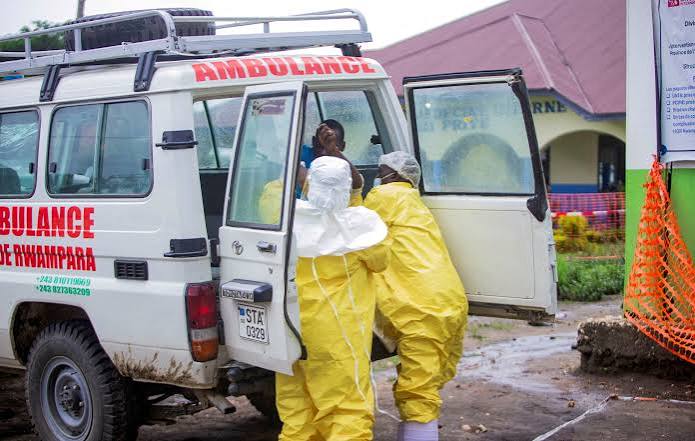
Nearly half of all confirmed patients have died, the virus has now jumped to Kenya, and there is still no licensed vaccine or treatment. Here is what the numbers really mean, and what they mean for you.
KINSHASA / NAIROBI
The numbers keep climbing, and they are getting harder to look at. As of 18 October 2026, the United States Centers for Disease Control and Prevention counts 9,581 confirmed cases of Ebola caused by Bundibugyo virus and 4,605 confirmed deaths. That makes it the second-largest Ebola outbreak ever recorded, behind only the catastrophic West African epidemic of 2014 to 2016.
The CDC does not mince words about the speed. In its latest situation summary, updated on 19 October, the agency says the outbreak is "spreading substantially faster than previous Ebola outbreaks." The Democratic Republic of the Congo (DRC) passed 1,000 confirmed cases within 40 days of the response being activated. The country's 2018 outbreak, the one that once held the record for the DRC, took about 235 days to reach the same grim milestone.
And this week, the story took another worrying turn. Kenya, which reported its first imported case only on 6 October, has now confirmed eight cases and one death, including three health workers. For the first time in months, an outbreak that had been largely confined to Central Africa is again knocking on the door of a major East African travel hub.
From a funeral in Ituri to a global emergency
Ebola outbreaks have a way of beginning quietly. According to timelines compiled from public health reporting, modelling suggests the virus most plausibly spilled over from animals to humans in February 2026. A funeral for a pastor in Mongbwalu, in Ituri province, on 4 February is considered a likely early transmission event, and nearly 50 people reportedly died with Ebola-like symptoms afterwards. In late March, three Red Cross workers are believed to have been infected while handling bodies. By late April, the person identified as the index case in Ituri developed haemorrhagic symptoms and died.
The alarm was raised on 30 April, but the first tests in Bunia came back negative for Zaire ebolavirus, the strain that most Ebola diagnostics and the only licensed vaccine are built around. That false reassurance cost precious days. On 14 May, the national laboratory in Kinshasa confirmed eight cases of a non-Zaire filovirus, and on 15 May genetic sequencing identified Bundibugyo virus. The DRC and neighbouring Uganda both declared outbreaks the same day.
The World Health Organization (WHO) wasted little time. On 16 May it declared a Public Health Emergency of International Concern, its highest alarm level. Within a week it had raised the national risk level in the DRC to "very high." Uganda closed its border with the DRC on 27 May. Since then, the outbreak has spread across eight DRC provinces and 66 of the country's 178 health zones, according to the European Centre for Disease Prevention and Control (ECDC).
The numbers behind the headlines
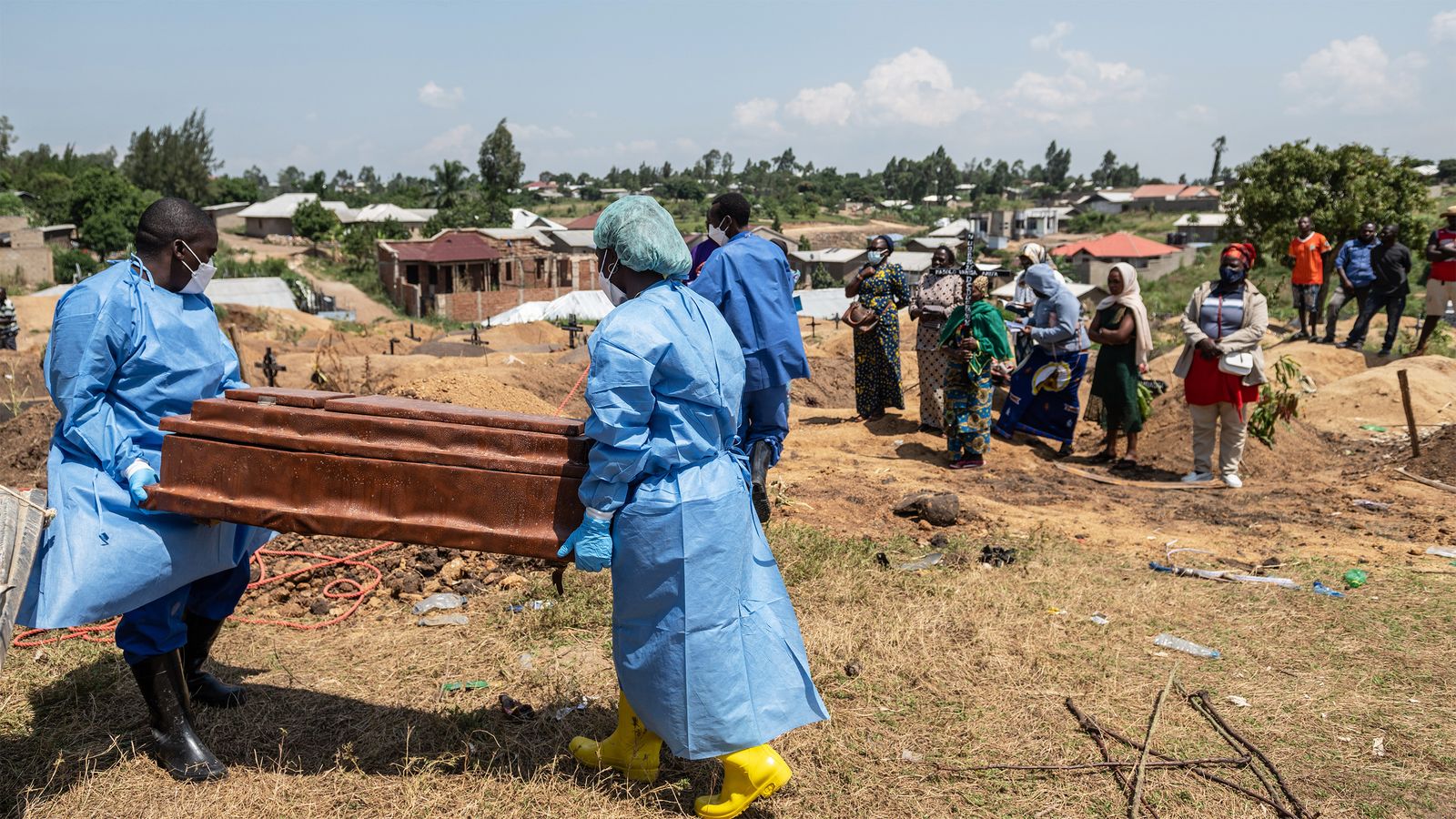
The ECDC's most recent update, covering data through 17 October, reports 9,455 confirmed cases and 4,561 deaths in the DRC alone. In just the three days since its previous update, 178 new confirmed cases and 83 new deaths were added. The geographic breakdown shows how heavily the east of the country is being hit:
- Ituri province: 6,918 cases and 3,197 deaths, with 28 of its 36 health zones affected.
- Nord-Kivu: 2,036 cases and 1,156 deaths, across 17 of 34 health zones.
- Haut-Uele: 408 cases and 176 deaths.
- Tshopo: 73 cases and 25 deaths.
- Smaller clusters in Bas-Uele (13 cases), Sud-Kivu (3), Sud-Ubangi (2) and, newly, Nord-Ubangi (2), where the virus was detected in Wapinda health zone.
Do the arithmetic on the CDC's totals and a stark picture emerges: roughly 48 out of every 100 confirmed patients have died. In late June, the overall death rate was around 28 percent, so the grim ratio has risen as outcomes for earlier patients have become clear. Public health experts have long estimated the Bundibugyo virus kills somewhere between 25 and 50 percent of those infected. This outbreak is landing at the upper end of that range.
There is a small, genuine bright spot. The ECDC reports that 2,530 people who tested positive have recovered, and 925 patients are currently in isolation and receiving care. Eighty percent of identified contacts of cases are being followed up. But those figures come with a giant asterisk, which brings us to the biggest problem of all.
The cases you can't see
Every figure in this story is a floor, not a ceiling. The CDC itself cautions that its totals include confirmed cases only. The DRC's health ministry leaves probable and suspected cases out of its official counts, and suspected cases and deaths are temporarily excluded while they are investigated and the data standardised.
Aid groups have been warning about undercounting since the early days. In early June, the International Rescue Committee said the outbreak was "likely far worse" than official figures suggested, estimating that only about 20 percent of contacts were actually being located. Today, with the epicentre in a conflict-scarred region where armed groups operate, that challenge has not gone away.
The CDC lists the obstacles plainly: limited health infrastructure, thin laboratory capacity, shortages of protective equipment, ongoing conflict that complicates contact tracing, violence against health workers, heavy cross-border population movement, and deep distrust of government paired with misinformation. Health workers have paid a particular price. By mid-June, reports put the toll at 75 health workers infected and 17 dead, and the Kenyan cases now include three more.
Kenya: the jump that has officials on edge
According to the ECDC, the first Kenyan case was a Kenyan citizen living in the DRC who travelled home via Uganda on 3 October. The person was reported on 6 October and later died. Additional cases were reported on 14, 16, 17 and 18 October. Most were close relatives of the first patient, three were health workers, and the latest was a patient attendant, according to Kenya's Health Ministry.
Kenyan authorities now face the nightmare scenario every Ebola response team dreads: transmission inside health facilities, where the virus can spread quickly if protective gear and isolation protocols fail. Six of Kenya's eight cases were added after the ECDC's 16 October update.
Uganda, meanwhile, is currently in a calmer place. It reported 20 confirmed cases between May and June, with the last patient released on 16 July. According to the ECDC, the WHO declared the outbreak over there on 25 August after 42 days without a new confirmed case. But the CDC still lists Uganda and the rest of the DRC under enhanced precautions, and the long, porous borders between the DRC, Uganda, South Sudan and Rwanda mean no one is treating the quiet as permanent.
No licensed vaccine, no licensed cure
Here is what makes Bundibugyo so much more frightening than the Ebola most people have heard of. The vaccine that helped bring the 2018 to 2020 DRC outbreak under control, Ervebo, was designed against Zaire ebolavirus. As the WHO put it when it convened expert panels in May, "There are currently no licensed therapeutics or vaccines specifically approved for the prevention and treatment of" Bundibugyo virus disease.
The WHO's experts recommended that candidate products be used only inside properly designed clinical trials. For treatment, the priority candidates are two monoclonal antibodies, MBP134 and maftivimab, plus the antiviral remdesivir, possibly in combination. For people exposed to the virus, the oral antiviral obeldesivir is the top candidate for post-exposure prevention, though the panel noted this depends on contact tracing that is operationally difficult in parts of the DRC.
On vaccines, the picture is a race against the calendar. A single-dose rVSV Bundibugyo vaccine from the International AIDS Vaccine Initiative (IAVI) was judged the most promising candidate, but may need seven to nine months before a trial can properly assess it. A chimpanzee-adenovirus candidate from Oxford and the Serum Institute of India could be ready for efficacy trials in two to three months, though more animal data are needed. The Coalition for Epidemic Preparedness Innovations (CEPI) put up funding for three candidates on 1 June, including $50 million for Moderna, $8.6 million for Oxford and $3.2 million for IAVI. The WHO said Ervebo should be used against this strain only in carefully designed research, since evidence of cross-protection is limited and inconclusive.
In plain English: until a vaccine arrives, the response relies on the old playbook. That means rapid testing, finding and following contacts, isolating and caring for the sick, strict infection prevention, working with communities, and safe burials. It works, but only if people trust it and can reach it.
Europe and America: how worried should they be?
The outbreak has already reached beyond Africa in a limited way, mostly through medical evacuations and returning aid workers. A US citizen was evacuated to Germany in May, and another was evacuated there in July. France confirmed a case in a returning humanitarian doctor on 24 June, and the patient was released on 4 July. The United Kingdom isolated an evacuated clinician in a London hospital in July. Most recently, a health worker who tested positive in the DRC was admitted to the high-level isolation unit at Leiden University Medical Center in the Netherlands on 1 October. The ECDC counts it as the fourth imported case in Europe.
The assessments from official bodies are consistent and reassuring in tone. The ECDC says its modelling shows the risk of importation into the EU and European Economic Area "remains very low," though sporadic importations cannot be ruled out. It cautions, however, that the model focuses on the general population and does not capture health workers and other professionals, who face "a substantially greater risk of exposure."
The CDC says no cases linked to this outbreak have been reported in the United States and rates the likelihood of spread to the country as very low, and the risk to the American public and travellers as low. Even so, it is taking precautions. Travellers who were in the DRC within 21 days of their flight cannot board commercial flights to the US. American citizens who have been in the DRC are told to stay outside the country for 21 days before entering. Those who were in Uganda or South Sudan must come through designated airports for enhanced screening. About 500 CDC staff are working on the response, with more than 120 deployed to affected countries.
What the experts are saying
Officials are walking a careful line between alarm and calm. The CDC's blunt language on speed reflects genuine concern about how quickly the epidemic has grown. The ECDC's modelling, which says even a pessimistic scenario of rising incidence is unlikely to produce multiple independent importations into Europe, reflects the other side: this is a disease that is hard to catch without direct contact with the bodily fluids of a sick person, and rich countries have strong isolation systems.
But the IRC's warning from earlier this year deserves to be remembered now. Counting only confirmed cases is a way of measuring a response's reach, and not the virus's. If only a fraction of contacts are being found, then transmission chains are running outside the view of the health system, and that is how outbreaks surge. The CDC's count jumped by 485 cases and 236 deaths between 11 and 15 October alone, which is consistent with that fear.
What this means for you
If you live in the United States or Europe, your personal risk is very low, and official agencies say so repeatedly. Ebola is not an airborne disease like flu or measles. It spreads through direct contact with the blood or body fluids of someone who is sick or has died, which is why the burden falls hardest on families who nurse the ill, health workers, and those who prepare bodies for burial.
If you are planning travel, take the guidance seriously. The CDC advises avoiding all travel to Ituri and Nord-Kivu provinces (Level 4), reconsidering nonessential travel to Haut-Uele and Tshopo (Level 3), and taking enhanced precautions elsewhere in the DRC and in Uganda. Anyone who has been in an affected area should monitor themselves for symptoms, including fever, severe headache, muscle pain, vomiting and unexplained bleeding, for 21 days after leaving, and should call a health provider before turning up at a clinic.
And if you want to help, the most useful thing is probably the least dramatic: support reputable relief groups already on the ground, and be wary of rumours. Misinformation is one of the CDC's named obstacles to ending this outbreak, and it spreads faster online than any virus.
The bottom line
Six months after the first alarm, the Bundibugyo outbreak is no longer a regional story. It has killed more than 4,600 people, jumped borders, sent patients to hospitals in four European countries, and exposed a vaccine gap that scientists warned about for years. Nothing about the figures suggests it is slowing down: a new DRC province, Nord-Ubangi, has just reported cases, and Kenya's tally is still rising.
The world has beaten Ebola before, in the 2018 outbreak and in West Africa, but never without a licensed vaccine on hand to help. This time the tools are being built in the middle of the fire. Whether the trial vaccines arrive in two months or nine, and whether trust in health workers can be rebuilt in the places that need it most, will decide how much bigger these numbers get.
Published By | Features Editor