World Politics
Background
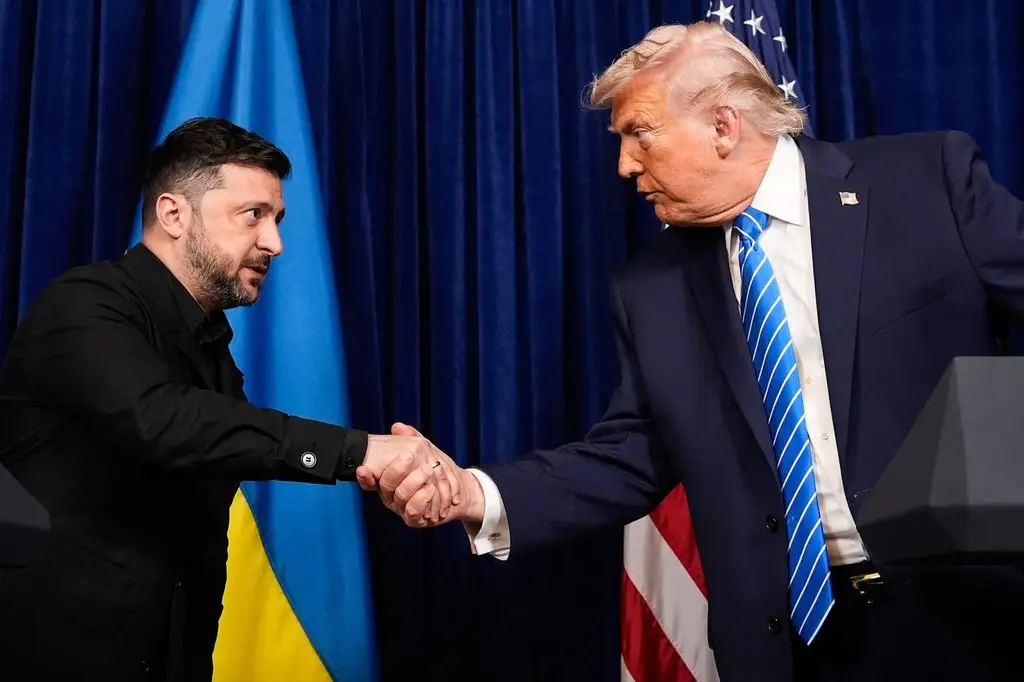
On Saturday, October 10, 2026, President Donald Trump told reporters outside the White House that it is "time for Ukraine to get a new president." He was about to leave for a midterm campaign rally in Clarksville, Tennessee. The remark, aimed at Volodymyr Zelenskyy, is among the most direct public calls by an American president for a change of leadership in an allied wartime government. It landed less than a day after Trump confirmed a deal with Moscow that loosens restrictions on Russian diesel exports, a move Zelenskyy had publicly condemned.
The immediate trigger is energy. Diesel prices in the United States have climbed since the United States and Israel attacked Iran on February 28, a conflict now in its eighth month. Earlier reporting in this series has noted the toll of that war on American politics, including the deaths of 19 U.S. service members and persistently poor polling. An AP-NORC poll cited by Euronews found that 71 percent of U.S. adults disapprove of Trump's handling of Iran. With the midterm elections weeks away, fuel costs have become a political liability, and the administration has been searching for ways to bring pump prices down.
The second strand is the war in Ukraine, now in its fifth year after Russia's full-scale invasion in February 2022. Both sides have intensified strikes on energy facilities, transport networks and other infrastructure. Ukraine has repeatedly hit Russian refineries with long-range drones; a large attack on a Moscow-area oil refinery on September 20 was one of the more prominent examples. Washington, according to Trump, had told Kyiv it could pursue its campaign against Russia but should leave refineries alone, because damage there ripples into global fuel markets.

Key Developments
The sequence began on Friday, October 9, when Trump confirmed an agreement with Russia, reached after a call with Vladimir Putin, to suspend restrictions on Russian diesel exports. According to Fox News, the arrangement runs until April 7. Treasury's sanctions office has reportedly issued a license permitting imports through April 2027, and earlier coverage in this series noted that the tonnage involved has been reported inconsistently, with figures ranging from a first shipment of roughly 300,000 tonnes to a planned total of about three million. Fox described the deal as allowing "millions of tons" of diesel to reach U.S. and global markets. Because sources disagree on the volumes and exact dates, those details should be treated as unsettled.
Zelenskyy reacted sharply. He called the arrangement a "gift to Putin," arguing it hands Moscow additional revenue to buy weapons and prolongs the war rather than shortening it, and he called for genuine de-escalation by Russia. The deal also arrived against the backdrop of United States-Ukraine-European talks held in Miami on October 9, which Steve Witkoff described as constructive but which reportedly ended after a single day without a breakthrough.
On Saturday, Trump answered. He accused Zelenskyy of worsening what he called "a world problem" by continuing to authorize strikes on Russian refineries after being asked not to, and he blamed the Ukrainian leader for high American diesel prices. He said Zelenskyy "could have made many deals and for some reason, he never does," and urged Ukraine to find "a new leader who can make a deal." Trump also announced on Truth Social that Russia and Ukraine had agreed to an "energy ceasefire." CBS News reported that it was unclear what such an arrangement would involve. Zelenskyy said the announcement "was news for me," noted that Russia had continued to strike energy infrastructure, including a power plant in Kharkiv, and said Kyiv would keep hitting Russian refineries while expecting Putin to honor what Trump had said.
The two announcements pull in opposite directions. One suggests an American effort to calm the energy war; the other suggests Washington is rewarding Moscow with market access while pressing Kyiv to stand down. Which framing prevails will depend on whether any concrete ceasefire terms materialize and whether Russian strikes stop.
Reactions
Kyiv's response was swift and carefully worded. Foreign Minister Andrii Sybiha posted on X that Zelenskyy is leading the country through a war for independence, freedom and dignity, that he has the backing of the Ukrainian people, and that only Ukrainians have the right to choose their leader. Sybiha added that foreign statements of this kind show Zelenskyy is doing his job well. He said Zelenskyy had met several European foreign ministers that day, including Germany's Johann Wadephul and Norway's Espen Barth Eide, and that partner support remained steadfast. One translated report named a British minister in a way that could not be verified, so that detail is omitted here.
Moscow welcomed the comments. Kirill Dmitriev, Putin's special envoy on economic cooperation, called them "symbolic and historic" and said Ukraine needs leadership focused on peace. The Kremlin's embrace is notable because Russian officials have long argued that Zelenskyy is illegitimate, a claim Ukraine and its allies reject. Ukraine's constitution and martial-law rules bar ordinary elections during wartime, so any change of leader would have to come through a political process far removed from a presidential remark.
European officials reacted with dismay. EU foreign policy chief Kaja Kallas warned that easing sanctions on Russian diesel gives Moscow more revenue, and said EU foreign ministers planned to approve a large new package of sanctions on Monday, October 12. Zelenskyy discussed the issue with British Prime Minister Andy Burnham and French President Emmanuel Macron. Burnham and Canada's Mark Carney both backed an energy ceasefire in principle, but Carney was openly critical of the U.S.-Russia diesel arrangement.
There was pushback in Washington too. Six bipartisan senators urged the administration to "immediately reverse course" on the diesel deal, and Democratic leaders including Chuck Schumer had already attacked it. The criticism cuts across party lines because it touches two sensitive issues at once: whether sanctions leverage on Russia should be traded for domestic price relief, and whether an American president should publicly weigh in on who governs an ally.
Why It Matters
For Ukraine, the practical stakes are financial and political. Russian oil and fuel revenue underwrites the Kremlin's war effort, so any easing, even if framed as a temporary price measure, is a setback for the strategy of squeezing Moscow. Politically, a call from the president of Ukraine's most important military backer to replace its elected leader risks emboldening domestic critics and Russian influence efforts, even though Kyiv's government has closed ranks. Zelenskyy's decision to say publicly that Ukraine will keep striking refineries signals he does not intend to bow to the request.
For Europe, the episode deepens a familiar anxiety. European governments have invested heavily in sanctions and in the Ukraine accession process, which has just advanced after Hungary lifted its objection to opening two negotiating clusters. A divergence between Washington and Brussels on sanctions would complicate coordination at a moment when the Miami talks are meant to produce a joint proposal for Moscow within weeks.
For the United States, the move is as much about the midterms as about Ukraine. Trump's own words tie the diesel deal to fuel prices, and the administration is under pressure from a war with Iran that has pushed energy costs higher. Critics argue that pursuing lower prices by easing pressure on Moscow trades long-term strategic leverage for short-term electoral relief. Supporters would counter that lower fuel costs help households and that pressing both sides toward a deal is a legitimate goal.
What's Next
Several things bear watching in the coming days. The first is whether the EU's new sanctions package passes on Monday, which would test how far Brussels is willing to diverge from Washington. The second is whether the so-called energy ceasefire acquires any defined terms, and whether Russian strikes on Ukrainian power infrastructure actually pause. The third is congressional action: the bipartisan group of senators may seek to constrain or reverse the diesel license, though the White House has given no sign of backing down.
A fourth is diplomatic. Washington has said it wants technical-level trilateral talks with Russia by the end of October, and a joint U.S.-Ukrainian-European proposal for Moscow is expected in the coming weeks. Trump's remarks make it harder for Kyiv to approach those talks as an equal partner, but they also increase pressure on European capitals to stand visibly behind Zelenskyy. Whether the president repeats or softens his call for a new Ukrainian leader will be an early indicator of how seriously to take it as policy rather than rhetoric.
Finally, the Kremlin's reaction suggests Moscow sees an opening. Expect Russian officials to amplify the theme that Ukraine's leadership is the obstacle to peace. Ukrainian officials, for their part, will likely keep emphasizing that the choice of their president belongs to Ukrainians alone, and the coming weeks will show whether that message holds among allies as the midterms approach.
Published By | News Editor