Written By | International News Agencies
The Houthis, formally Ansarullah, have fought Saudi Arabia and the Yemeni government since 2015
World Politics
Overview
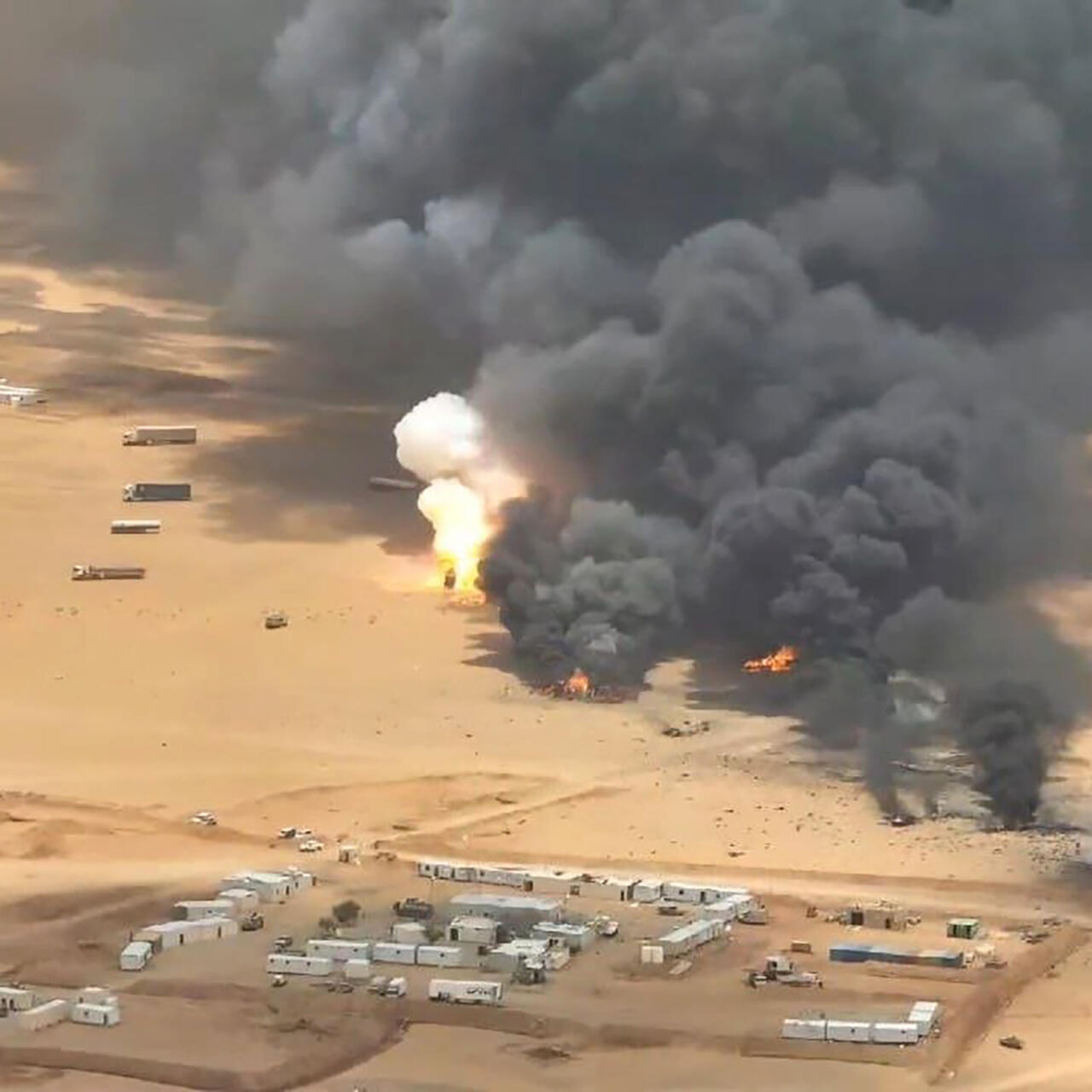
Saudi Arabia is now absorbing the most sustained attack on its territory in years. On the evening of October 21, a strike hit King Fahd International Airport in Dammam, the gateway to the kingdom's oil-rich Eastern Province, and an intercepted drone targeting a facility at Saudi Aramco's Shaybah oil field killed foreign workers with its falling debris. The next day the U.S. State Department ordered non-emergency government employees and their families to leave Saudi Arabia, and American officials said missions elsewhere in the Gulf would follow with similar departures for family members. Saudi Arabia attributes the attacks to Yemen's Houthi movement, which has declared the kingdom's airports legitimate targets, and the kingdom says it has struck Houthi missile launch sites in response.
The escalation is a second front in a regional crisis that has been building since the U.S.-Israeli war on Iran began in late February, and it lands the same week that Iran's Revolutionary Guard claimed new attacks on ships near the Strait of Hormuz and the New York Times reported that Washington and Jerusalem have drafted plans to resume strikes on Iran after the U.S. midterms. This account draws on Reuters-sourced reporting carried by several outlets, the Hill, the Jerusalem Post and others; reported casualty figures differ, and the differences are flagged below.
Background: From a Proxy War to a Regional Front
The Houthis, formally Ansarullah, have fought Saudi Arabia and the Yemeni government since 2015. A de facto truce reduced cross-border attacks for years, and Riyadh invested in a diplomatic track with the group. The regional war that began this February undermined that calm. Iran's partners and proxies have been drawn into a wider confrontation, shipping in the Red Sea and the Gulf has been disrupted, and the Houthis have framed their campaign as retaliation for coalition strikes on Yemeni civilian infrastructure.
The immediate run-up has been dramatic. According to one detailed timeline published by House of Saud, a single outlet whose chronology should be treated with caution because it contains internal inconsistencies, Saudi Defense Minister Prince Khalid bin Salman announced on October 5 that a committee under the so-called Mecca pact would activate collective deterrence measures. Between October 6 and 11, strikes on Riyadh's King Khalid International Airport reportedly killed about 20 people and wounded more than 300, a figure that I could not corroborate in other sources used for this article. On October 9, Saudi Arabia asked the United Nations Security Council to act, and on October 11 a projectile reportedly hit the tarmac beside parked aircraft at King Fahd Airport, causing a fire. The same day, Houthi military spokesman Yahya Saree declared all Saudi airports other than those in Mecca and Medina to be legitimate targets. On October 13 a ballistic missile reportedly struck the Aramco headquarters campus in Dhahran, causing a fire but no casualties. The Security Council subsequently adopted a presidential statement condemning the strikes and affirming Saudi Arabia's right to defend itself.
Diplomatically, the escalation also forced the postponement of the EU-Gulf Cooperation Council summit that had been set for October 24 in Riyadh, as covered in this briefing last week, because Houthi attacks made it unsafe to convene leaders in the capital.
Key Developments: October 21 and 22
Saudi Arabia's General Authority of Civil Aviation said the Dammam attack on Wednesday evening killed people and wounded eight, with injuries ranging from minor to serious; it said it was assessing material damage and did not specify the weapon used. The death toll differs between reports. The Jerusalem Post, citing the aviation authority, reported two dead, and Democracy Now likewise reported two killed at the airport and two at an oil field. Another outlet reporting the same authority's statement said one person was killed, and the Reuters-based account described a Saudi citizen and an Indian national among the dead while also saying "at least one." The Indian Embassy in Riyadh said at least one of the dead and two of the injured were Indian nationals. The safest reading is that at least one and probably two people died at the airport, and that the figure had not been settled when these reports were filed.
Separately, Saudi air defenses intercepted a drone heading for an Aramco facility at the Shaybah oil field. The Energy Ministry said falling debris killed two foreign residents, one Filipino and one Nepali, and injured two others, one Pakistani and one Indian. A vehicle fire broke out outside the perimeter but operations were reported to be unaffected. On Thursday the Saudi-led coalition said it intercepted and destroyed a further drone in the Riyadh region, with no details about origin or target. Aviation authorities said Dammam flight operations had resumed by Thursday morning. The Houthis claimed earlier strikes, and their Saree has described the campaign as retaliation, but a detailed Houthi statement on the October 21 attack had not been published when the reports were compiled.
Six sources told Reuters that Aramco instructed staff to evacuate the company's Dhahran headquarters and work remotely, and Aramco did not respond to a request for comment. If confirmed, the instruction would be a significant signal about how seriously the company views the threat to its own premises. KLM was reported to have suspended flights to King Fahd Airport through October 31, and Etihad canceled its Abu Dhabi to Dammam route through October 24, according to the House of Saud timeline. In neighboring Yemen, the government's army said the Houthis struck Al-Rayyan airport in Mukalla four times within hours.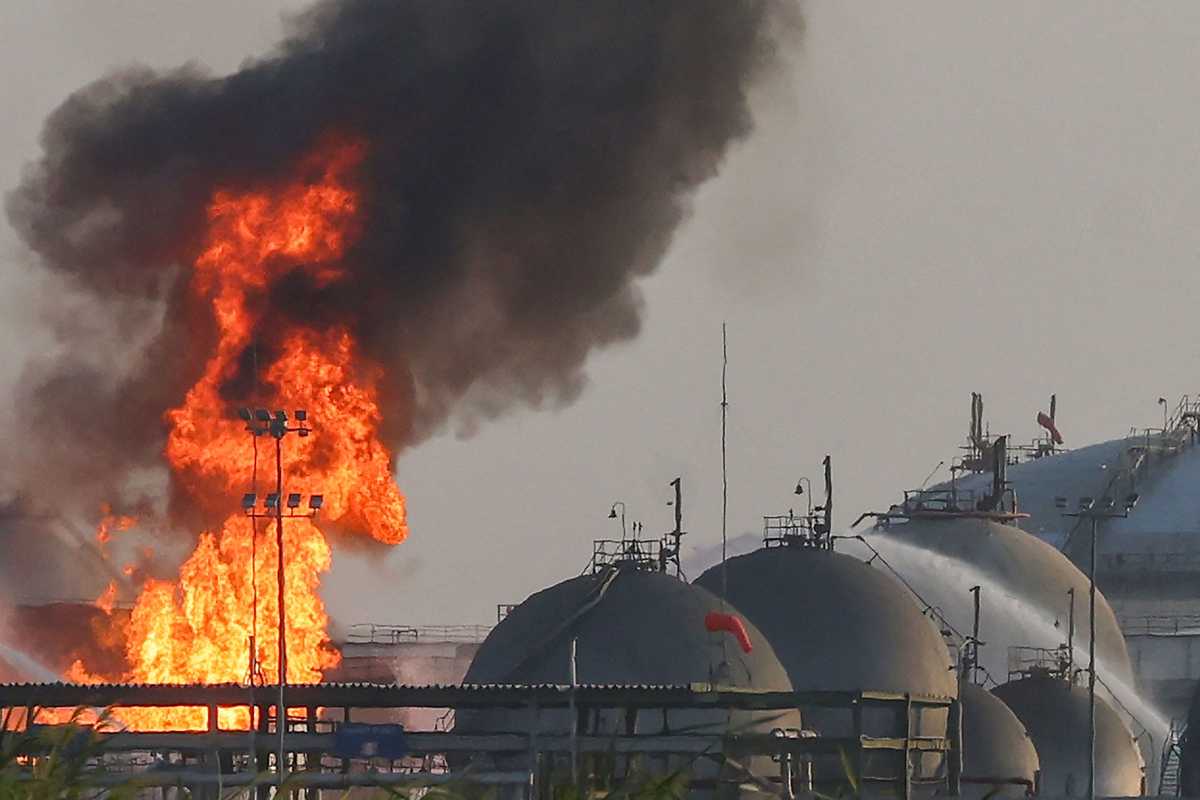
The U.S. Evacuation Order and Regional Reactions
State Department spokesman Tommy Pigott said the departure order applies to "non-emergency U.S. government employees and their family members in Saudi Arabia only," and blamed the Houthis for attacks on civilian targets. Four U.S. officials told Reuters that missions in other Gulf states would also order family members to leave. A mission drawdown of this kind is a risk assessment as much as a reaction: it suggests Washington expects further strikes and does not trust the defenses around the places where its personnel live and work. It also coincides with reports that Washington and Israel are planning a renewed campaign against Iran after the midterms, which would make Gulf states and their American diplomats more exposed.
Riyadh has been building regional support. Turkey is reported to be planning to send troops to Saudi Arabia under a defense pact among Saudi Arabia, Pakistan and Turkey, and separately Turkey, Qatar, Pakistan and Indonesia signed a defense cooperation accord, according to the FDD Overnight Brief. Egypt's president Abdel Fattah el-Sisi said Cairo's support for Saudi Arabia would not extend to attacks on Yemen, a pointed limit on how far some partners will go. On the ground in Yemen, pro-government forces have launched an operation to break the Houthi siege of Taiz, claiming roughly 285 Houthi fighters killed or wounded, a claim that is unverified; the United Nations says nearly 260,000 people have been displaced and water rationing is under way in a city of about three million.
Why the Eastern Province Matters
The geographic shift is the most strategically important aspect of the story. The earlier strikes concentrated on Riyadh; the Eastern Province has now been hit repeatedly in a short span, according to the House of Saud timeline four times in eleven days. The province contains the bulk of Saudi oil production and processing, the Dhahran headquarters of Aramco, and the airport that runs Aramco's employee rotation flights to remote sites such as Shaybah. An enemy that can disrupt that logistics chain does not need to destroy an oil field to affect output; it only needs to make it hazardous for workers to travel and for foreign companies to insure operations.
That matters for the global economy. Brent crude has been trading around $112 a barrel this week amid the confrontation over the Strait of Hormuz, and fuel prices have already become a political liability for Trump ahead of the November 3 midterms. A credible threat to Saudi export infrastructure would compound the shock. Some reports say Gulf oil exports have not yet been affected, though insurance costs have likely risen, and no confirmed damage to Saudi production has been reported in the sources used here.
What Is Contested and What Is Unknown
The reporting leaves open several important questions. Casualty figures differ across outlets and across time. The claim of roughly 20 dead and more than 300 wounded at Riyadh's airport is from a single source in the set used. The nature of the weapons, and especially whether they are Houthi-built, Iranian-supplied or something else, has not been independently established in the reports reviewed. Whether Tehran is directing the Houthi campaign or merely benefiting from it is the question that Gulf and Western officials most want answered, and the sources here do not resolve it. Iran has said the United States must lift its naval blockade to break the deadlock in indirect talks, and it is plausible that Houthi pressure on Saudi Arabia is part of a broader bargaining posture, but that remains an inference rather than a reported fact.
What Comes Next
Saudi Arabia faces a difficult choice between escalation and restraint. The kingdom has said its response will be "equally serious," and it has already struck Houthi launch sites, but a larger air campaign in Yemen risks reopening the war it spent years trying to close, and Cairo's reluctance shows that not every partner will follow. The UN Security Council statement gives Riyadh political cover, yet it does not stop missiles.
For Washington, the evacuation order is a first step that will raise pressure to offer air defense, intelligence and naval support to Gulf partners, just as the administration weighs renewed strikes on Iran. For Europe, the postponed Riyadh summit is a reminder that its own energy security depends on the stability of the Gulf. Watch for four things in the coming days: whether the departure orders are extended to more Gulf missions, whether Aramco's remote-work instruction becomes a wider operational curtailment, whether airlines extend their suspensions beyond October 31, and whether any Houthi statement clarifies who and what was hit at Dammam. Each will tell us whether this is a punishing but containable campaign or the opening of a wider Gulf war.



