Written By | Sports Desk
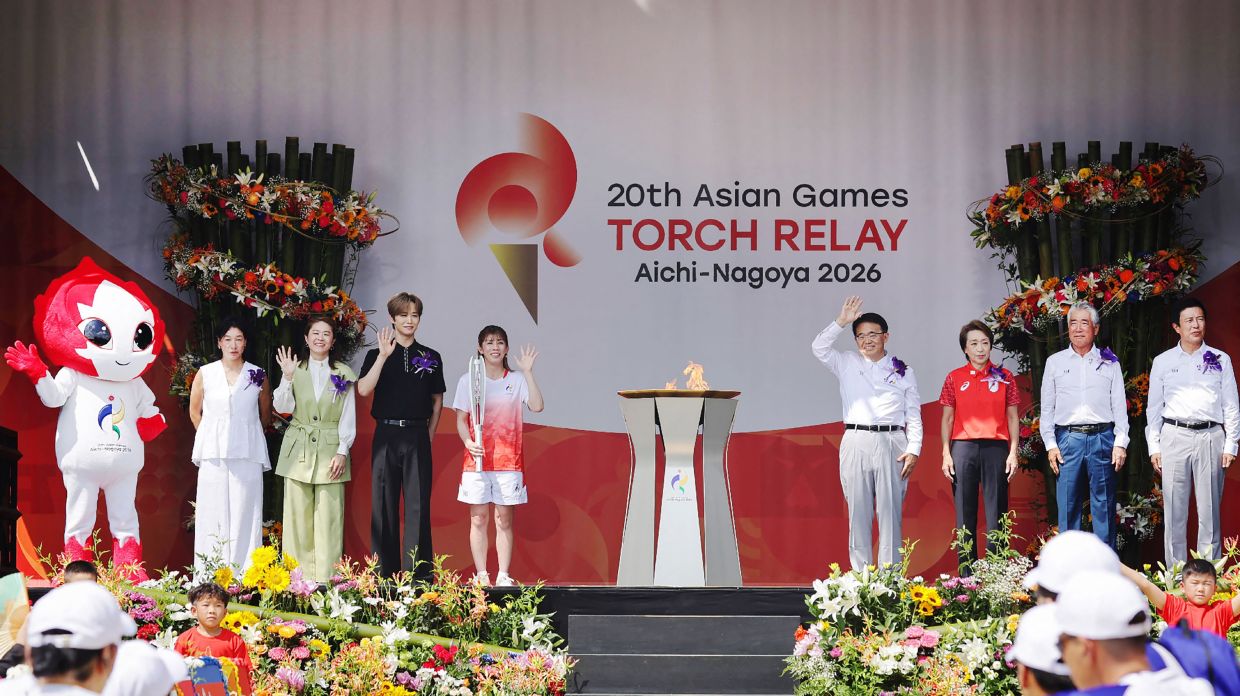
The 20th Asian Games open in Nagoya on Saturday with more than 17,000 athletes and officials, 469 medal events and seven Olympic qualifying pathways
NAGOYA, Japan
There is a moment in the life of every mega-event when the spreadsheets stop being abstract. For the organisers of the 20th Asian Games, that moment arrived when they counted the entry forms and discovered they had roughly 2,000 more people coming than they had planned beds for.
The Games open on Saturday evening at Paloma Mizuho Stadium in Nagoya, and by any measure of scale they are the largest sporting gathering on earth this year. More than 17,000 competitors and officials from 45 countries and territories are expected across 16 days of competition, running through October 4. That is more participants than a Summer Olympics. Organisers had budgeted for 15,000.
What follows is a story about ambition, arithmetic and an Italian cruise liner moored in typhoon season.
The bed problem
From the outset, Aichi-Nagoya 2026 made a deliberate choice that separated it from almost every recent host: no purpose-built athletes' village. Rather than pour concrete into a residential district that would need a second life, organisers opted for temporary accommodation — hotel rooms, prefabricated wooden container units, and a cruise ship.
Between 4,000 and 5,000 athletes and officials will sleep aboard the Costa Serena, an Italian vessel that in its day job carries holidaymakers around the Mediterranean with 571 cabins, seven swimming pools, eight restaurants and nine bars. Cruise ships have been pressed into service at international sporting events before — Rio, Sochi, the odd World Cup — but never at this scale, and never as the backbone of the housing plan rather than an overflow valve.
The reviews, so far, have not been kind. On Monday, South Korean sports officials publicly branded the facilities the worst accommodation in the history of the Games and complained that the beds were too short. A Korean Olympic Committee official told AFP there was "a serious shortage of accommodation" with days to go. Reports of tents serving as changing rooms and washroom blocks a long walk from sleeping quarters have circulated among several of the larger delegations.
India, rather than complain, prepared: the Indian contingent built replica container huts at home so its athletes could acclimatise to the dimensions before arriving.
Organisers are adamant that every athlete will have a bed. They have also promised the 20th edition of a competition first held in 1951 will be "the most spectacular for generations."
Rain, go away
Weather has already made its presence felt. Record rainfall last week forced athletes to evacuate their accommodation briefly, and rainwater seeped into some competition venues, though organisers reported no serious damage. More rain is forecast this week, and September and October are the heart of Japan's typhoon season.
It is the kind of risk that cannot be designed away, only planned around — and it is the reason the cruise ship raises eyebrows beyond the question of mattress length. A vessel is a fine hotel in calm water.
Kabaddi, padel and the road to Los Angeles
Beneath the logistics sits an extraordinary sporting programme: 43 sports and 469 medal events spread across 54 competition venues. Most sit in Nagoya and the wider Aichi prefecture, but events will also be staged in Tokyo, Shizuoka, Gifu and Osaka, with several Tokyo 2020 Olympic facilities — the Tokyo Aquatics Centre, the Setagaya Equestrian Park, the Izu Velodrome — brought back into use.
The Asian Games has always been the one multi-sport event where Olympic staples share a calendar with regional passions. Athletics and swimming sit alongside sepak takraw and kabaddi, jiu jitsu and wushu. Chasing a younger audience, organisers have added esports — running September 23 to October 2 at the Aichi International Exhibition Center — plus breaking and BMX. Padel and mixed martial arts both make their Asian Games debuts.
Crucially, the Games function as a qualifier for the 2028 Los Angeles Olympics in seven sports, including surfing, tennis, archery and squash, with direct quota places and ranking points on the line. For an athlete in a small federation with a thin travel budget, a fortnight in Aichi is not a warm-up. It is the door.
The names worth learning
Two of them are still in school. Yu Zidi, the 13-year-old Chinese swimming prodigy already talked about as a Los Angeles medal contender, is on the start lists. So is Vaibhav Sooryavanshi, the 15-year-old Indian batter, part of a cricket team eager to make a statement before the sport returns to the Olympic programme in 2028 after an absence of 128 years. India could meet Pakistan in the final at Nagoya's new purpose-built cricket ground — a fixture that needs no promotion.
Philippine tennis star Alexandra Eala is skipping the China Open to be there. "I love playing and competing with the Philippine team," she said, a decision that has cost her a WTA fine and prompted calls at home for the government to help cover it. Taiwan's Lin Yu-ting, the Paris Olympic boxing champion whose eligibility became the subject of a bitter public row in 2024, will also compete.
Hosts Japan lean on their Olympic champions: gymnast Shinnosuke Oka, and javelin thrower Haruka Kitaguchi, the reigning Olympic champion who — remarkably, at this stage of her career — is making her Asian Games debut on home soil, hoping to answer a disappointing 2025 World Championships in Tokyo.
The medal table nobody expects to change
China will expect to top it again, and few would bet otherwise. At the Covid-delayed Hangzhou Games in 2023 the Chinese team won 201 golds and 383 medals in total. This time it sends more than 800 athletes, among them 36 Olympic champions: gymnasts Zou Jingyuan and Zhang Boheng, diver Wang Zongyuan, swimming world-record holder Pan Zhanle, and the world's top-ranked table tennis players Wang Chuqin and Sun Yingsha.
"We will showcase China's standard and strength on the regional and global stage," said Wang Zongyuan. Japan and South Korea remain the other two traditional powers. North Korea will send more than 100 athletes across 14 sports.
What this means for you
If you have never watched an Asian Games, this is the edition to start with. Basketball and football are already underway ahead of Saturday's ceremony, and the fortnight offers the rare pleasure of sports that will never headline a Super Bowl broadcast: kabaddi's breathless raids, sepak takraw's aerial kicks, padel's small addictive geometry.
It is also a live experiment in how big events might be staged in future. If a host can put on the largest multi-sport competition of the year without building a village, that becomes the template for cities that have watched Olympic budgets balloon and said no thank you. If the beds, the tents and the typhoon forecast combine badly, that is a lesson too.
Either way, the answer starts arriving on Saturday, somewhere between the fireworks and the first swim heat, and it will be written by 17,000 people who mostly just want somewhere decent to sleep.



