Written By | International News Agencies
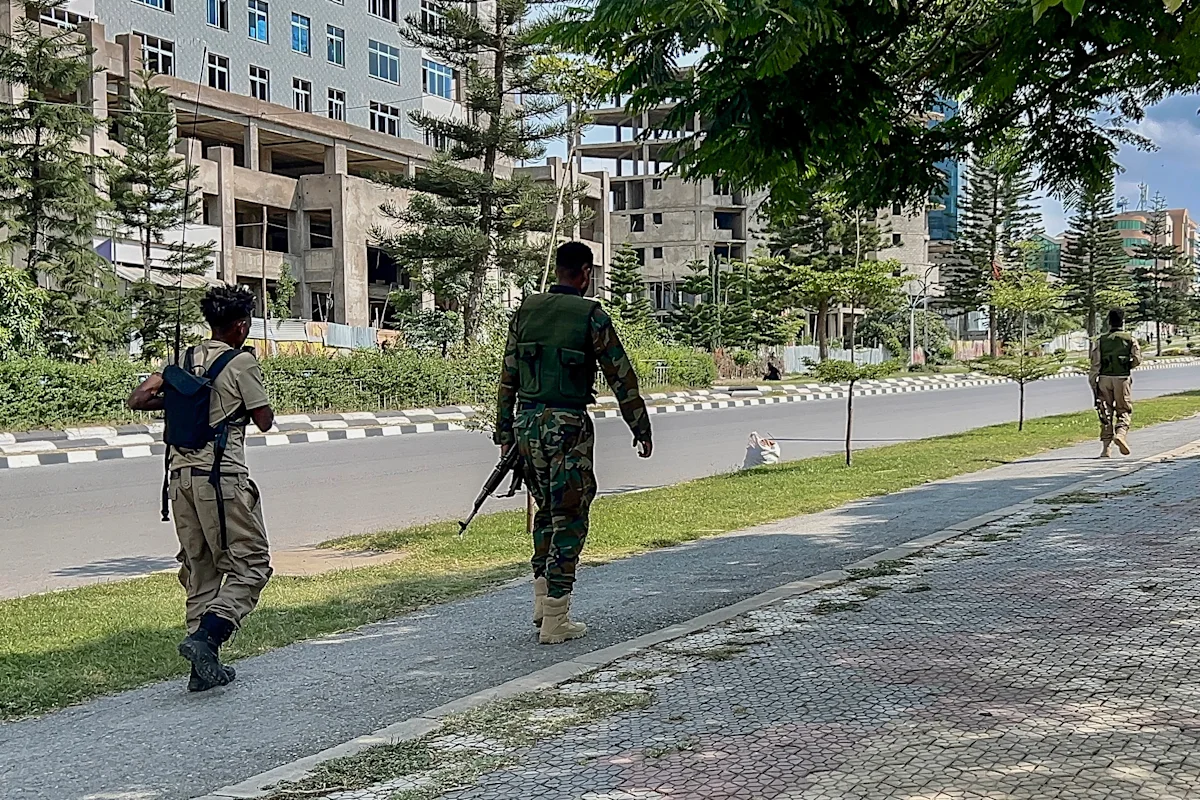
Al Jazeera reported that Tigrayan forces initially seized three airfields when the fighting began
ADDIS ABABA
Ethiopia's federal army said it retook the airport serving the Tigray regional capital, Mekelle, on Saturday, October 3. The advance came two days after Eritrea severed diplomatic relations with Addis Ababa and Egypt and Ethiopia expelled one another's diplomats. Taken together, the events turn a fortnight-old internal war into the gravest regional confrontation in the Horn of Africa since the 2018 peace between Ethiopia and Eritrea.
What happened
Fighting erupted on September 23 between the government of Prime Minister Abiy Ahmed and the Tigray People's Liberation Front (TPLF) and its allies, collapsing the Pretoria Agreement that ended the 2020-2022 civil war in November 2022, according to Al Jazeera's account of the conflict. The fighting has spread across three regions: Tigray, Amhara and Afar. Al Jazeera reported that Tigrayan forces initially seized three airfields when the fighting began.
By October 3, Al Jazeera reported, federal forces had recaptured Alula Aba Nega Airport, which lies about 10 kilometers east of Mekelle's center, and had taken control of Alamata, a strategic town near the southern border of Tigray with Amhara that serves as a supply hub. The Rio Times, citing the Associated Press, quoted an unnamed Ethiopian general as saying that "the military is in full control of the airport." The same report said the TPLF announced a "strategic withdrawal" and was relocating its regional government operations elsewhere. Some smaller outlets have gone further, reporting that federal forces entered Mekelle itself, but those claims rest on thinner sourcing, and communication blackouts make independent verification difficult.
The diplomatic breakdown moved even faster. On October 1, Ethiopia closed its embassy in Asmara and declared 10 Eritrean diplomats persona non grata, giving them 48 hours to leave, reporting by Reuters and regional outlets indicates. Addis Ababa cited what it called "direct and indirect acts of hostility and belligerence" by Eritrea and alleged breaches of the Vienna Convention. Eritrea responded the same day by severing all diplomatic ties. Its information minister said that Ethiopia had pursued a "hostile agenda" for three years and that Asmara had "no option but to reciprocate in kind and sever all diplomatic ties," according to the news aggregator Newscord's summary of the coverage.
A parallel dispute opened with Cairo. Ethiopia declared an Egyptian diplomat persona non grata with a 48-hour deadline, and Egypt answered by expelling an Ethiopian embassy counselor on identical terms, Egypt Independent reported. Reports differ on whether the two Egyptian-Ethiopian steps came on October 1 or October 2. Neither foreign ministry has publicly disclosed the specific allegations against the individual diplomats. An Egyptian official described Ethiopia's move as "unfortunate" and "unjustified" and accused Addis Ababa of "attempting to blame external parties for its domestic crises."
The human cost
The toll is already significant, though hard to measure. Al Jazeera reported at least 52 civilians killed. Doctors Without Borders (MSF) said it had documented more than 720 wounded patients since late September, with hospitals in Korem and Shire overwhelmed, according to the Rio Times. Al Jazeera also cited reports that roughly 270 Tigrayan fighters were killed in North Wollo, with more than 200 wounded. These combatant figures are unverified. About 150,000 people have been displaced in the Afar region, the Rio Times reported. Amnesty International said it had documented the "destruction of civilian objects through shelling and air strikes" and "intensified forced conscription," conduct that may violate international humanitarian law, according to Al Jazeera.
One development has alarmed diplomats in particular. An explosion hit the Ministry of Defence in Addis Ababa on Thursday, October 1, which Al Jazeera described as the first apparent spillover of the war into the capital. Reuters, as summarized by the aggregator Newscord, quoted a source linked to an opposition alliance as saying drones were involved. Other outlets did not confirm the cause, and one Africa-focused news aggregator also reported that the home of Ethiopia's army chief in Addis Ababa was reportedly targeted. Neither claim has been independently established.
Why Eritrea matters
The Eritrean dimension is the most consequential. In 2018, Abiy and Eritrean President Isaias Afwerki ended the state of war that followed their countries' 1998-2000 border conflict, a rapprochement that earned Abiy the 2019 Nobel Peace Prize. That settlement now looks like a casualty of the very war it was meant to prevent from recurring. During the 2020-2022 civil war, Eritrean forces fought alongside federal troops against the TPLF. Today, Addis Ababa alleges that Asmara has aligned with its former enemy. The TBS News account of the rupture says Ethiopia accuses Eritrea of forming an alliance with the TPLF to weaken the central government. It also says rebel forces maintain supply links across the Eritrean border. Eritrea denies involvement, according to Al Jazeera, and instead accuses Ethiopia of hosting, training and arming opposition groups.
Underneath sits the question of the sea. Ethiopia has been landlocked since Eritrea became independent in 1993, and Abiy has pressed for direct sea access, which Eritrea reads as a threat to its territory. Ports such as Massawa and Assab are the ones most often discussed. For Eritrea, Rio Times reported, such ambitions threaten its sovereignty. For Ethiopia, dependence on neighboring ports is a strategic vulnerability.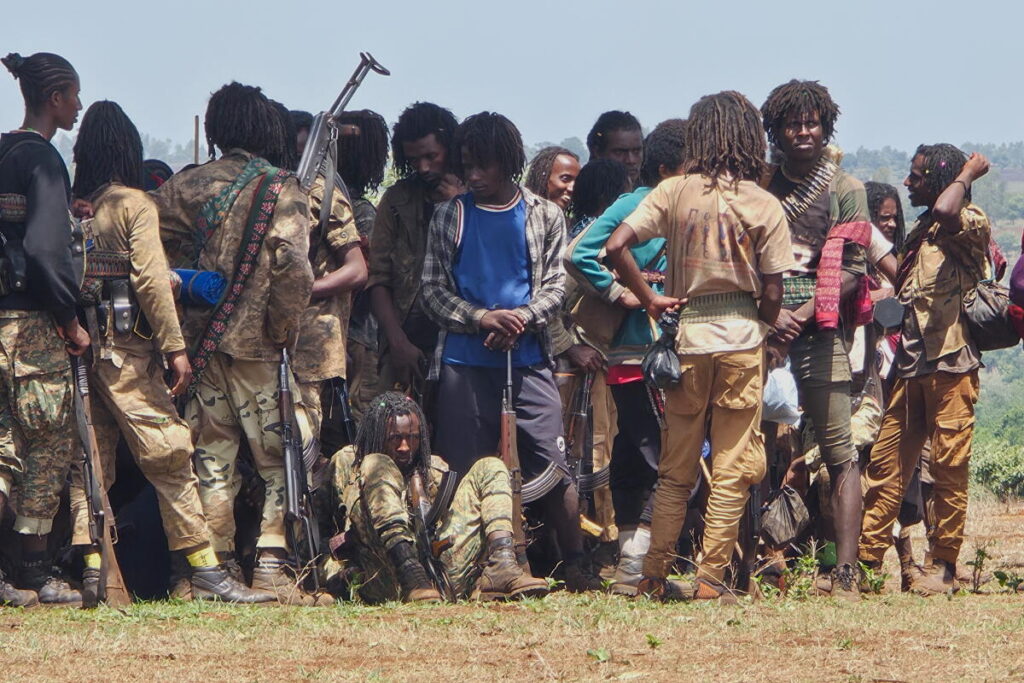
The Egypt factor
Egypt's entanglement is rooted in a different grievance: the Nile. Ethiopia inaugurated the Grand Ethiopian Renaissance Dam (GERD) in September 2025, and Cairo has long sought binding agreements on how much water is released in drought years, according to Rio Times' summary of the dispute. Ethiopia's Water and Energy Minister, Habtamu Itefa, has now set up a national committee to quantify losses from more than 22 projects that Addis Ababa says Egypt has blocked, including the dam, according to the Africa Intelligence Brief published by the Rio Times on October 3. An Egyptian official countered that Ethiopia's crisis is internal. Foreign Minister Badr Abdelatty suggested Ethiopian statements were meant to distract from domestic problems, and Cairo denied any involvement in the northern war, the Rio Times reported.
Alleged Egyptian support for Tigrayan forces is a charge that appears in analysis of the crisis. One report said that Egypt allegedly backs the rebels alongside Eritrea. Cairo rejects the accusation. This story has not verified the allegation, and it should be read as Ethiopian and analyst framing rather than established fact. What is on record is that Egyptian President Abdel Fattah el-Sisi hosted a four-way summit in New Alamein on October 4 with Eritrea's Isaias Afwerki, Somalia's Hassan Sheikh Mohamud and Sudan's Abdel Fattah al-Burhan, which the Egyptian presidency said was for "consultation and coordination about regional issues of mutual concern." The guest list is notable: it brings together Ethiopia's rival Eritrea and Egypt's partners in Mogadishu and Khartoum at the very moment relations between Addis Ababa and Asmara collapsed.
The African Union and Washington
The African Union Commission, which is headquartered in Addis Ababa and is therefore directly affected, urged Ethiopia, Eritrea and Egypt on October 1 to exercise "maximum restraint," the Rio Times reported. Egypt pushed back on October 3, arguing that the AU statement wrongly grouped it with what Cairo called an internal Ethiopian crisis. That exchange shows how limited the AU's leverage is when the continent's host capital is a party to the dispute.
The United States complicates matters. Washington lifted sanctions on Eritrea on September 19, citing "current realities," weeks before the rupture, according to the Rio Times. The timing now looks awkward for U.S. policy, since it lifted pressure on Asmara just as Ethiopia accused it of fueling a war.
Analysis: three overlapping conflicts
The crisis is best understood as three conflicts layered on top of each other, each with its own logic. The first is a civil war over the post-Pretoria settlement. The second is a contest over Red Sea access that pits Ethiopia against Eritrea. The third is a Nile dispute between Ethiopia and Egypt. The AU's own framing, as reported, treats these as intertwined, and the diplomatic expulsions suggest that the governments involved now do too.
Military momentum currently favors Addis Ababa. Retaking the airport and Alamata gives federal forces control of logistics nodes that matter for supply and humanitarian access. But battlefield gains can be deceptive in Tigray. The TPLF's announced "strategic withdrawal" is the language of a force preserving itself, not collapsing. The 2020-2022 war showed that the federal army could take Mekelle and still fail to end the conflict. Two of the three airfields seized in September, in Axum and Shire, remain outside federal control, the Rio Times reported.
The diplomatic track carries the larger risk. With embassies closed and channels cut, there is no crisis-management mechanism between Addis Ababa and Asmara, and every ambiguous incident, including the Defence Ministry explosion, risks being read as an act of war. The humanitarian picture will worsen if the war reaches densely populated areas. Sudan's own war, which continues, and Somalia's fragility add further pathways for escalation, as the TBS News analysis notes.
What to watch
Several indicators will show whether this stabilizes or spreads. The first is whether federal forces actually consolidate control of Mekelle and whether the TPLF's relocated leadership launches a counteroffensive. The second is whether Eritrea moves from alleged support to direct intervention, a question Rio Times said remains unresolved. The third is whether Egypt and Ethiopia stop at diplomatic expulsions. The fourth is whether the African Union or another mediator, perhaps one of the countries in the Alamein format, can open a channel. The fifth is humanitarian: MSF and Amnesty International findings will shape international pressure, and access for aid agencies will be a test of Abiy's government.
For now the best-supported facts are narrow: a fighting front that has moved quickly, two sets of expelled diplomats, a severed relationship that took years to build, and a death toll still being counted. Anything beyond that, including who is arming whom, remains allegation.



