Written By | Entertainment Desk
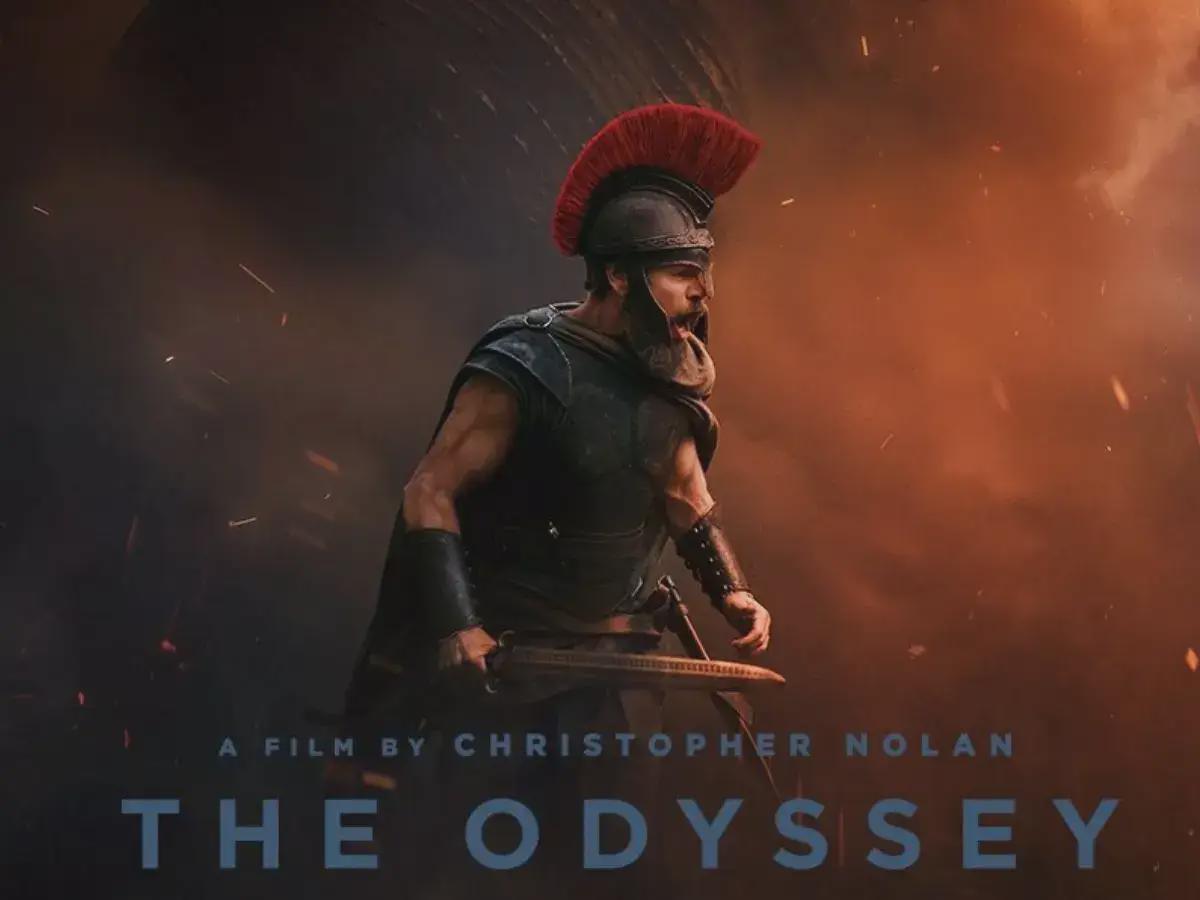
Beating "Avatar," beating "Oppenheimer," beating everything: how a three-hour adaptation of a 2,800-year-old poem became the sleeper box-office phenomenon of the summer
LONDON
There is something almost mythic about the fact that a film called "The Odyssey" has just completed the longest, most improbable box-office journey of the year — and that its final destination is a single screen in London that has now sold more tickets to it than to any film in its history, including "Avatar."
Christopher Nolan's sprawling adaptation of Homer's epic poem, starring Matt Damon, Tom Holland, Anne Hathaway, Zendaray, Lupita Nyong'o and Robert Pattinson, has officially become the highest-grossing film ever screened at the BFI IMAX in London, the largest cinema screen in the United Kingdom and, by most measures, the most prestigious single-screen venue in the world outside the TCL Chinese Theatre in Los Angeles. Since opening on July 17, the film has sold more than 101,000 tickets on that one screen alone, generating roughly £2.7 million in ticket revenue and eclipsing the £2.5 million benchmark "Avatar" set in 2009 — a record that had stood, essentially unchallenged, for 17 years.
Beating his own record, twice over
What makes the milestone especially striking is that Nolan wasn't just chasing "Avatar" — he was chasing himself. His 2023 blockbuster "Oppenheimer" had previously held the second-best mark at the BFI IMAX, meaning "The Odyssey" has now toppled both the all-time industry record and Nolan's own prior high-water mark at the same venue, inside the span of roughly three years. Few directors in film history have occupied the top two spots on any single theater's all-time chart simultaneously; Nolan now claims that distinction at one of cinema's most storied screens.
The BFI IMAX ranks as the top-performing IMAX location for "The Odyssey" across every UK and international market where the film has played, and it sits as the second-highest-grossing IMAX screen in the world for the title overall, trailing only the TCL Chinese Theatre location in Hollywood. For a three-hour film with subtitled ancient Greek passages, a nonlinear structure borrowing from Homer's original in medias res approach, and a run time that limits daily showings, that kind of per-screen dominance is a remarkable commercial feat.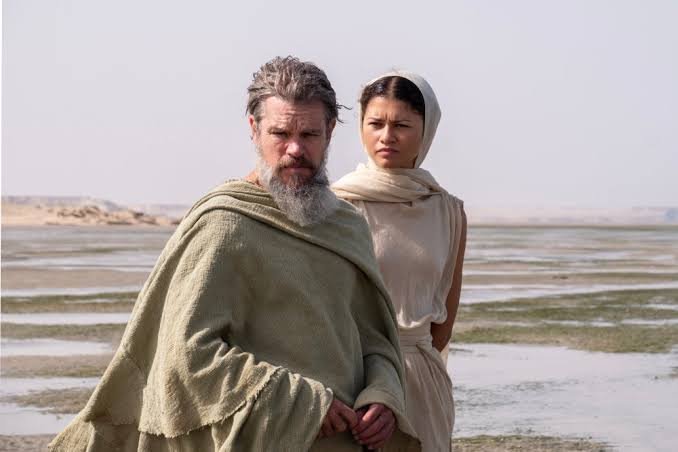
An old story, told for a new blockbuster era
"The Odyssey" tells the story of the Greek hero Odysseus's decade-long, monster-strewn journey home from the Trojan War, a narrative that has anchored Western literature curricula for millennia but had never before received a big-budget, IMAX-native cinematic treatment on this scale. Nolan, working from a script he adapted himself, has described the project in prior interviews as an attempt to restore a sense of "oral, mythic scale" to a story that predates cinema, theater, and even the written word as we know it — filming principal photography across multiple countries with a heavy emphasis on practical effects and IMAX film cameras rather than digital compositing.
Critics have pointed to the film's sound design and its refusal to modernize Homer's language too aggressively as key reasons audiences have returned to see it multiple times, a habit that helps explain the outsized per-screen numbers at a single premium venue like the BFI IMAX. Repeat viewings, distribution insiders note, matter enormously for IMAX-specific records, since the metric tracks tickets sold at one location rather than aggregate box office across thousands of screens.
An industry starving for exactly this kind of win
The record arrives at a moment when the theatrical film industry has been anxiously searching for proof that audiences will still turn out, in large numbers and repeatedly, for adult-oriented, non-franchise cinema. Much of 2026's box-office conversation has centered on franchise fatigue, streaming competition, and shrinking theatrical windows. "The Odyssey" — an original literary adaptation with a nine-figure budget, an A-list ensemble, and zero pre-existing cinematic universe to lean on — has become something of a proof-of-concept for studios watching nervously from the sidelines.
Industry trade outlets have framed the BFI IMAX milestone as evidence that "prestige spectacle" can still command the kind of sustained, repeat-viewing loyalty that action franchises typically monopolize. One exhibition analyst, quoted in trade coverage of the milestone, called the achievement "a genuine hall-of-fame moment for large-format cinema," noting that the film's success at premium screens has materially outpaced its performance at standard multiplexes — a pattern that underscores how format-specific experiences are increasingly what draws audiences out of their homes in the streaming era.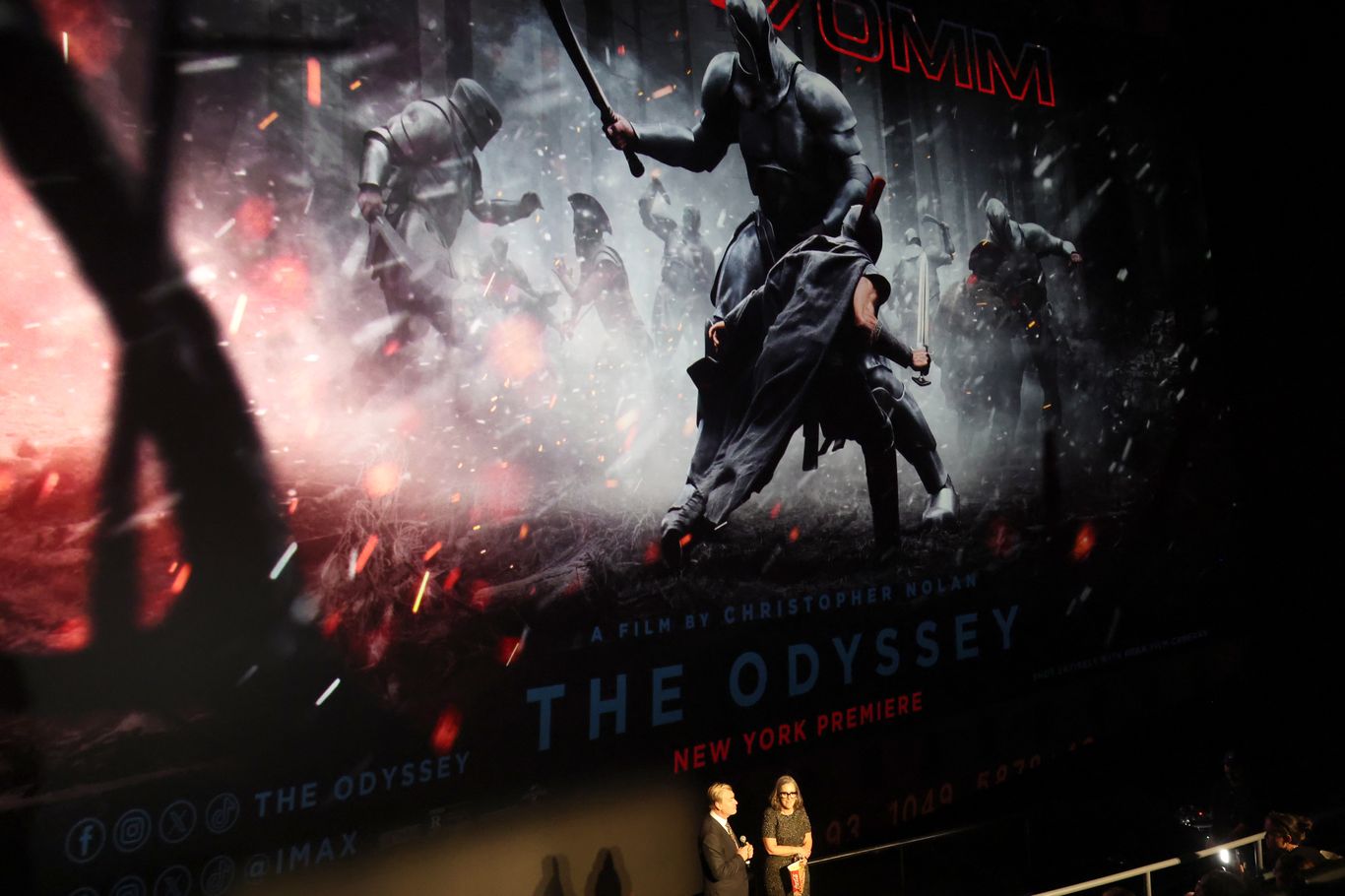
What this means for moviegoers
If you haven't seen "The Odyssey" yet, the record is as good an excuse as any to catch it the way its makers intended: on the biggest screen you can find. Nolan has been vocal for years about designing his films around IMAX's specific technical properties — the taller aspect ratio, the film-grain texture, the physical scale of the image — and "The Odyssey" reportedly leans into those qualities more aggressively than any of his previous work, with several sequences, including an extended storm-at-sea set piece, shot specifically to fill the format's full frame.
For casual audiences, the milestone is also a signal about where the theatrical experience is heading: increasingly bifurcated between disposable, streaming-adjacent content and event-scale spectacles engineered specifically to reward a trip to a premium-format cinema. Studios are watching "The Odyssey" closely as a data point for how much of that premium-format demand can be built around original stories rather than existing intellectual property.
The road ahead
With the film still selling tickets more than five weeks into its run, distributor Universal has not ruled out further re-releases or expanded IMAX bookings heading into awards season, when "The Odyssey" is widely expected to be a major contender across acting, directing, cinematography and sound categories. For now, London holds the crown — a fittingly epic footnote for a film about the long, winding path home.



