Written By | International News Agencies
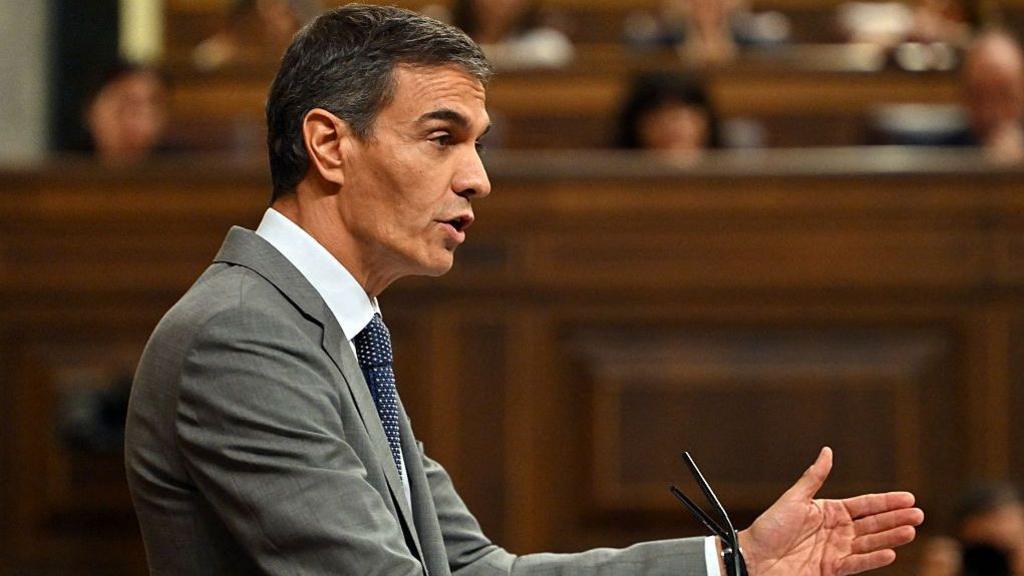
Sánchez has chosen to take the housing fight directly to voters, betting that a single, emotionally potent issue can reshape a race in which every major poll currently favors the right
World Politics
Overview
Spanish Prime Minister Pedro Sánchez dissolved the Cortes Generales on October 5, 2026 and called a general election for November 29, roughly seven months before his legislature was due to run its full course. The decision came three days after the Congress of Deputies rejected two emergency housing decrees that his Socialist-led government had approved only days earlier as a response to a nationwide wave of anger over rents and evictions. Rather than limp on without a working majority, Sánchez has chosen to take the housing fight directly to voters, betting that a single, emotionally potent issue can reshape a race in which every major poll currently favors the right.
The stakes are unusually high. The most recent survey cited by international outlets projects that the conservative People's Party (PP) and the far-right Vox could together command a comfortable majority in the 350-seat chamber, which would produce Spain's first government to include the far right since the end of the Franco dictatorship in 1975. Sánchez, who has governed since 2018 through a series of fragile coalitions, is wagering that he can turn the campaign into a classic left-versus-right referendum on who will protect tenants.
Background: A Housing Crisis and a Fragile Majority
Spain's housing crisis has been building for years. Reporting this week put average rents at roughly €1,176 a month, about double their level a decade ago, with young people in particular priced out of cities such as Madrid, Barcelona and Valencia. Housing has repeatedly topped polls as one of voters' chief worries, and it has fueled tenants' unions, mass demonstrations and a growing perception that the market favors investors over residents.
The issue acquired a human face in late September, when an 87-year-old disabled woman, identified in coverage as Maricarmen Abascal, was evicted from her home in Madrid. The images and the story spread rapidly and triggered street protests. Within days the cabinet moved. On September 29 it approved two decrees: one suspending evictions for vulnerable households through 2030 and barring purchases of housing by so-called vulture funds, and a second extending leases. Those measures, as previously reported, required ratification in the Congress of Deputies within a short window.
That requirement exposed the central weakness of Sánchez's position. His coalition of the Socialists and the left-wing Sumar controls only 147 of the 350 seats, far short of the 176 needed for a majority. Every significant law therefore depends on a patchwork of regional and left-wing partners, among them Catalan and Basque nationalists. The Catalan separatist party Junts, whose votes have repeatedly proved decisive and unpredictable, has been the most volatile of those partners.
Key Developments: The Vote and the Dissolution
On October 2 the Congress rejected the two decrees. According to reporting by outlets including Greek Reporter and the international wire services they draw on, the People's Party and Vox voted against, and Junts also opposed the measures, arguing that rent restrictions and eviction freezes would shrink the supply of rental housing. Exact tallies were not consistently reported across the sources reviewed, and earlier coverage of when the vote would take place was itself inconsistent, so this report does not cite a precise count.
Three days later, on October 5, Sánchez announced the dissolution of parliament and the November 29 election. He said Spain needs "a much broader progressive majority in parliament" to advance reform and acknowledged that his coalition had not achieved everything it set out to do. The remark amounted to an admission that the current arithmetic cannot deliver his program, and an appeal to progressive voters to deliver a stronger mandate.
The government is also pursuing a procedural counter-move. According to reporting that cites the strategy, ministers intend to push the rejected decrees through the parliament's standing committee during the campaign, a legal but rarely used path. The effect would be to keep the eviction protections in force while placing the opposition on record voting against them, handing the Socialists a campaign argument that housing relief was blocked by the right and its separatist allies. Whether that maneuver succeeds legally and politically will be one of the first tests of the campaign.
The Numbers: A Daunting Poll Picture
The political arithmetic is stark. A 40dB survey cited this week gives the PP 31.6 percent of the vote and Vox 18.4 percent, a combination projected to yield around 205 seats, well above the 176 needed for a majority. The Socialists poll at 27.4 percent and Sumar at 5.6 percent. Other polls were described as consistently showing the right-wing bloc ahead, though early surveys offer only a preliminary snapshot and a campaign of under two months can move numbers.
Sánchez has beaten the polls before. In 2023 he called a snap general election after poor regional results and, despite forecasts of a conservative win, remained in power by assembling a coalition of smaller parties. That history explains some of the government's confidence, and some of the opposition's caution. Yet the arithmetic in 2026 differs: the case now rests on a single defeat in parliament rather than a regional rout, and the PP-Vox combination is polling stronger than the right was then.
Reactions
Analysts quoted in international coverage framed the move as calculated. Political scientist Oriol Bartomeus told NPR the housing-centered framing is "highly favorable" to the Socialists because it allows Sánchez to cast the vote as a left-versus-right choice rather than a judgment on his entire record, which has included corruption allegations around figures in his circle and constant parliamentary instability. By contrast, the opposition is expected to argue that a government unable to pass its own decrees has run out of road and that Spaniards should be allowed to choose a different course.
The reaction in the streets has been more volatile. Euronews reported on its October 6 bulletin that violent housing protests broke out in Barcelona, with fires and arrests. Whether those demonstrations help or hurt the Socialists is uncertain: they underscore the strength of feeling that Sánchez wants to harness, but images of unrest can also energize the right's law-and-order message.
Business and property groups have warned against eviction freezes and rent controls, arguing that they discourage landlords from renting and push prices higher. Housing campaigners reply that without strong intervention, ordinary tenants will continue to be displaced. Junts' stance, which put the coalition in this position, reflects the broader dilemma of regional parties asked to back national measures that their own constituencies may not welcome.
Why It Matters Beyond Spain
Europe is watching for several reasons. Spain has been one of the continent's economic bright spots and, under Sánchez, one of the few large members led by a center-left government. A PP-Vox government would shift the balance within the European Council at a moment when the union faces war on its eastern flank, pressure on migration and a strained transatlantic relationship. Coverage in the same Euronews bulletin pointed to the EU's push for "faster returns and stricter controls" on migration, a debate in which a Vox-influenced Madrid would be a very different partner.
The campaign also tests a broader theory of politics: that cost-of-living and housing grievances, rather than identity or immigration, can rescue an incumbent from an unfavorable polling environment. Governments from Britain to Canada have struggled with housing affordability, and the Spanish result will be read as evidence about whether voters reward leaders who promise intervention.
What's Next
The campaign will run through late November. In the immediate term, watch for the legal fight over the standing-committee route for the decrees, the positioning of Junts and other regional parties on whether they would back a Sánchez-led government after the vote, and whether Sumar and other left-wing groups can consolidate support to avoid splitting the progressive vote. The PP's leadership must decide how openly to court Vox, since an outright coalition would be historic and controversial.
If the polls hold, the result could be the first national government in which the far right holds real influence since the end of the Franco regime. If Sánchez repeats his 2023 escape, he will have again defied forecasts, but would still face the same parliamentary fragmentation that triggered this election. Either way, housing, the issue that began with one woman's eviction, has now become the organizing question of Spanish politics.



