Written By | International News Agencies
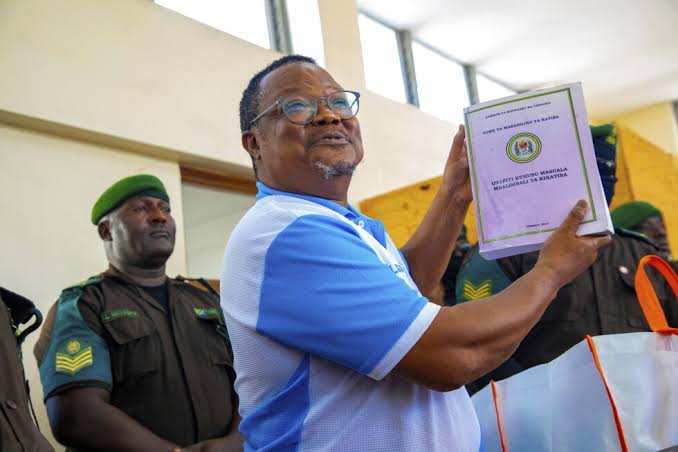
Lissu, national chairman of CHADEMA and the runner-up in Tanzania's 2020 presidential election, has been in custody since April 2025
DAR ES SALAAM
Tundu Lissu's treason trial resumed at 9 a.m. on Tuesday with prosecutors continuing to dismantle the testimony of his fifth defense witness, and with the High Court's own clock running down. On Sept. 7, Justice Dunstan Ndunguru told the courtroom that the case was supposed to have ended that day and gave the panel 14 further days to finish it. That extension expires next week.
Lissu, national chairman of CHADEMA and the runner-up in Tanzania's 2020 presidential election, has been in custody since April 2025. He faces a single charge of treason, an offense that carries the death penalty and for which Tanzanian law allows no bail. The charge rests on words he is alleged to have spoken at a meeting at CHADEMA headquarters in Mikocheni on April 3, 2025, and on the allegation that he published those words on the broadcaster Jambo TV with intent to threaten the government of the United Republic of Tanzania.
The case matters beyond the fate of one man. Because Lissu is conducting much of his own defense, and because his witnesses are the senior leadership of the country's principal opposition party, the trial has become the only formal proceeding in which the events surrounding the October 2025 general election are being argued out on the record, under oath and subject to cross-examination.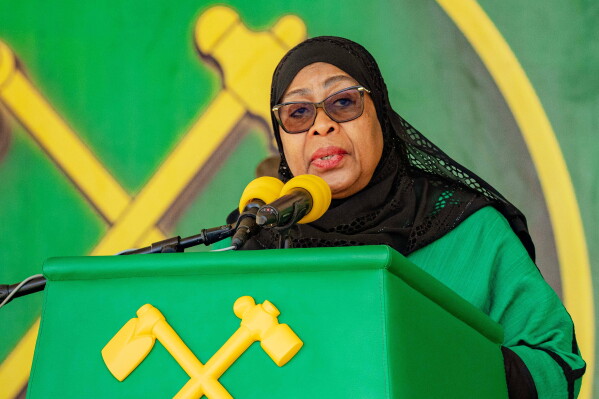
How the Case Reached This Point
The disputed meeting was convened for party members intending to seek CHADEMA nomination for the 2025 election, and its purpose was to explain the party's position that there should be no election without prior reform — the campaign CHADEMA branded "No Reforms, No Election."
That position, according to defense testimony, was announced publicly by then-chairman Freeman Mbowe on Dec. 10, 2024, endorsed by the party's Central Committee on Jan. 19, 2025, and passed to the Governing Council on Jan. 20 and the General Assembly on Jan. 21. The General Assembly, John Heche told the court, instructed the Central Committee to prepare a plan to explain the position to citizens, religious leaders and civil-society groups.
Lissu was arrested three months later. CHADEMA and the Alliance for Change and Transparency, the two largest opposition parties, were barred from contesting the general election held on Oct. 29, 2025. The Independent National Electoral Commission declared President Samia Suluhu Hassan the winner with 31,913,866 of 32,678,844 votes cast — 97.66 percent.
Protests and violence followed. A commission of inquiry chaired by retired Chief Justice Mohamed Chande Othman, which presented its report to Samia at State House in Dar es Salaam on April 23, 2026, concluded that 518 people were killed in the unrest, most of them by gunshot. The commission found that the events of Oct. 29 were not peaceful demonstrations but a premeditated operation involving coordinated planning, financing and the deployment of trained individuals. CHADEMA did not cooperate with the commission and does not accept its conclusions.
On Aug. 21, 2026, a three-judge panel comprising Justices Ndunguru, James Karayemaha and Ferdinand Kiwonde ruled that Lissu had a case to answer and ordered him to enter his defense.
The Defense Case
Lissu has built that defense along two lines. The first is technical: that he neither convened the April 3 meeting nor published anything.
Brenda Rupia, CHADEMA's communications and publicity director and the fourth defense witness, testified that the party secretariat under Secretary General John Mnyika organized the meeting, that she personally drafted the public notice on March 27, posted it on party social-media accounts and invited journalists. Roughly 250 people attended, she said, including aspirants, party leaders and reporters from Jambo TV, The Chanzo, Mwanzo TV, ITV and Mwananchi.
"It is not true," Rupia said when Lissu asked her about the allegation that he invited the media. "Tundu did not invite the media, and he did not organize the meeting." Of the publication charge she said: "He did not broadcast the programme; he is not a Jambo TV employee, and that is not his responsibility."
The second line is contextual: that the April 3 speech was the expression of a party policy formed in response to a long history of electoral grievance, not the announcement of a plot. Heche, CHADEMA's vice chairperson for Mainland Tanzania, spent days laying out alleged killings, abductions and arrests dating to 2011, citing among other material a Tanganyika Law Society report he said recorded 718 people as abducted or disappeared, and naming former CHADEMA aide Ben Saanane and journalist Azory Gwanda among the missing.
Much of the argument has turned on a single Kiswahili word, kukinukisha, whose meaning the parties dispute and which the prosecution treats as an instruction to disrupt. Amani Golugwa, CHADEMA's deputy secretary general for the mainland, told the court that the word uasi — rebellion — could be political language rather than a criminal expression. Pressed by State Attorney Nassoro Katuga on which dictionary of politics the party used, Golugwa replied: "We use the Kiswahili language."
Under cross-examination Golugwa conceded ground. Asked whether the aim of the speech was to press the government to change the electoral system, he answered: "It was true." Asked whether Lissu had used strong, persuasive and pressuring words, he again answered: "It was true." He maintained that the party had intended to educate voters rather than physically prevent anyone from voting, and denied any link between the speech and the October violence, noting that CHADEMA had been barred from political activity and Lissu was in remand when it occurred.
The Ruling on Summoning the President
The single most consequential procedural moment of the defense case came late on Thursday, Sept. 10, when the panel ruled on Lissu's application to summon 11 witnesses, among them President Samia, former Vice President Philip Mpango and former Prime Minister Kassim Majaliwa.
The court refused. It held that the prosecution, not the defense, carries the burden of proving the offense, including the claim that Lissu's words threatened the state, and that the defense therefore had no need to call senior state leaders simply to establish whether they had felt threatened.
"In criminal cases, it is the prosecution that has the duty to prove the offence, not the defence to prove the accused's innocence," Justice Ndunguru said. Of the three political office-holders he added: "The court sees no need to call those witnesses, and their evidence is not relevant to this case for the defence."
But the panel split the application. It found the evidence of Inspector General of Police Camillius Wambura, Chief of Defence Forces John Mkunda and the Director of Criminal Investigations relevant to the defense and directed that summonses be issued to all three. Neither the issues each is expected to address nor the dates of their appearances have been announced. The effect is that Lissu failed to reach the country's top three political offices but gained access to three serving heads of its security apparatus.
Monday's Cross-Examination
The prosecution spent Monday attacking the foundations of Heche's account, and drew a series of admissions that he had not personally witnessed most of what he described.
Heche said he had not seen the alleged killings he cited in Arumeru or Rorya, held no medical reports establishing causes of death and had attended no post-mortem examinations. Asked by State Attorney Ignas Mwinuka whether he had ever seen someone abducted, he replied: "With my own eyes, I have never witnessed it." Asked whether he had ever witnessed a disappearance, he said: "No."
On the international and regional reports he had cited — from the Thabo Mbeki Foundation, the United Nations, the Commonwealth, the World Council of Churches, the African Union and SADC — Heche acknowledged that he had obtained them through news outlets and social media and had himself translated them from English into Kiswahili in court. He declined to tender the documents, saying that was not his duty.
The questioning grew personal. Principal State Attorney Katuga asked about Heche's education, businesses, vehicles and alleged party fundraising, and put a bank receipt to him. "Who is Nilesh? I do not know him. Are you bringing street gossip here?" Heche replied. Revisiting the 2018 death of Heche's younger brother, Katuga asked whether the police officer involved had said he acted to intimidate Heche. "He did not tell me that, but I know," Heche answered.
Lissu objected to a request for a shortened afternoon recess and won a full hour and a half. "I live in prison. I have no time to speak with my witnesses and lawyers," he told the judges. Heche's cross-examination had not concluded when the court rose, and the hearing was adjourned to Tuesday morning.
The Stakes and What Comes Next
Tanzania's political settlement after October 2025 rests on an uncomfortable arrangement: a president with an official mandate of 97.66 percent, an opposition excluded from the ballot, an official inquiry attributing 518 deaths to a planned operation, and the leader of the largest opposition party in the dock on a capital charge he says is political.
A conviction would remove Lissu from public life for the foreseeable future and would formalize the state's account of what CHADEMA was doing in 2025. An acquittal would leave the government's version of October 2025 contradicted by its own courts. Either way, the verdict will arrive without the constitutional reform debate that CHADEMA says caused the crisis having been reopened.
Three things bear watching. The first is whether the panel finishes within its self-imposed 14 days or grants itself further time. The second is whether the police, military and investigation chiefs actually appear, and what they are asked. The third is the sentence question: treason carries death in Tanzania, and how the court handles that on conviction would say as much about the state of Tanzanian politics as the verdict itself.



