World Politics
Overview
Ethiopian federal forces and allied Tigrayan fighters have taken control of Mekelle, the capital of the Tigray region, after the Tigray People's Liberation Front announced that it had temporarily moved out of the city. The fall of Mekelle, reported by Reuters, the Associated Press and Al Jazeera over the weekend of October 3 to 5, is the most significant military development in the new Ethiopian conflict that began on September 23 and the sharpest reversal yet for the TPLF-led opposition alliance. It also lands amid a rapid regional diplomatic rupture, in which Ethiopia and Eritrea have severed relations and Egypt has convened a meeting of Eritrea, Sudan and Somalia. Our story two days ago covered the diplomatic break and the first explosions in Addis Ababa; this article is a continuation because the capture of a regional capital is a genuinely major new development.
The account below relies on international wire and broadcast reporting. Information from Tigray is hard to verify because telecommunications were disrupted, and no independent casualty figures for the October fighting had been published at the time of writing.
Background: The Collapse of the Pretoria Settlement
The current fighting cannot be understood without the 2020 to 2022 war in Tigray, which killed hundreds of thousands of people, displaced millions and devastated infrastructure across the north. That conflict ended with the African Union-brokered Pretoria Agreement in November 2022, which set out a permanent cessation of hostilities. The TPLF, which dominated Ethiopian politics for nearly three decades before Abiy Ahmed became prime minister in 2018, was a signatory.
The settlement frayed steadily. Issues the agreement left unresolved, including the status of disputed territory, the return of displaced people and the disarmament of Tigrayan forces, remained sources of friction. In April 2026 the European Union expressed serious concern about developments in Tigray and called for de-escalation to protect the agreement. By July, the TPLF had declared the peace deal effectively collapsed, according to Al Jazeera's reporting. Further complicating matters, a faction of former Tigrayan fighters now operates as the Tigray Peace Force, aligned with the federal government and opposed to the TPLF leadership.
Beneath the domestic dispute lies a regional one. Ethiopia has pushed to secure access to the Red Sea, which it lost when Eritrea became independent in 1993, a goal that alarms Eritrea and Somalia. Separately, Egypt and Ethiopia remain at odds over the Grand Ethiopian Renaissance Dam on the Nile.
Key Developments: From September 23 to the Fall of Mekelle
Fighting resumed on September 23, when seven opposition groups formed an alliance, described as the Ethiopian Peoples' Forces Alliance for Survival, seeking to remove Abiy and establish transitional governance. The TPLF seized the Mekelle airport on that date, and reports describe the capture of three Tigray airports in the opening phase. Fighting also spread to the neighbouring Afar region.
On October 1, the conflict acquired an international dimension. Explosions were reported in Addis Ababa, with an opposition-linked source describing them as drone strikes. The same day Ethiopia closed its embassy in Asmara and expelled ten Eritrean diplomats, and Eritrea responded by cutting all ties. Ethiopia also expelled an Egyptian diplomat, and Egypt reciprocated. Addis Ababa accuses Eritrea, Sudan and Egypt of backing the opposition alliance; all three deny the charge.
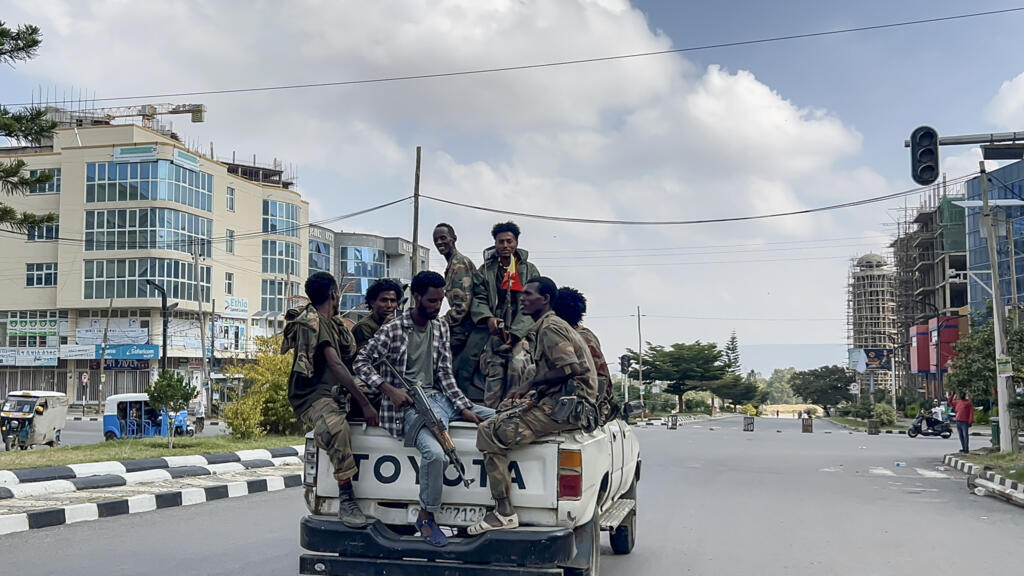
The decisive military moment came on Saturday, October 3. According to AP reporting, pro-government Tigray Peace Force fighters entered the centre of Mekelle that afternoon, followed by Ethiopian military troops, with celebratory gunfire reported. The TPLF then announced that it had temporarily moved out of Mekelle and would operate from somewhere else. Reuters cited three sources, a pro-government fighter, a humanitarian source and a Mekelle resident, confirming that the government controlled the city. By Sunday, federal forces were reported to have retaken the airport, and connectivity was partially restored.
The reporting contains discrepancies on dates. Al Jazeera's articles carry October 4 and October 5 dates, and one regional outlet places the entry of federal troops on October 3, while the AP describes the TPLF announcement on Saturday and subsequent developments on Sunday. These differences most likely reflect the timing of publication and the fog created by communications outages rather than conflicting accounts of the underlying event, but the exact hour of the city's fall is not independently established.
Humanitarian Situation
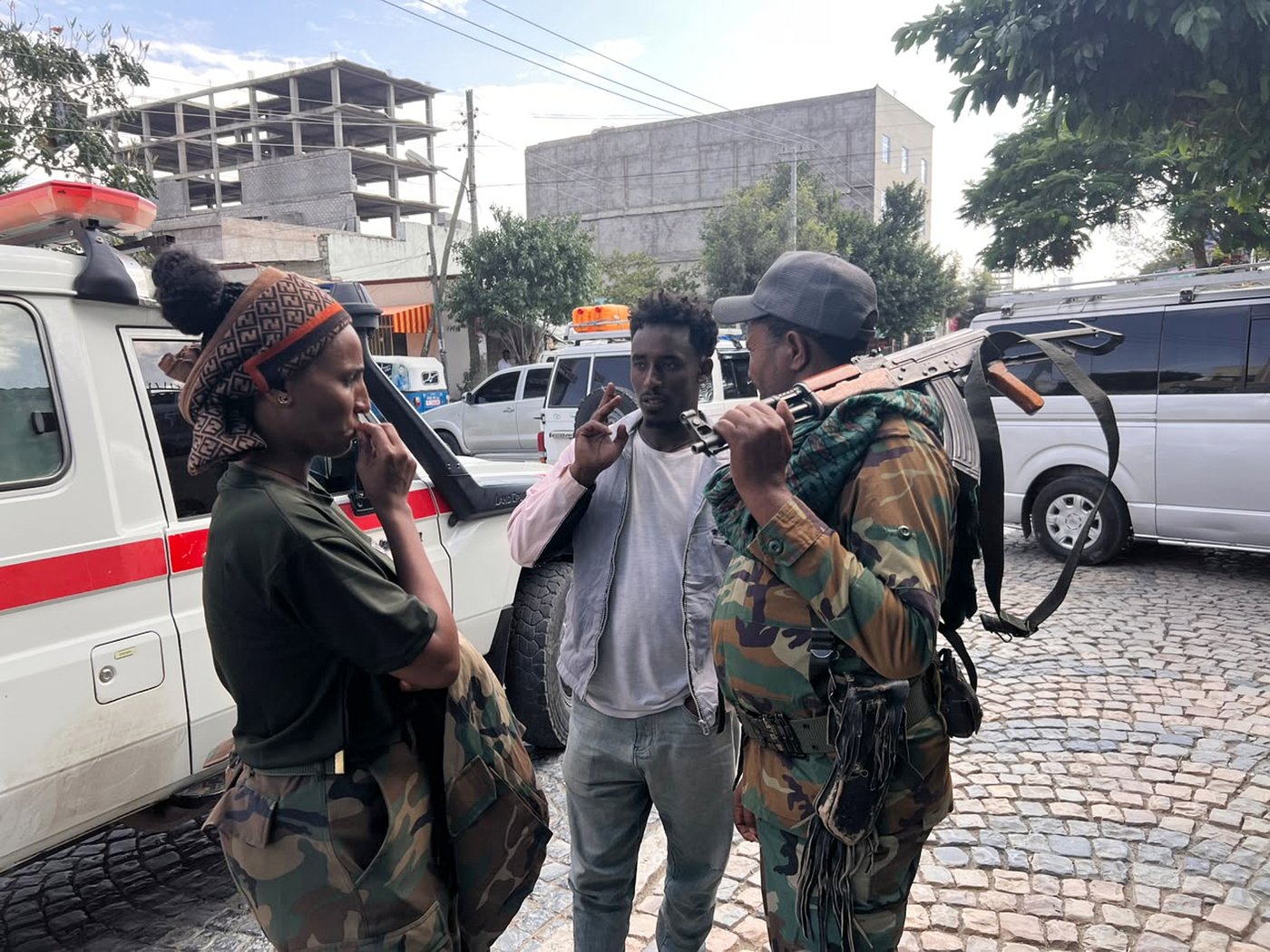
Mekelle's residents have borne the brunt of the uncertainty. AP reported looting of government offices, a police headquarters and shops in the aftermath of the withdrawal. Flights to Mekelle, Axum and Shire have been suspended, and roads were reported closed to civilian traffic. Internet and mobile networks were severely disrupted, limiting information flow and echoing the communications blackout that characterised the earlier war.
Residents interviewed by Al Jazeera expressed exhaustion. A Mekelle resident named Goitom said it felt like being back to square one, while a driver in Shire said he was heartbroken that Tigray had returned to full-scale war. Humanitarian organisations have yet to publish assessments of displacement or casualties from the new fighting, and the absence of figures should not be read as an absence of harm. In the previous war, ceasefire-era access constraints and aid blockages produced severe food insecurity in Tigray, a precedent that makes the current road and flight closures especially worrying.
Reactions: Regional and International
TPLF chairman Debretsion has framed the fighting as a continuation of the previous war and said fighters remain committed to defending Tigray, language that suggests the loss of the capital does not mean capitulation. Its statement that it would operate from somewhere else leaves open the possibility of a protracted insurgent campaign from outside the city, though no source has confirmed such a shift.
The African Union has warned that the tensions threaten the 2022 agreement. The United States State Department cautioned that the situation has the potential to affect the entire region and urged maximum restraint. The European Union had flagged concerns months earlier and is among the actors urging de-escalation. Analysts at the European Council on Foreign Relations have argued that European support could help prevent another Ethiopia-Eritrea war, a framing that reflects fears that the domestic conflict could become an interstate one.
Egypt's response has been to convene its partners. Arab News reported that President Abdel Fattah el-Sisi would host Eritrea's Isaias Afwerki, Somalia's Hassan Sheikh Mohamud and Sudan's army chief Abdel Fattah al-Burhan in El-Alamein for consultations on regional issues. Arab News gave the date as Sunday, October 6, but October 6, 2026 is a Tuesday, while another outlet placed the summit on October 4, so the date should be treated as unconfirmed. A similar Egypt-Eritrea-Somalia gathering took place in October 2024 and emphasised sovereignty and security coordination. Cairo has stressed a preference for dialogue over confrontation. Addis Ababa, however, is likely to read the meeting as the formation of an encirclement bloc.
Analysis: A Victory With Limits
Retaking Mekelle gives Abiy a significant symbolic and operational win, and it demonstrates the value of the Tigray Peace Force as a local partner able to lend political cover to a federal advance. Yet history counsels caution. In 2020 the federal army also entered Mekelle quickly and declared the operation over, only for the conflict to continue for two more years and eventually reverse federal gains. Holding territory, securing roads and winning the loyalty of a population that suffered grievously in the previous war are harder tasks than taking a capital.
The regional picture compounds the risk. Ethiopia's accusation that three neighbouring states back the opposition, together with severed ties with Eritrea and expelled diplomats on both sides with Egypt, creates conditions in which misjudgement could trigger a wider confrontation. The Red Sea access question, which Ethiopia treats as an existential economic priority, ensures that Eritrea and Somalia have strong incentives to resist. Meanwhile the opposition alliance spans multiple regions, meaning that even a complete TPLF defeat in Tigray would not end armed opposition to Abiy elsewhere in the country.
What Comes Next
Observers will be watching several indicators. First, whether the TPLF regroups and where, and whether the alliance holds together after losing its most visible prize. Second, whether humanitarian access, communications and flights are restored in Tigray, and whether independent monitors can document casualties and abuses. Third, the outcome of the Egyptian consultations and whether Eritrea moves troops or coordinates openly with Cairo. Fourth, whether the African Union, which called for restraint and which brokered Pretoria, can convene the parties, and whether a rights body such as Amnesty's call for an emergency session of the AU leads to formal action.
For now, Ethiopia's government holds the Tigrayan capital, the TPLF insists the war goes on, and the Horn of Africa is closer to a region-wide crisis than at any point since the Pretoria deal was signed.
Published By | News Editor