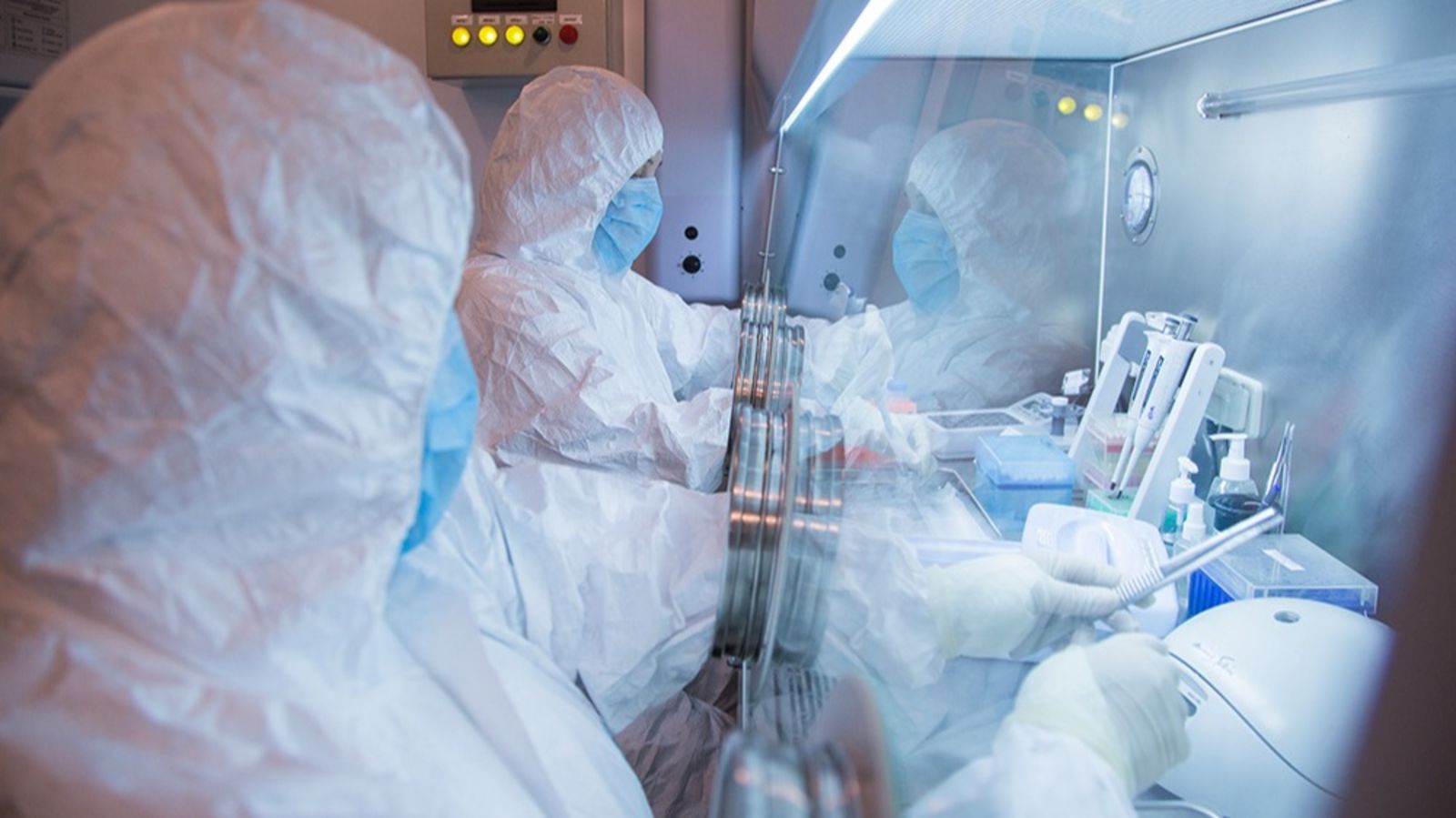
A 28-year-old technician at Siberia's famed anti-plague institute died after a sudden illness. Moscow insists there is no plague. The WHO is asking questions. And rumours of a broken test tube are refusing to go away.
IRKUTSK / GENEVA
She worked in one of the most specialised, and most sensitive, laboratories in Russia: a research institute devoted to some of the deadliest germs known to medicine. Now, Darya Shipilova, a 28-year-old laboratory technician at the Irkutsk Anti-plague Research Institute of Siberia and the Far East, is dead, and nobody outside a small circle of Russian officials can say for certain what killed her.
According to the European Centre for Disease Prevention and Control, she died on the night of 1 to 2 October 2026 after developing pneumonia of unknown cause. Russian media initially reported that the cause was suspected pneumonic plague, the most contagious and lethal form of the disease. Russian authorities say that is not the case. The World Health Organization has asked for details. And in the meantime, close to 200 people have been placed under medical observation in a Siberian city of more than 600,000.
It is a story with all the ingredients of a thriller: a secretive institute, an unconfirmed lab accident, an official denial, a second possible patient, and an international health body politely but firmly asking Moscow to show its working. Here is what is known, what is not, and what it means for the rest of us.

What We Know
The core facts are few. Shipilova worked at the Irkutsk institute, one of Russia's network of anti-plague research centres. She developed pneumonia and died on 2 October, a Friday. ECDC describes the event as a pneumonia of unknown aetiology and says the death occurred on the night of 1 to 2 October.
Some Russian media reports claimed she died of suspected pneumonic plague. Others went further, and ECDC notes that media reported an unconfirmed laboratory incident involving the bacterium Yersinia pestis, the cause of plague, on 25 September. Separately, Russian press reports suggested she may have broken a test tube containing plague bacteria. Authorities have not confirmed that account.
The official line is different. Rospotrebnadzor, Russia's public health watchdog, said on Tuesday 6 October that no plague cases had been found among staff who had been in contact with her over the previous 10 days. Those contacts, it said, were placed under hospital observation with daily laboratory testing. After an autopsy, the institute itself reported finding no microorganisms linked to her work. It did report two COVID-19 cases and two rhinovirus infections, but no other infectious pathogens.
Meanwhile, the number of people affected by precautionary measures has been significant. Local media reported about 200 people quarantined, while ECDC's figure is roughly 189 to 200 contacts placed under observation. Elena Sofina, the deputy head of the Shelekhov district, said that no "dangerous diagnosis" had been confirmed. A local hospital was put under quarantine, and about 60 per cent of those isolated as a precaution have since been released.
The Plague Question
Why does the word plague provoke such alarm? Because the disease has a terrifying history, and because one of its forms is particularly dangerous. Plague is caused by Yersinia pestis. Bubonic plague, the form most associated with the Black Death, spreads through the bites of infected fleas. Pneumonic plague, by contrast, infects the lungs and can spread from person to person through the respiratory route. It is the most contagious form, and without early treatment it can be fatal.
Plague today is treatable with antibiotics when caught early, and it is not the unstoppable medieval killer of popular imagination. But a pneumonia of unknown cause in a worker at an anti-plague laboratory inevitably invites the question, and it is one that officials in Moscow have chosen to answer with a firm denial rather than a detailed explanation.
Russia has also denied imposing anti-plague measures, even as hundreds of people have been placed under observation and a hospital has been quarantined. To outside observers, that sits awkwardly with the denials, and it is part of why international attention has remained so intense.
The WHO Wants Answers
WHO Director-General Tedros Adhanom Ghebreyesus said the agency has asked Russia for details about the technician's pneumonia, the pathogen involved, and the reported second case. The WHO said that "timely and transparent information is needed to assess any potential public-health risk."
That second case is itself unverified. Reports have circulated of a second employee with a similar illness, but it is not known whether that person exists, and Russian officials have not confirmed it. Russian officials told the WHO that no plague cases have been recorded in Irkutsk city. The WHO has noted it is unclear whether the technician's death was unrelated to plague at all.
On risk to the wider public, a WHO spokesperson said it appears low, though that judgement is based on unofficial information. ECDC has been more cautious in its wording, saying that the information available is not sufficient to reach a firm risk conclusion for the European Union population. The technician's contacts were reportedly identified and monitored, and no illnesses have been reported among them so far.
The diplomatic temperature has risen as well. US Secretary of State Marco Rubio said Moscow should share more information, adding: "it would be irresponsible for me to sit here and speculate." The comment captures the dilemma facing everyone outside Russia: without data, any claim, whether reassuring or alarming, is guesswork.
Inside The Anti-Plague System
To understand why the Irkutsk institute matters, it helps to know what it is. Russia has long maintained a network of anti-plague research institutes, a legacy of the Soviet era, when the country invested heavily in studying and defending against dangerous pathogens. Irkutsk's institute covers Siberia and the Far East, regions where natural plague foci, in rodent populations, have historically existed.
Laboratories of this kind work with some of the world's most dangerous bacteria and viruses under strict biosafety rules. The rules exist because mistakes do happen in laboratories around the world, even rarely. A single broken tube, a torn glove, or a lapse in procedure can matter. That is precisely why the unconfirmed report of a broken tube is so potent, and why international health authorities want to know whether an exposure incident was ever recorded.
Nothing publicly available has established such an incident. The institute's own autopsy-based statement points the other way. But the contrast between that statement and the media reports is the heart of the mystery, and until one side produces verifiable laboratory data, it will remain unresolved.

The Other Outbreaks Competing For Attention
The Irkutsk affair is unfolding against a crowded backdrop. ECDC's weekly threat report for 3 to 9 October lists the Bundibugyo Ebola outbreak in the Democratic Republic of Congo as its highest concern, with more than 8,700 confirmed cases. It also tracks a Salmonella outbreak linked to cherry tomatoes across ten EU and EEA countries, a record season of West Nile virus in Europe with 1,855 locally acquired human cases, and continued measles circulation.
Against that background, a single death in Siberia might not look like a headline. But a pneumonia of unknown aetiology in a worker at a facility that handles dangerous pathogens is exactly the type of event that international health regulations are designed to flag, because the cost of ignoring a signal can be enormous, and the cost of checking it is small.
What We Still Don't Know
Several crucial questions remain unanswered. What was the pathogen, or the cause of death, if not an infection? Russian authorities have said no microorganisms linked to her work were found, but they have not published a definitive diagnosis. Was there a laboratory incident on or around 25 September, and if so, what happened? Does a second patient exist? Why were nearly 200 people placed under observation and a hospital quarantined if there was no suspected dangerous disease? And will Russia share samples, sequence data or clinical records with the WHO?
Until those questions are answered, the safest summary is this: there is no confirmed evidence of plague, no confirmed illness among contacts, and a low reported risk to the public, but also no transparent diagnosis and no independent verification.
What This Means For You
For almost everyone reading this, the direct risk is very low. There are no confirmed cases among contacts, no reported spread outside the institute's immediate circle, and plague, if it did occur, is treatable with antibiotics when found early. You do not need to change your plans, avoid travel to Russia, or stockpile anything.
If you live in or are travelling to Irkutsk or the surrounding region, follow local official guidance, and seek medical attention promptly for fever, cough, chest pain or breathlessness. In general, anyone who develops a sudden high fever with cough or swollen, painful lymph nodes after contact with wild rodents or fleas in an area where plague is known to occur should seek care immediately.
The more important takeaway is about transparency. Health emergencies are rarely contained by borders, and the speed at which a country shares its findings can decide whether a local event becomes a regional or global one. The WHO's request for timely and transparent information is a standard expectation under the International Health Regulations, not an accusation.
The Bottom Line
A young scientist is dead, a Siberian city is on edge, and the world's health agencies are waiting for details that Moscow has so far chosen not to give. There is no evidence that the public is in danger. But there is also no evidence that it is not, because the one thing that would settle the matter, a clear and verifiable diagnosis, has not been published.
Until it is, the story of the Irkutsk laboratory will remain what it is today: a tragic death, a set of conflicting accounts, and a question hanging over a building that was built to protect people from precisely this kind of mystery.
This article is based on reporting and statements from the ECDC, the World Health Organization, Russian health authorities as reported by international media, and the US State Department. Several claims, including the alleged laboratory accident and the second case, remain unconfirmed. It is not medical advice.
Published By | Features Editor