Written By | Health News Agencies
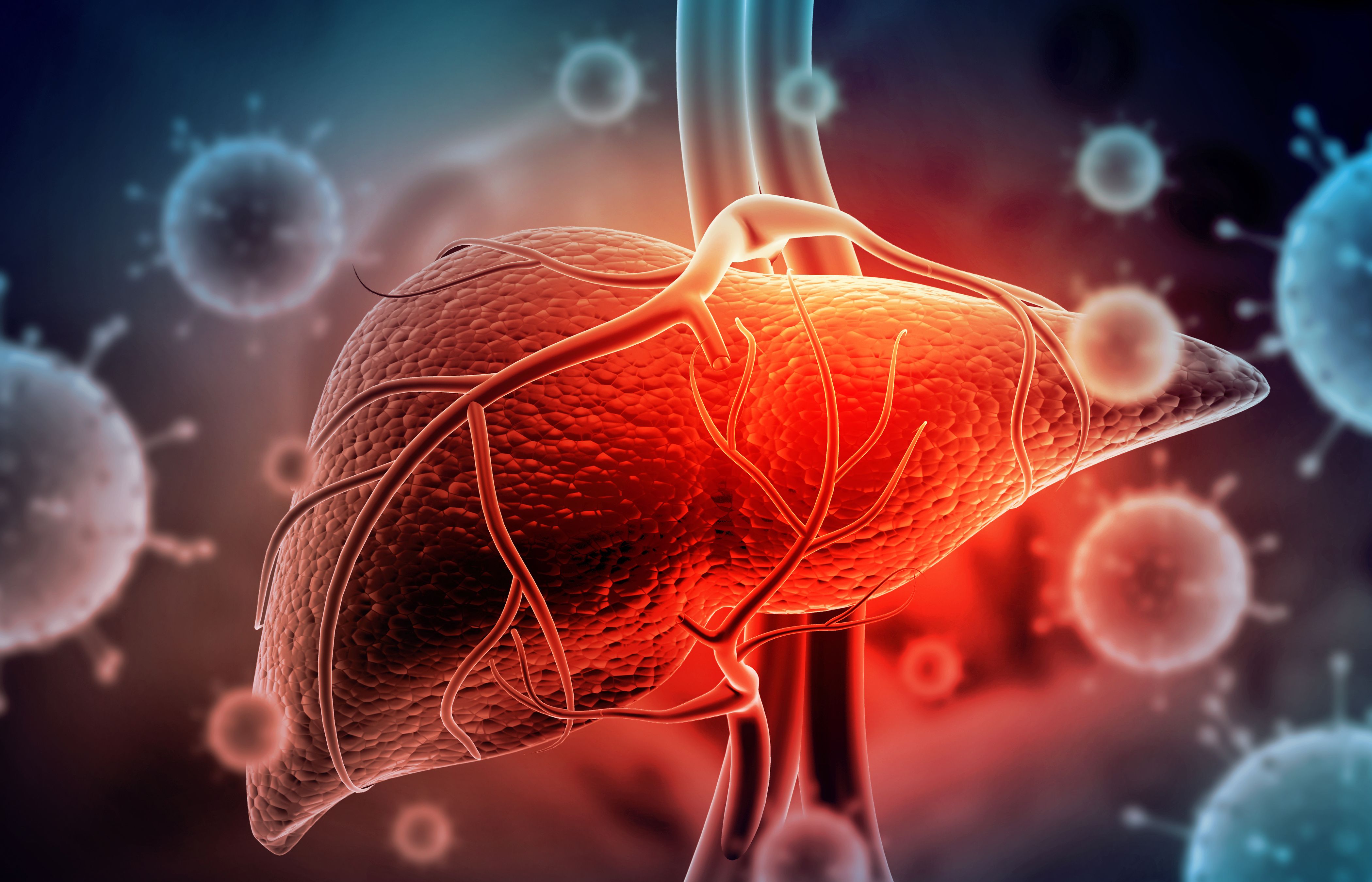
GSK's Hibsago is the first antisense therapy cleared for chronic hepatitis B, and roughly one in five patients in trials cleared the virus's key marker for good
WASHINGTON / LONDON
For millions of people living with chronic hepatitis B, the diagnosis has meant the same thing for decades: a pill every day, probably for life, and a lingering fear of cirrhosis and liver cancer. This week, the US Food and Drug Administration cracked that script open.
On 20 October, the agency approved Hibsago (bepirovirsen), a six-month course of injections from British drugmaker GSK, to be used alongside existing antiviral pills. In two large Phase 3 trials, about one in five patients reached what doctors call a functional cure: virus undetectable and the tell-tale surface antigen gone, months after stopping all treatment. In the hepatitis B world, that is a landmark.
What the FDA actually approved
Hibsago is the first antisense oligonucleotide approved for chronic hepatitis B. Antisense drugs are short strands of genetic material designed to latch onto a specific piece of a virus's messenger RNA and shut down its production of proteins. Bepirovirsen was licensed from Ionis Pharmaceuticals, which collaborated on its development.
It is approved for adults with chronic hepatitis B who do not have cirrhosis and who meet three conditions: they have taken a nucleos(t)ide analogue antiviral for at least six months, their viral DNA is suppressed, and their level of hepatitis B surface antigen, known as HBsAg, is 3,000 IU/mL or lower on an FDA-authorised test. The FDA also authorised a companion diagnostic, the Roche Elecsys HBsAg II quant II RxDx assay, to identify and monitor suitable patients.
Treatment is given by subcutaneous injection for up to 24 weeks, alongside the patient's existing antiviral. According to the prescribing information summarised by trade publications, each dose is two injections spaced at least five centimetres apart, with sites rotated weekly, and patients may self-inject after the first dose. After the final injection, patients continue their antiviral for at least 24 weeks, and may then stop it if they meet specified clinical and laboratory criteria.
The drug carries the full set of FDA fast-track tools: Fast Track, Breakthrough Therapy designation and Priority Review. Japan has also approved it, and GSK says decisions from other regulators are expected in the coming months.
The numbers behind the headlines
The approval rests on B-Well 1 and B-Well 2, two global, randomised, double-blind, placebo-controlled Phase 3 trials run across 29 countries. The primary goal was functional cure, defined as undetectable HBV DNA and undetectable HBsAg for at least 24 weeks after stopping all treatment.
In B-Well 1, 20 per cent of patients on bepirovirsen (127 of 650) reached functional cure at week 72, against none of 328 on placebo. In B-Well 2, the figure was 19 per cent (106 of 570), against none of 286 on placebo. Pooled, that is 19 per cent, or 233 of 1,220 patients, versus zero of 614 on placebo.
The results look stronger in people with lower surface antigen levels at the start. For patients with baseline HBsAg of 1,000 IU/mL or lower, a group GSK says represents about 45 per cent of diagnosed chronic hepatitis B cases globally, 26 per cent (200 of 768) reached functional cure compared with none of 393 on placebo. In an exploratory analysis, 49 per cent of all patients had HBsAg fall to 100 IU/mL or below at week 72, rising to 62 per cent in the lower-antigen group.
The FDA also noted that 24 per cent of bepirovirsen patients met the criteria to stop their antiviral medication, compared with none on placebo. GSK points out that standard of care alone typically achieves functional cure in under 1 per cent of patients after a year.
"This is the start of a new era in treating people living with CHB."
Dr Norah Terrault, University of Southern California Keck Medical Center, quoted in GSK's announcement.
Why hepatitis B is such a stubborn enemy
Hepatitis B is a virus that attacks the liver, and it is one of the world's great quiet killers. GSK estimates more than 240 million people worldwide live with chronic infection, and the disease causes roughly 1.1 million deaths a year, according to the company's notes to editors. Hepatitis B Foundation president Dr Chari Cohen says it accounts for about 56 per cent of liver cancer cases globally. In the United States, GSK estimates 1.7 million people have chronic hepatitis B, while the Hepatitis B Foundation puts the figure at around 2.4 million. The gap reflects how difficult it is to count a disease that often has no symptoms.
Current treatments, the nucleos(t)ide analogue pills, are effective at suppressing the virus and cutting the risk of liver damage. But they rarely clear it. The virus hides in liver cells in a form that the pills cannot touch, and surface antigen keeps being produced, so most patients must keep taking the drugs, often for life. That adds cost, adherence problems and anxiety. A functional cure, in which the virus stays silent and the surface antigen disappears without ongoing treatment, has long been the field's holy grail.
Cohen said the approval is "the first new therapy we have had approved in the U.S. in 10 years" for the condition, and the Foundation described Hibsago as the first approved drug that can lead to a functional cure in some people.
The fine print: a boxed warning and a narrow lane
This is not a miracle shot, and the label makes that clear. Hibsago carries a boxed warning, the FDA's most serious, for on-treatment hepatic flares and for thrombocytopenia, a drop in blood platelets that can raise the risk of life-threatening bleeding.
Liver enzyme spikes of 20 to 40 times the upper limit of normal occurred as surface antigen levels fell, in some cases with raised bilirubin, mostly within the first 12 weeks. That pattern may reflect the immune system waking up and attacking infected liver cells, and doctors will need to monitor ALT and bilirubin before and during treatment. Platelet counts must be checked before the first dose and weekly during treatment. The drug is contraindicated when platelets are below 100 billion per litre, and must be permanently stopped if they fall below 50 billion per litre.
Other warnings cover worsening kidney function, serious inflammatory reactions such as vasculitis, and risks from improper injection. In pooled trial data, adverse events occurred in 91 per cent of bepirovirsen patients versus 73 per cent on placebo. Serious adverse events were 7 per cent versus 4 per cent, and grade 3 or higher events during treatment were 16 per cent versus 3 per cent, with raised ALT the most common at 6 per cent. The most common side effects were injection-site reactions, fever, fatigue and headache.
The approved population is also narrow. People with cirrhosis are excluded, as are people who have not already achieved viral suppression on antivirals, and people whose surface antigen is above 3,000 IU/mL. Because the label requires quantitative HBsAg testing, which is not routine everywhere, access may depend on whether clinics can order the Roche test.
The FDA's Wendy Carter, DO, said the drug offers "the possibility of maintaining control of the virus," meaning some patients may keep HBV suppressed after all chronic treatment ends. Trade coverage also stressed that functional cure does not necessarily mean complete eradication of the virus, and that the lifelong durability of the effect is not yet proven.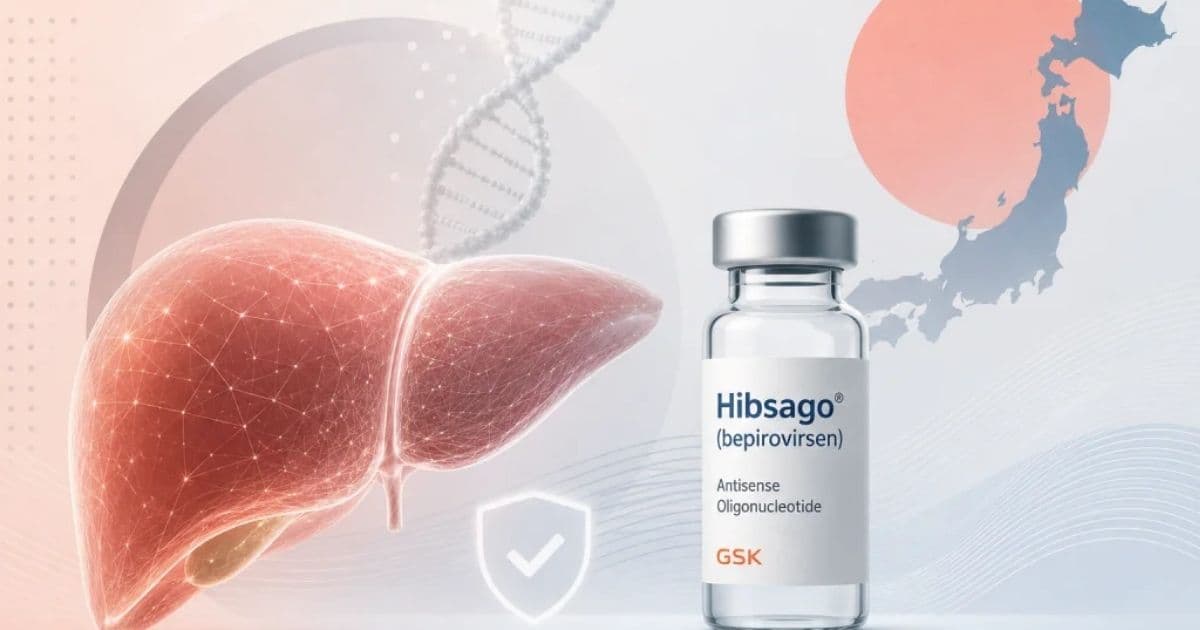
Expert perspective
Terrault, a hepatologist, framed the approval as the beginning of a different approach to the disease. GSK's chief scientific officer, Tony Wood, said that "for the first time, with Hibsago, US patients have the potential to achieve functional cure" after a six-month course.
Cohen of the Hepatitis B Foundation welcomed the approval but used it to make a broader point: the drug only helps people who know they are infected. She urged anyone who has not been tested to ask about screening, and encouraged people with chronic hepatitis B to ask their healthcare provider whether Hibsago might suit them. Many people with hepatitis B do not know they have it, and the benefits of any new drug depend on diagnosis.
Independent specialists will be watching several questions. How durable is the response over years? What happens to the roughly four in five patients who do not reach functional cure, and can they be retreated? How will doctors manage the liver flares in routine practice? And will insurers cover a drug and a companion test? The sources reviewed for this article did not report a US price, and GSK had not disclosed one in the materials examined.
What this means for you
If you have chronic hepatitis B and take a daily antiviral, do not stop or change your medicine on your own. Hibsago is designed to be added to your antiviral, and stopping antivirals without medical supervision can trigger dangerous flares. Ask your liver specialist whether you meet the criteria, which means no cirrhosis, at least six months on treatment, suppressed viral DNA and a low enough surface antigen level. A quantitative HBsAg test is the first step.
If you have never been tested for hepatitis B, ask for a test. Because the infection can be silent for decades, health agencies recommend screening for people born in or with family from regions where hepatitis B is common, people with household or sexual contact with an infected person, and others at risk. Testing is simple and a vaccine is available to protect those who are not infected. Vaccination remains the best way to prevent hepatitis B.
If you have cirrhosis or a high surface antigen level, the new drug is not for you yet, but its approval signals a pipeline of therapies aimed at functional cure. Keep up with regular liver monitoring, including ultrasound screening for liver cancer where recommended.
The bottom line
Hibsago is not a cure-all. It works for about one in five trial patients overall, more in those with low surface antigen, it comes with a boxed warning, and it needs careful blood monitoring. But for a condition where the standard of care has barely moved in a decade, a six-month injection course that gives a meaningful share of patients the chance to leave daily pills behind is a genuine step forward.
The real test will come over the next few years: whether the cures hold, whether safety is manageable outside clinical trials, and whether people who need it can actually get tested and treated. With hundreds of millions of people living with hepatitis B around the world, that last question may matter most of all.



