NEWS
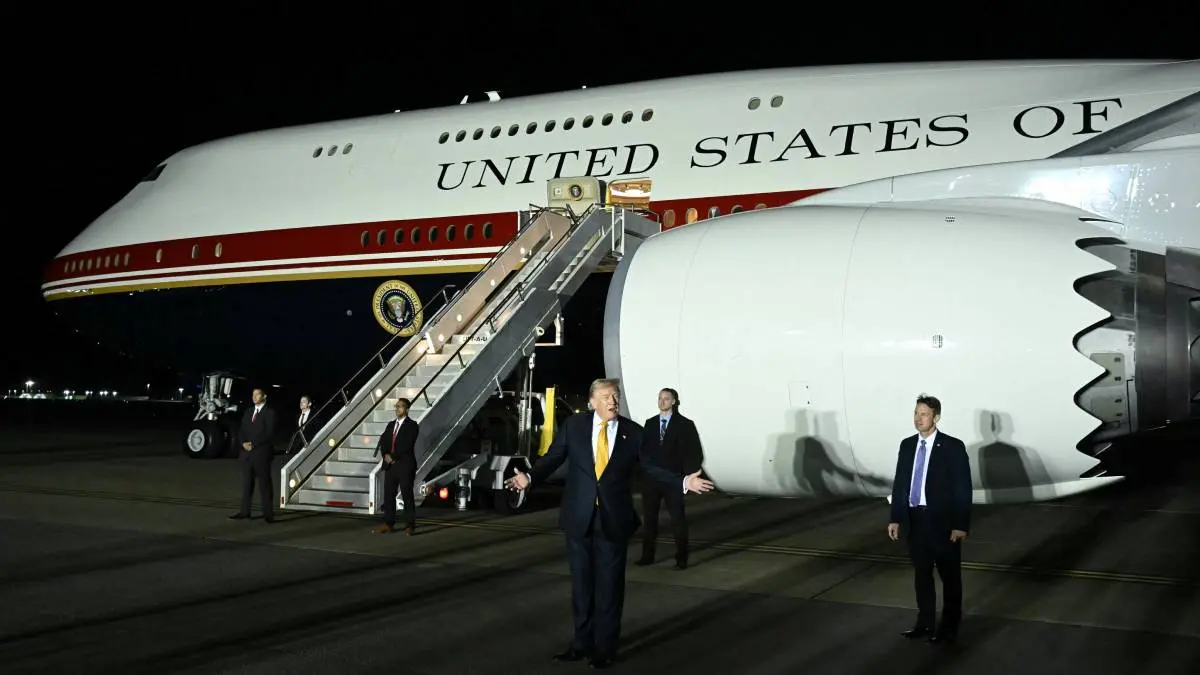
More than a month after it happened, the American public learned this week that President Donald Trump did not fly home from July's NATO summit in Ankara, Turkey, the way the White House said he did. Rather than boarding Air Force One in full view of the traveling press corps, Trump was quietly moved across the tarmac inside an airport catering truck and slipped aboard a smaller military jet, while the aircraft the public believed carried him took off as a decoy. The elaborate ruse, first reported by The Washington Post and CNN and confirmed in broad strokes by Trump himself, was triggered by intelligence that Iran had developed a specific plan to kill him as he left Turkish airspace — the latest and most dramatic illustration yet of how the monthslong, on-and-off war between the United States and Iran has reached directly into the security bubble around the American president.
Background
The plane swap took place against the backdrop of one of the most volatile stretches of the 2026 Iran war, a conflict that began with U.S. and Israeli strikes in February and has lurched between open combat and fragile, repeatedly collapsing ceasefires ever since. By early July, American and Iranian forces had traded rounds of strikes across the Gulf for months; U.S. aircraft had hit Iranian nuclear, military and energy targets, Iran had struck shipping and, at times, U.S. partners across the region, and the Strait of Hormuz had been opened, closed and threatened repeatedly. Trump himself had spent the preceding weeks alternating between declaring cease-fire agreements 'over' and announcing that new diplomatic 'perimeters of a deal' were within reach — a pattern that would recur again in early August, when he abruptly canceled a planned joint U.S.-Israeli bombing campaign against Iran's energy infrastructure that officials had described as potentially the most punishing strikes of the war.
It was into this environment that Trump traveled to Ankara for the July 7-8 NATO summit, hosted by Turkish President Recep Tayyip Erdogan and focused ostensibly on allied defense spending under the 2025 Hague pledge to reach 5% of GDP by 2035. But Iran, and the question of how to end the war Trump had waged against it, overshadowed the gathering's official agenda, according to contemporaneous coverage from CBS News and other outlets covering the summit. Trump met separately with Ukrainian President Volodymyr Zelensky on the sidelines, but it was the unspoken threat from Tehran — and how U.S. and Israeli intelligence agencies were tracking it — that would come to define the trip in hindsight.

Key Developments
According to U.S. officials who described the operation to the Post, CNN, CBS News and other outlets, intelligence services — with a Times of Israel report and other accounts pointing specifically to Israeli intelligence — had identified a credible and specific Iranian plot to attack Trump's aircraft as it departed Turkey, with some reporting describing a possible shoulder-fired missile aimed at Air Force One during takeoff. In response, the Secret Service and U.S. military devised a plan to conceal the president's actual movements from anyone who might be tracking them, including much of the traveling press corps and, reportedly, some White House staff.
On July 8, Trump publicly announced he would fly home aboard the older, blue-and-white 747 that has long served as the legacy Air Force One, rather than the newer jet — a Qatari-donated Boeing 747 he had used to arrive in Turkey — telling reporters at the time that he was doing so 'for old time's sake.' That explanation, it later emerged, was a cover story. Instead, Trump was driven onto the tarmac inside an airport catering truck, which lowered to ground level and carried him, out of view, to a nearby Air Force C-32A — a smaller, militarized version of the Boeing 757 typically used for the vice president and other senior officials. He boarded that aircraft and departed Turkey separately.
Meanwhile, the legacy Air Force One took off as planned with the press corps and much of the staff aboard, under the impression, by design, that the president was with them. Journalists were instructed to keep their window shades closed for the flight, a detail Reuters, the Post and other outlets have since highlighted as evidence of how far officials went to preserve the illusion. The White House, for its part, publicly stated at the time that the president was aboard Air Force One as he left the NATO summit — a statement that was, in fact, not true, and that went uncorrected until reporters pieced the episode together roughly a month later.
Reactions
Trump's own public comments on the episode have shifted over time. Weeks earlier, when The Wall Street Journal first reported on Israeli intelligence pointing to an Iranian plot against him, Trump dismissed it, telling the New York Post, 'No, no. Israel came up with nothing. No, no.' But after the plane-swap reporting broke in August, Trump told reporters he had in fact switched aircraft at the request of the military and the Secret Service, saying simply, 'I guess there was a threat out there' — an acknowledgment that stopped short of detailing the intelligence but confirmed the operation's basic outline.
The revelation has drawn scrutiny from several directions. Former Secret Service agents interviewed by Time described the operation as an extraordinary, if not unprecedented, security measure, underscoring how seriously protective agencies treated the threat. CNN's Barbara Starr raised a pointed question that other outlets echoed: if Iran believed Trump was aboard the decoy aircraft, were the journalists and staff members on that plane placed in danger in his place? The Hill and other outlets framed the episode as raising broader transparency questions, given that the White House's public account of the president's whereabouts was, by its own later admission, inaccurate.
Iran, for its part, has flatly denied any involvement. Foreign Ministry spokesperson Esmaeil Baghaei 'categorically dismissed' allegations that Tehran was involved in any attempt to assassinate Trump or other U.S. officials, calling related reporting 'completely baseless' and describing it as part of 'a malicious conspiracy orchestrated by Zionist and anti-Iranian circles' intended to further complicate U.S.-Iran relations. Notably, the sourcing of the underlying threat intelligence is itself contested: reporting from Middle East Eye indicated that Turkish officials have privately suspected that Israel may have exaggerated or even fabricated aspects of the assassination-plot intelligence, in a bid to derail nascent U.S.-Iran diplomatic contacts that Ankara had been quietly encouraging. That discrepancy — a U.S. security response built substantially on Israeli intelligence that a NATO host government has questioned — remains unresolved and adds a layer of uncertainty to an already murky episode.

What's Next
The disclosure is likely to intensify questions in Washington over presidential travel security protocols, the use of decoy aircraft and, more pointedly, why the administration allowed a false public account of the president's movements to stand for weeks without correction. Congressional committees with oversight of the Secret Service and the Pentagon may seek briefings on the operation, and press organizations whose reporters were unknowingly used as decoys are likely to press for greater disclosure before, rather than after, similar operations occur in the future.
More broadly, the episode lands at a delicate moment in the U.S.-Iran standoff. As of this week, the two sides remain locked in a tense back-and-forth over reopening the Strait of Hormuz, with Iran conditioning any deal on sanctions relief, the release of frozen assets, war reparations and a U.S. troop withdrawal from the region, while Trump has instead demanded Iran compensate American victims' families and has pivoted toward economic pressure over further strikes. Whether confirmation of a specific, high-level assassination plot against the U.S. president hardens Washington's posture toward Tehran — or whether the contested provenance of the intelligence tempers that response — is likely to shape the next phase of a negotiation that has already collapsed and restarted multiple times this year. For now, the episode stands as a stark reminder of how personal and immediate the stakes of the broader U.S.-Iran conflict have become, reaching all the way to the tarmac beneath the president's own aircraft.
Published By | News Editor