Written By | Fashion and Design Desk
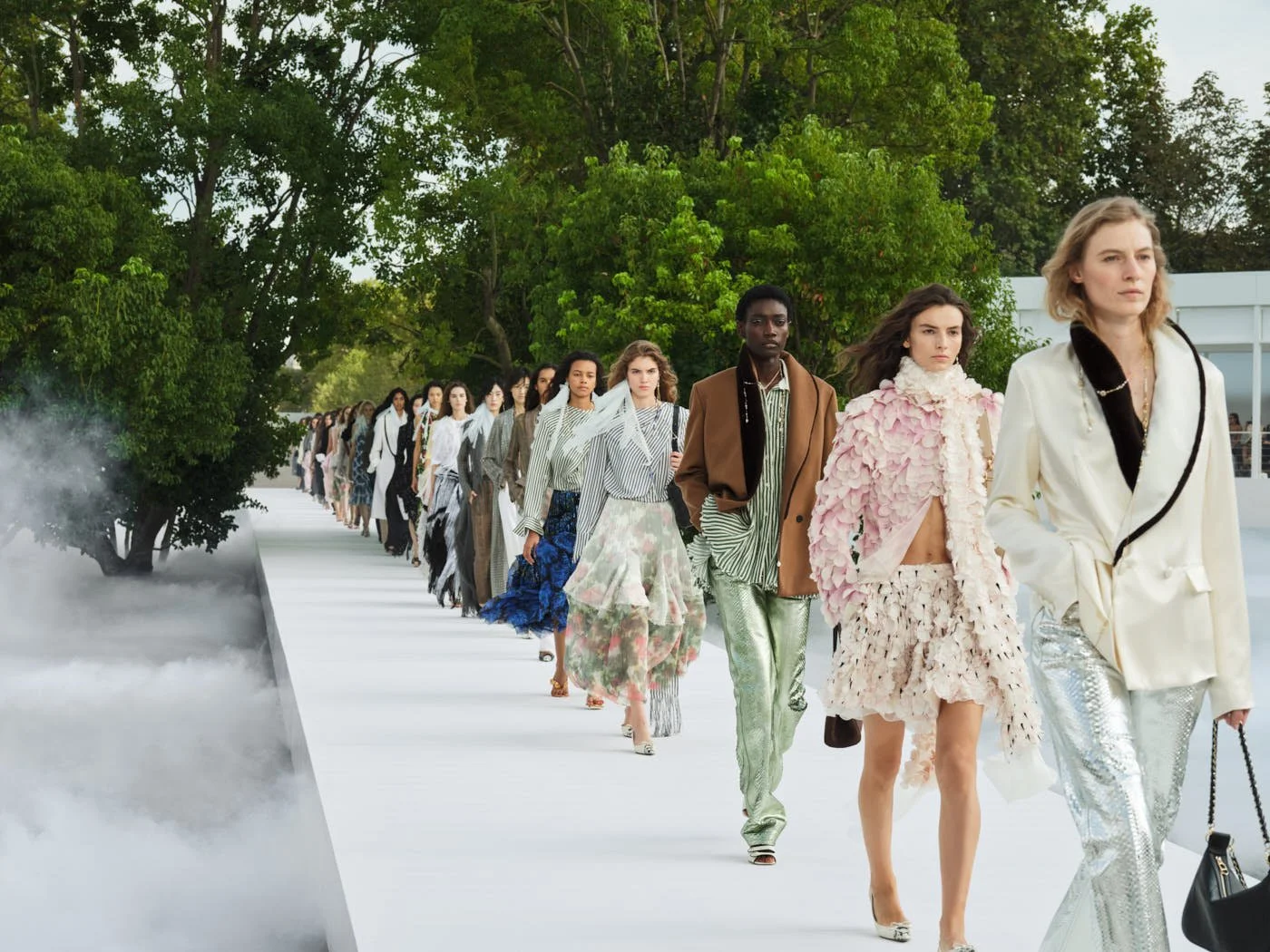
On a white runway cutting through an octagonal pond, shrouded in mist, Dior’s Spring/Summer 2027 show turned air itself into a fabric
PARIS
There are fashion shows, and then there are moments when a show feels like a deep breath. On Wednesday night in Paris, Dior’s Spring/Summer 2027 presentation was the second kind. Jonathan Anderson, now several seasons into his tenure as creative director, sent out a collection preoccupied with weightlessness, transparency and the simple, radical idea of letting a garment float.
The setting was as memorable as the clothes. In the Jardin des Tuileries, at the Bassin Octogonal, a stark white geometric runway sliced across the water, while mist drifted among camphor trees. It was one of the most talked-about stagings of Paris Fashion Week so far.
Air as a Material
Anderson’s central idea, as relayed in coverage of the show, was to explore what happens “when air becomes a material in itself.” The show notes posed a set of questions that served as the collection’s manifesto: How light can a garment be? Does lace hold air? What if tailoring is imagined as something fluid?
The answers arrived in a sequence of silhouettes that stripped away the more exaggerated shapes of Anderson’s debut season at the house. Instead came asymmetrical, gathered skirts, cropped Bar jackets, and dropped-waist dresses in swingy chiffon. Sheer jackets were layered over exposed lingerie. Hand-plissé details with deliberately undone edges added a lived-in softness. Bubble mini-skirts appeared in gauze with ruffled hemlines, and high-shine snakeskin trousers provided a jolt of sleek contrast.
The palette stayed disciplined: black, white and pastels, with the snakeskin as a glossy accent. Grazia Singapore summed up the effect by saying the collection made familiar codes feel like a breath of fresh air, and described it as Anderson’s most sensual take on Dior yet.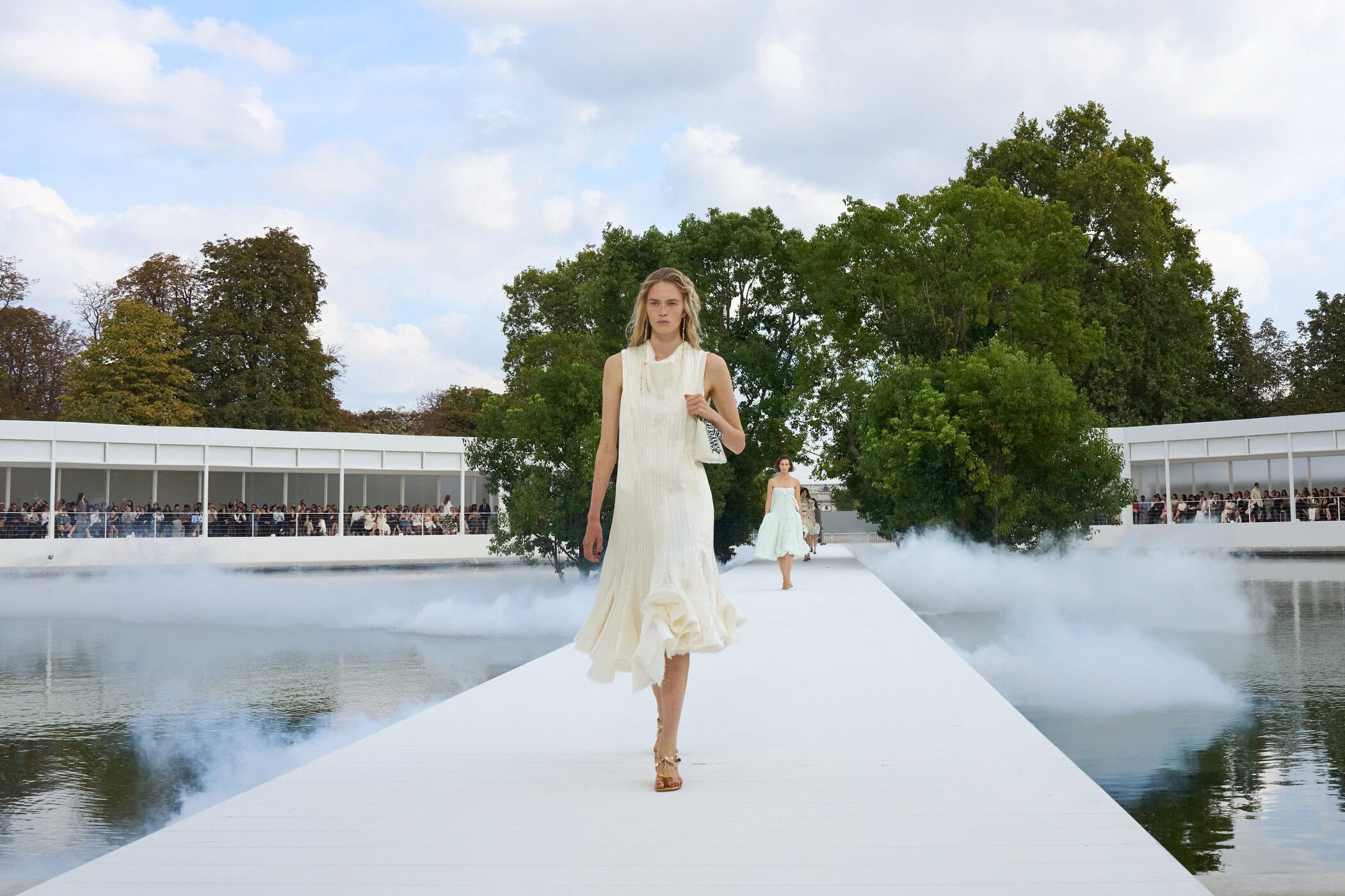
The Set That Became a Statement
Bureau Betak, the production studio long associated with the industry’s most ambitious runway settings, built the stage. Designboom reports that the studio placed a geometric white runway in a mist-filled landscape, using precise architecture to contrast with organic forms. Trees emerged from the water to interrupt the runway’s straight lines, mist softened the edges, and reflections shimmered across the pond’s surface.
The staging was also designed with an afterlife. According to coverage of the show, the camphor trees used in the scenography were replanted in the Tuileries after the event, a gesture that answers the growing criticism of wasteful, one-night-only fashion sets. In an industry increasingly asked to justify its footprint, leaving the park with new trees is a meaningful signal.
Even the invitations carried the theme. Guests received wénwán walnuts in tailored boxes, a nod to a Chinese tradition in which these smooth, hand-polished nuts are handled and cherished over time. Anderson’s accompanying line, “We find knowledge and preciousness in nature,” tied the invitation, the set and the clothes into one idea.
Why It Matters
Anderson arrived at Dior with enormous expectations, tasked with carrying a house of immense heritage while adding something new. A debut season is often about making a loud first statement; the second act is about confidence. This collection suggests a designer comfortable enough to slow down, rethink the house codes and trust restraint.
That restraint is also commercially smart. Cropped Bar jackets are a direct nod to one of Dior’s most famous silhouettes, giving loyal customers something familiar. Flowing chiffon dresses and gauzy skirts translate easily into wearable, giftable, red-carpet-ready pieces. The snakeskin trousers add an edge that will photograph well on social media. The collection speaks to heritage clients and to younger shoppers hungry for the new.
The Bigger Trend: Softness Returns
Dior’s show lands amid a broader shift on spring runways toward lightness and transparency. After seasons of sharp tailoring and heavy, sculptural statements, designers are exploring fabrics that move, breathe and reveal. Sheer layering, undone hems and delicate lace are becoming the shorthand for a more relaxed form of luxury that values ease over armor.
There is a cultural logic to that shift. Consumers have been signalling a desire for pieces that feel personal, comfortable and a little romantic. A jacket that floats over lingerie, or a skirt that moves like a breeze, offers a different kind of luxury than logo-heavy statements, one that rewards touch and movement.
The show also reinforces how much a set can shape the way a collection is read. Because the runway seemed to float on water and the mist blurred the horizon, the clothes appeared to drift rather than march, which made the sheerness and movement of the fabrics the obvious star. It was a reminder that scenography is not decoration but part of the argument, and that the best shows make the idea visible before a single look has reached the end of the runway.
What This Means for You
You do not need a front-row seat to borrow the ideas. Start with the layering principle: pair a sheer or lightweight top layer with a more structured piece underneath, letting contrast do the work. Look for chiffon and gauze in soft pastels as the season approaches, and consider a gathered, asymmetrical skirt as a flexible wardrobe anchor.
If snakeskin feels bold, try a single shiny accessory, such as a belt or a shoe, rather than a full trouser. And if you are curious about the Bar jacket, vintage and high-street interpretations of the cropped shape will likely follow within months, since runway silhouettes tend to filter down quickly.
A Collection That Breathes
At its best, fashion makes you feel something before you can explain why. Walking toward a white runway through mist, to clothes that seem to hover just off the body, is the kind of experience that lingers. Anderson’s Dior asked how light a garment can be and answered that, with enough thought, it can be nearly weightless. The question for the rest of Paris Fashion Week is who else will dare to follow.



