Written By | International News Agencies
The IEC must print 6.6 million extra ballot papers, bringing the total to 33 million, with about 27 million already printed, EWN reports.
JOHANNESBURG
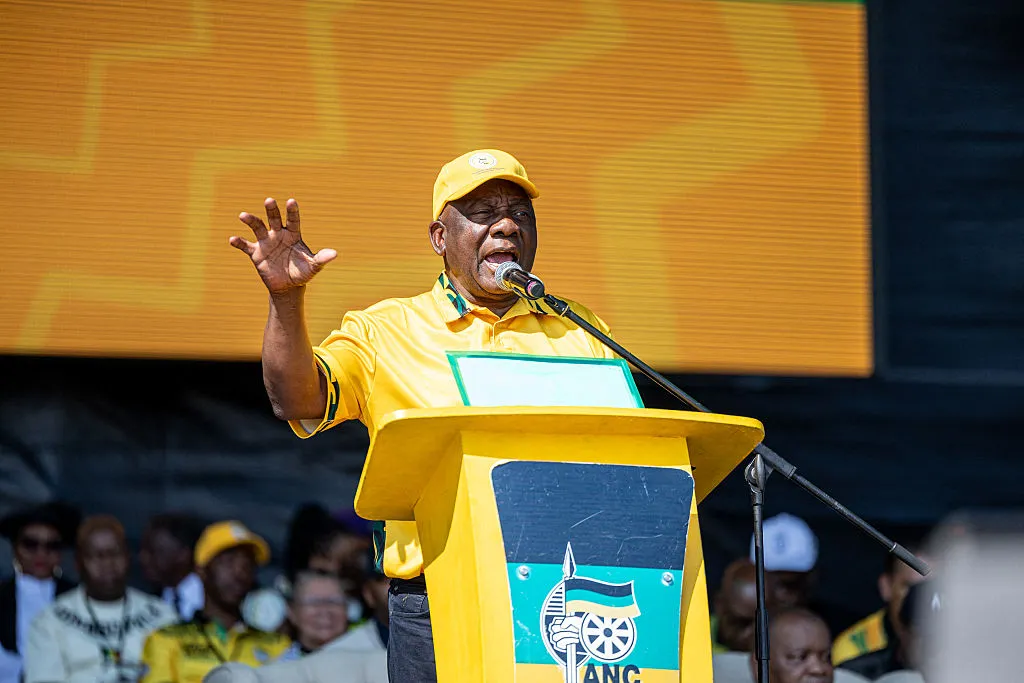
South Africa goes to the polls on Nov. 4 for local government elections that are expected to deepen the coalition politics reshaping the country since 2024. With about two weeks to go, the Constitutional Court has forced the Electoral Commission of South Africa (IEC) to print millions of extra ballots, polls show the governing African National Congress (ANC) trailing in several major cities, and the parties are already positioning for post-election bargaining.
A court ruling upends the ballot
On Oct. 15, the Constitutional Court ruled by majority that 181 ANC candidates who had been excluded from the party's final candidate lists in six municipalities must be restored to the ballots, according to the Rio Times. The order covers 51 ward candidates and 130 proportional representation candidates in municipalities in the Eastern Cape and KwaZulu-Natal, and in the Mangaung metro, according to EWN. The IEC had excluded them over a late list submission.
The ruling has had practical consequences. The IEC must print 6.6 million extra ballot papers, bringing the total to 33 million, with about 27 million already printed, EWN reports. The commission had held back printing for the six affected municipalities until the court ruled, so it incurred no printing costs for those ballots beforehand. EWN gives no total cost figure.
The IEC then extended the logic of the ruling to others. At a briefing on Friday, Oct. 16, it said it would apply the ruling to 32 other parties in similar positions that had nominated compliant candidates and paid deposits but had not submitted final lists, IOL reports. IEC chairperson Mosotho Moepya said: "The Commission recognises that 32 other similar-situated political parties intended to contest against the ANC." The IEC argued that excluding ANC candidates while letting other parties lose out would undermine "fairness and the principle of equal treatment," according to EWN.
IOL reports that those parties had intended to contest 121 municipalities, while the article also says the extension affects 107; the source does not explain the difference. Thirteen other parties did not meet the requirements, including paying election deposits and meeting voter registration requirements. Moepya said the commission does not currently expect the election date to change, but acknowledged that "it is apparent that our logistical preparations have been significantly affected."
The scale of the election
Voting takes place on Wednesday, Nov. 4, a public holiday, from 7 a.m. to 9 p.m., according to the Rio Times. Some 257 municipalities are voting: eight metros, 44 district councils and 205 local councils, for 10,526 council seats. About 29.2 million people are registered, and the voters' roll closed on Aug. 7. The IEC certified a record 136,790 candidates, including 621 independents, up from 95,427 in 2021. Special votes are cast on Nov. 2 and 3, and the IEC approved a record 2,655,067 applications. The party count may rise because of the extension to the 32 parties. Results must be declared within seven days of the vote; in 2021, final results came three days after polling.
The national backdrop
The ANC won 45.59 percent in the 2021 local vote and 40.18 percent in the 2024 national election, the first time it lost its outright majority since 1994, according to the Rio Times and the Friedrich Naumann Foundation. The Democratic Alliance (DA), now led by Geordin Hill-Lewis, is the second-largest party. The uMkhonto weSizwe (MK) Party, led by former president Jacob Zuma, won 14.58 percent in 2024, mainly in KwaZulu-Natal, and is contesting local elections for the first time. The Economic Freedom Fighters (EFF) won 9.52 percent.
The ANC and DA form the national Government of National Unity, backed by eight smaller parties. Coalition arrangements vary provincially: KwaZulu-Natal has a Government of Provincial Unity of the IFP, DA, ANC and NFP with a majority of one seat, according to the Naumann Foundation. There is no statutory framework governing local coalitions, and a proposed bill is unlikely to pass before November.
What the polls say
Polling is mixed and, in several metros, within the margin of error.
An eNCA MarkData survey conducted Oct. 18, with 1,000 voters per metro and a margin of error of about 3 points, put the DA at 35.0 percent in Johannesburg, against 21.8 percent for the ANC, 12.5 percent for MK, 11.9 percent for the EFF and 10.3 percent for ActionSA. In Cape Town, it put the DA at 52.6 percent and the ANC at 23.6 percent, as summarized by the Rio Times.
An earlier Ipsos survey of 3,600 people, published Sept. 4 and taken before final lists were set, showed a different picture in Johannesburg, with the ANC at 31 percent and the DA at 28 percent, within the margin of error. It put the DA ahead in Tshwane at 31 percent to the ANC's 22, and MK far ahead in eThekwini at 55 percent, with the DA at 17 and the ANC at 10. In Nelson Mandela Bay, the ANC and DA were tied at 37 percent. Ipsos margins of error range from about 5.6 points in Johannesburg to above 15 points in smaller metros. The Rio Times cautions that polls are snapshots, not forecasts, and the gap between the two Johannesburg surveys illustrates why. The Naumann Foundation cites other polling, including figures for Johannesburg and Tshwane that differ again, and expects the ANC to fall to at least 35 percent nationally; the sources do not reconcile these differences, so none should be read as a prediction.
The upshot is that the ANC faces losses, the DA is favored in Cape Town and competitive in Johannesburg and Tshwane, and MK is strong in eThekwini. In 2021, 66 councils ended with no party in control, the Rio Times notes, so coalition negotiations may decide many mayors after the count. Johannesburg currently has an ANC-led coalition under mayor Dada Morero.
Campaign flashpoints
The South Africa Brief's weekly summary for Oct. 5–9 captured several storylines. Andile Lungisa won a court case against the ANC, which had removed him from its proportional representation list for Nelson Mandela Bay; the court found that Secretary-General Fikile Mbalula had not shown that Lungisa skipped the vetting process, and ordered him reinstated. IFP leader Velenkosini Hlabisa, who is also the minister of cooperative governance, said national coalition partners may extend the GNU model to hung councils and that smaller parties would not be allowed to lead councils. The MK Party said Zuma's stay in a private hospital as of Oct. 9 was a routine check-up, and it opened a crimen injuria case against DA figure Helen Zille over an unaired debate recorded on Aug. 31. The EFF will close its campaign with a rally at Orlando Stadium on Oct. 31.
Analysis: coalition math matters more than the headline
Three points follow from the facts above, offered as analysis rather than reported fact.
First, the likely story on election night is not a single winner but a set of unfinished councils. With the ANC's support well below its historical levels, a fragmented field of large and small parties, and no statutory coalition framework, many councils are likely to need negotiations. That raises the importance of smaller parties. A commentator quoted in the South Africa Brief concluded that smaller parties in Johannesburg are likely to keep their kingmaker role, and the Naumann Foundation names the Patriotic Alliance as a possible kingmaker in Nelson Mandela Bay and MK as a possible kingmaker in Ekurhuleni.
Second, the court-ordered ballot changes expose an institutional vulnerability. The IEC's willingness to extend the ruling to 32 other parties is consistent with equal treatment, but it enlarges the logistics task close to election day. Moepya's statement that logistics have been "significantly affected" is a warning that execution risk is real, though no source reviewed suggests that the election will be postponed.
Third, the national government's stability is indirectly at stake. The ANC and DA govern together nationally but compete head to head in Johannesburg, Tshwane, Cape Town and Nelson Mandela Bay. A bruising local campaign followed by tense council negotiations could strain the GNU, though the sources reviewed do not report any plan by either party to leave it. Hlabisa's remarks suggest the GNU partners see the model as a template for local government, which would make local outcomes an extension of national bargaining.
What to watch
Key dates are Nov. 2 and 3 for special votes, Nov. 4 for the main vote, and the seven-day window for declaring results. Before that, watch for the IEC's confirmation of which of the 32 parties will contest and how quickly they correct candidate lists, the EFF's Oct. 31 rally, and further polling in the metros. Afterward, the main question will be which councils produce clear majorities and which require coalition deals, starting with Johannesburg, Tshwane, Ekurhuleni, Nelson Mandela Bay and eThekwini.



