KAJIADO, Kenya
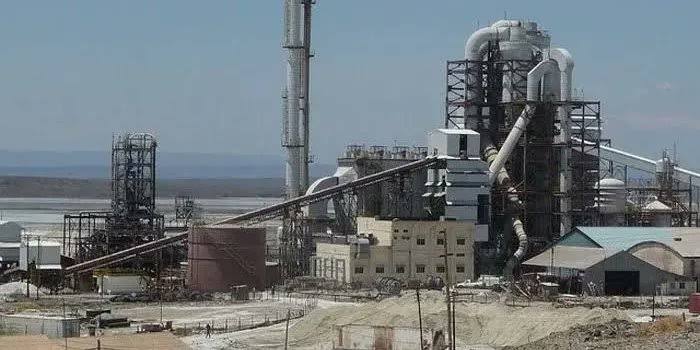
President William Ruto told a rally in Kajiado County on Thursday that he has ordered Tata Chemicals Magadi, the Indian-owned soda ash producer that has worked the shores of Lake Magadi for more than a century, to leave the country, and that a replacement investor has already been lined up on condition that it build processing plants on Kenyan soil. Within two hours, the opposition Democracy for Citizens Party had issued a statement demanding the "immediate, unconditional reversal" of the shutdown, accusing the government of destroying more than 500 direct jobs, endangering Nairobi's water treatment supply and staging the whole affair to coincide with the president's tour of the county.
The exchange matters well beyond one lake. With Kenya's next general election due in August 2027, the Magadi dispute has become the first fully formed argument of the campaign: whether Ruto's willingness to revoke a legacy mining licence in the name of local value addition is economic nationalism that a former colony is overdue in exercising, or a politically timed expropriation that will frighten off the foreign capital his own fiscal programme depends on.
What the president said
Speaking in Kajiado on Thursday, Ruto framed the decision as a matter of a bargain that had never been honored.
"We have Lake Magadi, we have a big company, we have resources that can change Kajiado County and Kenya as a whole. Tata Chemicals Company, which is here in Kajiado, has been running its contract for over 100 years," he said, according to Kenyans.co.ke, which reported the remarks.
"They have not constructed anything in Kajiado, including even employing people here. I recently told them to vacate and get out of this country. Let them go. They have been taking our resources to India."
Ruto said the government would install a new operator at Lake Magadi, but that a licence would be conditional on the investor establishing a glass processing plant and a chemical processing facility inside Kajiado County. He put the same point to residents in Kiswahili, asking, in the People Daily's account of the address: "Kwani sisi ni watuma wa watu wengine? Si tujenge hii Kajiado?" — roughly, are we other people's servants; should we not build this Kajiado?
He also used the stop to list what his administration is spending in the county, announcing that 5 billion Kenyan shillings had been secured to rehabilitate the road running from Kajiado through Imororo to Isinya, and that a contractor would be on site in September. On his contested push to have Amboseli National Park managed as an asset of Kajiado County, he was defiant about the litigation it has attracted: "Walienda kortini shamba ikafulu. Wakaenda kortini housing ikafulu. Hii Amboseli itafaulu" — they went to court over land and it succeeded; they went to court over housing and it succeeded; this Amboseli will succeed too.
In the same speech, Ruto issued a broader challenge to his opponents, telling them to stop what he called noise and instead set out programs. "Kuja utueleze ajenda yako ni gani, sera yako ni gani, mpango wako ni gani, maono yako ni gani," he said — come and tell us what your agenda is, your policy, your plan, your vision. The framing is deliberate: Ruto wants the 2027 contest fought on competing development records rather than on the grievances that have dominated the past two years.
How Magadi got here
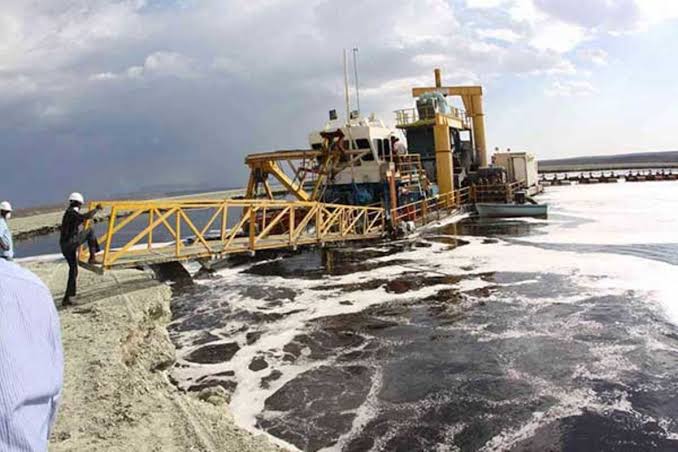
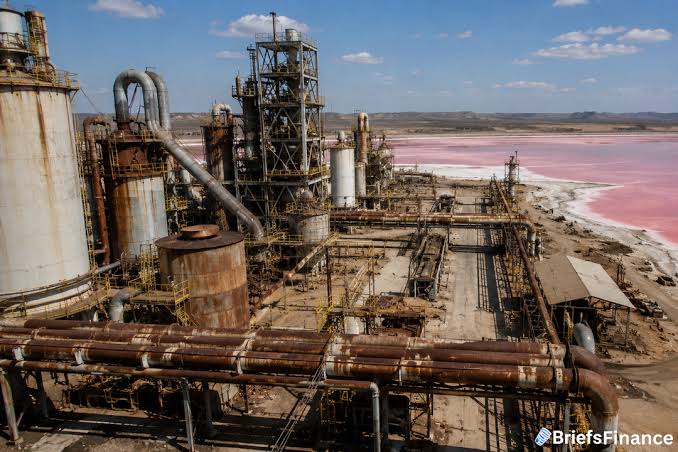
Tata Chemicals Magadi Ltd., owned by Tata Chemicals Ltd. of India's Tata Group, is one of Africa's largest producers of soda ash and salt, and the operation at Lake Magadi predates independence. Its troubles with the current government came to a head in late July. Mining and Blue Economy Cabinet Secretary Ali Hassan Joho ordered the company's mining operations suspended on July 28; in a statement the following day, he said the decision followed years of engagement between the State Department for Mining and the company over compliance with its statutory obligations.
The ministry's list of unresolved issues was long and specific: the absence of a clear mineral beneficiation strategy, outstanding royalty reconciliation and payment obligations, inadequate export reporting, poor implementation of community development agreements, insufficient plans for employing Kenyans and transferring skills to them, weak local procurement, and shortcomings in environmental compliance. Kajiado Governor Joseph Ole Lenku has separately accused the firm of corporate greed and of failing to invest in local infrastructure, and there is a running dispute over billions of shillings in land rates. The company has said publicly that it has met the government's demands.
Thursday's announcement moved the matter from suspension to termination. Ruto's language — vacate, get out of this country — and his reference to a licence revocation and a successor investor recast a regulatory enforcement action as a political decision about who owns the returns from Kenyan minerals.
The opposition's counterattack
The Democracy for Citizens Party, the vehicle of former Deputy President Rigathi Gachagua, moved the same day. In a statement issued by DCP-allied members of parliament on Sept. 3, the party said the closure order had arrived at a conveniently useful moment, just as Ruto was planning his Kajiado tour.
"On behalf of the people of Kenya, and the people of Kajiado county in particular, we demand the immediate, unconditional reversal of this suspension," the statement read in part.
The party's case rests on four claims. First, jobs: it says more than 500 direct employees and thousands of support workers were rendered jobless overnight. Second, services: it argues that the shutdown has locked the Magadi community out of infrastructure, healthcare and clean water that the plant, rather than the state, has historically supplied. Third, and most striking, public health: DCP says Nairobi's water treatment depends on soda ash from Magadi and asks where the Nairobi City Water and Sewerage Company will obtain an average of 360 tonnes a month, warning that the closure "risks the lives of millions." The MPs also asked where else in East Africa soda ash is produced, arguing that no other plant can fill the gap.
Fourth, and most inflammatory, motive: the party alleges the ministry is hiding behind what it called flimsy excuses to mask a scramble for lithium deposits believed to lie beneath Magadi, claims the area sits atop oil prospects, and asserts that Ruto and his allies have personal business interests tied to the closure — that the president wants Tata pushed out or a majority stake acquired so that companies associated with government allies can explore for oil. No evidence for those allegations was presented in the statement, and the government has not responded to them.
Whatever their evidentiary basis, the allegations tell you where Kenyan opposition politics has arrived. DCP is defending a foreign multinational against a Kenyan president on the grounds of jobs and water security — an unusual posture for an opposition built on grievance about elite capture, and a measure of how completely the Magadi file has been absorbed into the 2027 contest.
The wider board
Gachagua's party is the most aggressive but not the only actor. Since his impeachment ended his tenure as deputy president, Gachagua has rebuilt himself as Ruto's most persistent opponent, holding solo rallies through Meru, Nyeri and Nyandarua and pressing DCP as the single political home for Mt. Kenya voters. He has courted an early pact with Wiper, hosting Wiper leaders at his Wamunyoro home on Aug. 18. That strategy is contested inside the anti-Ruto camp, where others argue that multiple vehicles should compete before a coalition is negotiated. Ruto, for his part, has stepped up efforts to win back the Mt. Kenya bloc, and has said publicly that he cannot work with Gachagua.
A second front runs through the Office of the Registrar of Political Parties. The Linda Mwananchi movement — associated with Nairobi Senator Edwin Sifuna, Siaya Governor James Orengo, Senators Godfrey Osotsi and Richard Onyonka and MPs Babu Owino, Caroli Omondi, Jack Wamboka and Danson Mwashako — has spent months trying to convert a protest brand into a registered party. Promoter Charles Wanyonyi lodged an application to reserve "Linda Mwananchi Party of Kenya" on Feb. 24; Registrar John Cox Lorionokou rejected it on March 4, holding that it too closely resembled the already reserved slogan "Linda Mkenya, Boresha Kenya" and raised public interest concerns under Section 8 of the Political Parties Act. A separate outfit, the Liberty National Democratic Alliance — LINDA Party — then secured registration, producing three competing claims to the same brand.
On Aug. 25, the Political Parties Disputes Tribunal issued preliminary orders allowing the Sifuna faction to reserve the wording "Mwananchi Party" and barring the registrar from processing the Linda Mwananchi name, or any similar variation, for anyone else pending the appeal. It also allowed the LINDA Party registration to proceed pending determination. "What we are fighting for is not a party. We have parties. We are fighting for our brand, our name," Sifuna told the tribunal, as reported by Kenyans.co.ke. The matter resumes on Sept. 14.
What to watch
Three things. First, whether Tata Chemicals litigates. Ruto's own boast that court challenges to his land and housing programs failed is an invitation the company's lawyers may take up, and a licence revocation is far more legally exposed than a compliance suspension. Second, whether the soda ash supply claim holds: if Nairobi's water utility genuinely cannot source 360 tonnes a month elsewhere, the political cost of the shutdown will arrive quickly and in the capital, where Ruto can least afford it. Third, the Sept. 14 tribunal sitting, which will determine whether the loudest anti-government movement of the past two years can appear on a 2027 ballot under the name that made it.
Ruto has chosen his ground carefully. Resource nationalism polls well, and a president who can point to a century-old foreign contract and promise a factory in its place has a story that is easy to tell in a rally. The risk is that the story is easier to tell than to deliver, and that a new investor with a glass plant and a chemical plant in Kajiado does not materialize before the campaign does.
Published By | News Editor