Written By | International News Agencies
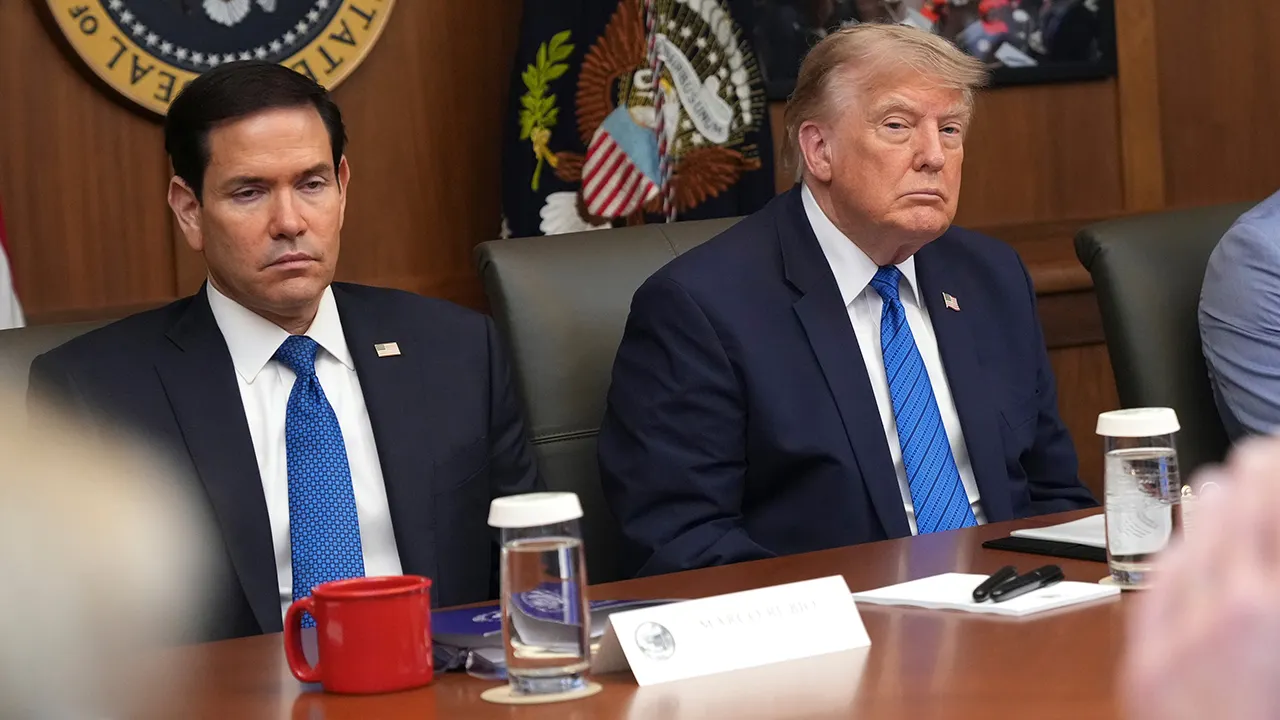
With the seven-month Iran war unpopular at home and diplomacy stuck over sequencing, Washington and Tehran are trading accusations while Qatari mediators try to keep a compromise alive.
World Politics
Overview
The latest effort to end the seven-month war between the United States and Iran stalled this week in New York, and the manner of its stalling has become a story in itself. According to an Axios report on October 1, Secretary of State Marco Rubio ordered Iran's delegation to the United Nations General Assembly, including Foreign Minister Abbas Araghchi, to leave the country after negotiations reached a stalemate. A U.S. official told the outlet that the Iranians had "overstayed their welcome" because the General Assembly was over. Iran's mission to the UN rejected the account, saying on X on Thursday that the delegation's Monday departure had been scheduled long before and that the State Department had been told on September 17.
The same days produced a revealing set of public remarks from President Donald Trump. In comments reported by Fox News and in a long interview published by TIME, he declined to rule out intensifying the bombing of Iran after the November midterm elections, defended a war he conceded had become costly, and acknowledged the political risk it poses. Taken together, the expulsion row and the president's comments show a diplomatic track that has not died but is badly strained, and a White House weighing military options against an electoral calendar.
Background: Seven Months of War
The conflict has dominated American foreign policy for more than half a year. Its center of gravity is the Strait of Hormuz, the shipping lane through which a large share of the world's oil passes. Reporting this week describes negotiations as focused on reopening the strait and reviving a ceasefire framework reached in June, with the main disputes concerning the order in which each side makes concessions on nuclear steps, sanctions relief and access to the waterway. Earlier in this series, our coverage noted that the U.S. had reimposed a naval blockade of Iranian ports in July after a ceasefire broke down, and that oil prices spiked as a result.
In late September, diplomacy appeared to gather pace. On September 22, special envoy Steve Witkoff met Araghchi in New York. Around September 26, Araghchi presented at the General Assembly a seven-day sequence in which a ceasefire on all fronts, including Lebanon, and U.S. steps on the blockade, sanctions and frozen assets would precede the reopening of Hormuz, with nuclear talks to follow. Washington was skeptical, wanting the nuclear question addressed at the outset. By October 1, the Just Security daily roundup reported that Iran had received a U.S. response on a ceasefire and that both sides agreed on the steps required but disagreed on their sequencing, which is the same gap that has existed for weeks.
Key Developments: The New York Standoff
According to the Axios account, the White House believed on Monday that progress might be possible, but by late afternoon it was clear the talks had reached an impasse. Rubio then directed the U.S. mission to the United Nations to tell Iran's mission that the delegation should depart immediately. Axios reported that the Iranians left that night on a flight from New York to Doha, departing at 1:20 a.m. on Tuesday. A second source cited in the same report said Araghchi was in any event scheduled to leave that night, which is consistent with Tehran's version.
The disagreement over why the delegation left is partly a dispute over narrative. For Washington, describing the departure as an expulsion signals that talks have not yielded the concessions it wants and that the U.S. is not prepared to indulge open-ended negotiating in New York. For Tehran, insisting the trip was always scheduled to end allows it to avoid appearing to have been dismissed. The Iranian mission's statement was blunt: it said that, having achieved nothing, the State Department had resorted to "propagating baseless and worthless news." Reports also differ on dates; Fox News described the sequence using calendar days that do not line up with the weekdays given by Axios, and this account follows Axios's description of a Monday stalemate and a Tuesday-morning departure.
What both accounts agree on is that mediation has not ended. Qatari mediators were reported to be continuing to pursue compromise proposals, and the flight went to Doha, the Qatari capital. In remarks reported by Axios, Trump said he would either "blow 'em up" or make a deal with Iran, and suggested a resolution was imminent. Separately, Britain's new prime minister, Andy Burnham, said that Iran played a role in an incident at RAF Fairford, a claim Araghchi disputed; the incident adds a further European dimension to the dispute, though its details remain unclear in the reporting available.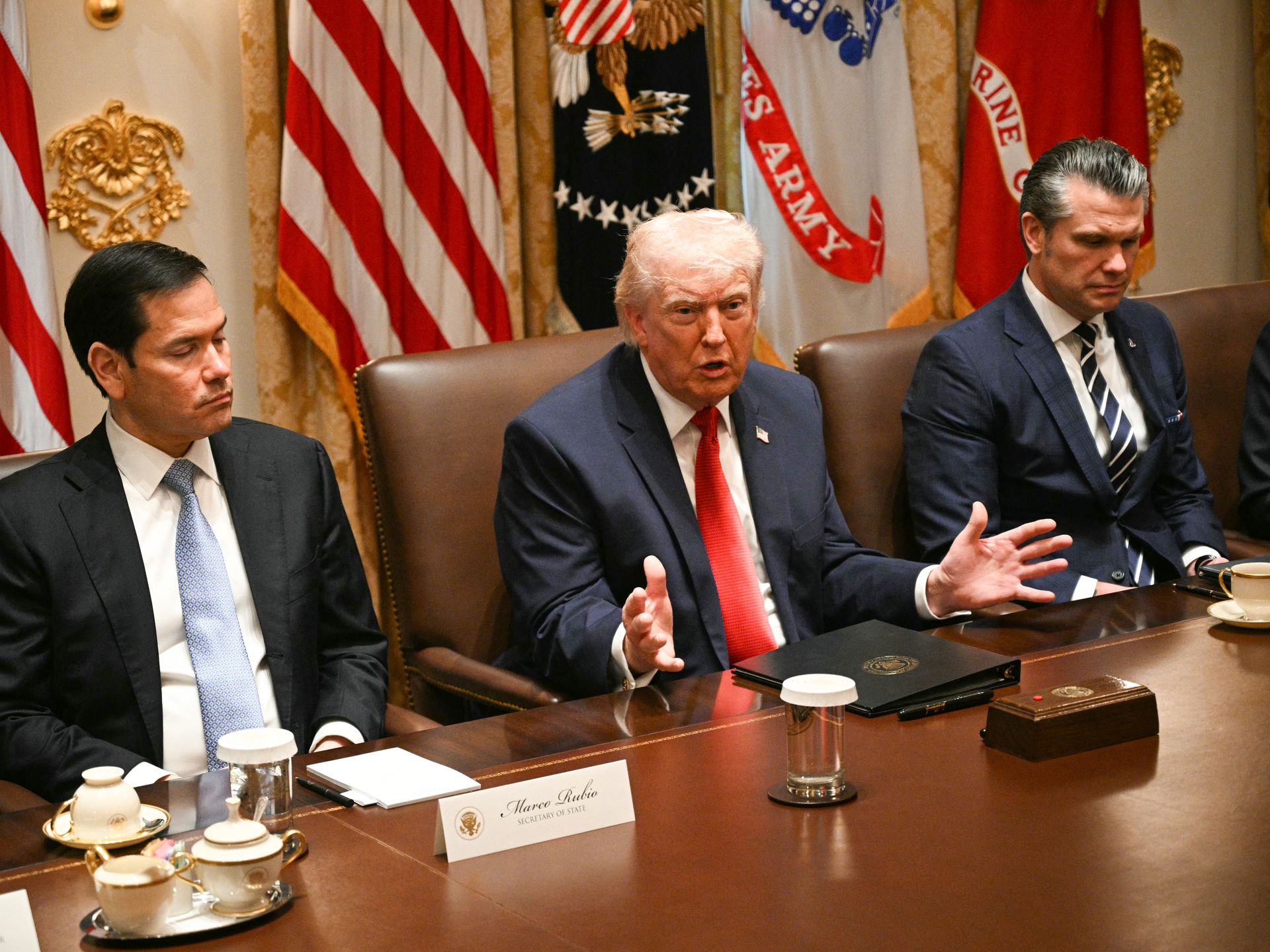
Trump's Remarks: 'Possible'
Fox News reported that Trump, asked whether he might ramp up the bombing of Iran after the midterms, answered "Possible." He told reporters the United States has a lot of weapons and has been "stocking up for the last six months." Asked whether he might annihilate Iran, he again said "Possible." The remarks are notable because they tie the possible timing of military escalation explicitly to the electoral calendar, something that critics will likely cite as evidence that political considerations are shaping the conduct of the war.
The TIME interview, published October 1, added more detail. The magazine reported that Trump acknowledged the conflict had become costly and unpopular, with 19 U.S. service members killed and more than 800 wounded. He said that "by annihilating Iran, we've created peace in the world," and when pressed on his early projection that the operation would last six to eight weeks, he said: "I could have stopped there, but I wanted to go further." According to the interview, he conceded that some ammunition stocks had been depleted while arguing that defense contractors are increasing production. He also made a pointed comment on the war's effect on his party: when asked about the possibility of losing the House, he said that Democrats would "probably go after me and I'll go after them."
The Domestic Political Backdrop
The interview underscored how closely the war and the midterms are linked. TIME cited a Wall Street Journal poll in which only 25 percent of Americans said Trump's policies had improved the economy while 60 percent said they had made conditions worse, and it noted that gasoline prices were at record highs for September. Trump pointed to low unemployment, consumer spending and strong stock markets, while conceding that "the cost of everyday life remains painfully high." He dismissed unfavorable polls as fake and said he intends to campaign heavily, with TIME reporting plans to visit 32 competitive districts even as advisers acknowledge the risk of losing House seats. The magazine also reported, citing aides, that he has been reluctant to spend from a roughly 400 million dollar war chest.
Other lines in the interview have drawn less attention but fit the same pattern of a president under pressure on several fronts. He called the Supreme Court's decision against his tariffs "an absolute crying shame," noting that justices he appointed had voted against him, and he criticized the Federal Reserve for raising interest rates despite what he called the strongest economy. On a third term, he said "I'm not running," without addressing future involvement in more detail. On the Iraq withdrawal completed this week, he described the pullout in a separate statement as the end of a "very expensive excursion into Hell," a comparison that critics may find uncomfortable given the continuing war with Iran.
Reactions and Competing Readings
Reactions to the expulsion report have followed predictable lines. Supporters of the administration's hard line see the episode as proof that Washington will not allow Tehran to use diplomatic platforms to extract concessions without movement on core U.S. demands, particularly on the nuclear question. Skeptics argue that sending the foreign minister home, even if the timing was already planned, risks closing off channels at the moment when a sequencing compromise appears closest. Iranian officials, for their part, have cast the U.S. as dishonest and unserious, while still engaging through Qatar.
There is also a market dimension. Oil prices have swung sharply on each twist in the diplomacy; at the time of the seven-day proposal in late September, crude traded around 103 dollars a barrel after dipping roughly 2.5 percent. Any sign of either a deal or a new round of strikes moves prices, and for a president worried about gasoline costs before November, that sensitivity adds to the pressure to produce an agreement. At the same time, his own remarks suggest he sees military pressure as a bargaining tool, and he has said he will "blow 'em up" if no deal emerges.
What's Next
The most immediate question is whether the Qatari channel can bridge the sequencing gap. Both sides say they agree on the steps required: a ceasefire, easing of the U.S. blockade and sanctions, reopening of Hormuz and nuclear talks. What divides them is who moves first. Tehran wants relief up front, while Washington wants nuclear commitments addressed immediately. A formula that stages and verifies each step would be the obvious compromise, but neither side has shown willingness to accept the risk of going first.
A second question is how the election calendar will shape decisions. Trump's "possible" comments about post-midterm escalation could be read as pressure on Tehran to settle before November, as a hint that serious action will wait until after voters have spoken, or as both. Congress, where the war has divided opinion and where Democrats could gain ground in November, will also be a factor if casualties or costs rise.
Finally, there is the risk of miscalculation. With the ceasefire framework from June in tatters, the blockade in place and each side publicly disputing the other's account of events as simple as why a delegation left New York, the margin for error is thin. Observers will watch for a new round of Qatari-hosted contacts, any resumption of strikes, and statements from Tehran on whether it still considers the June framework alive. Until one of those developments occurs, the situation remains as the latest events suggest: talking, but not yet agreeing, with an exit route visible to both sides and neither willing to take it first.



