Written By | Health News Agencies
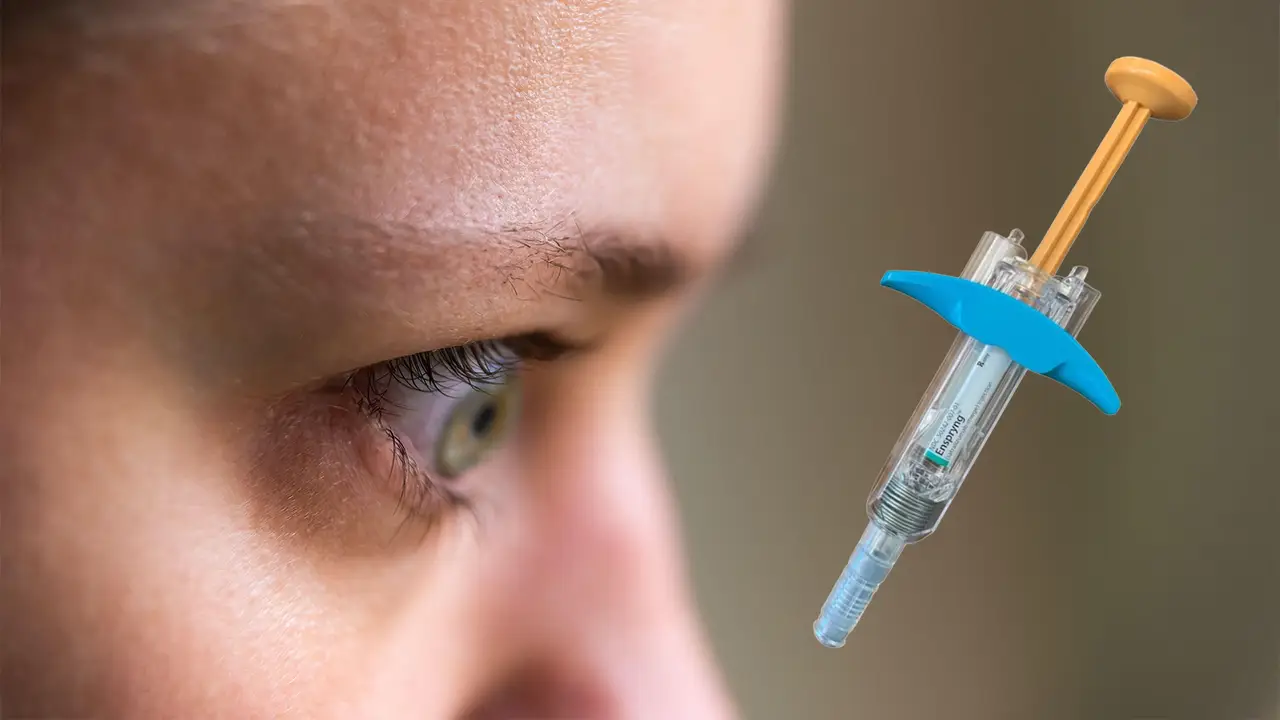
Roche's Enspryng gets the green light for a painful, disfiguring autoimmune condition, and patients can give it to themselves at home. But one of its two big trials failed, and that matters.
HEALTH
For people living with thyroid eye disease, the symptoms are impossible to hide. Eyes that bulge forward, eyelids that pull back into a permanent stare, red and swollen tissue, pain, and double vision that makes driving or even reading a daily struggle. For years, treatment has meant trips to an infusion centre. Now, a new option has arrived that patients or their caregivers can give at their own kitchen table.
On 16 October 2026, the US Food and Drug Administration approved Enspryng (satralizumab) for adults with thyroid eye disease (TED), according to Roche, which owns the Genentech arm that markets the drug in the United States. It is the first and only at-home subcutaneous treatment for the condition. After training from a healthcare provider, a patient or caregiver can administer it by injection under the skin. The agency had granted the application priority review, a status reserved for treatments that may offer a significant improvement.
What is thyroid eye disease?
Thyroid eye disease, sometimes called Graves' ophthalmopathy, is a rare and progressive autoimmune condition. In simple terms, the immune system mistakenly attacks the tissue in and around the eyes. That tissue becomes inflamed and swells, and the eyes can be pushed forward in the socket, a feature doctors call proptosis. The result can be redness, swelling, eyelid retraction, that distinctive staring appearance, pain, and diplopia, the medical term for double vision.
According to Roche, the condition affects roughly 155 per 100,000 people. About half of people with an overactive thyroid have at least mild TED. It can also occur in people with an underactive thyroid or even with normal thyroid function, which is one reason it is sometimes missed or diagnosed late.
The toll goes beyond the physical. The condition changes how people look, and patients often describe the emotional weight of being stared at or asked whether they are unwell. For those with severe disease, double vision and pressure on the eye can threaten daily independence and, in the worst cases, sight.
How Enspryng works
Enspryng is a humanised monoclonal antibody, a lab-made protein designed to home in on a specific target. This one binds to the receptor for interleukin-6 (IL-6), a signalling molecule that drives inflammation. By blocking the receptor, both the soluble and the membrane-bound forms, the drug dampens the IL-6 signal that helps fuel the immune attack on the tissue behind the eye.
The drug uses recycling antibody technology developed by Chugai, Roche's Japanese group company. In practice, the antibody binds in a way that depends on acidity, so it can let go of its target inside cells and be recycled back into circulation. That helps it work for longer and supports sustained blockade of the receptor. The maintenance dose is given by injection under the skin once every four weeks.
This is not a brand-new drug. Enspryng was first approved in 2020 for neuromyelitis optica spectrum disorder (NMOSD), a rare disease of the central nervous system that can damage the optic nerves, and is now cleared in about 90 countries for that use. Roche says its safety record spans more than 16,000 patients overall. TED is its second approved indication in the US.
The trial results: a win and a miss
The approval rests on two identical phase III studies called SatraGO-1 and SatraGO-2. Together they enrolled 258 adults across 19 countries, randomly assigned in equal numbers to receive either Enspryng or a placebo. They included people with active, moderate-to-severe TED as well as those with chronic disease. The main goal was the share of patients with active TED who saw their proptosis, the eye bulging, improve by at least 2 millimetres at week 24.
Here is where the story gets more complicated. SatraGO-2 hit the mark. In that study, 52.9 percent of patients on Enspryng achieved the proptosis response, compared with 23.4 percent on placebo. Double vision also improved: 60.7 percent of patients on the drug had a reduction in diplopia, against 25.8 percent on placebo. Healio, which reported the approval, described the difference as significant and clinically meaningful. Roche says the results were consistent across the overall study population, including patients with chronic TED.
But SatraGO-1 did not meet its primary endpoint. Both Roche's release and trade coverage acknowledge that this twin study missed its mark at week 24. It is unusual, though not unheard of, for the FDA to approve a drug when one of two pivotal trials fails, and it is a detail worth knowing when you hear the word breakthrough. The agency's decision signals it was persuaded by the totality of the evidence, including the strength of SatraGO-2, the priority it gave to the unmet need, and the drug's established safety record. The full results were presented to eye-plastic surgeons at the ASOPRS Fall Scientific Symposium in October 2025.
On safety, Roche reports no new signals across the SatraGO trials, and says the profile matched what has been seen with Enspryng in NMOSD. Specific adverse event rates were not included in the public summaries we reviewed, so patients should look to the full prescribing information and talk to their doctors.
A crowded, fast-moving field
Enspryng is the third FDA-approved treatment for TED, joining two other antibodies. The first was Tepezza (teprotumumab), from Amgen, which transformed the field when it arrived in 2020 as the first drug approved for the disease. The second, according to Healio, is Lumvoa (veligrotug), from Viridian Therapeutics. Tepezza, as far as we know, is given by intravenous infusion, which means regular visits to an infusion centre, and Enspryng is the only one of the three that can be given at home.
That is the heart of Enspryng's pitch. Roche's chief medical officer, Levi Garraway, said the drug "offers a positive safety and efficacy profile and the potential for at-home administration." For patients who live far from a specialist centre, who juggle work and childcare, or who simply dread the time and cost of infusion visits, a self-injected option every four weeks could be a real quality-of-life upgrade.
It is also a different approach. Tepezza works by blocking a different target, the IGF-1 receptor. Enspryng targets IL-6, which opens a new pathway for patients and doctors, including, potentially, people who cannot take or do not respond to the existing options. Whether it will be preferred head-to-head is an open question. No direct comparison of these drugs in a trial has been announced, and the response rates seen in different studies cannot be compared like for like.
What we still don't know
Several questions remain unanswered in the public documents. Roche's release does not state a US list price, and it is unclear how insurers will handle coverage for a drug given at home, which usually falls under pharmacy benefits rather than the medical benefit that covers infusions. Patients' out-of-pocket costs will depend heavily on those decisions.
It is also not yet clear how Enspryng will perform over the long term in TED, how quickly the benefits appear in daily life, and how well they hold after treatment ends. Roche has not published details in the release about the treatment course in TED beyond the four-weekly maintenance schedule, so the length of therapy and any loading doses will be spelled out in the prescribing information.
And there is the matter of the failed study. Independent eye specialists will be watching closely to see whether real-world results mirror SatraGO-2 or the weaker SatraGO-1, and the FDA's label will show exactly which patients the data supports.
More to come for Enspryng
The TED approval is part of a broader push by Roche to extend the reach of the drug. The FDA has granted priority review to Enspryng for myelin oligodendrocyte glycoprotein antibody disease (MOGAD), another rare neurological autoimmune condition, with a decision expected in January 2027. The company is also studying the drug in autoimmune encephalitis, a serious inflammation of the brain.
What this means for you
If you or a loved one has been diagnosed with thyroid eye disease, speak to your specialist, usually an ophthalmologist, an oculoplastic surgeon or an endocrinologist, about whether Enspryng might be appropriate. It is approved for adults, and the decision will depend on whether your disease is active or chronic, your other health conditions, the treatments you have already tried and what your insurer will cover.
If you have an overactive thyroid, this is also a good moment to know the warning signs. Eye redness, a gritty feeling, swelling around the eyes, a staring look, bulging, or double vision should prompt a visit to your doctor sooner rather than later. TED is often easier to treat while it is active, and early attention matters. Stopping smoking is widely recommended by eye specialists, as smoking is known to make the disease worse.
Whatever you do, do not buy or inject anything you find online. Enspryng is a prescription biologic that requires training from a healthcare provider before home use.
The bottom line
For patients who have spent years rearranging their lives around infusion appointments, the arrival of a home injection is genuinely good news. The science behind Enspryng is solid enough to have won FDA priority review, and its safety record in a different disease is backed by more than 16,000 patients.
Still, the whole picture includes one clear success and one clear miss. Doctors, patients and insurers will now start the real work of finding out where this newcomer fits among the older options. For the thousands of people whose eyes have been changed by this disease, a third choice, and an easier one, is a welcome development.



