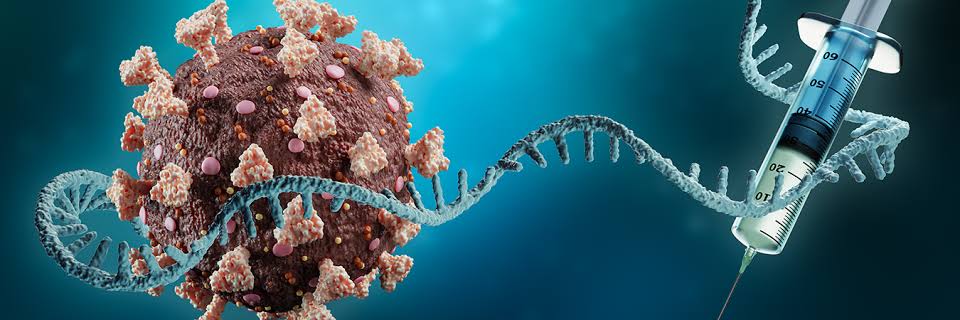
For sixty years, scientists chased a dream that kept slipping through their fingers: a vaccine that doesn't stop cancer before it starts, but hunts it down after it's already tried to kill you. Billions of dollars burned. Decades of "promising" trials that quietly died in Phase 2. So many broken hearts in so many oncology departments that "cancer vaccine" became something researchers said with an apologetic shrug.
Then, on a Wednesday morning ten days ago, that all changed.
Moderna and Merck announced that intismeran autogene — a personalized mRNA shot built from the DNA of a patient's own tumor — had done something unprecedented: it hit its main goals in a randomized, controlled, late-stage Phase 3 trial. Not a hopeful subgroup analysis. Not a "trend toward benefit." A real, statistically significant, independently verified win, in a disease — melanoma — that kills more than 8,000 Americans a year.
Moderna's stock more than doubled in a single day. Analysts started throwing around words like "landmark" and "paradigm shift" like confetti. And Moderna CEO Stéphane Bancel, the same man who stood in front of cameras in November 2020 to announce his company's COVID vaccine worked, said this moment hit just as hard.

"It's as big a day for humanity as Nov. 16, 2020," Bancel told CNN, referencing the day Moderna's COVID vaccine data first broke. On CNBC's "Squawk Box" the same morning, he put it even more simply: "It's a big moment for medicine, a big moment for patients."
For a field that has spent decades collecting failure after failure, that is not hype anyone is used to hearing.
HOW DO YOU VACCINATE SOMEONE AGAINST A CANCER THAT ALREADY EXISTS?
Here's the part that sounds like science fiction but is now, as of this month, medical fact: intismeran isn't a vaccine you can buy off a shelf. There is no factory churning out identical vials. Every single dose is a one-of-a-kind product, manufactured specifically for the person who's going to receive it.
It works like this. After a melanoma patient has their tumor surgically removed, doctors sequence the DNA of both the excised tumor and the patient's healthy tissue. Software compares the two genomes and flags the mutations — the "neoantigens" — that make the cancer cells look foreign to the immune system. Moderna's platform can identify up to 34 of these unique mutations per patient. That genetic blueprint is then coded into synthetic mRNA, the same molecular technology that powered the COVID vaccines, and manufactured into a custom shot within weeks.
Once injected, the mRNA instructs the patient's own cells to produce those exact neoantigen proteins, essentially putting up a "wanted poster" that trains the immune system to recognize and destroy any lingering cancer cells carrying that specific genetic fingerprint — the kind that hide out after surgery and eventually come back as recurrence or metastasis.
It's not administered alone. In the trial, called INTerpath-001, the vaccine was paired with Merck's blockbuster immunotherapy Keytruda (pembrolizumab), which works by releasing the brakes cancer cells put on the immune system. The combination is designed to be a one-two punch: Keytruda takes the immune system's foot off the brake, and intismeran gives it a very specific target to chase.
THE TRIAL THAT CHANGED THE CONVERSATION
INTerpath-001 enrolled 1,137 patients with high-risk, surgically resected stage IIB through IV melanoma — people whose cancer had been cut out but who remained at serious risk of it coming roaring back. Two-thirds of participants were randomly assigned to receive intismeran plus Keytruda; the rest got Keytruda alone, which is already the standard of care in this setting.
At a pre-planned interim data check, independent data monitors reviewing the trial found "statistically significant and clinically meaningful improvements" in the combination arm over Keytruda by itself — enough to call the trial an unambiguous success on both counts that mattered most: recurrence-free survival (how long patients went without their cancer coming back) and distant metastasis-free survival (how long before the cancer spread to other organs).
Moderna and Merck have not yet released the actual numbers — the hazard ratios, the percentage reductions, the raw data that oncologists will pore over — saying they plan to present full results at an upcoming international medical meeting and file with regulators. That silence hasn't stopped Wall Street from speculating wildly. Analysts have pointed to earlier Phase 2 data from the same drug combination, which showed a 44% reduction in the relative risk of death or recurrence compared to Keytruda alone — nearly double what Keytruda achieves against a placebo. If the Phase 3 numbers land anywhere close to that, doctors say it would represent one of the more meaningful advances in melanoma treatment in a decade.
TD Cowen analyst Tyler Van Buren called the readout a "landmark moment" for the field. Jefferies analyst Andrew Tsai went further, projecting the vaccine alone could generate billions of dollars in annual sales just from its use in melanoma — before even considering the other cancers Moderna and Merck are now testing it against, including lung, kidney, and bladder cancer.

WHY THIS TIME IS DIFFERENT
Cancer vaccines have broken hearts before. For decades, researchers tried to build vaccines that targeted a single mutated protein shared across many patients' tumors — a one-size-fits-all approach that consistently flopped in trials. Other efforts foundered because they were tested in patients whose cancer was already too advanced for a struggling immune system to mount a real fight, or because tumors deployed their own immune-suppressing defenses that no vaccine could out-maneuver.
Intismeran's design tries to dodge all three traps at once. It's personalized to each patient's specific tumor rather than aimed at a generic target. It's given in the adjuvant setting — after surgery, when the disease burden is lowest and the immune system has the best shot at mopping up whatever's left. And it's paired with an immunotherapy that actively disables the tumor's defenses rather than asking the vaccine to fight alone.
Notably, this melanoma readout isn't happening in a vacuum. It comes just one day before this article's publication, alongside a wave of other major oncology news — including the FDA's approval on August 26 of a first-in-class pancreatic cancer drug and, the day before that, a rare skin disease treatment breakthrough — leading some industry watchers to call August 2026 one of the most consequential months for cancer treatment in recent memory.
THE MONEY QUESTION NO ONE HAS ANSWERED YET
Cancer vaccines built individually for each patient come with a manufacturing and cost challenge that mass-produced drugs don't face. Every dose requires sequencing, custom synthesis, and quality testing on a compressed timeline, since patients can't safely wait months after surgery for their treatment to arrive. Neither company has announced pricing, but personalized biologic therapies of this complexity have historically carried price tags in the tens of thousands of dollars, and sometimes far more, per course of treatment. Patient advocates are already asking the question that follows every cancer breakthrough: who gets access, and who gets priced out.
Moderna and Merck haven't said when they'll file for FDA approval, only that detailed data will come at a medical conference in the coming months, which typically precedes a regulatory submission by several months to a year. That means most melanoma patients diagnosed today won't be able to get this specific treatment for some time yet — but doctors treating high-risk melanoma say the psychological impact of the announcement alone has already changed conversations in clinic rooms.
WHAT EXPERTS ARE SAYING
Oncologists who have watched cancer vaccine research limp along for two decades describe this result as a genuine inflection point rather than incremental progress. The trial is widely described in the biotech press as the first randomized, controlled Phase 3 study to definitively demonstrate benefit for an individualized neoantigen cancer vaccine — a "first" that matters because it moves the entire approach out of the realm of promising theory and into proven, reproducible clinical medicine.
Researchers involved with the vaccine's development, including physicians who have studied intismeran since its earlier trials, have pointed to the durability of the benefit seen in prior data. Five-year follow-up results released earlier this year from the smaller Phase 2 study showed that patients who got the vaccine-Keytruda combination were still doing meaningfully better than those on Keytruda alone half a decade later — suggesting the immune system's "memory" of the cancer's genetic fingerprint doesn't fade quickly.
Not every expert is popping champagne yet. Because Moderna and Merck have withheld the actual magnitude of benefit, some analysts caution that the excitement is running ahead of the data. Evercore ISI's Cory Kasimov noted that anything below a 25% risk reduction compared to Keytruda alone would likely be seen by the market as "underwhelming," while a reduction in the 35-40% range would be viewed as clearly differentiated from existing treatment. Until the full numbers are unveiled at a medical meeting, the field is essentially trading on faith that the topline "win" translates into a clinically dramatic one.
WHAT THIS MEANS FOR YOU
If you or someone you love has been diagnosed with high-risk melanoma, this treatment is not yet available and won't be for a while — regulatory review takes time, and full data hasn't even been presented yet. But it's worth discussing with an oncologist, especially at academic cancer centers, since some patients may become eligible for related trials testing the vaccine in earlier stages of disease or against other cancer types.
More broadly, this is a moment worth paying attention to even if melanoma has never touched your life. The core technology — sequencing a tumor's unique mutations and building a custom mRNA shot to attack them — is not melanoma-specific. Moderna and Merck are already testing the same platform against lung cancer, kidney cancer, and bladder cancer, three of the most common and deadly cancers in the world. If those trials replicate anything close to what's being seen in melanoma, doctors say the way oncology approaches surgery-plus-immunotherapy could look fundamentally different within the decade.
Skin cancer prevention remains as important as ever regardless of these developments. Melanoma is still one of the most preventable cancers when caught early: limit UV exposure, wear sunscreen, and get any changing mole checked by a dermatologist. No vaccine, however revolutionary, replaces catching cancer before it needs treating in the first place.
THE BOTTOM LINE
Sixty years of failed cancer vaccine research just met its first unambiguous, randomized, Phase 3 success — and the two companies behind it are the same ones that proved mRNA technology could rewrite the rules of medicine once already, with COVID-19. Full data is still to come, pricing is still unknown, and regulatory approval is still months to years away. But for a field that has spent generations promising a moonshot and delivering disappointment, intismeran autogene just landed on the moon. Whether it can stay there — in lung cancer, kidney cancer, bladder cancer, and beyond — is the multi-billion-dollar question the rest of 2026 and 2027 will start to answer.
Published By | Features Editor