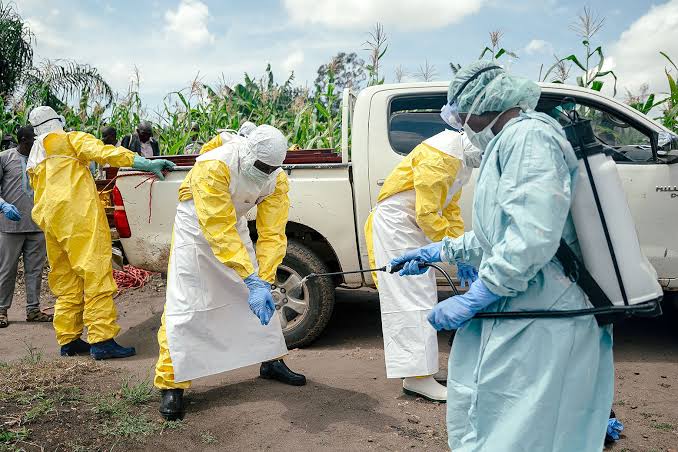
A man drove through Congo and Uganda, flew into Nairobi and died within days. Now relatives and nurses are testing positive, and officials are asking one terrifying question: how did he get through three countries unseen?
NAIROBI, Kenya
It began with a journey that should never have been possible. A Kenyan man living in the Democratic Republic of the Congo, a country now battling the second-largest Ebola epidemic ever recorded, travelled out of the outbreak zone, passed through Uganda, and landed in Nairobi on 3 October. Two days later he was dead at a city hospital. On 6 October, Kenya confirmed what its doctors had feared: Ebola, the Bundibugyo strain, had reached the country for the first time in its history.
Seventeen days on, the story has grown darker. According to the public tracker ebola-tracker.org, which cites Kenya's Ministry of Health and the World Health Organization, the country had recorded nine confirmed cases as of 22 October, with one death. Among the infected are close relatives of the first patient and three health workers who cared for him. Eight patients are in treatment and described as stable.
There is a sliver of good news, and it is a fragile one. No new cases were reported on 22 October, and all 14 samples taken in the previous 24 hours came back negative. The Ministry describes the nine cases as a single cluster with no evidence of community spread. But for a nation that had never faced this virus, the past fortnight has been a brutal education.
The patient who slipped through
The first patient's route is the part that keeps officials awake. Al Jazeera reported on 14 October that he had reportedly driven from the DRC into Uganda and then flown from Uganda to Nairobi. The DRC-Uganda border has been officially closed since May because of the outbreak, which makes the trip all the more alarming.
He arrived on 3 October and died on the night of 5 October at Nairobi Hospital, according to the tracker. Kenya's Director-General for Health, Patrick Amoth, said a meeting with DRC and Uganda officials and the Africa CDC had been scheduled to work out how the first patient passed through three countries undetected.
The finger-pointing started almost immediately. When the second case was announced, Uganda's Alan Kasujja questioned how the man had entered through Kenya's airport, writing on X: "Leave Uganda out of this conversation. We don't have Ebola here." Uganda had reported 20 cases and two deaths earlier this year, and was declared Ebola-free in August, so the sensitivity is understandable. Still, the exchange shows how quickly regional goodwill can fray when a deadly virus crosses borders.
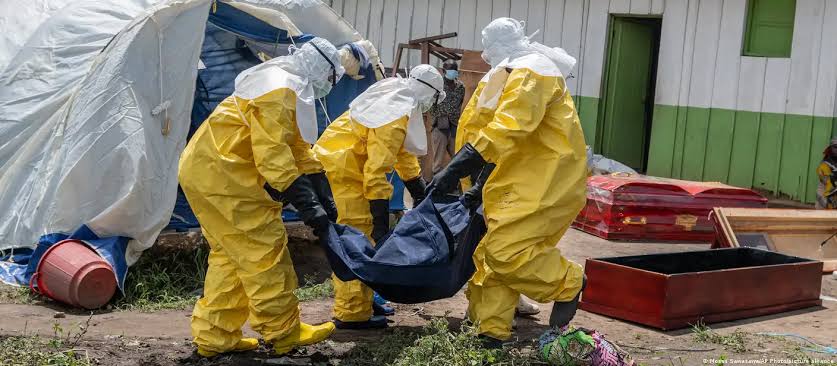
The cluster grows: relatives, then nurses
The second case was confirmed on 14 October: a 39-year-old man, a close family member of the first patient. He fell ill on Tuesday 13 October while already in quarantine, with fever, fatigue and joint pain. He was moved to a designated treatment centre.
A 65-year-old woman, also a relative, was confirmed on 16 October. She had been in quarantine since 6 October. On 17 October came four more: another male relative who was in quarantine, and three health workers aged 29, 35 and 32 who had looked after the first patient and had been quarantined since 9 October. A 49-year-old man who is not a health worker tested positive on 18 October, the only positive among 38 people tested that day. The tracker does not say how he is linked to the cluster. The ninth case, a 24-year-old male relative already in quarantine, was confirmed on 19 October and announced on 20 October.
Notice the pattern: nearly every case was already being watched. That is the reassuring reading, because it suggests contact tracing is catching people early. Health Minister Aden Duale said on 7 October that authorities had traced at least 57 contacts of the first patient and that 10 were quarantined immediately. The tracker now says all 135 contacts have been traced, and those who remain well are due to leave quarantine from 25 October.
The less comfortable reading is that three nurses were infected while caring for a patient before anyone knew what he had. That is a familiar and painful story in Ebola outbreaks: the first people to get sick are often the ones trying to help.
What is Bundibugyo, and why is it so worrying?
Ebola is not one virus but a family, and Bundibugyo is a rarer member. The European Centre for Disease Prevention and Control (ECDC) states that no licensed vaccine or specific treatment exists for this particular virus. That sets it apart from the better-known Zaire strain, for which vaccines and treatments have been used in earlier outbreaks.
The ECDC's weekly threats report notes that vaccination of frontline workers with Ervebo began on 27 August. The report does not explain how that fits with the absence of a licensed vaccine for Bundibugyo, and readers should treat the question of what protection, if any, that campaign offers as unresolved.
Ebola spreads through direct contact with the bodily fluids of infected people, whether alive or dead. Symptoms include fever, vomiting and diarrhoea, and severe cases can involve internal and external bleeding. Early signs, such as the fever, fatigue and joint pain reported in Kenya's second patient, can look like many common illnesses, which is exactly why detection is so hard.
The monster next door: Congo's epidemic
Kenya's cluster is a spillover from a far bigger fire. The outbreak began with an alert on 5 May 2026 about an unknown illness with high mortality in the Mongbwalu Health Zone of Ituri Province, DRC, where four health workers died within four days. On 15 May the Institut National de la Recherche Biomedicale in Kinshasa confirmed Bundibugyo virus disease, and the DRC declared its 17th Ebola outbreak. The WHO Director-General determined it to be a Public Health Emergency of International Concern, with the ECDC giving the date as 17 May and WHO's own situation report giving 16 May.
The scale since then is staggering. The ECDC reported that as of 15 October, DRC had 9,277 confirmed cases and 4,478 deaths. On 14 October alone, 65 new cases and 37 deaths were reported. Ituri remains the epicentre, with 6,806 cases and 3,148 deaths. Seven provinces are affected, and media reports cite two cases in North Ubangi, which would make it an eighth.
Kenya is the fourth country to record a case linked to the epidemic, after the DRC itself, Uganda and France, where a doctor who returned from the DRC in June tested positive with no further spread, according to Al Jazeera. The ECDC also notes that patients have been medically evacuated to the Netherlands and Germany as well as France, with earlier reports from the UK.
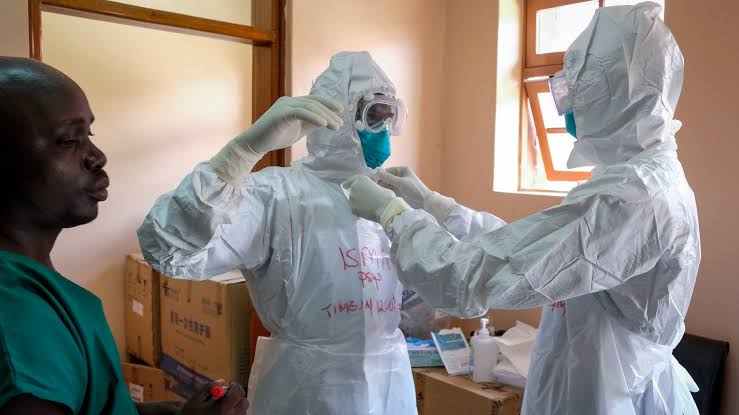
Border screening under the microscope
Kenya has stepped up screening at points of entry, including the Busia border post and Jomo Kenyatta International Airport. But the case of the first patient raises uncomfortable questions about how much screening can really achieve. The ECDC, assessing the risk to Europe, said it considers screening of returning travellers unlikely to prevent introduction of the virus. The reason is basic biology: someone incubating the virus can look perfectly healthy at a checkpoint.
That is why contact tracing and quarantine, rather than airport thermometers, have done the heavy lifting in Nairobi. The fact that most new cases were already in quarantine when they became ill is the best argument that the system is working. It is also why the coming days matter so much. Contacts who remain well are scheduled to leave quarantine from 25 October, and officials will be watching closely for any case that appears outside the known chain.
The expert view
The official risk language is measured. The ECDC assesses that the likelihood of infection is low for EU/EEA residents in or travelling to affected areas, and that "the likelihood of infection for people living in the EU/EEA is estimated to be very low." The agency has experts on the ground: two ECDC staff are with WHO in Bunia, DRC, and one is with the Africa CDC incident team in Kampala, Uganda, as of 11 October. The EU Health Task Force has had experts deployed since 19 May.
Public health experts generally stress that outbreaks of this kind are won or lost on speed: how fast cases are found, how completely contacts are traced, and how well health workers are protected. Kenya's record so far is mixed. The first case got through undetected and nurses were infected, but contacts were traced rapidly and the cluster appears contained for now. Whether that holds will become clear in the next incubation period.
What this means for you
If you live in Kenya, the Ministry of Health's advice is the one to follow. Report fever or unexplained illness, especially if you have been in contact with a known case or have travelled from affected areas, and do not touch the bodies of people who have died of suspected Ebola. Funeral practices are a known driver of transmission.
If you are travelling to or from East or Central Africa, check official travel advisories before you go, and seek medical care promptly if you develop symptoms after returning, telling clinicians where you have been. The risk to the general public in Europe and North America is assessed as very low, so there is no reason for panic. But there is every reason to take the situation seriously, and for governments to keep funding surveillance, protective equipment and the search for a vaccine against Bundibugyo.
For health workers, the lesson is stark. Three nurses were infected after caring for the first patient. Protective equipment and rapid isolation of any patient with fever and a travel history are non-negotiable.
The bottom line
Nine people infected, one dead, 135 contacts traced and a day without new cases: Kenya's Ebola cluster is, for now, a containment story rather than a catastrophe. But it started because a sick man crossed three countries without being stopped, and the same gap exists everywhere along a continent where the virus is still burning in Congo's east, with dozens of new cases every day.
The next few days, as the first quarantine releases approach on 25 October, will show whether Nairobi has truly closed the chain. Until then, the world will be watching, and the officials who must work out how one man slipped through so much will be hoping that no one else did.
Published By | News Editor