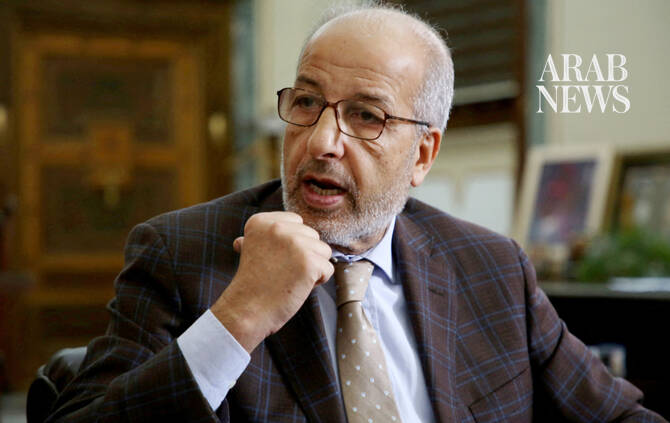
TRIPOLI/BENGHAZI
The governor of Libya's central bank, Naji Issa, resigned over the weekend without publicly stating a reason, throwing fresh uncertainty over the fragile 2024 power-sharing arrangement that has kept the country's oil revenue flowing and its currency stable for nearly two years.
Issa's resignation letter, dated Aug. 9, was submitted to both of Libya's rival legislative chambers — the House of Representatives, based in the east, and the High Council of State, based in the west — according to documents cited by multiple outlets, including Arab News and Sowetan. Private television channel Al-Ahrar reported that Issa had personally confirmed the resignation. In the letter, he said only that he could no longer continue in his post, citing reasons he described as too sensitive to disclose.
The move immediately alarmed officials on both sides of Libya's political divide. Mohamed Takala, head of the High Council of State, publicly asked Issa to remain in his position "in order to maintain financial, economic and political stability" until the resignation could be formally considered. As of Monday, neither the eastern-based parliament nor the western-backed Government of National Unity had issued a substantive response.

Why It Matters Now
Libya's central bank is not just a monetary authority — it is the single institution both of the country's competing governments depend on to distribute oil revenue, the source of the overwhelming majority of state income. Any disruption to its leadership carries the risk of reopening a fight that, less than two years ago, cut the country's oil production in half and pushed Libya toward a full-blown fiscal crisis.
Issa took the job in September 2024 under a United Nations-brokered deal that ended one of the most damaging standoffs in Libya's post-Qaddafi history. That crisis began when the Tripoli-based Government of National Unity, led by Prime Minister Abdulhamid Dbeibah, moved to remove longtime governor Sadiq al-Kabir in August 2024, accusing him of mismanaging state funds and favoring the rival eastern administration. In retaliation, the Benghazi-based authority — aligned with military commander Khalifa Haftar — declared force majeure and suspended all oil production and exports nationwide. According to Libya's state-run National Oil Corporation, the shutdown cut national output by roughly half, to about 600,000 barrels per day, at a time when oil accounted for the vast majority of government revenue and foreign currency earnings.
The UN-mediated compromise that followed installed Issa and vice-governor Miree Al-Barasee as a jointly acceptable leadership team, restoring oil flows and restarting the disbursement of revenue to both halves of the country. That arrangement is now the one thrown into question.
Background: A Country Still Split in Two
Libya has been divided since the 2011 NATO-backed uprising that toppled Muammar Qaddafi after more than four decades in power. The country has not had a unified national election since 2014, and a vote scheduled for December 2021 collapsed amid disputes over eligibility rules and candidacy challenges, leaving the country's political architecture frozen in a transitional state that has now persisted for years.
Today, Libya remains split between the UN-recognized Government of National Unity under Dbeibah, which controls Tripoli and much of the west, and a rival administration in the east backed by Haftar's Libyan National Army. Most of the country's oil production and export infrastructure sits in the east and south, in territory controlled by forces loyal to Haftar — a geographic reality that gives the eastern camp significant leverage in any fight over how oil revenue is managed and distributed.
The central bank governorship has functioned, in effect, as the fulcrum of this balance of power. Because both sides depend on the bank to convert oil dollars into the dinars that fund salaries, subsidies and government operations in their respective territories, control over the institution has repeatedly become a proxy battle for broader political leverage between Tripoli and Benghazi.

What's Driving the Resignation
Issa has not detailed his reasons, but Libyan commentary published in the wake of the resignation has pointed to a deepening dispute over how to manage a worsening economic squeeze. An op-ed published by the Libya Herald framed the departure as rooted in a dispute over "who bears the cost of economic adjustment — the treasury, the reserves or the dinar," suggesting friction over politically painful choices such as currency valuation, subsidy cuts or drawing down foreign reserves to cover state spending.
The resignation also lands amid signs of broader strain on Libya's energy sector. In the days immediately preceding Issa's announcement, a fire broke out at the Zawiya refinery west of Tripoli, days after the same facility reported a leak attributed to a drone crash. Libyan authorities have not linked these incidents to the central bank dispute, and there is no confirmed connection between the infrastructure problems and Issa's decision to step down. But the overlapping crises underscore how exposed Libya's economy remains to disruption from multiple directions at once — political, security and infrastructural — even as the country approaches its third year without a path to national elections.
The Stakes for Ordinary Libyans
For Libyan households, instability at the central bank is not an abstract governance dispute. The bank's decisions directly determine the value of the dinar, the availability of hard currency for imports, and the government's ability to pay public salaries — which support a large share of the workforce in a country where the state remains the dominant employer. The 2024 shutdown demonstrated how quickly a leadership fight over the bank can translate into a nationwide economic emergency: the halving of oil output starved both governments of revenue simultaneously, worsening fuel shortages and inflation for ordinary citizens regardless of which side of the political divide they lived on.
Any repeat of that scenario — whether triggered by a contested succession fight over Issa's replacement or by one side trying to install a governor without the other's consent — would risk reigniting exactly the kind of standoff the 2024 deal was designed to prevent.
Political Implications and Analysis
Issa's resignation poses an immediate institutional question: how, and by whom, will a successor be chosen? The 2024 arrangement depended on both rival chambers agreeing to a single candidate, a process that took considerable international mediation to achieve the first time. There is no guarantee that a repeat negotiation would proceed as smoothly, particularly given that Libya's broader political reconciliation process — including plans for a unified national election — has made little tangible progress in the two years since Issa's appointment.
The resignation also exposes the underlying fragility of Libya's post-2024 truce. That arrangement never resolved the fundamental division between Tripoli and Benghazi; it merely papered over the fight with a technocratic compromise at the central bank. If Issa's departure reflects irreconcilable disagreements over economic policy — as the "who bears the cost" framing suggests — it raises the possibility that no successor will be able to satisfy both political camps without the kind of external pressure that produced the original 2024 deal.
There is also a symbolic dimension. Issa's predecessor, al-Kabir, held the post for more than a decade before his ouster became the flashpoint for the 2024 crisis. Issa's own tenure, by contrast, lasted less than two years — a signal, to many observers, of just how difficult it has become to govern Libya's financial institutions independently of the country's unresolved political rivalry.
What to Watch Next
The most immediate question is whether Libya's two legislative chambers formally accept Issa's resignation or press him, as Takala has already done, to remain in place. If he does step down, the process of selecting a successor will test whether the UN and other international mediators can broker a second compromise as effectively as they did in 2024 — or whether the vacancy becomes a new flashpoint between Tripoli and Benghazi.
Also worth monitoring: whether the Benghazi-based administration uses the vacancy as leverage to renegotiate the terms of oil revenue distribution, a lever it has pulled before by threatening or imposing production shutdowns. Any sign of unilateral moves by either side to control the bank without the other's consent would be a strong indicator that Libya's fragile financial truce is unraveling. Conversely, a swift, jointly endorsed replacement would suggest the 2024 framework, while shaken, remains intact.
Libya's long-delayed national elections, still without a confirmed date, remain the backdrop against which all of this plays out. Continued paralysis at the top of the central bank would be one more sign that the country's deeper political reconciliation remains as distant as ever.
Published By | News Editor