Written By | Staff Writer
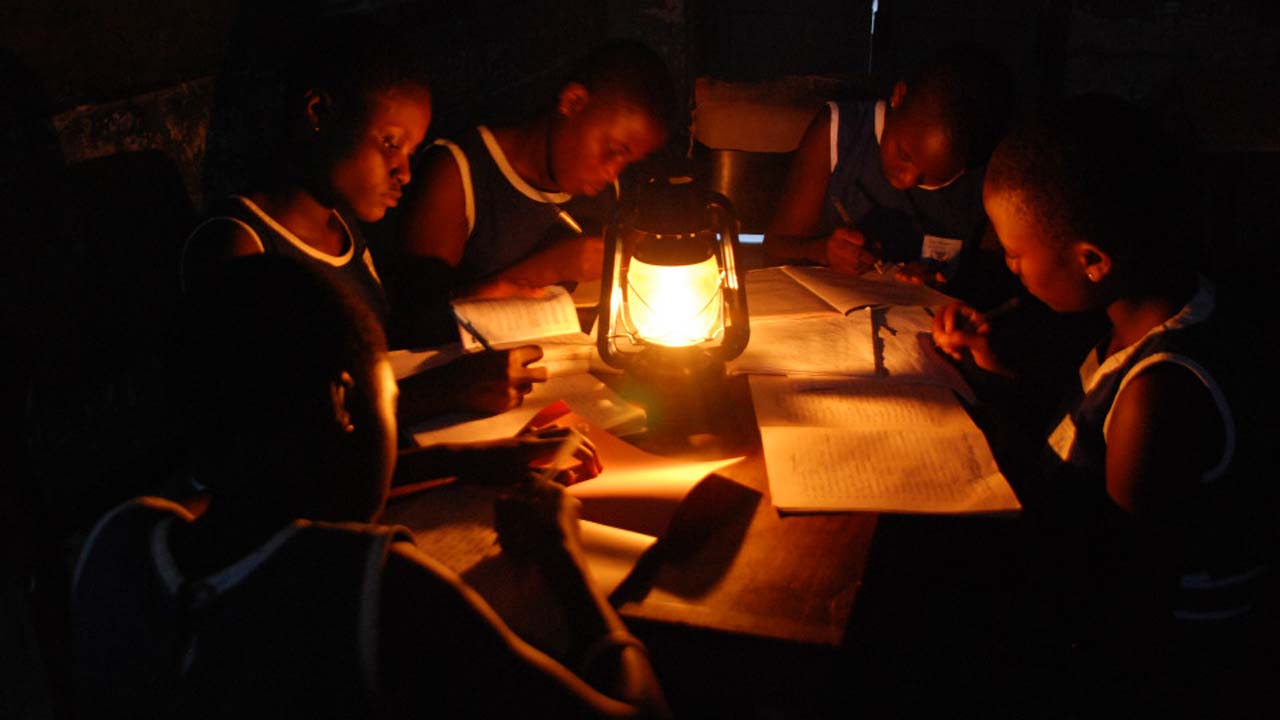
Subsidies are falling, debts are rising and the grid is producing less. Why Nigeria's power-sector finances have become a macroeconomic question ahead of the 2027 election.
Economic & Social Transformation
On Monday 5 October 2026, Nigeria's national grid was reported to be delivering roughly 2,034 megawatts of electricity to a country of more than 230 million people. Sixteen of the 29 grid-connected power plants were said to be producing nothing at all. Less than a fortnight earlier, on 24 September, the system had briefly touched about 5,400 MW. Swings like that are a familiar part of Nigerian life, but the economics behind them have changed in ways that make 2026 an unusually revealing year.
The headline numbers seem to point in opposite directions. The federal government's electricity subsidy bill is shrinking: the Nigerian Electricity Regulatory Commission (NERC) reports that it fell 35.27% to ₦679.58 billion in the first half of 2026, from ₦1.05 trillion a year earlier. Meanwhile the debt owed to generation companies (GenCos) keeps growing, and the industry warns it could reach ₦17 trillion by 2033. The government has said it will end electricity subsidies from 2027 but will not raise tariffs in the near term. This article argues that these trends are not contradictory. They are what happens when the state stops paying the full gap without the gap actually closing. The costs move from the federal budget to the generators' balance sheets, and from there to households and firms that run diesel generators.
A falling subsidy that does not mean progress
NERC's Q2 2026 report puts the government's subsidy obligation for the quarter at ₦321.26 billion, down 10.34% from ₦358.32 billion in Q1. That still covered 49.6% of all GenCo invoices, compared with 51.95% in the first quarter. In plain terms, Nigerian electricity consumers paid for only about half the cost of the power they received, and the state promised to cover the rest.
The regulator says the quarter-on-quarter fall came mainly from a 3.4% drop in the electricity that distribution companies (DisCos) took from the grid. Average offtake fell from about 3,309 MWh/h in Q1 to about 3,197 MWh/h in Q2. So the subsidy shrank mostly because less electricity was delivered, not because tariffs moved closer to cost. For a country where only about a third of peak demand is ever met, a smaller subsidy produced this way is a sign of contraction rather than reform.
Supply data in the first quarter showed the same thing. According to NERC, average available generation capacity fell 17.45% from 5,400 MW in Q4 2025 to about 4,458 MW in Q1 2026, and generation fell 9.64%. The regulator recorded no full system collapse between April and June 2026, which was an improvement on January, when the grid collapsed on the 23rd and again on the 27th. Even so, its September fact sheet showed the average lower grid frequency at 49.43 Hz, below the prescribed band of 49.75–50.25 Hz. A grid that does not collapse can still be fragile.
The debt is moving, not disappearing
The more serious problem sits upstream. In a July 2026 analysis, the Association of Power Generation Companies (APGC) used Nigerian Bulk Electricity Trading (NBET) data to show that between January and April 2026 GenCos invoiced an average of ₦213.5 billion a month but were paid only about ₦90.8 billion. That is a settlement rate of 42.5% and a monthly shortfall of roughly ₦122.7 billion. Month by month, the rate stayed between 40% and 45%: 44.84% in January, 40.05% in February, 41.60% in March and 43.02% in April.
The DisCos do pay most of what NBET bills them. In Q2 they remitted ₦306.62 billion of a ₦326.46 billion invoice, or 93.9%, and seven of them (Benin, Eko, Enugu, Ibadan, Ikeja, Port Harcourt and Yola) reached 100%. Kaduna (50.1%), Jos (62.4%) and Kano (66.5%) lagged well behind. The main gap is therefore not DisCo collection. It is the unfunded half of the bill, the share the government has promised to cover but has not reliably paid in cash.
The government's main answer is the Presidential Power Sector Debt Reduction Programme (PPSDRP). It has presidential approval for up to ₦4 trillion in bonds to settle verified legacy debts. The first ₦501 billion series was issued in January 2026, and a second tranche of about ₦729 billion was announced on 20 July. The GenCos argue that this is not enough. The APGC puts the debt owed to its members at about ₦7.66 trillion as of June 2026, says Series 1 covers just 7.37% of the ₦6.8 trillion legacy debt built up between 2015 and 2024, and estimates that even after Series 2 about ₦5.07 trillion would remain uncovered. It also counts what the bonds themselves will cost: roughly ₦3.07 trillion in repayments over seven years for the two series together, including about ₦1.34 trillion in interest.
The government disputes these figures and puts the verified debt closer to ₦4 trillion. Still, both sides accept the main point. While tariffs stay below cost and the subsidy is not fully funded, new arrears keep building up even as old ones are paid off. On current trends, the APGC projects total sector debt rising from ₦8.27 trillion in 2026 to ₦9.75 trillion in 2027 and ₦17.11 trillion by 2033, when the bonds mature. It also estimates a separate tariff shortfall of about ₦1.78 trillion between April 2025 and April 2026.
The 2027 promise and the tariff freeze
On 31 July 2026, Power Minister Joseph Tegbe said the government intends to stop paying power-sector subsidies from 2027 and has no immediate plan to raise tariffs. Both goals are popular, but they are hard to achieve together. Band A customers, who are supposed to receive at least 20 hours of supply a day, have paid about ₦209.5/kWh since mid-2024 after the tariff was raised to near cost-reflective levels. Bands B to E, which serve most households, have stayed largely frozen at December 2022 rates. If the subsidy disappears and tariffs do not rise, the gap has to be closed through lower costs, mainly cheaper gas and smaller technical and commercial losses, or it will simply become new debt.
Losses are high. NERC put the weighted average aggregate technical, commercial and collection (ATC&C) loss across DisCos at 37.44% in Q1 2026. Billing efficiency fell to 78.67% in Q2, when the DisCos lost about ₦201.9 billion through billing shortfalls. Cutting those losses through metering, feeder upgrades and enforcement is the most credible way to fill the gap without raising the price per unit. It is also slow and expensive, and it depends on DisCos that are themselves short of capital.
The politics are also difficult. Nigeria holds its general election in early 2027, and campaigning has already started. A tariff rise for Bands B to E before the vote looks unlikely. One plausible result is that the federal government formally stops budgeting for the subsidy while the shortfall continues off-budget as arrears to GenCos and gas suppliers. That would repeat the pattern the bond programme was created to end.
Decentralisation: the reform that is moving
The most important structural change is happening at state level, not in Abuja. The Electricity Act 2023 allowed states to regulate their own electricity markets. By mid-2026, NERC chairman Musiliu Oseni said 16 states had taken over regulation within their borders. These states license suppliers, set retail tariffs and can design their own subsidies, while NERC keeps control of the national grid and interstate trade. NERC inaugurated a Forum of Nigerian Electricity Regulators on 25 March 2026 to coordinate the two levels.
This matters for public finances. Earlier in 2026, President Bola Tinubu directed ministries to apply existing electricity laws when deciding how subsidy obligations should be shared among federal, state and local governments. That could allow Abuja to pass part of the cost to states that choose to keep tariffs low. States that price power at cost and enforce collection may attract investment. States that do not will have to pay for that choice themselves.
The second change is outside the grid. In January 2026, about 20 companies were reported to have received licences to leave the national grid and generate their own power. Off-grid supply is also growing. The World Bank-supported Distributed Access through Renewable Energy Scale-up (DARES) programme had reached about 5.3 million Nigerians by mid-2026, against a target of more than 16 million by December 2028. It had deployed just over one million solar home systems against a target of 2.75 million, but enabled only 41 MW of mini-grid and distributed capacity against 465 MW. After Nigeria met four performance conditions, the Bank released up to $200 million in restricted funds and pledged a further $243 million. JICA is co-financing about $193.8 million. NERC also raised the size limit for eligible mini-grids to 10 MW in April. Projects such as the Kogi State mini-grid, with more than 8,100 connections and up to 20 MW of peak capacity, show the approach working, though it is still small compared with the shortfall.
The hidden tax on households and firms
For most Nigerians, the real price of electricity is the price of the generator. Industry estimates put the fuel cost alone of diesel generation at more than ₦600/kWh, roughly three times the Band A tariff and far above what Band B to E customers pay. A small business running a 10 kW diesel generator for ten hours a day spends about ₦60,000 a day on fuel, before maintenance, batteries or depreciation. These costs feed into food, transport, telecoms and rent prices. They also help explain why manufacturing remains a small share of GDP despite ten years of policy aimed at changing that.
This is why the electricity balance sheet matters beyond the power sector. Every naira of unpaid subsidy that turns into GenCo arrears reduces gas payments and plant maintenance, which cuts generation and pushes more activity onto diesel. The resulting costs fall unevenly. Large firms and wealthy households can buy their way out of the grid. Small traders, clinics and schools cannot. Unreliable electricity therefore deepens inequality.
What to watch
Three indicators will show whether Nigeria's power reforms are moving forward or simply moving costs around. First is the settlement rate on GenCo invoices. Unless it rises well above the current 42–45%, the bond programme will be clearing old debt while new debt builds up. Second is the 2027 budget's treatment of the subsidy. A clear funded line, or a schedule for phasing it out alongside targeted protection for poorer households, would be more believable than a declaration that subsidies have ended. Third is how many states set cost-reflective tariffs with genuine metering and enforcement, rather than simply claiming regulatory authority. NERC's Q3 2026 report, due in the coming weeks, will show whether the early-October collapse to about 2,000 MW was a temporary dip or the start of a weaker trend.
Nigeria's power sector has always looked like an engineering problem: not enough gas, transmission or megawatts. In 2026 it has become clearer that it is also a financial problem. The sector cannot be fixed until someone pays the full cost of the electricity Nigerians use, and so far no one does.



