Written By | International News Agencies
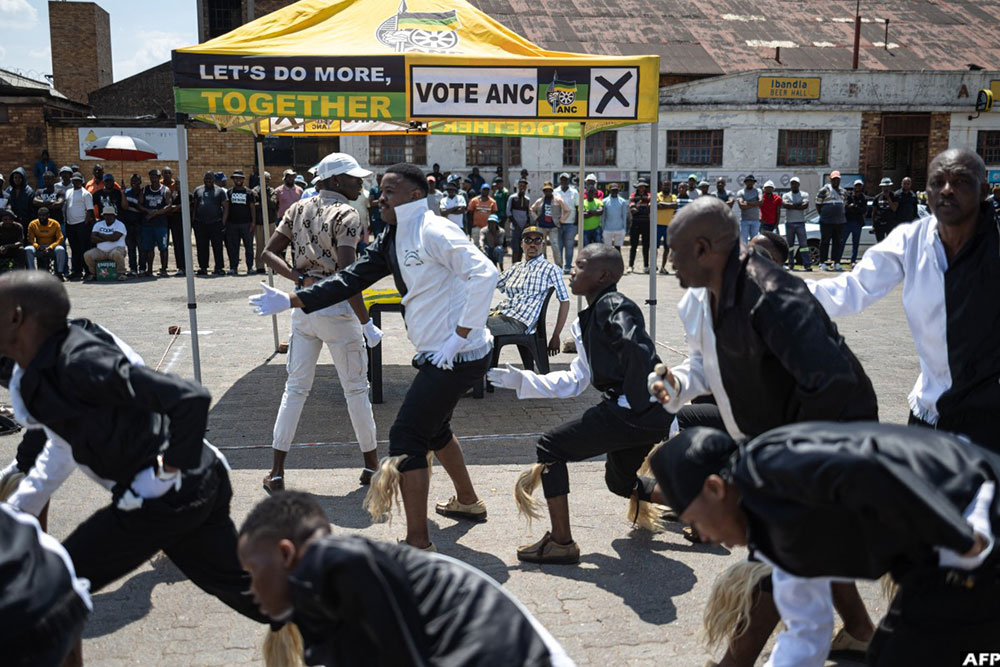
With 19 days to go before South Africans vote in local government elections, a new count of politically linked killings has become a measure of how much is at stake at the municipal level.
SOUTH AFRICA
With 19 days to go before South Africans vote in local government elections, a new count of politically linked killings has become a measure of how much is at stake at the municipal level. The Global Initiative Against Transnational Organised Crime (GI-TOC) says 43 people were killed in 45 politically linked attacks between Jan. 1 and Sept. 30, 2026. That is already more than the full-year total for any year since at least 2015.
The toll lands on a contest that is unusually crowded and unusually close. A new poll shows the country's two largest parties separated by less than its margin of error in two big metros. Together, the violence and the closeness of the race raise a question that will outlast Nov. 4: whether the ballot can settle South Africa's most contested local power struggles, or whether some of them will continue to be settled by gunmen.
What the numbers show
The figures come from GI-TOC's report "Ballots and Bullets," as relayed by the IOL newspaper group. Of the 43 people killed, 41 died in 36 attacks on party officials, ward councillors, members of civic organisations and movements, and traditional leaders.
The 2026 total already exceeds the full-year counts for 2021 (30), 2024 (33) and 2025 (31). It also tops the highest annual totals recorded since 2015: 42 in 2019 and 40 in 2022. And the year still has more than two months to run.
The geography is changing as well. Political killings have spread into provinces that were long considered relatively safe: the Western Cape, North West and Limpopo. The deadliest stretch of the year was the June 20-21 voter-registration weekend. GI-TOC recorded 40 assassination-type incidents of all categories over that period, 12 of them political. Over those two days, six political figures were killed in four provinces: the Western Cape, Eastern Cape, Gauteng and KwaZulu-Natal.
The victims span the party spectrum. The Cape Times reports at least seven suspected political killings in the Western Cape in the first nine months of the year. They include African National Congress (ANC) councillor Aubrey Tsengwa, shot dead in Knysna; Democratic Alliance (DA) ward candidate Sinovuyo Dyokwe, gunned down in Dunoon; and Leon Ngcikwe, a ward candidate for BOSA, shot dead in Gugulethu. GI-TOC's own database classifies Dyokwe's killing as organised crime rather than political, a reminder of how hard it can be to separate the categories.
Elsewhere, GI-TOC lists two MK Party members killed in Bekkersdal, Gauteng, and an ANC ward councillor, Sicelo Mleve, in the Eastern Cape. The Cape Times also reports that four ANC Youth League members were killed in a shooting in Katlehong, Ekurhuleni.
A task team dissolved, and a long-ignored warning
Part of the debate is about how the state is responding. The Political Killings Task Team (PKTT) was set up in 2018 under President Cyril Ramaphosa, following the recommendations of the Moerane Commission. It combined police, prosecutors and intelligence agencies.
In December 2024, the then police minister, Senzo Mchunu, ordered it dissolved, citing costs of R435 million since its creation. KwaZulu-Natal police commissioner Lt. Gen. Nhlanhla Mkhwanazi opposed the decision and called it irregular. Critics said the move stalled 121 active case dockets and suggested political interference. The dispute fed into the Madlanga Commission of Inquiry and a parliamentary ad hoc committee.
GI-TOC now argues that the PKTT should keep its authority, funding and political backing through the election and afterward, and be shielded from interference. A spokesperson for the police ministry, Kamogelo Mogotsi, said Acting Police Minister Firoz Cachalia was in a special Cabinet meeting when IOL sought comment. National police spokesperson Lt. Col. Amanda van Wyk did not respond.
The report adds that the Moerane Commission's recommendations remain largely unimplemented. They include parties disciplining members who encourage violence, ending unqualified political appointments and prosecuting tender corruption.
Police in the Western Cape say they are prepared. Brig. Novela Potelwa, the provincial police spokesperson, said SAPS has a comprehensive operational plan for the elections, coordinated through the provincial joint operational and intelligence structure, with threat assessments continuing across the province.
Why local seats are worth killing for
Analysts point to the economics of municipal power. Prof. Theo Neethling told IOL that KwaZulu-Natal remains the main hotspot, citing ANC-Inkatha Freedom Party (IFP) rivalry, disputes over candidate selection and patronage networks tied to the taxi and construction industries. "The internal strife among parties regarding candidate selections exacerbates the situation," he said.
Yusuf Abramjee, a crime expert quoted by the Cape Times, framed the investigative challenge. He said detectives should determine whether the killings share suspects, hitmen, weapons, vehicles or financiers, and whether they are truly political or tied to tender and municipal-contract disputes, factional fights or organised crime.
The intimidation reaches beyond the dead. Brett Herron, the GOOD party's mayoral candidate in Cape Town, said the party advised a serving councillor, who is also a candidate, to move his family out of their home and pause active campaigning after death threats that included harm to his young children. "We advised our councillor to remove himself and his family from their home and to take a break from active campaigning," Herron said. Zandre Allen, secretary-general of the People's Movement for Change, said candidates in some hotspots do not want their faces on posters. Ian Cameron, chair of Parliament's Portfolio Committee on Police, said: "My main concern is that threats must receive serious attention before someone is killed."
A vote of unusual scale
The election itself is enormous. Voting takes place Wednesday, Nov. 4, a public holiday, with stations open from 7 a.m. to 9 p.m., according to Daily Maverick's guide. The voters' roll closed on Aug. 7.
According to EWN, 546 parties have registered candidates, about 60% more than in the previous local elections. Nearly 137,000 candidates are contesting just over 10,500 council seats, roughly 13 per seat. South Africa has about 29.2 million registered voters, up roughly 3 million since 2021.
Turnout is the quiet variable. It was 45% of registered voters in the 2021 local elections, and EWN notes that only about three in 10 eligible adults voted that year. An Ipsos study cited by EWN found that about 40% of people nationally distrust the Electoral Commission of South Africa or have concerns about it, while about 60% trust it. In KwaZulu-Natal, 58% of respondents said they did not trust the commission. Analyst Melanie Verwoerd said low youth turnout could disproportionately hurt the Economic Freedom Fighters (EFF) and the MK Party, while low rural participation could hurt the ANC.
Voters in metros receive two ballots, one for a ward councillor and one for a party list; those outside metros may receive a third for the district council. Once councils are seated, councillors elect mayors and speakers, and where no party holds a majority, coalitions must be built. That is why the big-city line-ups matter. In Johannesburg, which has 75 contesting parties, the DA is fielding Helen Zille and ActionSA Herman Mashaba. Cape Town, with 55, features the DA's Geordin Hill-Lewis. The ANC will not appear on Mangaung's party ballot after an Electoral Court ruling, and had not confirmed mayoral candidates in most metros when Daily Maverick published its guide.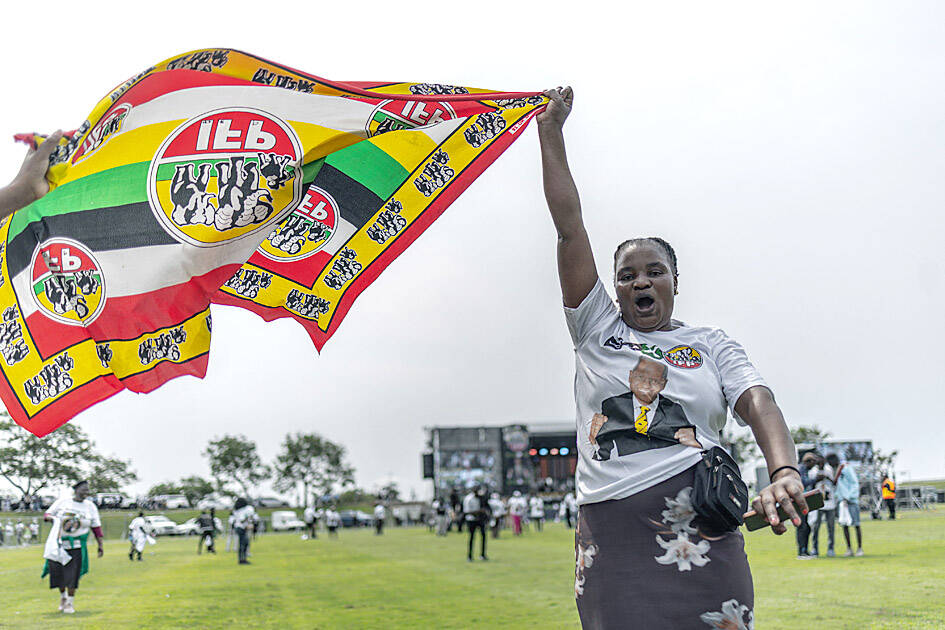
A race too close to call
The latest public polling suggests the ANC's long decline has produced genuine competition. An eNCA/MarkData survey published on Oct. 11 interviewed 1,000 registered voters in each metro between Aug. 10 and Sept. 14. Among likely voters, the DA stood at 37.7% and the ANC at 37.4% in Nelson Mandela Bay, with a margin of error of 3.11 percentage points. In Ekurhuleni, the DA stood at 31.2% and the ANC at 29.4%, with a margin of error of 3.07 points. In both cases the DA lead is smaller than the margin of error, so the poll cannot separate the parties. TimesLIVE described the MK Party as a significant force in eThekwini, Johannesburg and Ekurhuleni, without giving figures; numbers for the other four metros were not published in the reporting reviewed.
Seen against the national backdrop, the stakes are larger than city halls. A Daily Maverick analysis notes that the ANC won 40.18% in the 2024 national election, after 45.59% in the 2021 local elections, and argues that local results are "the best signpost" for national ones. The author contends the real question is the rate of the ANC's decline, and that a result below about 30% would suggest the party could be at that level or lower in 2029.
Analysis: what to watch
Three threads run through the next 19 days. The first is security. The GI-TOC data suggest the risk is no longer confined to KwaZulu-Natal and Gauteng, and the most vulnerable people are not national figures but ward-level candidates and branch officials, whose deaths rarely register nationally. Threats are already narrowing the campaign in some Western Cape neighbourhoods, a democratic cost even if no further killings occur.
The second is institutional credibility. The unresolved fight over the PKTT, and what Daily Maverick's analyst calls "the absolute mess in police leadership," leave a gap between the promise of a security plan and public confidence. How quickly police arrest suspects in the killings already recorded will be an early test.
The third is the coalition arithmetic. With 546 parties, close metro contests and historically modest turnout, hung councils look likely in several cities, and the pacts that follow will be negotiated in the shadow of the 2029 national election. The polls cited cover only some metros, were taken weeks ago and carry margins of error that swallow the reported leads, so they signal competitiveness rather than forecast a result.
What is clear is that a record-level toll, a fragmented ballot and a close race are converging on one Wednesday in November. South Africa's election authorities and police will be judged not only on how smoothly Nov. 4 runs, but on whether the candidates who stood for office in 2026 could do so safely.



