Written By | Entertainment Desk
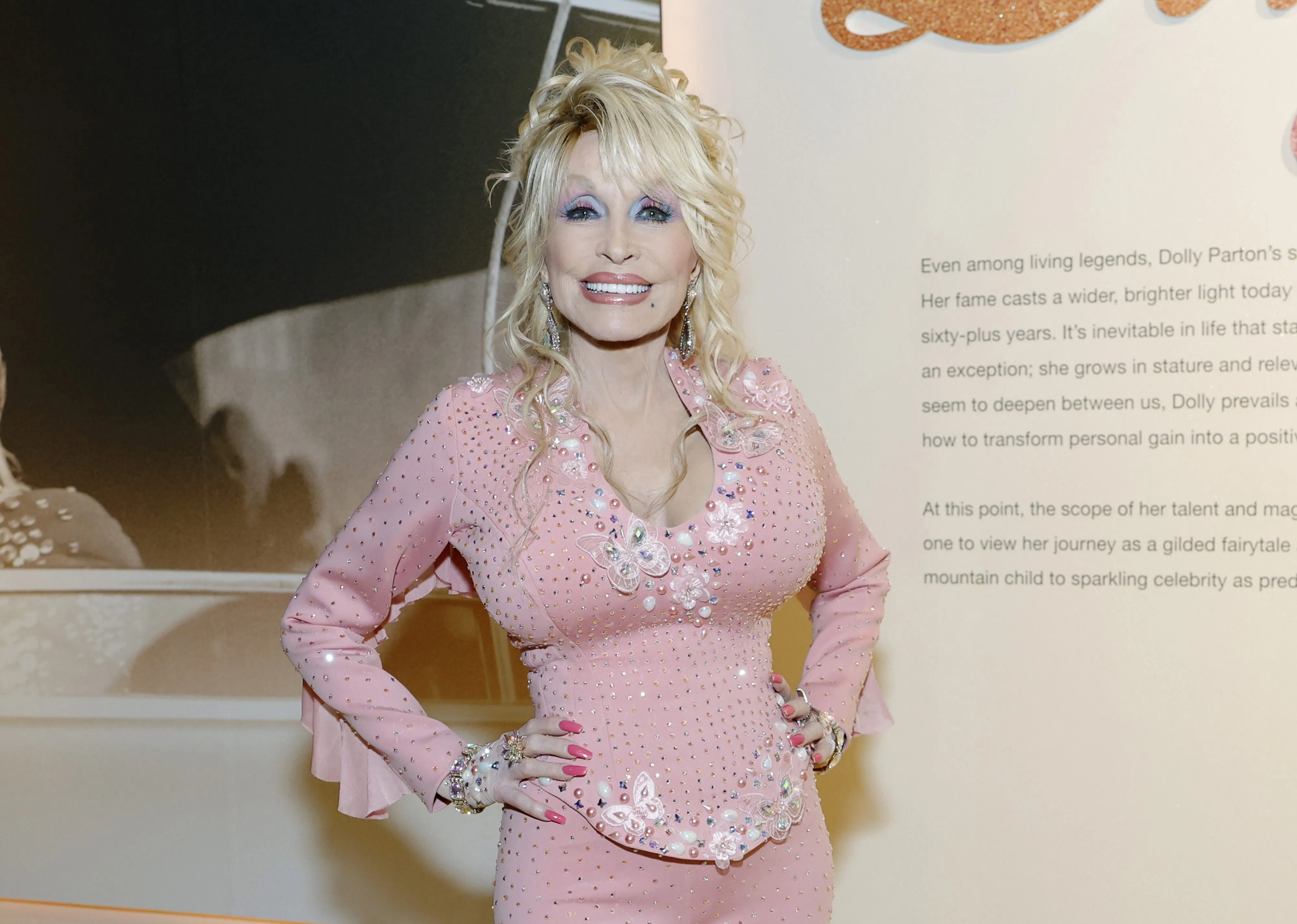
From a one-room cabin in the Smoky Mountains to global icon, the Queen of Country leaves behind a catalog, a theme park, and a library program that reshaped childhoods around the world.
NASHVILLE
A Queen Passes
Dolly Parton, the singer-songwriter, actress, and philanthropist who became one of the most beloved entertainers in American history, died peacefully in Nashville after what her representatives described as a brief battle with cancer. She was 80. The news, confirmed by her family and representatives, sent an immediate wave of tributes across the entertainment world, Nashville's Music City Walk of Fame — where fans quickly gathered to lay flowers at her star — and beyond.
The Empire State Building lit its tower pink in her honor. Flags were ordered to fly at half-staff at federal sites for a week. Radio stations across the country pivoted their programming to her catalog. For an artist whose career spanned six decades, the outpouring reflected not just admiration for her music, but for a public persona that managed to remain almost universally beloved in an era when few public figures escape controversy.
From Locust Ridge to the Ryman
Parton's life story reads like one of her own songs. Born in 1946 in the rural community of Locust Ridge, Tennessee, she was one of twelve children raised in poverty in a one-room cabin. She began performing as a child and moved to Nashville the day after graduating high school, determined to make it as a singer-songwriter in an industry that, at the time, offered little space for women to write and control their own material.
She broke through anyway. Over the following decades, Parton built a catalog of Grammy-winning songs that became American standards in their own right — "Jolene," "I Will Always Love You," "9 to 5," and "Here You Come Again" among them. She sold more than 100 million records worldwide, making her one of the best-selling and most honored female performers in country music history. In 1999, she was inducted into the Country Music Hall of Fame, and in 2011 she received a Lifetime Achievement Award recognizing not just her own body of work but the generations of songwriters she influenced along the way.
Beyond the Music
What set Parton apart from most entertainers of her stature was how deliberately she turned her success back toward the community she came from. In 1986, against the advice of skeptical business partners, she opened Dollywood in the Smoky Mountains near her hometown — a theme park that grew into one of Tennessee's largest tourism draws and a major regional employer, transforming an economically struggling part of Appalachia in the process.
Her most enduring legacy outside music may be the Dolly Parton Imagination Library, a program she launched to mail free books to children from birth until they start school. What began as a local initiative in her home county grew into a global effort that has put hundreds of millions of books into children's hands, crossing partisan and cultural lines in a way few philanthropic programs manage. It remains, by most accounts, the achievement Parton herself was proudest of.
Tributes Pour In
The tributes since her passing have crossed political and cultural lines in a way that speaks to Parton's unusual reach. President Trump posted that she was "one of the greatest Country singers, and far beyond, EVER," and ordered flags flown at half-staff at federal sites for a week. A Tennessee state senator announced plans for legislation designating September 25 as "9 to 5 Day" in her honor, saying "Dolly will go down as one of the most legendary Tennesseans of all time."
Her family, in a brief statement, said her funeral would be private, asking fans instead to honor her memory by supporting the causes she cared about most — literacy, her home region's economy, and the arts.
In Her Own Words
Parton was as famous for her wit and self-awareness as she was for her music, and fans have spent the days since her passing sharing the lines that defined her outlook. "Find out who you are and do it on purpose," she once said — a line now circulating widely as an epitaph of sorts. Others have returned to "The way I see it, if you want the rainbow, you got to put up with the rain," and "Don't get so busy making a living that you forget to make a life," both of which capture the plainspoken philosophy that made her as relatable to working-class fans as she was beloved by critics and fellow musicians.
What This Means for the Rest of Us
Parton's death marks the end of an era for country music and for American popular culture more broadly — one of the last living links to a generation of self-made entertainers who built their own empires from nothing, on their own terms, without losing the audience that made them famous in the first place. Her catalog isn't going anywhere; if anything, expect a fresh surge of interest in her music, her Netflix and Broadway projects, and Dollywood itself in the weeks ahead, the way audiences often rediscover an artist's full body of work in the wake of loss.
But her example may matter as much as her songs. Few entertainers managed to build a business empire, a philanthropic legacy, and a beloved public image simultaneously, all while staying rooted in the values of the community she came from. For anyone building something of their own — a career, a business, a creative project — Parton's arc offers a template that has little to do with luck and everything to do with persistence, generosity, and staying true to where you started.
The Bottom Line
Dolly Parton spent sixty years turning a hardscrabble Appalachian childhood into one of the most expansive legacies in American entertainment — a catalog of songs that will outlive everyone reading this, a theme park that revived a region's economy, and a library program that changed how an entire generation of children encountered books. Her family may be grieving privately, but the tributes lighting up buildings and airwaves this week make one thing clear: the world isn't ready to say goodbye quietly to the Queen of Country.



