ADDIS ABABA
Barely two weeks after federal forces captured Mekelle, Prime Minister Abiy Ahmed's government has announced a six-month caretaker administration for Tigray, and the Tigray People's Liberation Front (TPLF) has declared it illegitimate. The political move comes as the military campaign that preceded it pushes toward the Eritrean border, prompting the International Crisis Group to warn that Ethiopia and Eritrea are moving toward direct interstate war.
The Lede: Governing a Region Still at War
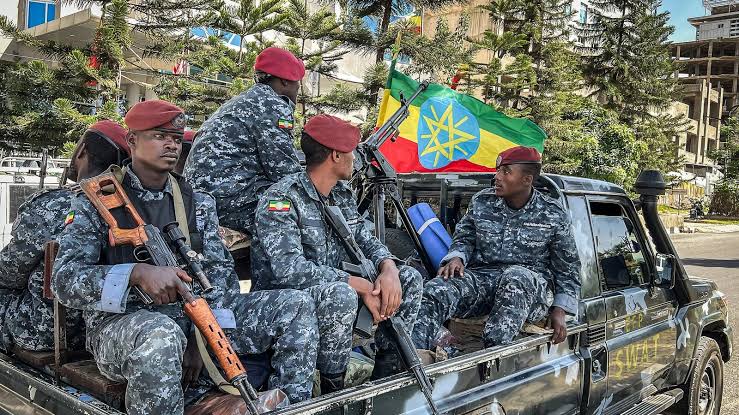
On Oct. 16, Abiy's government announced a six-month caretaker administration for Tigray, according to an Addis Standard report republished by AllAfrica. Its remit covers administration and public services, economic affairs and reconstruction, peace and security, and political organisation. Dr. Shishay Amare was named mayor of Mekelle. The announcement did not name an interim president or administrator. Its stated goals include restoring public services, addressing security challenges, facilitating the return of displaced people, preparing for elections, rebuilding institutions and rehabilitating war-damaged infrastructure.
The TPLF answered the same day. In a statement issued on Friday, Oct. 16, it called the new body a "Prosperity structure" imposed on the region, a reference to Abiy's ruling Prosperity Party, and said its decisions have "no legality or enforceability." It warned that institutions cooperating with the administration would be treated as part of the Prosperity Party and held accountable, and cautioned residents against movement near airports, alleging that the federal government is using aviation facilities for military purposes. The Addis Standard noted that the TPLF did not provide independently verifiable evidence for its airport or surveillance claims.


Background: How the Pretoria Ceasefire Collapsed
The war that ended in the November 2022 Pretoria agreement has effectively restarted. The Crisis Group, in an alert dated Oct. 12, traces the breakdown through a series of steps. In March 2025, the TPLF ousted the interim administrator Getachew Reda. In May 2026 it retook power in Mekelle, and the federal government responded with economic restrictions and airstrikes. On Sept. 20, the TPLF and six other groups announced an "alliance for survival" aimed at toppling Abiy's government. Ethiopia carried out a large drone raid in southern Tigray on Sept. 22, and the TPLF launched large-scale offensives on Sept. 23, coordinating with Amhara Fano and the Afar Revolutionary Democratic Unity Front.
Federal forces and the allied Tigray Peace Force, a pro-government Tigrayan formation, took Mekelle on Oct. 3 without a fight, according to the Critical Threats Project, which reported that the TPLF had withdrawn beforehand and said it did so "to prevent damage to Mekele." Al Jazeera, on Oct. 9, quoted TPLF leader Debretsion Gebremichael as vowing to keep fighting: "We will confront the enemy on our terms and where we choose." Al Jazeera drew a comparison with 2020, when the capture of Mekelle was declared a victory but the TPLF regrouped in the mountains and the war lasted about a year and a half.
Key Developments on the Ground
According to the Critical Threats Project's review for Oct. 9 to 13, federal forces moved rapidly across several fronts. They entered Adigrat without resistance on the night of Oct. 9 and 10, and advanced about 23 miles north to Zalambessa on the Eritrean border between Oct. 11 and 12. On the central axis they took Adwa on Oct. 11, and on the northwestern axis Axum fell on Oct. 12. Fighting was continuing elsewhere. TPLF-affiliated Tigray TV claimed two ambushes against federal forces on Oct. 12 in the Kola Tembien Mountains, southeast of Mekelle; the review did not confirm them.
Civilians are paying a price. Reuters reported, as summarised by Critical Threats, that airstrikes on Adwa on the night of Oct. 4 and 5 killed nine people and strikes on Sheraro killed eight. Critical Threats assesses that the TPLF is weaker than in the 2020 to 2022 war because of waning popular support, internal cohesion problems and improved federal drone capabilities.
The TPLF's internal divisions surfaced in another way. On Oct. 12, former Tigray interim administration head Tadesse Werede and other imprisoned TPLF leaders escaped the Tigray Defense Forces' custody near Rama and reached federally controlled Mekelle, Critical Threats reported. A colonel said the detention was politically motivated and stemmed from opposition to the TPLF's rejection of a term extension for Tadesse in May 2026. That account comes from a single source cited in the review.
The Political Plan: Command Post and Elections
Before the caretaker announcement, Prime Ministerial Adviser Getachew Reda said on Oct. 11 that the federal government would rule Tigray directly through a command post for six months before regional elections, according to Critical Threats. The aim, he said, is to restore administrative and security conditions and allow humanitarian aid in federally controlled areas. Getachew is a former TPLF spokesman and former head of the Tigray interim administration, and is now aligned with the federal side. His prominence illustrates Abiy's strategy of using Tigrayan figures to give the federal presence a local face, while the TPLF paints the same figures as collaborators.
The political design has obvious weaknesses. The caretaker administration has no named leader in public documents, its legitimacy is rejected by the party that has dominated Tigrayan politics for decades, and it is being established in a region where control of towns, roads and airports remains contested. Al Jazeera noted that Abiy was sworn in for another five-year term after the country's election on June 1, so the federal government faces no immediate electoral pressure, but also no easy route to the local consent that a durable settlement would require.
The Eritrean Dimension
The most dangerous aspect of the crisis lies north of Tigray. On Oct. 1, Ethiopia closed its embassy in Eritrea and expelled 10 Eritrean diplomats, and Eritrea cut diplomatic ties, calling Ethiopia's stance "a publicly pronounced declaration of war," Critical Threats reported. Reports from Oct. 7 placed Eritrean units near Adigrat and Idaga Hamus. A senior Ethiopian official told Reuters that Eritrea had deployed one mechanised and three infantry divisions, of about 1,500 soldiers each, but Critical Threats found no large-scale Eritrean buildup in satellite imagery and assessed that Asmara is seeking a buffer zone rather than an invasion. AFP and the Armed Conflict Location and Event Data project reported on Oct. 8 that Eritrean forces in Adigrat had withdrawn north.
The roots of the quarrel are historical and strategic. Eritrea's secession in 1993 left Ethiopia landlocked, and Abiy has made sovereign sea access a priority. He reiterated it in his re-inauguration address on Oct. 5, according to Critical Threats. Asmara sees the push as a threat, particularly to the port of Assab. Eritrea fought alongside Abiy against the TPLF in 2020 to 2022 but opposed the Pretoria agreement, and relations have since soured, the Crisis Group said. The two countries fought a war from 1998 to 2000 that killed hundreds of thousands of people.
Both governments have taken their case to the United Nations. Ethiopia wrote to the Security Council on Oct. 8, citing self-defence and accusing Eritrea of backing armed insurgents. Eritrea wrote on Oct. 10, accusing Ethiopia of effectively declaring war and asking the Council to take deterrent measures under Chapter VII of the UN Charter, according to Critical Threats. A closed-door Security Council session was scheduled for Oct. 13, the Crisis Group said, and the sources reviewed do not report its outcome.
Wider alignments are forming. Egypt, Eritrea, Sudan and Somalia held a summit in New Alamein on Oct. 4, issuing a declaration that stressed sovereignty and said Red Sea governance is the "exclusive responsibility of the littoral states," a line Critical Threats reads as implicitly critical of Ethiopia. Al Jazeera stressed that the grouping is not a formal military alliance and that its members have differing interests. The Crisis Group added that Sudan and Egypt might back Eritrea in a wider war while the United Arab Emirates would likely support Ethiopia, and that Saudi Arabia has a stake in Red Sea security.
Analysis: A Military Win Without a Political Settlement
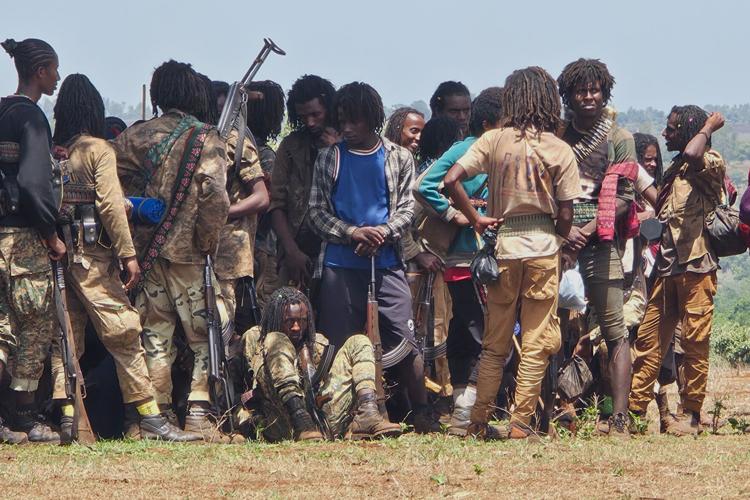
Abiy has achieved quick tactical gains. Mekelle fell without a battle, and federal forces now hold or contest the main towns of northern and central Tigray. But the history of the 2020 war warns against equating territory with victory, and the TPLF's own statements indicate it intends to fight on from rural areas. Federal forces are also stretched. Critical Threats reported that Fano fighters captured Wurgessa on Oct. 3 and Mehal Meda on Oct. 7, threatening federal supply lines between Amhara and Tigray, and Al Jazeera noted that the government is also fighting insurgencies in Oromia.
The caretaker administration is meant to translate military control into political order. Its success depends on whether it can deliver services and aid quickly enough to build credibility with a population that has been through two wars in six years, and on whether Tigrayans who oppose the TPLF, such as those around Getachew and the Tigray Peace Force, can command respect beyond the territory the army holds.
The Eritrean question is the larger risk. The Crisis Group's central argument is that the crisis can still be averted, and it calls for high-level diplomacy involving Washington, Nairobi, Pretoria, Riyadh, Abu Dhabi and others. It urges Abiy not to advance into Eritrean territory and Asmara to respect Ethiopian sovereignty and withdraw any remaining troops. It also recommends reactivating African Union envoy Olusegun Obasanjo on Tigray. Ethiopian officials have said they do not intend a ground invasion, according to the Crisis Group, but the group warns that the war could be easy to start and hard to end.
What to Watch
The first indicator is whether federal forces halt short of the border at Zalambessa, Rama and Sheraro, or press on toward the Eritrean-held positions around Badme. The second is the naming of the caretaker administration's leadership and whether it can reach humanitarian access in contested areas. The third is the TPLF's response: whether it begins a guerrilla campaign, targets airports as it has warned, or seeks talks. The fourth is diplomacy at the Security Council and the African Union, and any move by the Gulf states to broker de-escalation. Finally, the degree of Egyptian and Sudanese involvement will show whether this remains a conflict centred on Tigray or becomes a regional contest over the Red Sea and the Nile.
Published By | News Editor